Table of Contents
Key Takeaways
- Kamaria Williams channels personal and intergenerational trauma into a psychological horror that confronts identity, grief, and societal judgment.
- The film’s creative process embraced unpredictability and restraint, highlighting the power of unseen horror and collaborative adaptability.
- Haunted is a politically resonant work that amplifies marginalized voices, reflecting Williams’s commitment to authentic, thought-provoking storytelling.

Kamaria Williams, a queer Black filmmaker, writer, actor, and producer, brings her multifaceted talents to the psychological horror short Haunted, recently selected for TRC Shorts Fest.
Williams also stars as Malanie, the film’s lead, supported by director Shemeka Wright, cinematographer Alex Correa, and editor Maria Scrinzi.
The film navigates trauma and identity through an unsettling supernatural lens, deeply rooted in Williams's personal experience and philosophical explorations.

What drew you to make Haunted? Why this story, and why now?
Haunted was born out of my colorful imagination of my personal experience with intergenerational trauma and the silence surrounding painful family histories. It serves as a cinematic parable. I wanted to tell a story where the supernatural isn't just a metaphor, it’s the only language trauma knows when buried too deep. It started as a monologue loosely inspired by my real life and many other stories. As a person who is a legal candidate, legal professional, actor, writer, creative, and philosophy enthusiast, I always seek to explore the ethics and ethos of real-life situations. Not just pontificating on esoteric principles and ideologies, but applying these philosophical principles to reality.
I read a lot of Plato and Aristotle, and I’m currently studying Jean-Paul Sartre and Friedrich Nietzsche. My favorite school of philosophy right now (because it always changes) is Existentialism.
In creating Haunted, which Aristotle would classify as a spectacle, I wanted to ask: Will the audience empathize with the main character, who made a huge mistake that could risk their livelihood? Or should Malanie be held accountable for their actions, especially as a queer, Black (dark skinned) femme with natural/textured hair from a low socioeconomic background?
Do people of marginalized identities ever get to be seen as human before being persecuted under the American legal justice system, or under first impressions? Like Bell Hooks said, “When a [person] meets a Black person who shatters their racial stereotypes, they often create a 'special category' for that individual rather than revising their prejudiced thinking.”
Would you give Malanie a second chance because you see them as a “special” Black person, a legal candidate at a prestigious school? Or would you change your mind if they didn’t have that background or ambition?
I’m also asking: does hardship excuse our actions, especially if they infringe on another’s life or rights? These moral gray areas fascinate me.

What surprised you most about the filmmaking process this time—creatively or logistically? Was there a moment on set or in post that completely changed how you saw the story?
There was a last-minute location shift the day of shooting, and that change ended up giving us our most striking visual moments. It reminded me how instability in indie filmmaking often unlocks unexpected beauty. The production company I hired informed me that there was no more time left to shoot an extra car scene that I’d requested. Ultimately, I eventually realized that I actually preferred the film without the extra car scene. Shemeka checked in and made sure that I got all the shots that I envisioned.
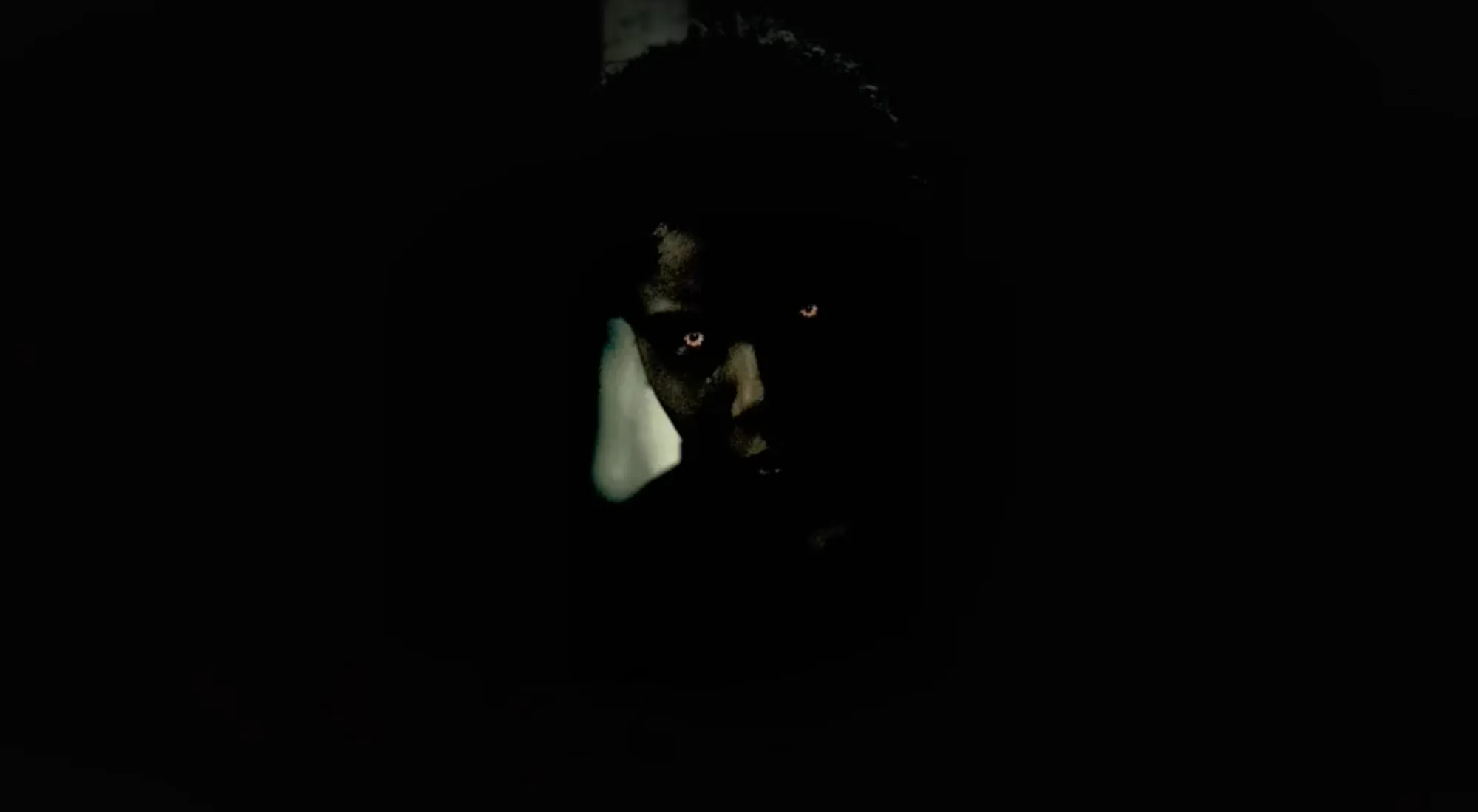
I focused on refining the ending edit with Maria, our editor. I also wanted to focus more on the overarching theme rather than the pre-planned vision I had in my imagination. Later on, I edited and added a moment of visual terror that paralleled the psychological horror Malanie is experiencing.
“I wanted to tell a story where the supernatural isn't just a metaphor, it’s the only language trauma knows when buried too deep.”
Is there a moment in the film that feels the most you—something only you could have made?
There’s a scene where the main character simply stares into an abyss (off camera), breath held, no cuts, just stillness. That stillness, the eerie quiet before an emotional eruption, is my signature. It’s the horror of avoidance, and it mirrors my own nature: confronting unease head-on, even when I possess nervous energy due to overthinking.
“The unseen became scarier, at least to me. It was a lesson in restraint and trusting the audience, my vision, and message.”

What was the hardest creative decision you made while making this film?
Choosing what not to show. I had several ghost moments scripted that I shared with the production team. However, during the post-production process, I stripped them back. The unseen became scarier, at least to me. It was a lesson in restraint and trusting the audience, my vision, and message.
“I wanted to tell a story where the supernatural isn't just a metaphor, it’s the only language trauma knows when buried too deep.”

What do you hope audiences take away from your film?
That grief, anxiety, and worry don’t disappear; they wait. They fester. The longer you delay confronting all of these harrowing, unsettling feelings, the more monstrous they become. These are universal feelings we all feel and deal with, often amplified by our surroundings, circumstances, socioeconomic status, race, gender & sexual identities, and many other factors.
Haunted is about what happens when silence turns into a scream and manifests into a living nightmare.

How has this film shaped or shifted the kind of stories you want to tell next?
Haunted reaffirmed my passion for psychological horror with emotional and ethical depth. I yearn to continue creating stories that blend pathos, ethos, and darker truths. I’ll continue creating work where the real terror lies within, especially for marginalized people whose realities often go unseen.
“There’s a scene where the main character simply stares into an abyss... That stillness... is my signature.”
What’s a tool, technique, or resource that really helped you during production?
My Production Breakdown document & Moodboard were essential. Collaboration was our greatest asset, along with virtual meetings and shared docs like Google Docs and Slides. I also used Canva Pro (for pitch decks), RED Digital Camera, and Frame.io for remote editing.

Independent filmmakers often rewrite the rules out of necessity. What do you think is the greatest strength of independent filmmaking, and how did you lean into that on this project? Is there a lesson or breakthrough you’d share with others navigating this path?
Adaptability. Indie filmmakers are scrappy storytellers who build castles out of scraps. I learned to trust creative pivots and lean into authenticity over being ultra-polished and being “perfect”.
“Adaptability. Indie filmmakers are scrappy storytellers who build castles out of scraps.”
What does it mean to you to have your film selected for TRC Shorts Fest?
Being selected means the world to me, especially now. At a time when DEI efforts, bodily autonomy, and LGBTQ+ and femme identities are under attack, Haunted being recognized reminds me that horror is, and always will be, political. TRC’s mission to amplify underrepresented voices aligns deeply with my own. This honor reinforces that Haunted resonates on both an artistic, psychological, and cultural level.
“Being selected means the world to me, especially now. At a time when DEI efforts, bodily autonomy, and LGBTQ+ and femme identities are under attack, Haunted being recognized reminds me that horror is, and always will be, political.”

Where do you see this film going next?
I’m submitting to additional genre-specific and cultural festivals (like Pan African and other horror festivals) and pursuing streaming platform opportunities. I also plan to expand Haunted into a longer short that bridges into a feature film. My feature script, You Can Call Me Cookie, a femme-driven psychological drama-thriller, is already a Finalist in several competitions. I’m also adapting my Hypnagogic short story (a horror screenplay finalist) into a film that connects within the same universe of psychological horror and survival, which Haunted lives in.
“At the core of all my work is a desire to turn marginalized people’s stories into a heartfelt, shocking, shocking, thought-provoking, reeling, bold, brash, colorful, and truthful saga."

Cast & Crew
- Zoe Bowers — Supporting Cast (“Jess”). Emerging actress adding emotional depth to Haunted.
For more on Haunted, visit the film's website.