Table of Contents
Dracula: A Love Tale is an English-language French film which was released in France in July of 2025. It was released in North America for the first time on February 6th, 2026.
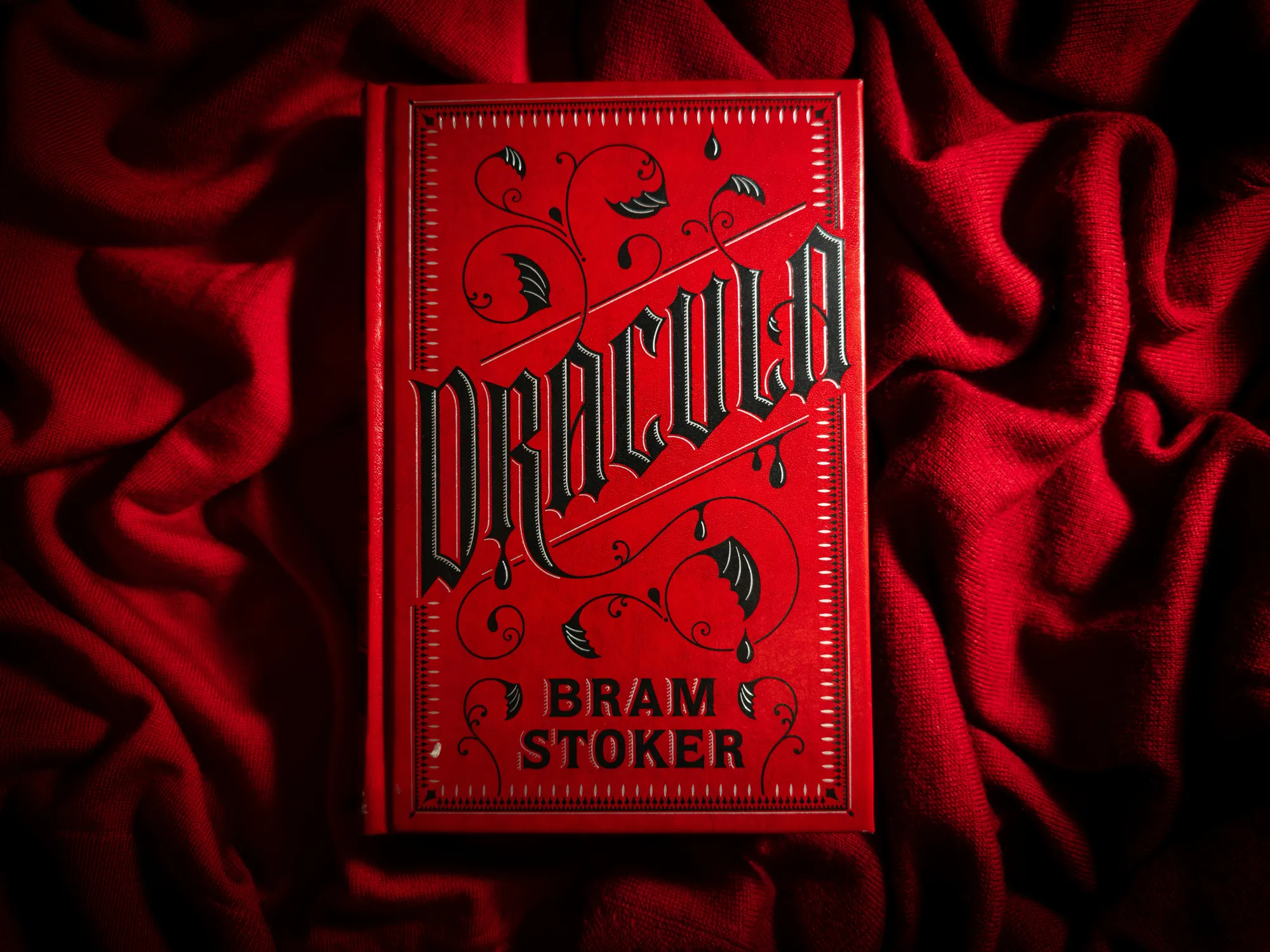
Dracula: A Love Tale was directed by Luc Besson and adapted from Bram Stoker's gothic horror novel, Dracula. There are many Dracula adaptations out there, some stick close to the novel while others are less recognizable. As I just finished reading Bram Stoker’s Dracula, the release of this film is the perfect opportunity to compare the two.
In the film, Count Dracula (Caleb Landry Jones) was once a king who cursed God after the death of his wife; in return, he was cursed to walk the earth as a vampire. When solicitor Jonathan Harker (Ewens Abid) visits the Count, he’s held hostage after it’s discovered that his fiancée is the Count's reincarnated wife.
Dracula: A Love Tale differs from the book in quite a few ways; for one, it’s mainly set in Paris, while the novel is set in London.
Another large change is that Count Dracula does not have a wife in the novel. Despite this, many adaptations include this version. This was a major part of this film, as Count Dracula’s every motivation was for the hope he would one day see his dead wife again. In the original book, he never had a wife. This is not that unusual a change to make, as this is quite common in many Dracula adaptations. Such as Bram Stoker's Dracula, directed by Francis Ford Coppola, which, despite staying more faithful to the novel than other adaptations, also included this change.
Count Dracula holds Harker hostage to go find his wife, who has come back as Mina, Harker's fiancée. This is a welcome change in my opinion, as it gives a strong motive for the Count. Whereas in the book, the motive to keep Harker hostage and travel to London isn’t very clear, other than creating more vampires.
In the film, Mina feels a disconnect between her relationship with her fiancé, which is due to the strong connection between her and Dracula, despite not remembering her past life. A large difference here is that in the novel, Mina is incredibly in love and faithful to Harker, and they actually have quite a sweet relationship. So I found Mina’s overall indifference towards Harker to be a jarring change.
Maria (Matilda De Angelis) is one of Mina’s close friends, but she’s actually a hundred-year-old vampire turned by Count Dracula to find his wife. However, in the novel, Mina’s friend is named Lucy, and they have a genuine and heartfelt friendship. Lucy is eventually turned by Dracula, but unlike the film, she was friends with Mina before becoming a vampire. In the film, Mina and Maria’s friendship was superficial, as Maria’s only motive was to serve Count Dracula and deliver her to him; there was no genuine care there. The film vastly differs from the novel in regard to Mina, as she’s isolated from any genuine connections that aren't with Count Dracula.
In Dracula: A Love Tale, the main character pursuing Count Dracula is Abraham Van Helsing (Christoph Waltz), a priest with extensive knowledge of vampires who leads the hunt against the Count. Van Helsing is in just about every Dracula adaptation and is known to be an impressive vampire hunter; the change here is that, in the book, he is a professor rather than a priest.
Assisting Van Helsing in pursuing Dracula are Mina’s fiancee Jonathan Harker, the psychiatric doctor Dumont (Guillaume de Tonquédec), and Maria’s husband, Henry Spencer (David Shields). This team is about the same in the book, but regarding Dumont, he has a much bigger role in the novel. For one, he was in love with Lucy, Mina’s friend. He also greatly assists Van Helsing in tracking down the Count, which is somewhat reduced in the film.
I did find myself appreciating the special effects makeup, as in my opinion, they did a good job at making Dracula look as decaying and chilling as he’s described in the book. Jones does a great job in his role and plays the inner turmoil Dracula is facing well. Although I felt Van Helsing should’ve played a bigger role in the film, Waltz still delivers a satisfying performance with what he’s given.
Dracula: A Love Tale as a standalone was entertaining enough, though it was lacklustre in areas such as pacing, and apart from a few standouts, it fell a bit weak in terms of the acting.
If you’re not looking for book accuracy and just want to see vampires getting beheaded, then you might enjoy this latest adaptation of the beloved classic.