Table of Contents
Three Key Takeaways
- Nicole Dizon’s Ruya explores the delicate intersection between dream and reality through the lens of Filipino cultural heritage and personal insomnia.
- The film’s production embraced creative limitations, with a single-location shoot and an experimental archival sequence that deepens its narrative complexity.
- Dizon’s work champions overlooked stories and communities, blending surrealism and thriller elements to explore identity, ancestry, and the artistic spirit.
Nicole Mairose Dizon, a first-generation Filipina-American filmmaker, brings her evocative short film Ruya to the TRC Shorts Fest, weaving a luminous tale of tradition, dreams, and family.
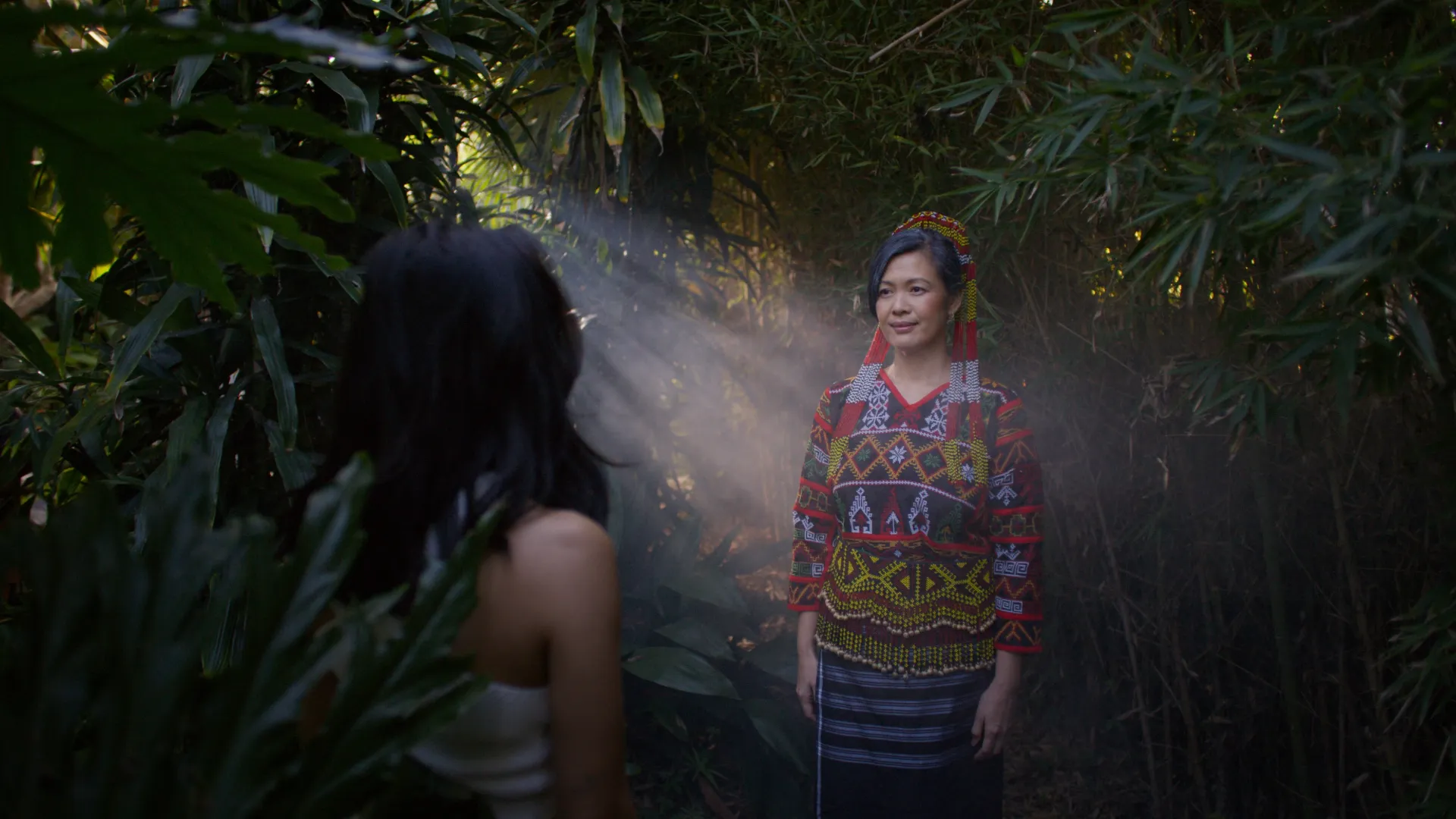
Starring Yssamei Panganiban, Bernadette Balagtas, and Malia Villegas, Ruya follows a T’boli dreamweaver’s daughter as she confronts insomnia and the spiritual legacy of her heritage.
With a crew including director of photography Mike Maliwanag, editor Calvin Chin, and composer Jaimie Pangan, Dizon’s film is a heartfelt meditation on identity and resilience.

What drew you to make this film? Why this story, and why now?
But the answer lied in those sleepless nights—I revisited an idea I shelved about the T’boli dreamweavers in Mindanao. Though I don’t identify as T’boli, I was drawn to the idea that we can stand in our way even for a communal dream and calling we’re born into. During the 2023 strikes, I thought about my purpose in art and my relationship with my creative self. I was recovering from a long bout of insomnia, burnout, undiagnosed (at the time) anemia that interfered with my sleep. It had been 2 years since I directed anything outside of work. I didn’t recognize myself in the midst of my anxiety and all of the external factors I had no control over. I wanted to remember: Why does art matter to me? Could I still create? With time away from work, I stayed up late that summer obsessing over finding the perfect idea–only to worsen my insomnia in the process.
“The moment on set that completely changed how I saw the story was the transition from the day to night scenes.”
What surprised you most about the filmmaking process this time—creatively or logistically? Was there a moment on set or in post that completely changed how you saw the story?
I’m most surprised by the boundless possibilities that can be found in the limitations of production. We managed to shoot the whole film in one location. The moment on set that completely changed how I saw the story was the transition from the day to night scenes. The title and lead character’s name, Ruya, means “sight” or “vision” in Arabic and “dream” in Turkish. In thinking about my character’s name and the act of dreamweaving, I realized that there’s ultimately a thin line between the real world and dream world.

Is there a moment in the film that feels the most you—something only you could have made?
The first nightmare scene where Ruya’s coughing up bills before she sees a glimpse of Fu Dalu is the moment in the film that feels the most like me.
What was the hardest creative decision you made while making this film?
The hardest creative decision I made while making this film was the decision to include an experimental archival image sequence. The quick, disorienting sequence in my film was the final scene that my editor, Calvin Chin, and I kept revisiting to get the rhythm right. It implicitly reclaims some of the forgotten legacy of Filipino Americans before my generation. Though the film isn't centered on our history in America, this nightmare shows Ruya's subconscious and her experience of crippling anxiety from the weight of her mom and ancestors' sacrifices.

What do you hope audiences take away from your film?
At a time when many of us feel lost about our direction in life, I hope this film reminds people that we can always come back home to ourselves and dream.
“The quickest, disorienting sequence… implicitly reclaims some of the forgotten legacy of Filipino Americans before my generation.”
How has this film shaped or shifted the kind of stories you want to tell next?
As the granddaughter of an Overseas Filipino Worker (OFW), I’ve never seen a story about a T’boli dreamweaver as an OFW pursuing their dream of dreamweaving in modern America. This film reconfirmed that I’m motivated to continue telling stories about overlooked people.

What’s a tool, technique, or resource that really helped you during production?
It was more of a mindset shift that helped me during production. I was able to let go of perfectionism a bit more when I remembered that I have another opportunity to rediscover my story in post production.
Independent filmmakers often rewrite the rules out of necessity. What do you think is the greatest strength of independent filmmaking, and how did you lean into that on this project? Is there a lesson or breakthrough you’d share with others navigating this path?
The greatest strength of independent filmmaking is doggedness with a dash of delusion that everything will work out. I didn’t know whether or not I would get to film at my location until the day before the shoot. It was nerve-wracking. The belief that I was going to make the film no matter what is what helped me push through every obstacle.

What does it mean to you to have your film selected for TRC Shorts Fest?
I’m so grateful to TRC Shorts Fest for offering the platform to share the story and tradition of the T’boli dreamweavers. It was empowering to learn that only women in the T’boli tribe weave and can be considered dreamweavers. The film celebrates a line of femininity and the sacred transfer and physical manifestation of our stewardship and connection to the land and its resources.
“The greatest strength of independent filmmaking is doggedness with a dash of delusion that everything will work out.”

Where do you see this film going next?
I’m still submitting Ruya to film festivals, so fingers crossed more people can experience it.
“At the core of all my work is a desire to make people feel less alone."

For more on Ruya, visit the film's website.