Table of Contents
Three Key Takeaways
- Earth Defender tells a critical story of Indigenous people risking their lives to protect nature.
- The filmmakers collaborated deeply and respectfully with the Iban Sungai Utik community, embedding their authentic voices and traditions.
- The film blends cinematic storytelling with documentary truth, symbolically portraying grief, legacy, and the fight for land rights.
Earth Defender, directed and written by Jorik Dozy, Sil van der Woerd, and Kynan Tegar, is a powerful music film co-created with the Indigenous Iban Sungai Utik community of Kalimantan.
Set to Novo Amor’s haunting score, the film reveals the sacrifices made by Earth defenders—Indigenous people protecting their lands from destruction—and underscores the urgent need for global support.
The project was produced by Studio Birthplace, with executive producer Alea Rahim and producers Sara Kong and Agustina Merdekawaty (Tina), and features the talents of Bet and Lapi as father and son.

Q&A Interview
What drew you to make this film? Why this story, and why now?
For over a decade, we (Sil & Jorik) worked in the entertainment industry before dedicating our skills to telling urgent stories for our planet. In 2019, we founded Studio Birthplace to focus exclusively on pro-planet storytelling. We realized one crucial voice was missing: Indigenous peoples. They safeguard 80% of the planet's biodiversity, yet every 48 hours, an Earth defender is killed or goes missing globally. With the climate crisis escalating, we felt an urgent responsibility to tell their story now, to help protect the protectors.
“Every 48 hours, an Earth defender is killed or goes missing globally. With the climate crisis escalating, we felt an urgent responsibility to tell their story now, to help protect the protectors.”
What surprised you most about the filmmaking process this time—creatively or logistically?
The most profound part was co-creating with Indigenous filmmaker Kynan Tegar and the Sungai Utik community. We didn’t want to impose a fixed story or simply use their voices and leave. We wanted to listen, collaborate, and make a film they could see themselves in and use for their own purpose. Every person in the cast is from this small community of 250 people, and their talent was extraordinary. When we shared our initial concept, the whole village gathered to respond, suggesting changes. Instead of resisting, we adapted, allowing their voice to lead the story. It was humbling to take a backseat and use our craft to help their perspective reach the world.
Was there a moment on set or in post that completely changed how you saw the story?
When they saw the finished film, they told their children to watch closely, because if the next generation does not continue to defend the land and say ‘no’ to outside exploitation, their community’s work will be lost. That moment captured the true purpose of the film for us.

Is there a moment in the film that feels the most you—something only you could have made?
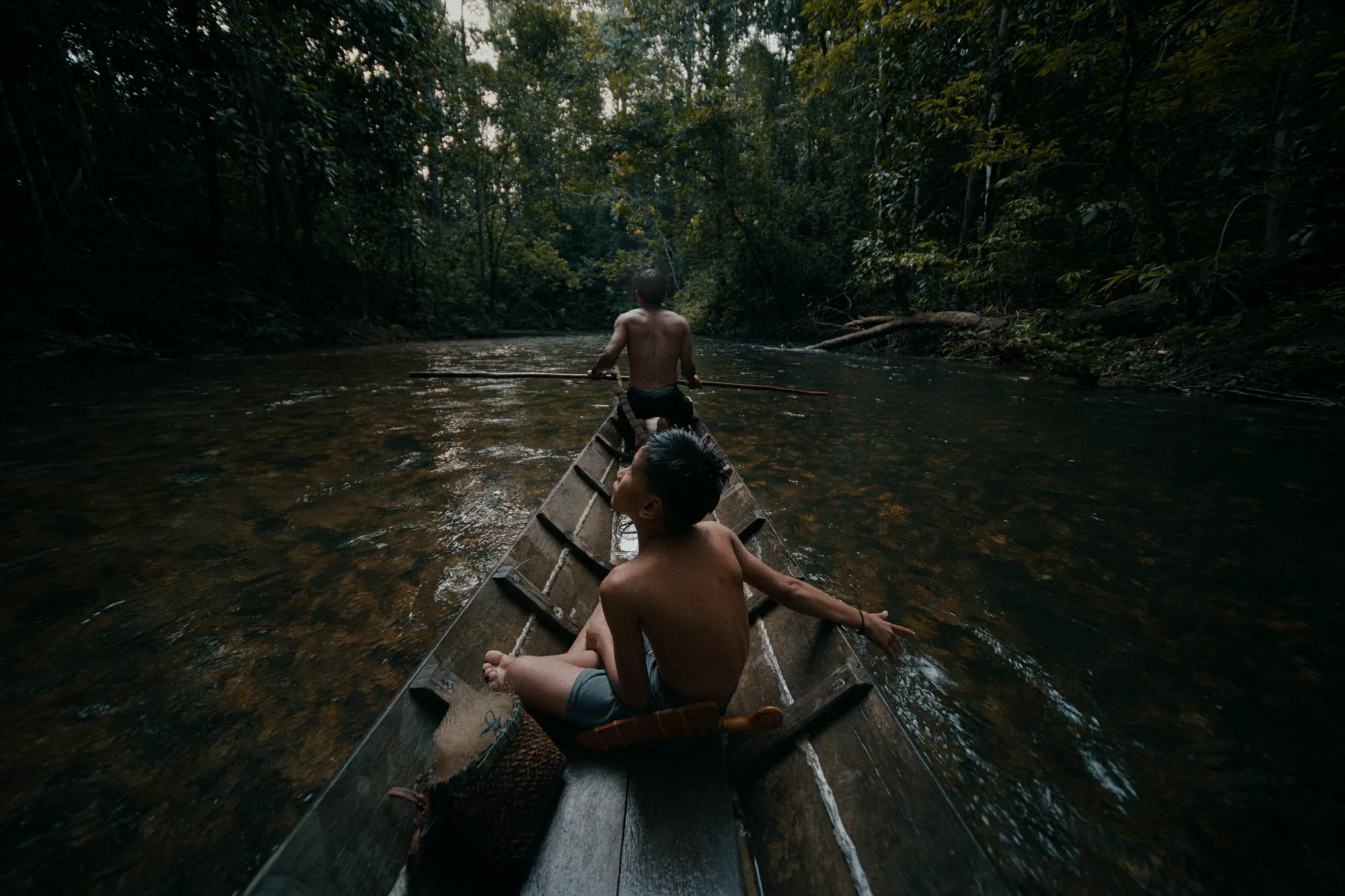
The ending carries the most personal imprint. The story follows a father and son until the father is killed defending his land. In the wake of his loss, the son is embraced by his community in the river where he bathed with his father. Grief turns to acceptance, and in the final scene, the son stands before a mirror, painting his father’s tribal tattoos on his shoulders. It’s a quiet, symbolic passing of the torch—a boy becoming a man, ready to continue his father’s fight. This sequence reflects our vision using symbolic imagery and heightened emotion to tell a layered, universal story in simple, resonant moments.
“Instead of showing his death, we depict him being absorbed by nature, becoming part of the land. It kept the story true to their traditions while adding a powerful layer of symbolism.”
What was the hardest creative decision you made while making this film?
The community told us we could not show one of their own as dead, as it could bring a bad omen. In listening to their beliefs, we learned ancestors are never truly gone; they pass into the afterlife and live on in the land they protect. This understanding gave us the solution: instead of showing his death, we depict him being absorbed by nature, becoming part of the land. It kept the story true to their traditions while adding a powerful layer of symbolism.

What do you hope audiences take away from your film?
We hope audiences understand that we are nature, we come from it, depend on it, and cannot exist without it. Those closest to nature, often Indigenous communities, hold deep knowledge of its value. The Sungai Utik say: “The land is our mother. The forest is our father. The river is our blood.” Yet many face grave injustice, often having no legal title to their land, leaving them vulnerable to exploitation, intimidation, and violence. This film was made to stand with them: to protect the protectors. We invite everyone who sees it to sign the petition and support Indigenous land rights, because their survival is tied to the survival of our planet.
How has this film shaped or shifted the kind of stories you want to tell next?
Making this film was humbling. Telling a real story alongside a real community changes you. It reinforced our desire to create “heightened documentaries,” using cinematic craft, genuine emotion, and symbolic imagery to tell real stories with real people. The Sungai Utik’s story is one among many Indigenous communities worldwide facing threats while protecting the planet. We want to keep telling these stories to expose challenges and share wisdom with a world increasingly out of touch with nature.

What’s a tool, technique, or resource that really helped you during production?
The most valuable technique was listening and observing. We spent a full month living alongside the Sungai Utik before filming—following them into the forest, bathing in the river, sharing meals, playing with children, sitting with elders. If you want to tell a story about a community, first you have to know them. Never tokenize, never impose. Listen, adapt, and amplify their voice.
What do you think is the greatest strength of independent filmmaking, and how did you lean into that on this project?
Independence gave us the freedom to make the film we felt needed to be made. There was no second agenda, no distant client steering the story. We shaped our own process, living with the community, listening, and adapting as the story unfolded. Novo Amor and his label funded the project but gave us complete creative freedom. That kind of trust is rare and allowed us to stay true to the heart of the story. The lesson for other filmmakers: independence is a gift, use it to stay close to the truth.

What does it mean to you to have your film selected for HollyShorts?
HollyShorts is an opportunity to share an urgent story with new audiences. The resilience of Indigenous peoples must be heard worldwide. On a personal level, it’s coming full circle. We met in Hollywood in 2008 while studying visual effects and dreamed our work would be shown at the Chinese Theatre. To now return with this film, in the very place our filmmaking journey began, is simply amazing.
How do you hope being part of HollyShorts will shape the life of this film?
We hope it resonates deeply with audiences, opens doors to other festivals, and ideally a distributor. Beyond that, we want to inspire other filmmakers to merge cinematic storytelling with real-world documentary narratives, proving meaningful stories can be told anywhere and connect globally.

Where do you see this film going next?
Earth Defender is the first chapter in a larger series about Indigenous communities globally. We hope it travels through festivals, streaming, and NGO networks, reaching audiences everywhere. Whether in cinemas or small Indigenous villages, we want it to inspire and empower those who see it.
"At the core of all my work is a desire to repair the broken relationship between humanity and the natural world."

Cast & Crew
- Bet — Actor, plays Father
- Lapi — Actor, plays Son
- Novo Amor — Music artist, composer
- Alea Rahim — Executive producer
- Sara Kong — Producer
- Agustina Merdekawaty (Tina) — Line producer
- Nicholas Chin — Director of Photography
- Heckler Singapore — Visual effects
- Joe Wills — Sound designer
- Indigenous Communities:
- Iban Sungai Utik and Iban Mungguk communities of Kalimantan, Indonesia
For more on Earth Defender, visit their website.