Table of Contents
Three Key Takeaways
- Filmmaking as Understanding: Etzu Shaw approaches her projects not to showcase what she knows, but to explore and understand complex emotions, such as grief.
- Creative Trust: The easiest decision for Shaw was trusting her collaborators, highlighting the importance of teamwork in independent filmmaking.
- Navigating Grief and Rationality: Killing Jar delves into the complexities of grief, illustrating that a rational approach to understanding death might not suffice for emotional healing.
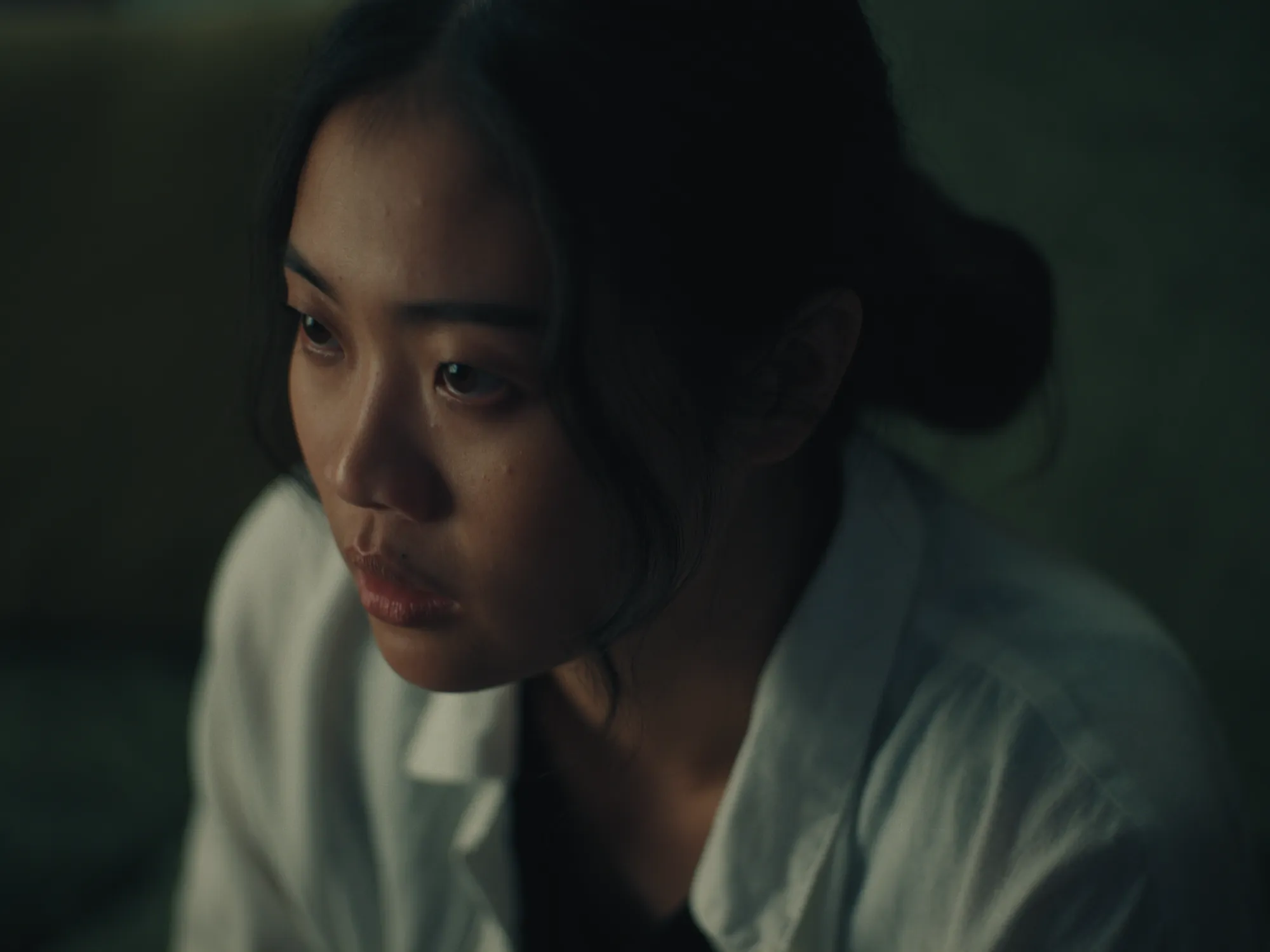
Etzu Shaw, a Taiwanese-American screenwriter and director, is showcasing her latest short film Killing Jar at the HollyShorts Film Festival. With a strong background in STEM and filmmaking, Shaw's journey includes accolades like the Alfred P. Sloan Screenplay Award and the SFFILM Sloan Science in Cinema Fellowship.
Her team for Killing Jar features Producers Constanza Castro, Doménica Castro, Kira Leinonen, Co-Producer Gorby Mufan Shih, and Cinematographer Eitan Almagor. The film stars Valerie Loo, Nicole Rainteau, and Dante Alexander, with casting directed by Mark Droter.
What drew you to make this film? Why this story, and why now?

I spent most of my life studying and working in STEM, prioritizing an analytical mindset over an emotional one. I empathize with the inclination to use rationality as a safety net, especially when facing something as incomprehensible as death.
After my grandfather passed, the struggle of processing grief became more intimate. I revisited the feature as a short film to write and understand these themes. Yes, I have an amateur interest in entomology and spent a semester collecting insects in killing jars.
What surprised you most about the filmmaking process this time?
The ending montage was hard to imagine while shooting out of order. Seeing it edited with voiceover and music by Joshua Cole was a pleasant surprise. It gave direction for the rest of the film's edit.
"I often approach writing projects not as an opportunity to write what I know, but as an opportunity to understand."

Is there a moment in the film that feels the most you?
This is my second film at HollyShorts about emotional repression, so there's something there. Also, I once took an entomology class where we observed a rotting pig, which feels specific.
What was the hardest creative decision you made while making this film?
Condensing a feature screenplay into a short was challenging. The ending conversation between Cam and Becca was difficult to execute, balancing relationship exposition and emotional intimacy.


What do you hope audiences take away from your film?
That grief's forms are strange and unique. A purely rational understanding of death may not be enough, and pushing others away or forcing someone to open up can be damaging.
"The easiest creative decision, and the most exciting: trusting my collaborators and all their individual expertise."
How has this film shaped or shifted the kind of stories you want to tell next?
The film reaffirmed my desire to tell complex, empathetic narratives about women. However, the weight of this story makes me want to explore comedy next.
What’s a tool or resource that helped you during production?
"The Art of Filmmaking" by Peter Markham and "Directing Actors" by Judith Weston.


What does it mean to you to have your film selected for HollyShorts?
It's a fantastic validation of the creative efforts of the cast and crew and an exciting opportunity for a new audience to watch the film.
Where do you see this film going next?
We'll target more festivals before releasing it at the end of the year. I also hope to use it as a proof-of-concept for pitching the feature.
"At the core of all my work is a desire to understand - myself, others, the world around us, the human condition."