Table of Contents
Three Key Takeaways
- Exodus challenges dominant incarceration narratives by focusing on life after release, exploring the gray areas of accountability and redemption.
- The film’s black-and-white cinematography intensifies emotional rawness and underscores the binary perceptions incarceration often imposes.
- Nimco Sheikhaden’s filmmaking approach creates a real-time healing space, making the film not just a document but a bridge between family members separated by incarceration.
Bronx-based filmmaker Nimco Sheikhaden brings a profound and intimate lens to her latest documentary, Exodus, which chronicles the post-incarceration journeys of two women, Trinity Copeland and Assia Serrano.
Executive produced by Geeta Gandbhir, Blair Foster, and Rudy Valdez, the film premiered at the 2025 SXSW Film Festival and has been selected for HollyShorts.
With cinematography by Skyler Knutzen and producing support from Sara Chishti, Exodus offers a nuanced exploration of resilience and humanity against systemic barriers.

Q&A Interview
Q: What drew you to make this film? Why this story, and why now?
Exodus was born out of a desire to challenge the dominant narratives around incarceration, which so often frame freedom as the ultimate destination. But what comes after freedom? Freedom alone is not enough. What does it mean to be released from prison if the world you’re returning to is unprepared to receive you? That question was at the heart of Exodus.
Too often, the stories that break through fall into extremes—either wrongful convictions centered on innocence or sensationalized portrayals of the “remorseless” offender. In between lies a vast spectrum of human experience that gets erased. With Exodus, I wanted to sit in that middle space, beyond the binary of guilt and innocence, where we can confront the complexities of accountability, the weight of circumstance and survival, the lingering impact of childhood trauma, and, most importantly, the possibility of redemption.
Q: What surprised you most about the filmmaking process this time—creatively or logistically? Was there a moment on set or in post that completely changed how you saw the story?
One of the most surprising and moving parts of this process was realizing how the film itself could become a bridge between the people in it. Early on, I made it a priority to involve both women in the process, and one of the moments that stayed with me was when Assia watched footage of her kids, her mother, and her loved ones in New York City. It wasn’t just about seeing them, it was about seeing their lives in a way she never had before, and for them to see hers.
Her children, who had only ever known life apart from her, her youngest born in Rikers, were suddenly able to witness the quiet, everyday moments of her life. And through the film, Assia saw things her children had shared with me but had held back from her, not wanting to burden her. She told me that those moments opened conversations they might not have had for years. That, for me, was transformative, the realization that Exodus wasn’t only documenting a story, it was actively shaping it, creating space for healing in real time.

Q: Is there a moment in the film that feels the most you—something only you could have made?
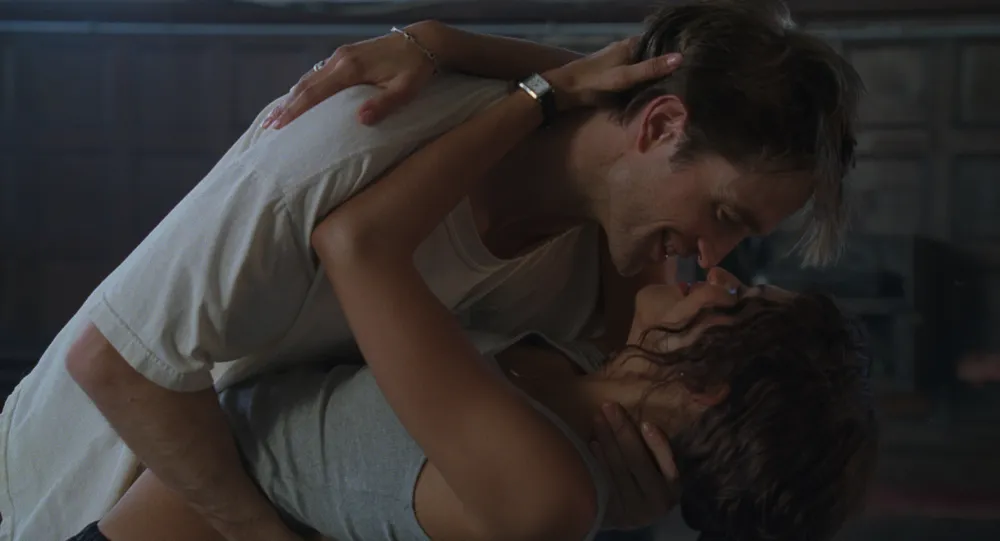
If I had to choose a moment in Exodus that feels the most like me, it would be the way we approached both Assia’s reunion with her children in Panama and Trinity’s release day. These scenes aren’t just milestones, they’re layered with the emotional complexity I’m always drawn to capturing. In Panama, standing just inches away as Assia’s children walked through the doors, the joy was overwhelming, but I couldn’t ignore the fragility of that moment, the years of absence and the uncertainty ahead. I wanted to hold space for both truths, without letting one cancel out the other.
With Trinity, it was about the small details on her first day out—buying her first meal, picking out clothes, realizing how expensive the world had become. Those moments may seem simple, but to me they reveal the deep dissonance between freedom as an idea and freedom as a lived experience. That balance, finding the humanity in the monumental and the mundane, is something I feel only I could have brought to the film, because it’s how I see the world and the stories I tell.
Q: What was the hardest creative decision you made while making this film?
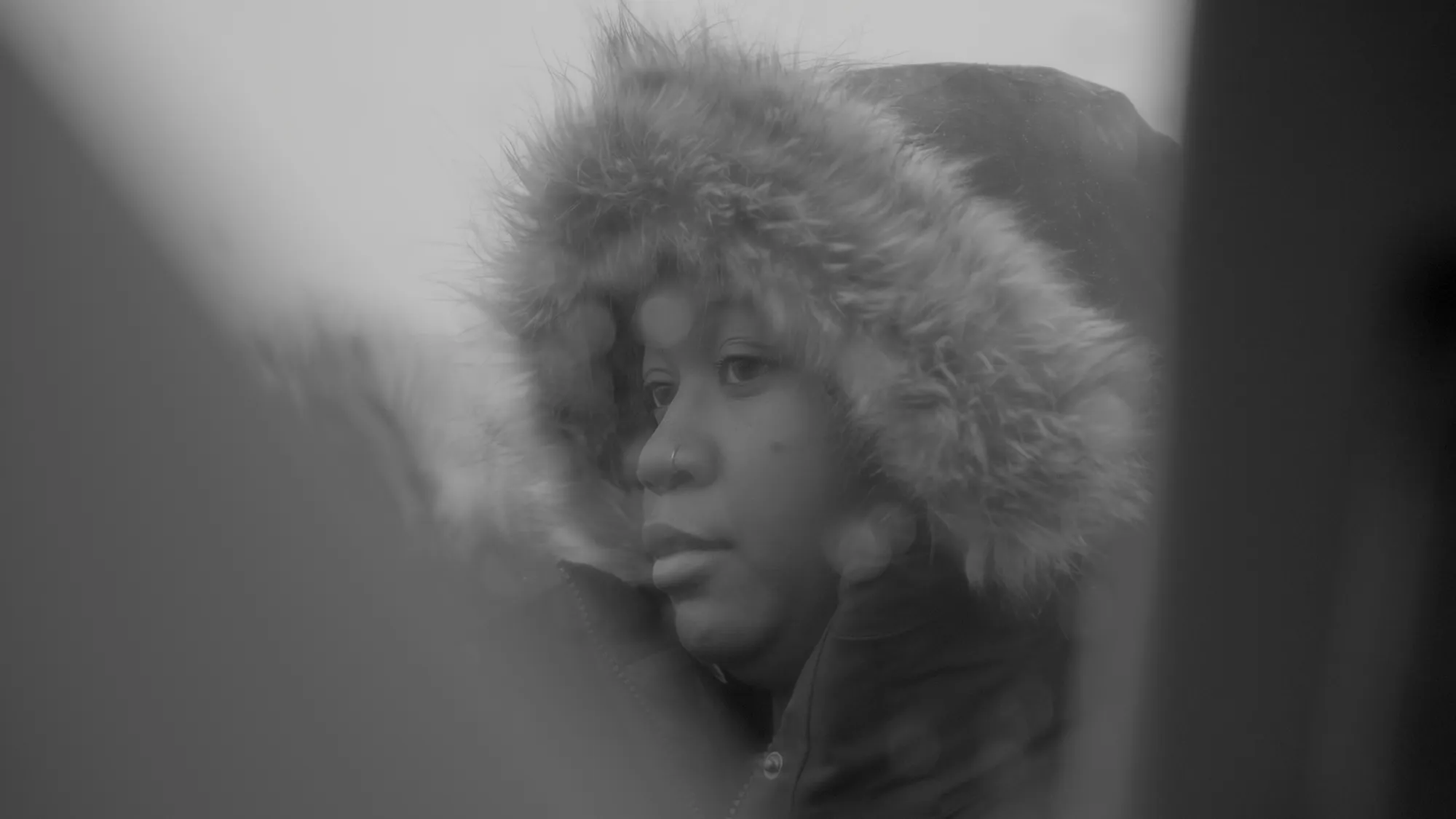
The most important but hardest decision was to make the film in black and white. It stripped away distractions, focusing the viewer on the emotional weight and rawness of each moment. The stark contrast in our visual approach mirrored the binary that incarceration often imposes: the idea that a person is either good or irredeemably criminal. By removing the distraction of color, we emphasized the complexity and humanity of our subjects, challenging those rigid perceptions.
"Freedom alone is not enough. What does it mean to be released from prison if the world you’re returning to is unprepared to receive you?"

Q: What do you hope audiences take away from your film?
I want audiences to walk away from Exodus with a deeper understanding that this story isn’t just about Trinity and Assia, it’s about a much larger reality. It’s easy to individualize their experiences and say, ‘wow, they’re so strong, they deserve freedom,’ but the truth is, the system they’re navigating impacts countless others who aren’t at the center of this film. Their struggles aren’t exceptions; they’re reflections of something much bigger.
More than anything, I hope this film pushes people to define what true freedom actually means. Release isn’t the finish line, it’s just the beginning of another kind of struggle. If we believe in justice, then we have to ask: What does it take for someone to truly be free? And what role do prisons really serve in that equation?
Lastly, I want audiences to reflect on how we, as a society, unfairly decide who is worthy of empathy and redemption. Too often, we reserve compassion for those we deem ‘deserving,’ as if dignity and humanity must be earned. This film challenges that instinct, it asks us to expand our empathy beyond simplistic narratives of innocence and instead recognize the fundamental humanity of every person impacted by incarceration.
Q: How has this film shaped or shifted the kind of stories you want to tell next?
Making Exodus has deepened my commitment to telling stories that resist easy narratives—stories that linger in the gray areas where complexity lives. It reminded me how urgent it is to push back against sensationalism and instead center the humanity of those who are most impacted by our systems.
Moving forward, I want to continue creating work that challenges dominant narratives about immigration, incarceration, and justice, stories that don’t just point to policy failures but illuminate the emotional and generational toll they take. If Exodus taught me anything, it’s that the most powerful stories aren’t necessarily the loudest; they’re the ones that refuse to look away, and I want my next projects to hold that same unwavering gaze.

Q: What’s a tool, technique, or resource that really helped you during production?
The camera was essentially this wonderful tool to bear witness to the story. Our brilliant DPs often worked in very close proximity to the subjects, using a handheld approach to create an intimate, almost palpable connection with the audience. We chose to stay close to them, allowing the audience to feel both the joy and discomfort of their experiences as though it’s happening right in front of them.
In terms of sound and music, we were fortunate to collaborate with an incredible composer whose work became a vital supporting force in the film. The score was carefully crafted to complement the emotional arc of the story, enhancing the experience without overshadowing it. Every technical choice, from the camera work to sound design—was made to fully immerse the audience in the emotional landscape of the film.
Q: Independent filmmakers often rewrite the rules out of necessity. What do you think is the greatest strength of independent filmmaking, and how did you lean into that on this project?
For me, the greatest strength of independent filmmaking is the freedom to honor the truth of a story, even when that truth doesn’t fit neatly into a three-act structure. On Exodus, that meant embracing time as both our biggest challenge and our greatest asset—letting the reentry process unfold on its own terms, with all its quiet stretches and sudden upheavals, rather than forcing a tidy narrative arc.
"The most powerful stories aren’t necessarily the loudest; they’re the ones that refuse to look away."
We leaned into the uncertainty, even when funders and partners asked for a clear “ending” before it existed, because manufacturing closure would have betrayed the reality we were documenting. The breakthrough for me was realizing that independence isn’t just about creative control—it’s about having the courage to resist external pressure and to stand by the ethical commitment to bear witness, no matter how uncomfortable or unpredictable that path may be.
"Exodus wasn’t only documenting a story, it was actively shaping it, creating space for healing in real time."

Q: What does it mean to you to have your film selected for HollyShorts?
It’s deeply affirming to have Exodus recognized by a festival that celebrates bold, independent storytelling. HollyShorts is known for championing work that pushes boundaries, and that’s exactly what we set out to do, offer a more nuanced, human lens on incarceration and reentry. For me, this selection isn’t just a career milestone, it’s a validation of the trust the women in this film placed in us, and an opportunity to amplify their voices to an audience ready to listen.
Q: How do you hope being part of HollyShorts will shape the life of this film?
I hope HollyShorts serves as both a launchpad and a conversation starter. This festival brings together an engaged, diverse audience of filmmakers, industry leaders, and change-makers, people who can help carry Exodus into spaces where its message matters most.
My hope is that this screening sparks connections that lead to more festivals, impact partnerships, and screenings in communities directly affected by the issues we explore.

Q: Where do you see this film going next?
The plan is to continue a strong festival run while also building an impact campaign that brings Exodus into a wide range of spaces. On Monday, August 11th, we’re hosting an impact screening and discussion with organizers from the Campaign to Free the Mississippi Five and Survived and Punished – NY, because we believe this story should be shared with everyone whose lives have been touched by incarceration and its lasting effects.
“At the core of all my work is a desire to illuminate the humanity and complexity of people whose stories are too often reduced to statistics or stereotypes."