Table of Contents
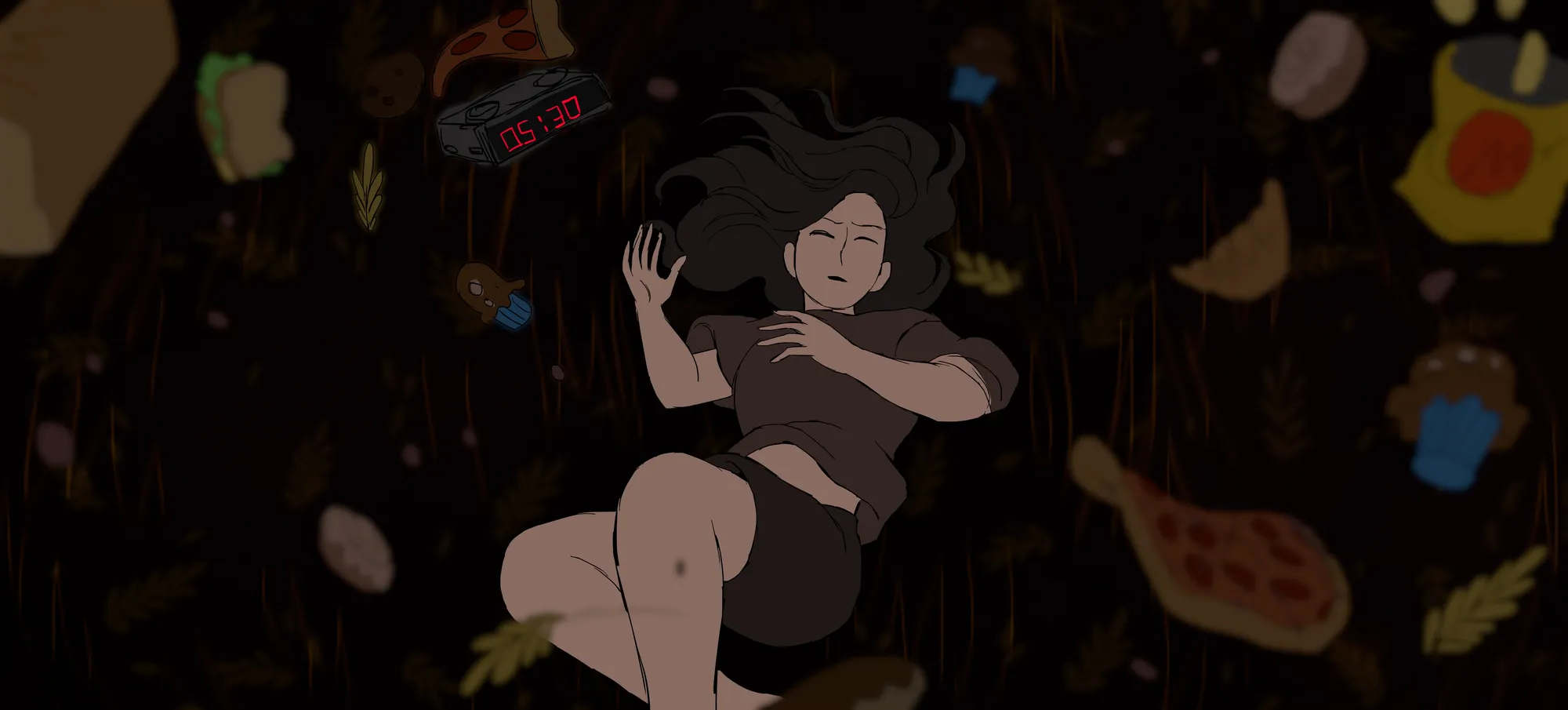
Grain (2025) is a new animated short that turns a deeply personal struggle into an unnerving horror story. Written, directed, produced, and voiced by first-time filmmaker Ilana Zackon, the film tackles the complexities of a young woman’s battle with a binge eating disorder, transforming her struggle into a metaphorical and literal hunger that threatens to consume the town around her. Since its festival run, including winning the Toon Boom Award for Best 2D Short Film at the 2025 Fantasia International Film Festival.
Ilana sat down with us to discuss the film, her inspirations, and working with animation.
Was there a moment when this concept first came to mind and inspired you to make the film?
So the story behind Grain is a really long one. I went through a binge eating disorder, which is what the film is about, when I was twenty years old, and I was living in New York City. As I was going through it, I remember thinking to myself, if I ever recover, I want to write about it. I initially conceived it as a book, some kind of memoir. That image of a rolling ball of wheat actually came to me back when I was younger. I kept having this sense that I was going off the path, like that moment in a video game where you go the wrong way. I felt like everyone around me in the city was going to work, going to school, and then I was going the other way to the bakeries and binging. So those images were very present for me for a long time.
It's funny how obvious it was because it took me over a decade to realize it was an animated film. I thought I wanted it to be a play first, but that didn't end up quite panning out, and I almost abandoned the project. The script supervisor, who I had been working on the play version with, we reconnected, and it was their idea to try to write it as a film. When I started writing out my ideas, that same image of the ball of wheat had still been there. Then I thought, I wonder if this is an animated film. All of a sudden, it all made sense.
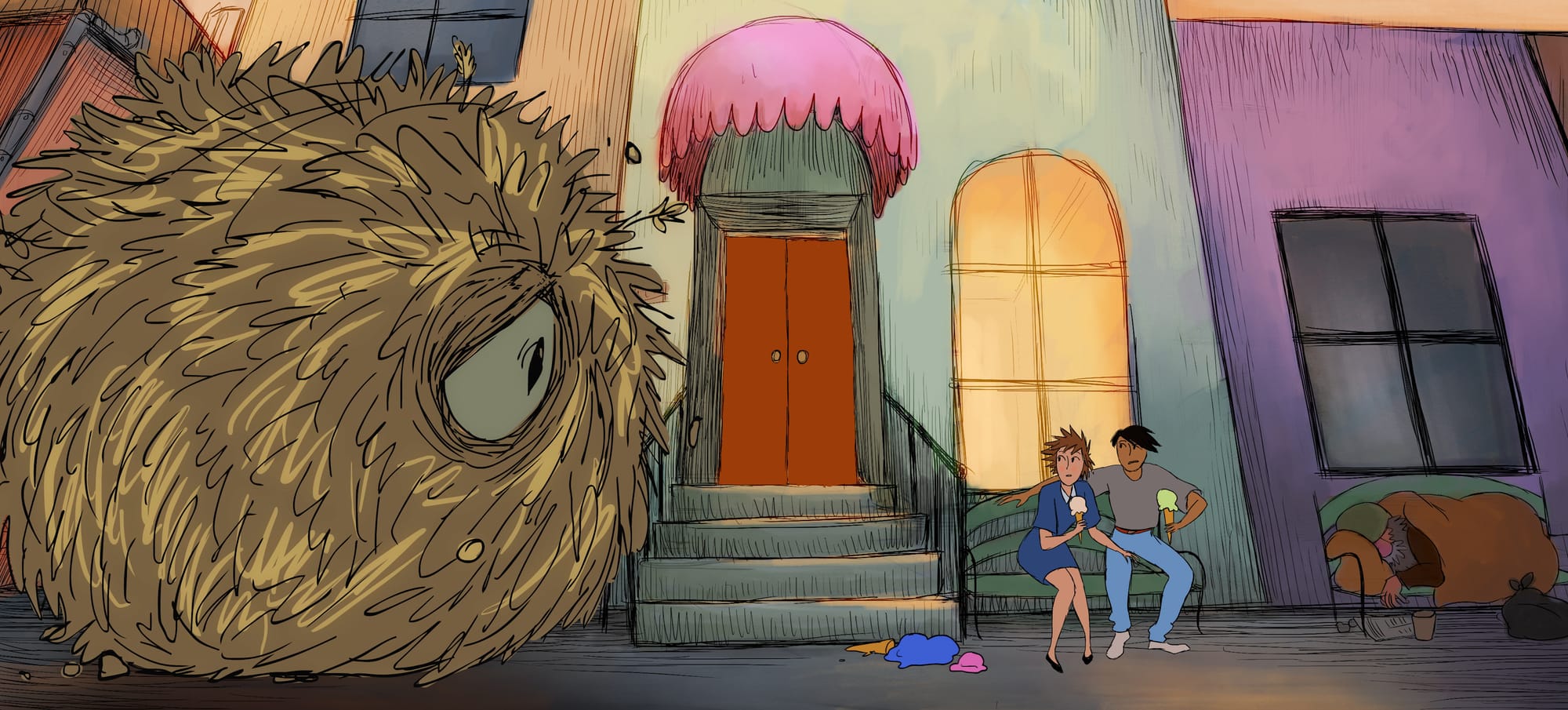
How did you balance the fantasy elements with the grounded reality of experiencing an eating disorder? Why did you choose to represent it in this way?
It can be very triggering for people who are going through an eating disorder to watch displays of someone binging, or for other eating disorders, it might be purging or restriction. I knew, for me, when I was going through it, it was really challenging when I saw other people, even in real life, having the same displays of behaviour. It was very important to me that if someone was watching my film and happened to be going through the disorder, they'd be able to watch it without it making their disorder worse. On the other hand, for people who aren't going through the disorder or who have never experienced an eating disorder, I wanted them to understand the feeling of being trapped in an addictive cycle. I think people have a lot of their own preconceived ideas about food. I think we all, in some ways, struggle with using food as an emotional way to deal with our issues. Being able to go through it through fantasy felt like a safer way into the material.
The medium of animation is seen as something that's a lot more for kids, so there's not a lot of animated horror that we see. Was there a reason you thought of this medium as the best way to tell your story? Do you think there could be more kinds of projects where we see animation and horror [together]?
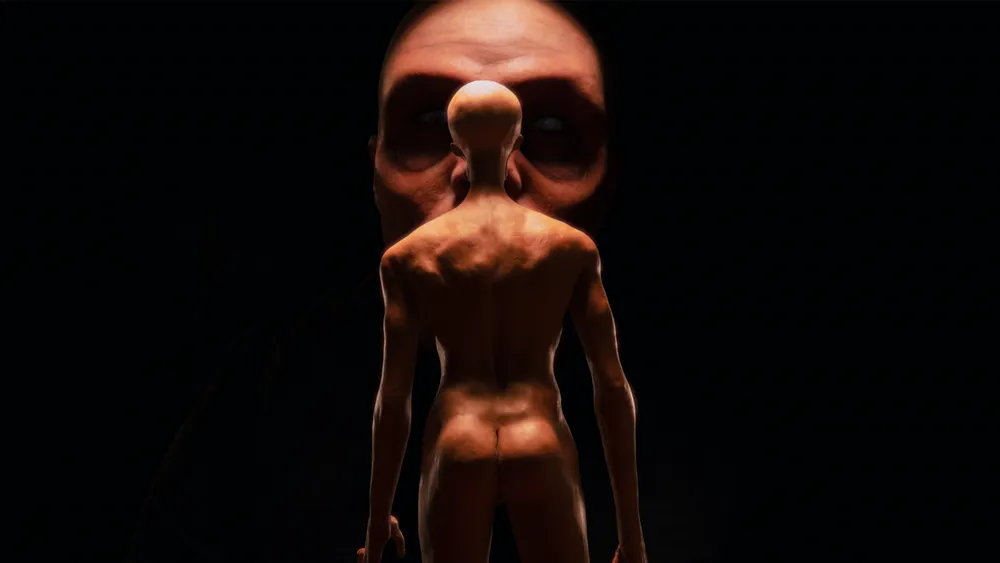
So, funny story about the horror piece of the film. I didn't realize it was a horror film until after it came out. I'm not kidding! I always saw it as more thriller-esque, maybe more on the experimental, surrealist style of things. Then I premiered it at Fantasia in Montréal this past summer. A lot of people came up to me, other filmmakers, saying "wow, the body horror was so interesting." I was like, body horror? Yeah, I guess it's body horror. I think that because it's my story, in some ways, I was so in it that I didn't even have the objective view that the audience members had. Then I changed my strategy and thought, well, I got into Fantasia, maybe if I start applying for horror festivals, maybe that's the end, and it's been happening. Now I can see it, but I definitely didn't initially think I had written a horror movie, but it totally makes sense now that I see it.
I do think there is definitely a lot more room for animated horror. I think that making an animated film to explore a difficult emotional issue has definitely opened up a door in my brain of what other experiences I've gone through, whether they're psychological or other mental health issues. This could be something that I might want to explore in this medium now. There's something amazing about animation because there's no bounds. Whereas in live action, you have a budget and there's only so much you could do with effects. I would have all these wild ideas and just tell the animator, and then she would make them. There's something really freeing about working in animation.
I know that in the film itself, there is a very stark contrast with the muted tones we see in the protagonist and in the monster, and then the very vibrant colours of the world around her. What was it like working with your team to develop this visual language?
What you just pointed out is actually in the script. I wrote in the script that the room that the girl is in is muted, as if her world has lost its colour. Then, through the window, there's a bit of that light streaming in. You can see that the outside world is still vibrant. I wanted to use that to symbolize the kind of depressive state and feeling of disconnection from the world that she was going through, that feeling of isolation and darkness. Then, in an ironic way, the ball who becomes this maniacal monster, it's almost manic. That was something we talked about a lot, especially with the musicians, the composers of the film. I wanted to make sure that the moment where the ball just goes out of control, and you can see it going through all the difrent streets, that it had a really manic quality to capture the feeling I had when binging, where it feels like you're on a high. There's all this sugar and flour and whatever else you're eating going through your brain. It's a feeling I do not recommend people try, but I had never experienced anything quite like it in my life. So the music really helped with that.
Visually, I think Katherine [Stefanska, animator] had really understood my vision. We had a really quick symbiosis. When I came to her with my idea and showed her the script, she just understood it. I think in some ways, the little details were the parts we had a lot more conversation around. What is the ball's expression? What's the ball's emotion in this moment? Making sure that we had an arc where we could see the way that the ball was becoming more human-like. Why was it binging? That was something we talked about with the script supervisor, that moment where the ball's watching the family all eat together, with the mom and the kid. We were trying to convey the loneliness and the longing that the ball felt to have community and have people around. Maybe that was the reason why it was going on this rampage.
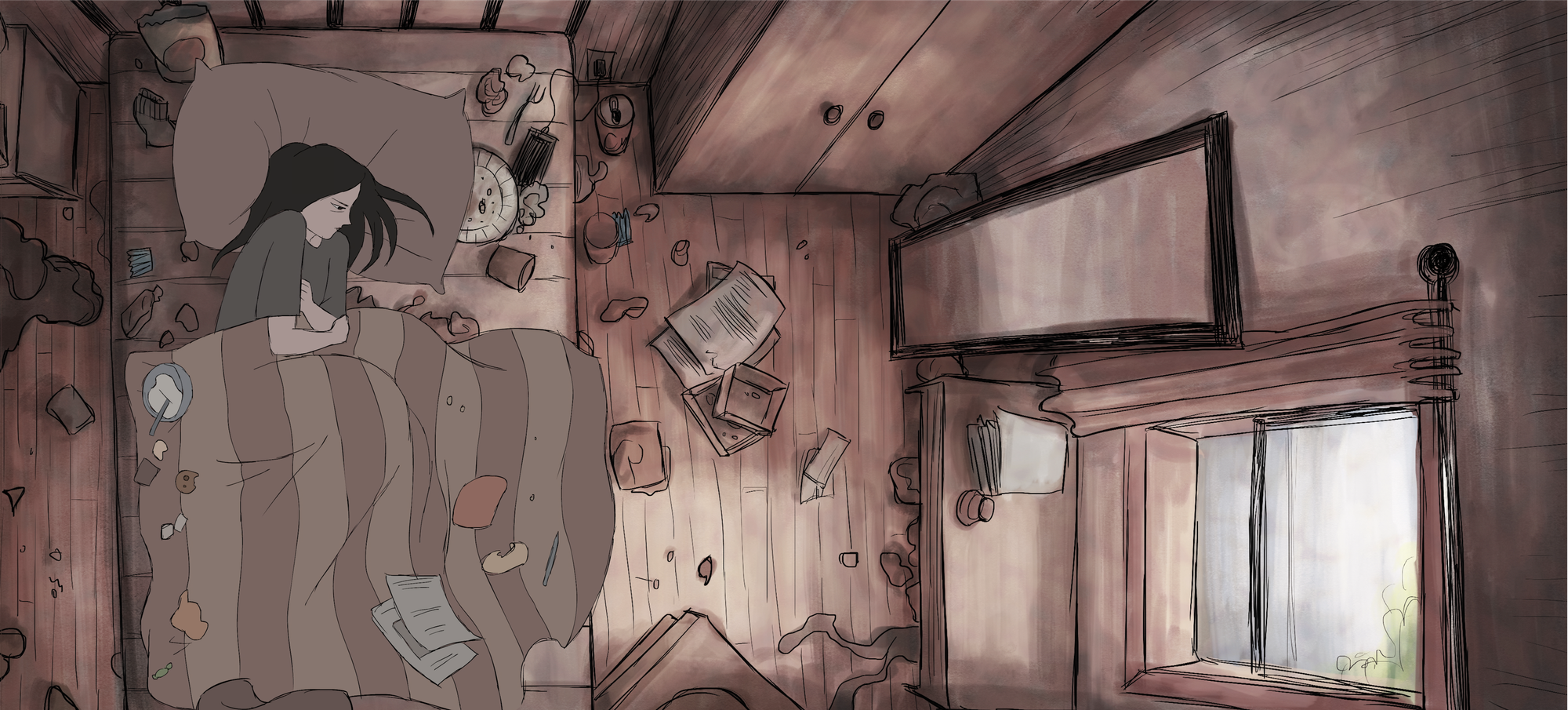
I know you mentioned a bit about the sound and the composers. Sound is something that is so, so important with horror. How did you find that worked into the pacing of the film?
Yeah, that's huge. I feel like I spent a lot of time on pacing with the composer. Zach [Frampton] was on from the beginning. Pierre [Mendola] joined a little later in the process. A lot of my conversation with Zach were like, how do we contrast the ball before it goes nuts and after? How do we contrast the world of the girl in her room versus the world of the ball? There are so many little details. The moment where the ball goes back into the muffin shop, I wanted there to be some little audio cue that would repeat throughout the film where you could feel the ball's gravitational pull towards eating and binging. But I didn't want it to be too on the nose either.
There was a version of the score that was a lot darker earlier on when the ball's kind of medium sized. I wanted to make sure that we were still following the story and had enough room to grow to where it actually becomes scary. I think that what Zach and Pierre did towards the end, where the ball's really scaring people and everyone's running away, that in some ways was their creative input. Then, when I heard it, I was like, oh, this totally makes sense. Because in some ways, it becomes a collaboration between the animator and the composers at that point. I've done the storyboarding, I had the script. We did a lot of back-and-forth. But then Katherine created this eerie world where the ball's eye looks back at the people. I think that it automatically gives a cue to the composers of what tone they want to add to it. So it's extremely collaborative, you become a bit of a hive mind as you're working.
There is some interesting use of perspective that happens in the film, which is something very difficult, especially when it's hand-drawn. How did you find the storyboarding process? Were there any challenges that came around?
It was really interesting because my background is primarily as an actor. Most of the script is description because there's very little dialogue except for the poetry that is narrated on top. In a way, my stage directions were quite dramatic in itself. Then I handed it to Katherine, and she came up with the storyboard, and then we refined it. In a way, a lot of those perspectives you're talking about were kind of her brainchild. If there was something that wasn't quite working, then we would rejig it. I gave her a lot of rein to bring in some of her own vision into the project. I do remember we had a meeting early into the process. She had done an initial take of the storyboard where we went through it with me, Katherine, and Jesse [Stong], the script supervisor, kind of panel by panel. That was Jesse's note of "what's the ball's emotional journey? What is the emotion on each part?" So then I went through the storyboard, and I was like, okay, on panel blah, I want the ball to be sad or confused or whatever.
Then I sent all my notes to Katherine. She refined the storyboard. She would be live, not necessarily drawing, maybe making some changes. But a lot of it was in After Effects, kind of figuring out how we wanted to trim things. Sometimes I would log on and actually watch her do it live and be like, okay, can we fix this? Or I feel like the girl's expression is not quite right in this moment. It's really amazing to see her update it so quickly. Katherine is completly self-taught, which blows my mind. She'd only done a few smaller projects before this. This was the longest piece that she'd done, especially because she was essentially a team of one. We did have two animation assistants, but they mostly helped with colouring. It was a huge endeavour, and I think she did an amazing job.
How long did it take to animate this whole thing? Especially if you only had one person doing it?
It took us two years from when we got the grant, and then finally started working. I spent the first couple months just refining the script, making sure it was ready to go. Then we kind of got going. We had initially thought it would take one year, and then it was clear that we needed more time. So it ended up being a two year process. This is my first time making a film, but I totally get what directors talk about now. I watched it, and then I noticed little things that we could tweak, but what's done is done, and you just have to let it breathe.
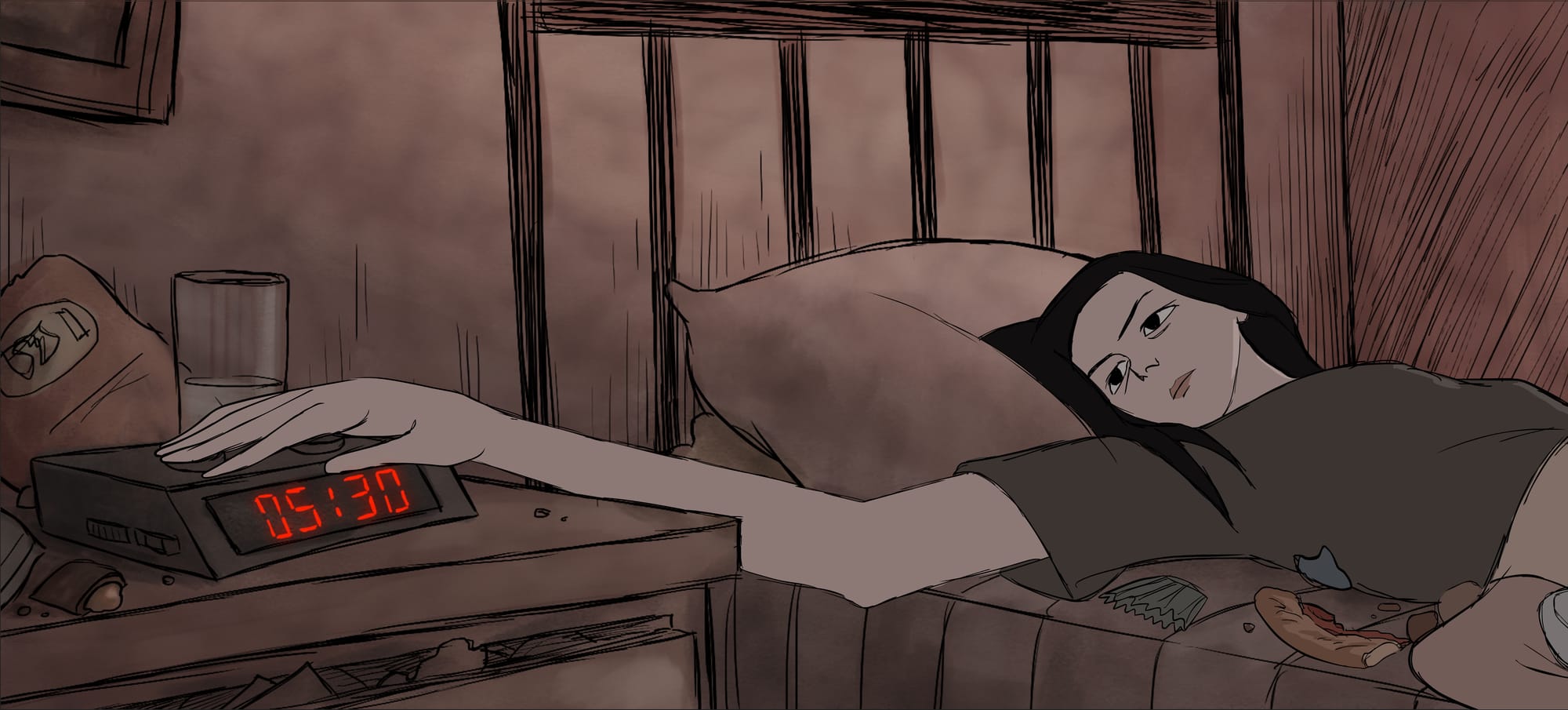
I know that this is something very personal for you. When you're taking these experiences, these feelings, and putting them into a film, into something visual and that you're sharing, how do you feel that impacts you? Does it help you work through some feelings or experiences?
Part of what I felt is that it took me this long to actually put it into the world, so I would have space to be comfortable having people know my story. When I came out of my binge eating disorder, I did make some theatre pieces related to mental health, and some of the parts of the piece related to eating disorders. But I was still in a place where I didn't feel comfortable owning that it was my story. I'd often have other performers tell my story, and we'd share our pieces. I think that having over a decade of space really helped me feel ready. But I will say nobody knew that I was making this movie except my partner and the people working on it. It was so frightening to me up until I posted on Instagram that I got into my first festival. A lot of people in my life came up to me, and they were shocked that I made a movie. Nobody knew, and I was so nervous. I remember I hovered over that post button on Instagram for probably twenty minutes. Because once it was out there... It's so personal that you can't really talk about the film without talking about the fact that I'd gone through it. Then I think after that, it got a lot easier.
The interesting experience that I've had is when I've shown it to people one-on-one. There've been a couple people in my life where they weren't able to make it to a screening, and I watched it with them on my laptop. I get a lot more emotional, and it feels a lot more like my story. Whereas when I've seen it on the big screen, there's a bit of a detachment, and I feel like I'm watching it more visually and more from an artistic perspective, and kind of taking in the audience reaction. In some ways, it becomes its own product, and I'm able to take a step back. But there is something probably very cathartic about it. Maybe it'll take time looking back, now that it's doing screenings around the world, to really absorb it. But I did have an experience at the U.S. premiere at the Atlanta Horror Festival, where an audience member came up to me and said, "is this about a binge eating disorder?" I'm like, yes, I'm so glad you understood, because if you don't read the description, people have come to me with all sorts of interpretations about what the film is. Then she opened up to me and told me that that was something she was struggling with, and that she was so glad I was spreading awareness on it. That really touched me because that is the reason why I made the film, was for other people who are going through what I did and making them feel less alone.
You mentioned having this idea start out as a play. How did you find going from theatre to film, especially animation?
I think what really helped me in creating distance is in the play version, the way I had conceived it, I was going to be potraying myself. I think that's one of the reasons why it never quite took off for me, is whenever we'd go into workshopping, it would become really challenging for me emotionally to work on the material for too long. I think in the container of being in a rehearsal room with Jesse, who was workshopping it with me at the time and another performer, it felt okay. But then, as soon as I got home, I couldn't even look at anything. I couldn't write, I couldn't think about it. So that became a really big roadblock. I thought maybe I'm not ready, and the beauty of doing this as an animated film is that I'm not reliving it. I'd be in a similar way to me watching it in theatres. I kind of forgot it was my story for most of the animation process. I was so in it and going at it from such a director's perspective and a writer's perspective that only when it was done and I showed it to my husband, that I was like, oh, right, this is my story.
Again, very freeing because even in theatre, there's a lot you can do with imagination. I had the vision in the theatre piece of having a screen that would be behind the actors, where you would see a rolling ball of wheat, and you would see some of these same exact images that made it into the film. But why not just make that? I think my idea was more complicated than it actually needed to be, and making it into this short, concise, animated film felt like a consolidation of all these ideas. It was distilled, and it was so much clearer. Then I was able to get a grant. I think that it was all there; I just needed to shave away the fat and then find the core, which was this movie.
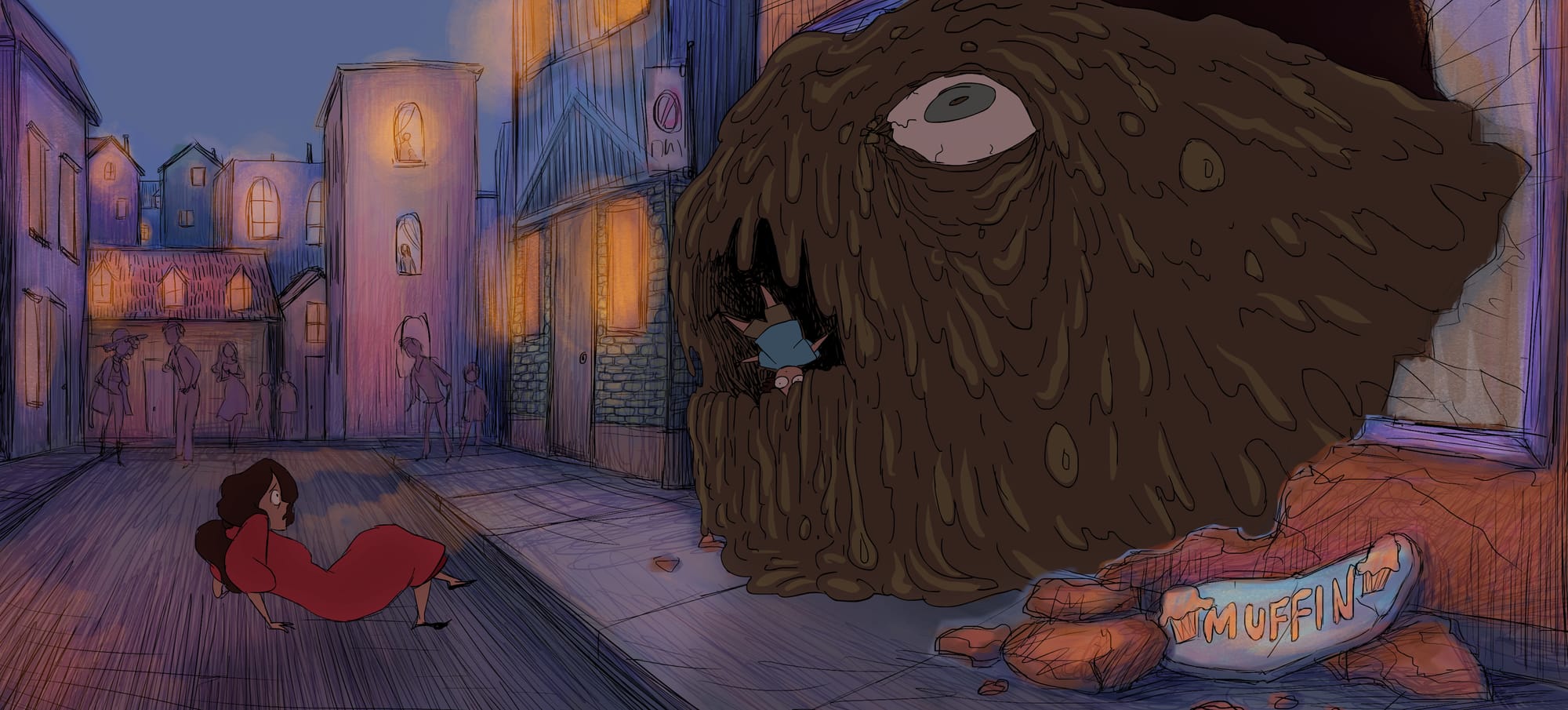
What do you hope for audiences to take away, or feel themselves, when they watch this?
I hope that it makes people reflect on their own relationship with food and body image. Like I said earlier, we do have a lot of unhealthy associations with emotional eating and body image. Even though things have definitely gotten a lot better in the public discourse. I do think that there's a lot of work to do, and I hope this gives people pause and maybe changes the way they interact, especially if you have children or if there's someone in your life who struggles with food. Maybe having a bit of an understanding of what they might be going through and having compassion. A lot of the work that I create is around destigmatizing taboo subject matter. I want to normalize this and bring more awareness to binge eating disorder. I hope that people look it up and familiarize themselves with what it is so that they can be better equipped to not fall into it or to help others in their lives who might be struggling with it.
Our thanks to Ilana Zackon and the rest of the Grain crew. You can learn more about the film on the official website.
This interview has been edited for length and clarity.