Table of Contents
Three Key Takeaways
- Ladybug uses an unexpected tone to confront the common numbness around gun violence in America, inviting empathy rather than despair.
- Daniela Kafshi’s tightly held vision and bold storytelling choices, particularly breaking the fourth wall, deepen audience connection to the protagonist's grief and resolve.
- The film’s selection at TRC Shorts Fest underscores the power of independent filmmaking to spark dialogue on urgent social issues through innovative narratives.
Brooklyn-based filmmaker Daniela Schrier Kafshi returns with Ladybug, a provocative short film exploring grief and justice in the aftermath of a school shooting.
Featuring a standout performance by Emily Shaffer as Ronnie, the film blends irony and comic relief with raw emotion.
Ladybug’s international screenings and accolades—including a Best Director prize—set the stage for its inclusion at the TRC Shorts Fest.
With producers Inés Martina and Alex Kosene, and cinematographer Andres Karu, Kafshi’s creative team delivers a powerful cinematic statement on gun violence in America.

What drew you to make Ladybug? Why this story, and why now?
The day after the school shooting in Uvalde, I wrote Ladybug. I’m a mother and a filmmaker, and the script poured out of me nearly fully formed. The result, perhaps, of a holy sort of fury. I wrote the script, in some ways, as an answer to the question of what do you do with that much pain in a country that seems deaf to your cries. In a country where gun violence is so commonplace, we often ignore it and wait for the next, so we can ignore that one too. With Ladybug, I wanted to do the opposite of what an audience would expect tonally and character-wise for the subject matter. I wanted to make a film that would grab you by the shoulders and make you lean in, not give you the choice to turn away. Because when we can really look at someone that has been touched by gun violence, and connect to the depth of their experience, it allows us to be more empathetic. And when more and more of us are empathetic we can, hopefully, stand together and realize the power we have to demand change. Right now, in this country, seeing people as people – not as news headlines, not as someone else, from somewhere else, who thinks something else – is the most important piece of humanity that we must hold tight to.
"With Ladybug, I wanted to do the opposite of what an audience would expect tonally and character-wise for the subject matter."
What surprised you most about the filmmaking process this time—creatively or logistically? Was there a moment on set or in post that completely changed how you saw the story?
To be honest, I don’t have a great example of anything that surprised me or changed the way I saw the story. Good, bad or otherwise, my vision for this film was pretty tight and firm the whole way through. What surprised me, is just how many people rallied around making this film. Men, women, parents, people of all ages and from all different walks of life and political backgrounds. It showed me in real time that you can’t assume to understand how someone feels about an issue until you ask them. And more people than not want to feel safer in this country.
Is there a moment in the film that feels the most you—something only you could have made?
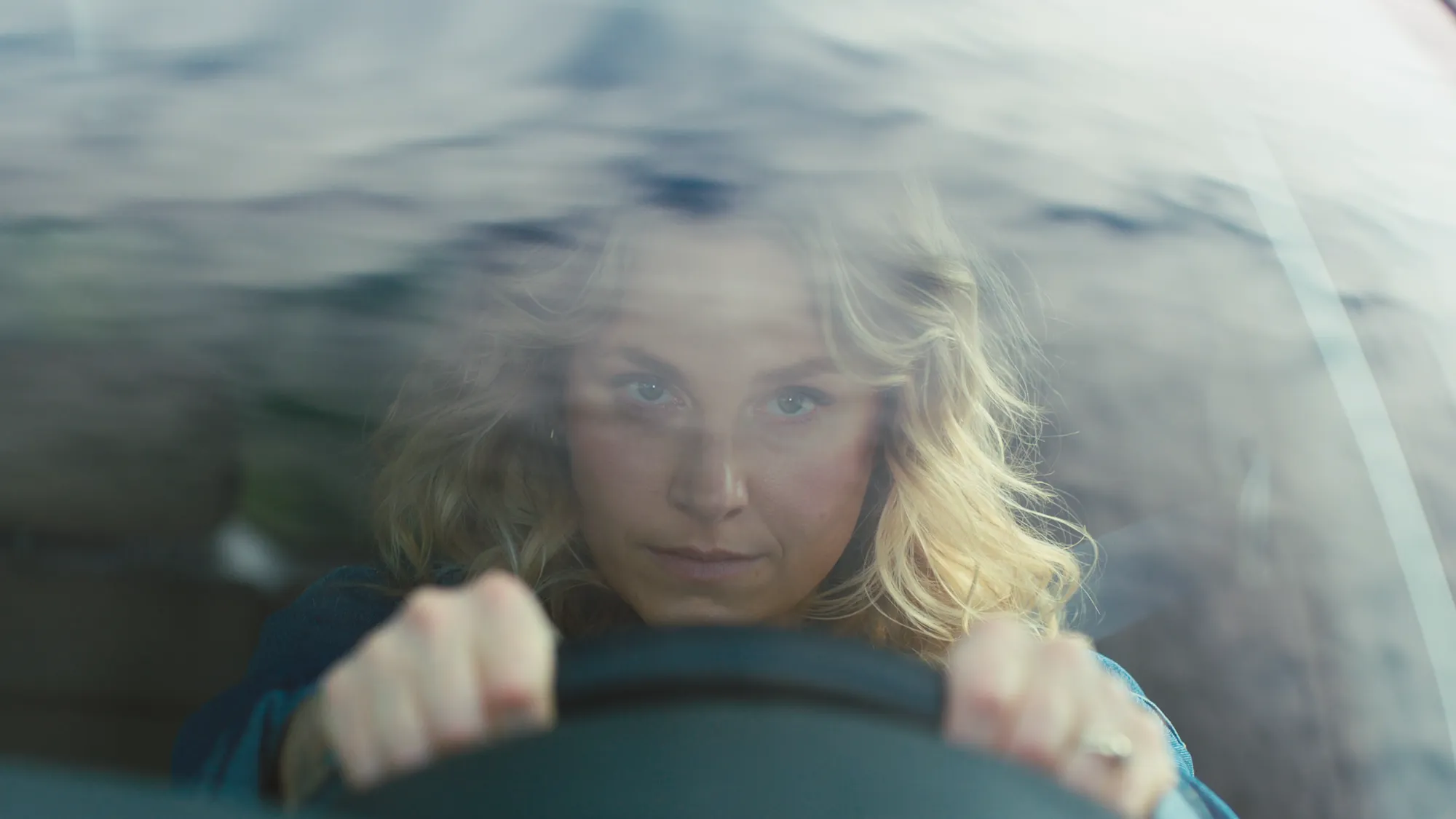
The tone. It’s a strange amalgamation that works, but just so. Emily Shaffer, who plays Ronnie, is brilliant in her ability to walk a tightrope, switching internally and externally with fluid honesty. Without her, I don’t know if Ronnie or the film would work. Tone, to me, also extends to the scoring and music selection in the film, and with those I also wanted to go in a direction that made the film surprisingly playful. Because even if a film is about someone in the depths of despair, about to blow themselves up, you need to have a good time watching that.
What was the hardest creative decision you made while making this film?
The main character breaks the fourth wall and in an early scene in the film, looks directly into the camera and tells the audience exactly what she plans to do that day. Some people felt that was killing the element of suspense in the film. But I trusted that the revelation being stated so cut and dry was central to the entire film’s meaning. The suspense wasn't “what is this person doing”, but “will she do it and how do I as a viewer feel about it?”

What do you hope audiences take away from your film?
So often, we want to turn away from people who have been victimized by violence. We can't look at that level of grief. With this film, I wanted to make the audience feel so connected to Ronnie, that they are almost partners in the journey with her. That is the power of art, it can break down the barriers of otherness. It opens us and can hopefully compel us to do more and do better for each other. Because our similarities are always greater than our differences. Gun violence prevention feels so hopeless in this country, but no matter where we have shown this film – Red state, Blue state – people ache for the same outcome: this nightmare to end. One day, people will realize that in our numbers, change is possible.
"At the core of all my work is a desire to spark empathy and shake up preconceptions."
How has this film shaped or shifted the kind of stories you want to tell next?
The character of Ronnie is deeply real to me. And I care about her so much. I want to continue to create female characters that are complex, contradictory with their own powerful desires too big to fit into narrow expectations. I also want to continue to tell stories about identity, about what shapes us and what we rebel against. Women on screen, in particular, have been historically forced into small boxes of type and I don’t see that reflecting real life whatsoever.
What’s a tool, technique, or resource that really helped you during production?
I did a lot of guided mindfulness meditation on the drive to set every morning. This was truly the most important part of my prep because I was investing energy in slowing down, focusing and trusting my intuition. All things that are really hard to do when I get nervous or overwhelmed. To me, being a director means being a leader that makes sound choices and has the confidence to listen to others and be open to new ideas and solutions. Having that meditation at the start of my day got me in the right headspace.
Independent filmmakers often rewrite the rules out of necessity. What do you think is the greatest strength of independent filmmaking, and how did you lean into that on this project? Is there a lesson or breakthrough you’d share with others navigating this path?
Having limitations – financial, logistical, etc., etc. – is actually an asset of independent filmmaking. It requires you to make thoughtful choices that take your film out of the theoretical and into the possible. At this stage in my career, I have focused on writing scripts with production and post-production in mind. My goal is to make the thing, so I think like a writer AND a producer. How much does this decision cost? If it makes it harder, or impossible, to actually finance the film – I should make a different, more feasible choice.

What does it mean to you to have your film selected for TRC Shorts Fest?
It feels incredible to be included in this line-up of female and non-binary filmmakers with powerful, unique stories to share. Cannot wait to watch the other films in line up. This is such a hard industry, sisterhood and camaraderie in this space can make all the difference and lift us all up together.
"The suspense wasn't ‘what is this person doing’, but ‘will she do it and how do I as a viewer feel about it?’"
Where do you see this film going next?
I would love this film to be a helpful conversation starter for people working in the gun violence prevention space. It would be amazing if the film had a second life as an advocacy tool! Taking on a sad topic but portraying it in an unexpected tone helped me to find a way to bring audiences into a subject they might otherwise avoid – school shootings. Ladybug inspired the idea for a bigger anthology series called “Things We Should Talk About,” which would focus on issues that feel too big, too broken or too sad for us to engage with. It would use humor, surprising genre treatments and unique narratives to tell stories about, well, things we should talk about but usually don’t want to: climate change, authoritarianism, maternal mortality and postpartum, racism – you get it, the list goes on! The series would be written and directed by a collective of filmmakers that would bring their unique vision and experience to all the things we gotta face.
“At the core of all my work is a desire to spark empathy and shake up preconceptions."

Cast & Crew
- Jimmy Chung — Actor ("Tao"); Chicago artist with extensive film, television, theatre, and commercial credits.
For more on Ladybug, visit the film's Instagram.