Table of Contents
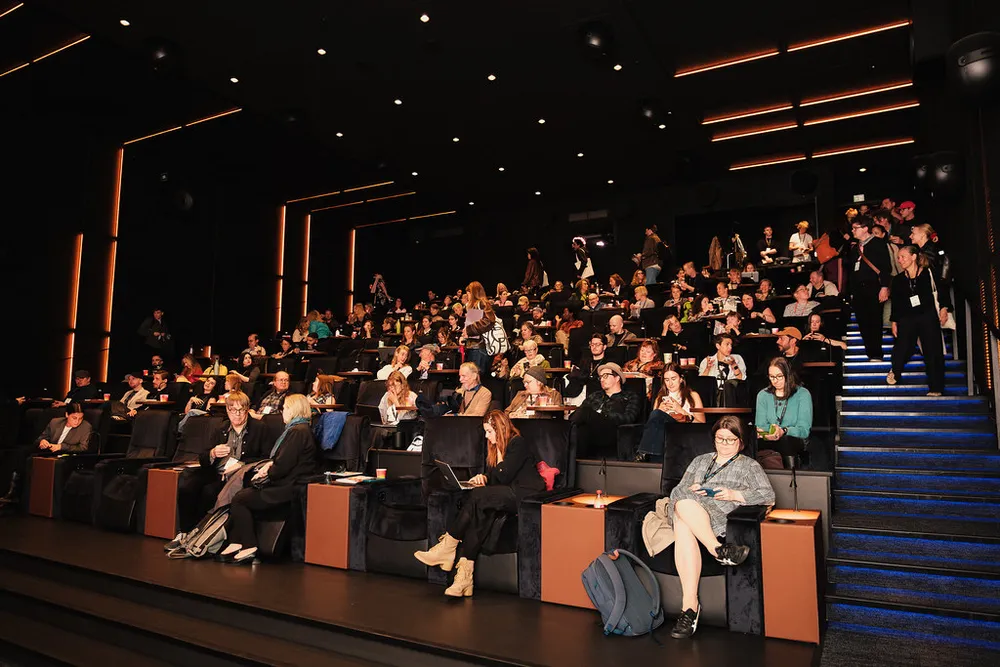
As the lights lowered in the today's sold-out The Mastermind screening, the entire 415-seat theater went still. The film was programmed in HIFF Love and Anarchy’s “Spotlight Selection,” a category designated for “all the hottest, coolest, and most anticipated new films.” This categorization likely stems from director Kelly Reichardt’s strong history with HIFF, having already screened here before. It can also be accredited to the film’s MUBI financing and distribution, a Cannes premiere, and the gentle powerhouse Josh O’Connor coming off the high of last year’s Challengers.
It’s not hard for me to love a gorgeous arthouse film in which a single filmmaker serves as editor, writer, and director, and hopefully we give Reichardt the same props we give her male contemporaries (ie, Mr. Baker). I also love a film that gives the audience what it wants: Josh O’Connor fetching the family’s morning newspaper in boxer briefs and mid-calf crew socks. A huge applause for casting crew Fiona Weir and Chiara Polizzi (who also cast La Chimera). What a treat to see James Blaine Mooney (JB), played by O’Connor, walking around town like a mother goose with two perfectly cast mini Joshes in tow. The British actor, whose roles seamlessly shift from one nationality to another, has had my heart since Italian filmmaker Alice Rohrwacher‘s La Chimera (2023). His performances have not let me down once, despite being on-screen for what I would estimate as 95% of this film.
Speaking of La Chimera, it’s hard not to draw comparisons. If I had a nickel for every time I saw O’Connor playing an introverted art thief in a slow-burn movie, I’d have two nickels, which isn’t a lot but it’s weird that it happened twice. Still, one is not exactly like the other. Whereas La Chimera uses robberies as a smokescreen for meditations on death and the afterlife, The Mastermind distracts us with art heists while quietly point at the political unrest of 1970s America.
The noise of black panthers, a deathly war draft, and raging patriots clashing with hippie activists buzzes in the background with slowly building volume. However, James Blaine Mooney (JB), played by O’Connor, lives as though he is in a completely different timeline. His problems are entirely of his own making. Nobody is pressuring him to borrow large sums of money and plan a dubious art heist of the small Massachusetts town’s local gallery. Though apparently he’ll never admit it, this art school dropout has a big chip on his shoulder, and some abstract paintings to blowup his picturesque home life over.
I appreciate that from top to bottom, Reichardt trusts the audience to discern for ourselves what the movie is saying. Over-explaining is a hot-button issue in recent moviemaking, as the Netflix-ification and 3-screens-at-a-time phenomena have changed some consumer’s viewing habits. The Mastermind does not overstate anything. Even the idiocracy of JB’s Tom & Jerry-esque heist is depicted through various nonverbal clues, rewarding the clued-in viewers with more to chuckle about. However, if a film that asks for your full attention and nothing less is not the vibe you’re seeking, The Mastermind is not the movie for you. Catching some post-screening conversations in Helsinki, I also realized that without an understanding of 1970s American history, the film renders much less accessible.
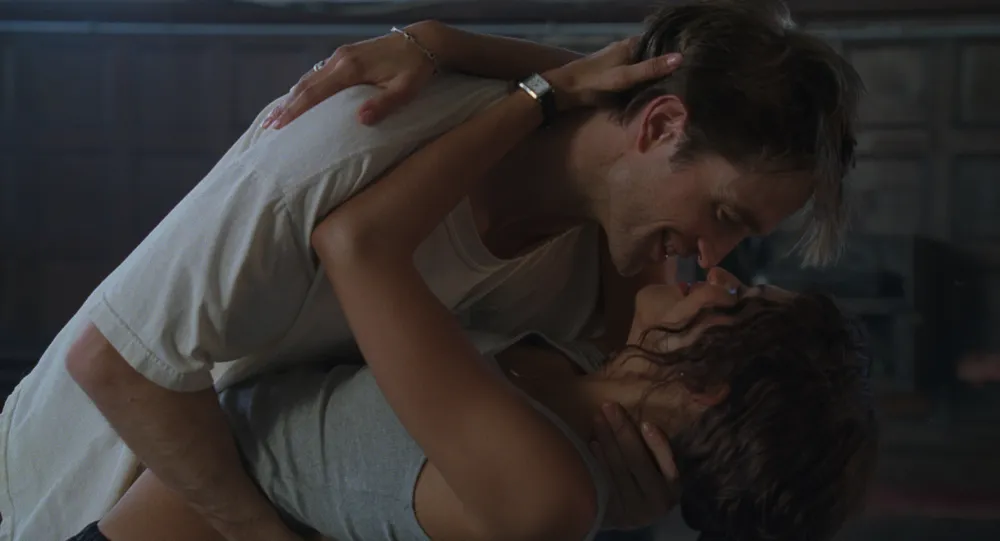
This review would not be complete without some noted admiration for Christopher Blauvel’s cinematography. The slow pace of the narrative is completely balanced out by the richness of every frame. Light and shadows interplay like lace over the soft-edged bodies. Every line and corner intersect perfectly as though they were hand drawn. The academic brick and the crunchy fall leaves, the baby blues, earthy browns and forest greens… it’s undeniably visually stunning. Altogether, a great Autumn watch, with a tragically relevant finale.