Table of Contents
Introduction
Entertainment law can feel like a foreign world to many creatives, yet the film industry relies just as much on legal and business expertise as it does on artistry and creativity. Understanding it is essential to protecting yourself and your work.
To break it all down, here are some digestible lawyer-isms that these top entertainment lawyers practice and preach:

An Actor Killed Abraham Lincoln
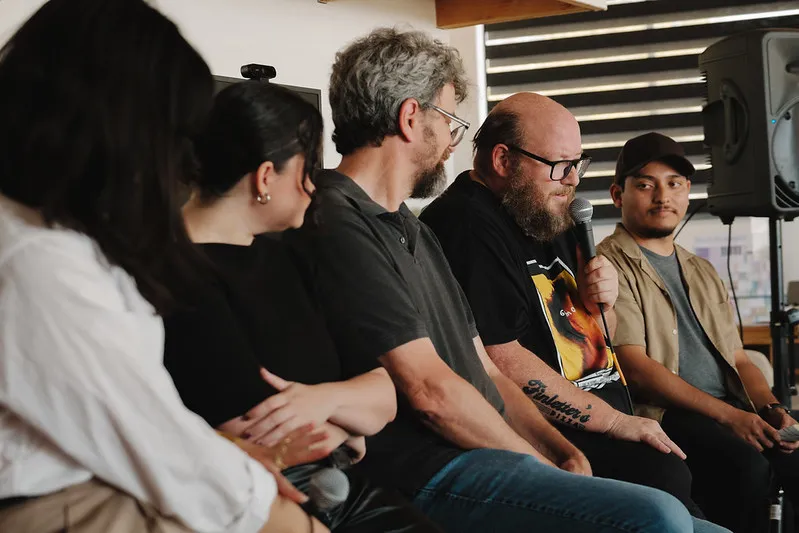
Jeff Cohen came out of the gate swinging with his first cheeky mantra for the audience – one that pertains more specifically to the aspiring entertainment lawyers in the crowd.
"As an entertainment lawyer, you are going to be working with actors. You always must remember an actor killed Abraham Lincoln...who was a lawyer, so be careful. As a lawyer, know that actors are very charismatic, they’re charming, and at any moment, they can snap, and kill the lawyer who is closest to them."
Jeff's humorously blunt first tip expresses the sentiment that as a entertainment lawyer, your job is to look out for everyone else. But your first job is to look out for yourself, especially in a sometimes corrupt, exploitative, and transactional industry.
Where There's a Hit, There's a Writ
This is a common rhyme in the business, meaning that whenever a product becomes successful, it often attracts lawsuits.
In the context of the entertainment business, if a hit film or TV series suddenly draws legal claims over copyright, contracts, or royalties, it is because the project has become widely successful.
To reference a bonus pithy saying that touches on this subject: Failure is an orphan and success has a thousand parents. When you build something and it works, and it's profitable, everybody jumps out of the woodwork to get a piece of the action.
Consider yourself flattered. If you are served a writ, you've built something worthy of litigating over.
No Chain, No Gain
Another rhyme! In this case, “chain” refers to the chain of title, which is the documented history of rights ownership for a creative work. Think of it like a legal “paper trail” that proves who owns what and when.
If that chain is unbroken, it has been continuously assigned from one party to the next with no disputes or missing documentation. In the case of this legal rhyme, it's Kailin Che who explains,
"Without a clear, unbroken chain of title, you can’t sell your creative work. This can lead to a lot of litigation down the road, especially the longer the property has been in existence, and that can affect your ability to build a rhythm of projects."
You can’t profit on your work unless you legally own it through an unbroken chain of title.

Moguls Own Sh*t
It's a fundamental question in entertainment. How do movies make so much money and the executives and CEOs are making $100 million dollars a year, and yet, they're not making a profit.
Hollywood is fantastic at making sure your profit participation is not going to pay off, unless there is a huge battle for it. So the solution, as a creative, is to own something.
As an example, George Lucas. Twentieth Century Fox was financing Star Wars in 1976. When the film was in production, they were tipping way over budget, so as a solution, George Lucas makes a deal with Fox. Instead of receiving his pay as the writer/director, he proposes that he keeps all rights to the merchandising and sequels. Twentieth Century Fox, who were not confident in the film, agree.
That deal clearly worked in Lucas's favor. Roughly 50 years later, he's benefitting heavily from the ownership of his own creative property. If you own something that succeeds to that degree, then you're the bank and you're making the decisions.
Moguls own sh*t. That's why George Lucas was able to sell Star Wars to Disney for $4.05 billion. It starts with asserting your rights and your share in the early phases of your creative project.
Nurture the Tiger
The first rule of show business is that no one knows anything. So it's wise to have humility. As Jeff Cohen, enlisting the help of a metaphor once again, says,
"Show business is a brutal, dangerous, sexy, weird tiger. And you must respect the tiger. You must love the tiger. You must nurture the tiger but never turn your back on the tiger. Because it’s gonna bite you. When you’re at your highest point, when you’re at your lowest point – respect the tiger."