Table of Contents
Introduction
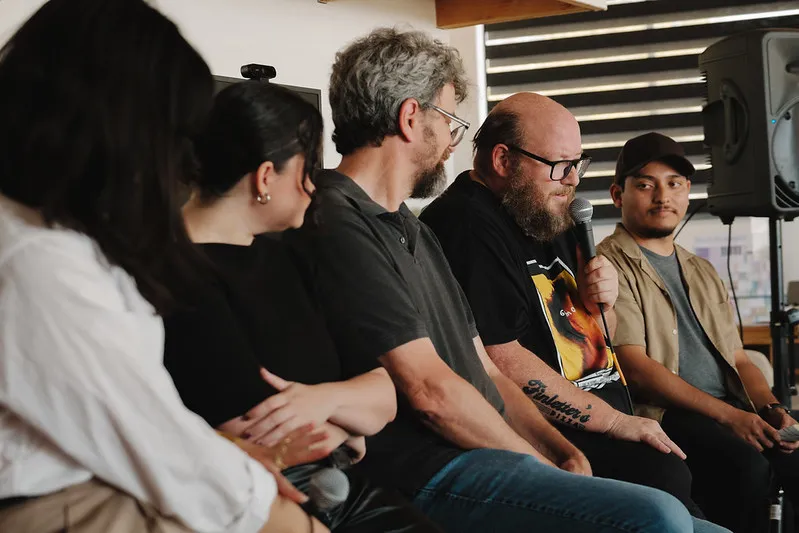
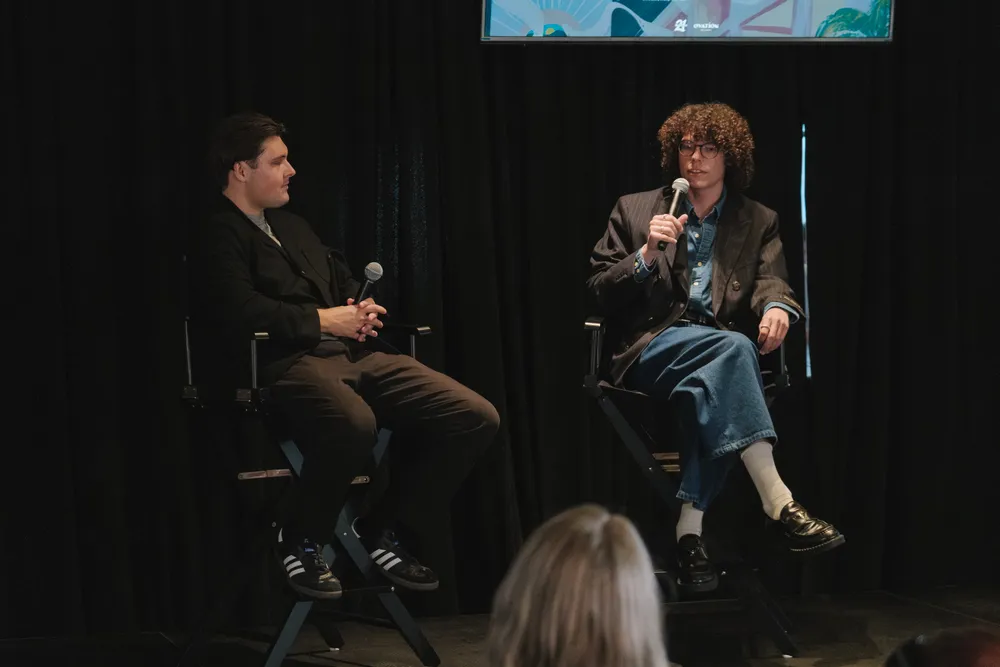
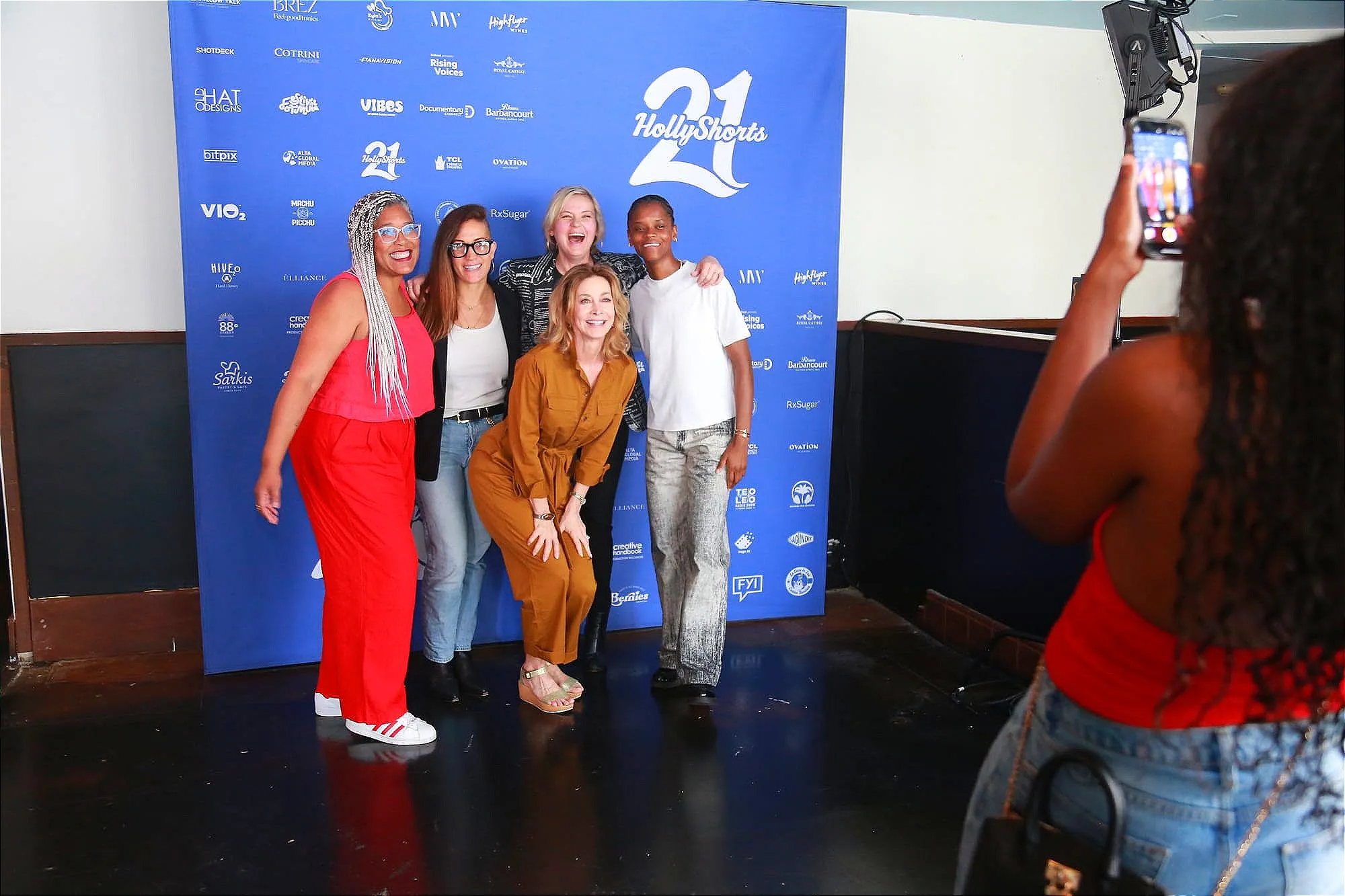
The HollyShorts Film Festival highlighted women behind the camera with a panel moderated by SAGindie’s Darrien Michele Gipson, featuring industry voices Letitia Wright, Kimmy Gatewood, SJ Main Muñoz, Sharen Lawrence, and Ruby Rose Collins.
Gipson introduced the panel by quoting Sinners writer and director, Ryan Coogler, whose claim caused quite a stir in the film industry recently. In an interview with Variety, Coogler stated bluntly:
“I feel that women are better filmmakers than men. Put it on record. I mean it’s true bro, in film school, life, whatever, they’re equipped to do this job in many ways better than us. They’re infinitely more complex than we are. Stronger and sharper. So you know we’re going to get better movies if we have more female filmmakers. The industry would improve. That’s the best thing that I could say about it. They’ve got to be given the opportunity.”
The Problem
Diving into the conversation of industry inequality, the panel turns to the numbers that reflect the uphill climb for women behind the camera.
The first figure shared by Gipson – Last year out of the top 100 films released, only 11 percent were helmed by women.
Upon hearing the stat, the panelists joke that it’s terrible how impressive that number seems in the scope of how low percentages have been in the past.
Secondly – Roughly 50 percent of film school students are women, but by the time they get out of film school, the number that actually get to make a movie drops down to 5 percent.
So the question presented to the panel is: How do we support female filmmakers, particularly those transitioning from student to professional?

Advocacy
SJ Main Muñoz—whose credits include Fear the Walking Dead, SEAL Team, and Pulse—takes the lead on the conversation, emphasizing that advocacy at every level is key to women advancing in the industry. “Which means us being here, being present to help you find your next steps,” she explains. “And to the showrunners—you need to hire female directors, and then you need to hire them again.”
Her passion builds as she continues: “We need a girls’ club. There’s a boys’ club, guys! It exists, and it is strong. Well, we need a women’s club. Too often it’s been, ‘There’s one scrap of bread, I’ll be the one woman to get it.’ – No. We have to share it. We all have to be there together.”
Kimmy Gatewood, director of Disney’s upcoming Descendants: Wicked Wonderland, riffs on Main Muñoz’s women’s club point with a playful mob-boss impression: “Let’s go get some rosé after this, huh?”
Letitia Wright, known for her work in Marvel’s Black Panther and Black Panther: Wakanda Forever—builds on the conversation, noting that her experience on major projects has shaped how she leads her own as a director and producer. “Leadership puts you in a position to enact change,” she says. Reflecting on her collaboration with Ryan Coogler, Wright recalls how strong leaders provide opportunities for others: “I would love to do that one day. And when I do have that position, I can make a difference. But I started with my short film.
On a past project, I was given the opportunity to select my HoDs (Heads of Department), and I said to the studios and producers, ‘Hello! We can’t make a film about two black women without black women. We can’t make a film about women without women. Never about us, without us.’ Being in positions of influence has helped me bring people with me.”
Wright circles back to her directorial debut, Highway to the Moon, which screened in HollyShorts’ Primetime block. She proudly shares how she prioritized women in key roles: “I did put more women in those positions because they were extremely talented. And when push came to shove, it was the women who went the extra mile. I love my men, but they were the ones complaining about carrying cameras up a mountain,” she laughs. “It was the women who pulled their bootstraps up and said, ‘What do you need?’”

Consistency
Sharon Lawrence, Emmy and SAG award nominated actress, adds another pillar of advancing women in the film industry, “You have to make sure that there’s consistency with a career.”
She cites the example of Cindy Holland, former Head of Television at Netflix. Lawrence says, “She started as a post-production supervisor. She got her first job through the message board at Women in Film back in the late 80s, and now she’s brought in to run the television division at Paramount. And she’s notorious for hiring great writers, great show runners, and women. That’s an ethos for her. Orange is the New Black happened because of Cindy Holland’s taste and desire to tell stories about women.”
SJ Main Muñoz echoes this point, stressing how difficult true consistency can be for female directors. She explains that studios often approach inclusion superficially—filling quotas or appearing progressive by assigning a woman to direct only one or two episodes of a series. “That’s when they say, ‘Okay, I’ll give it to SJ,’” she shares. “Well, I’m gonna kick it out of the f*cking ballpark. But then the next time they’ll say, ‘Well, but I want to work with Jerry again. I like Jerry. I’ve been working with Jerry for 45 years.’ So I move on to the next show.”
No matter how strong the work is, Muñoz notes, women are rarely granted the same repeat opportunities as their male counterparts. She expresses that some of the best female directors you’ve ever seen only get one episode from each project, stating, ‘There’s so much politics going on behind the screen, that we need to have new standards for the situation we’re dealing with.’”
Mentorship
Answering the question from a place of personal experience, short film director Ruby Rose Collins emphasizes the crucial role of mentorship in sustaining women’s careers in the industry. “I’ve been lucky enough to work with a phenomenal range of women directors,” she shares, “and that has helped me learn how to exist confidently and navigate changes with integrity.”
Kimmy Gatewood adds a practical perspective: when approaching a potential mentor, it helps to have something tangible to share—whether it be a short, or even a piece of written work. Without that, she notes, “it’s hard to help you.” Something concrete not only reflects who you are as a creative, but also signals to a mentor how your vision might align with theirs.

Directorial Advice
SJ Main Muñoz, who has directed numerous male-dominated shows, shares insights on earning trust as a woman in leadership. On large projects, she explains, some men may initially be standoffish. “But they know I’ve been vetted, so they have to give me a chance,” she says.
Still, the first day on set can be a psychological minefield. “Do I get tested? Constantly, guys. The first day is a series of tests,” she explains, “Everything needs to go right off your back.” To meet those challenges, she outlines four rules for success on day one:
- Prove you can “make the day” – finish all planned shots and scenes on schedule.
- Demonstrate creative vision that results in cinematic, compelling work.
- Foster an environment where the crew enjoys themselves and has fun.
- Make every team member feel their voice is heard.
If you can do those things, your team will trust you, and day two will be way more fun. She closes with her golden rule: “Don’t sweat it. Keep moving forward. The people that survive are the ones that say, ‘I’m not leaving town.’”
Conclusion
The panel ends on a unifying message delivered by Sharon Lawrence: “A yes is something you can give each other.” In a business defined by approval, collaboration, and waiting for that one opportunity, Lawrence reminds the audience that sometimes you can be the one to believe in someone else.