Table of Contents
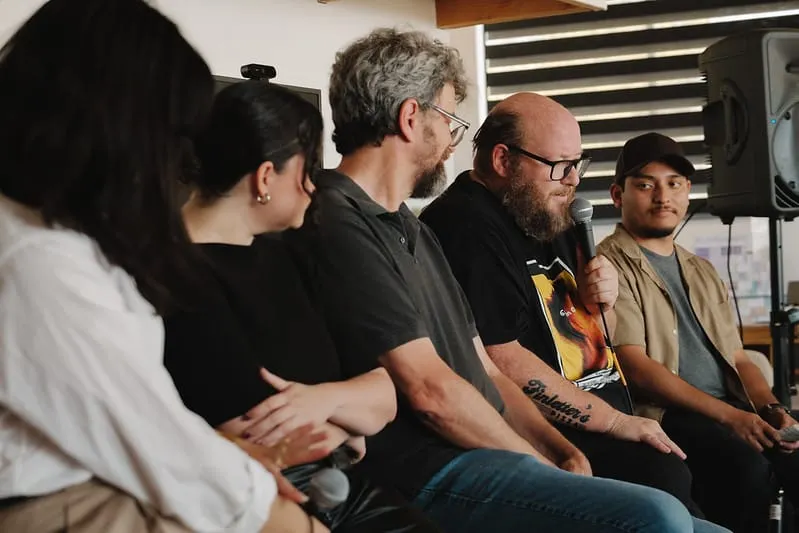
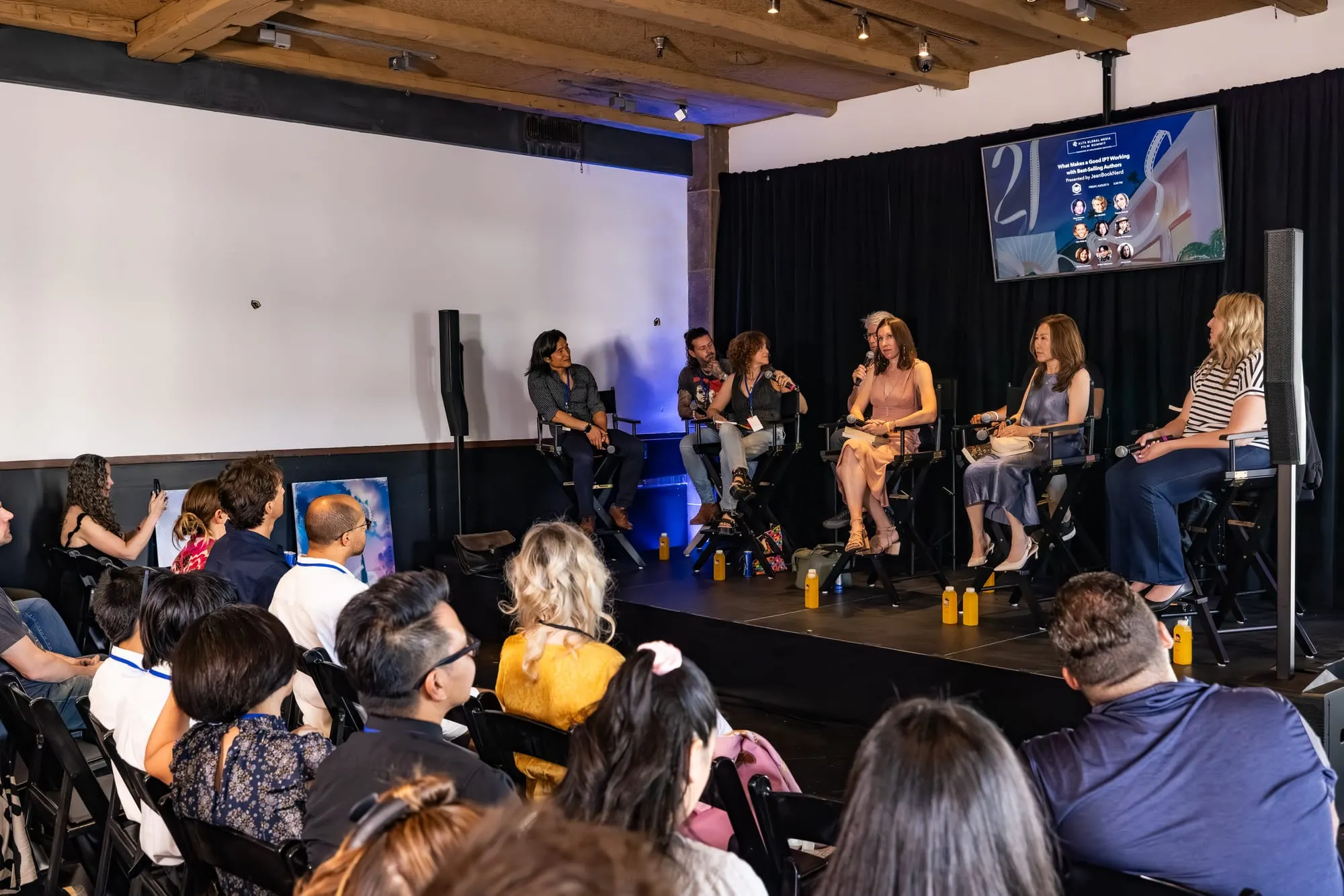
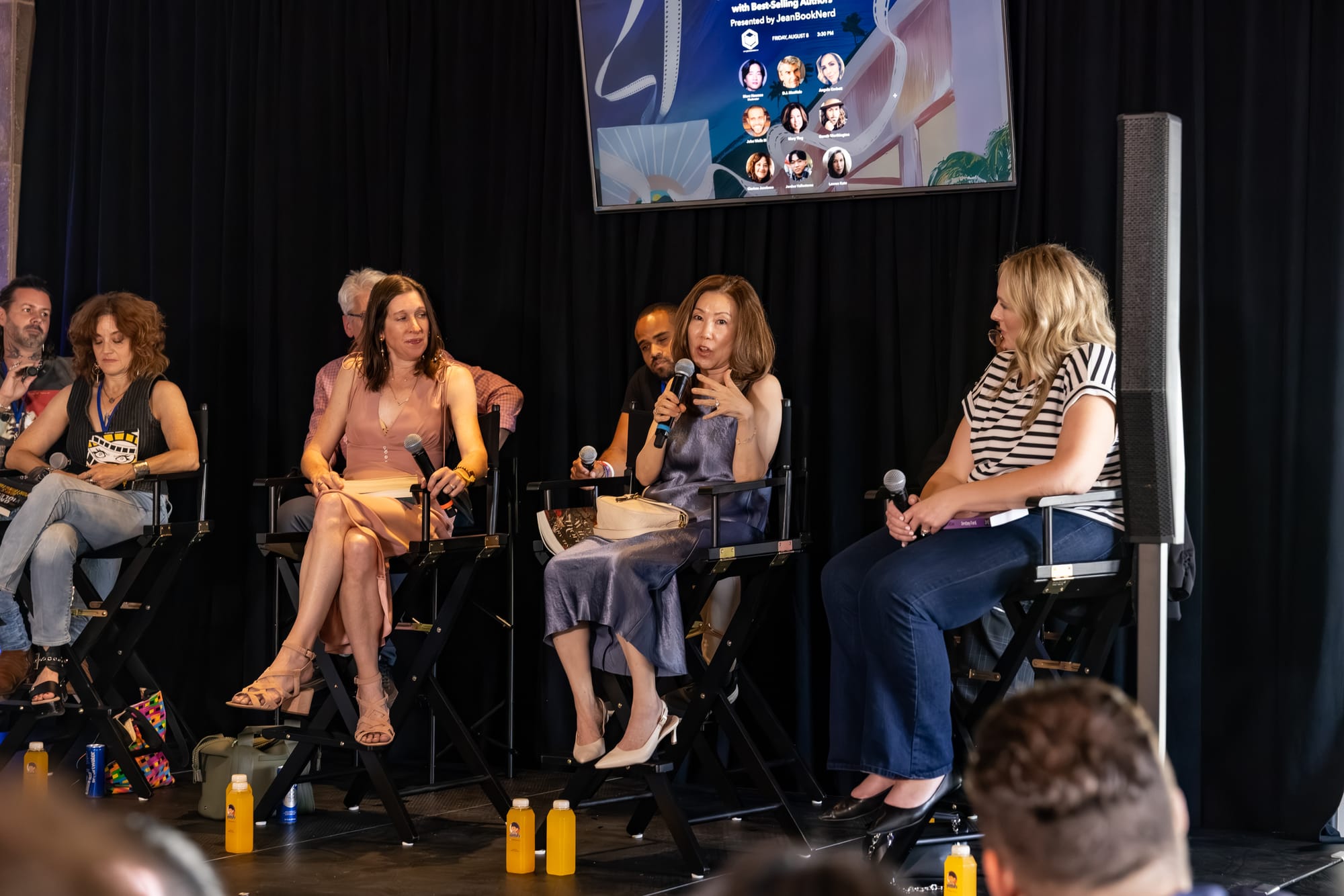
This Hollyshorts panel's lineup of writers was stacked with professionals who have worked in both film writing and literary writing, and cover genres ranging from romance and high fantasy, to YA and children’s books, as well as books offering film industry insider advice.
More and more, major studios are turning towards IP (Intellectual Property) to ensure built-in audiences for their big budget projects. In this new age, many filmmakers and writers are striving to create stories in other mediums to prove their stories’ potential for fandom and expansion.
When the panel of best selling authors were asked the million dollar question, there were plenty of varied takes and advice to go around.
So… what makes good IP?
Gareth Worthington
Author, Children of the Fifth Sun, It Takes Death to Reach a Star
"I am the founder of a media company which specifically publishes books for adaptation to screen. I’m looking for depth. I’m looking for something to mine. I love scripts, but they don’t have the depth that comes with novels that give you the ability to mine. So for me, what makes good IP is depth. "
Clarissa Jacobson
Filmmaker and Author, I Made a Short Film, WTF Do I Do Now?
"My expertise is in short film and marketing it. What I think makes a good IP as a screenwriter and what I’ve gotten hits on is something that has a really strong hook."
Mary Ting
Author, When the Wind Chimes, Isan, From Titans, Always Be My Baby
"I think what they’re looking for currently is something that is more grounded, not really high fantasy, because like, I’m like, 'Hey! I’ve got 55 books! I have fantasy! Dragons!' - No, that’s too much. So, something that has a heart that’s going to capture the audience and yet is grounded and contemporary.”
Angela Corbett
Author, The Devil Drinks Coffee, Devilishly Short, Eternal Starling, Withering Woods
"It depends who you’re working with. I have worked with some producers who want that big vision. They want the outline. They want to know everything before they start making this into a a film, a TV series.
I have a friend who is an award winning screenwriter and she said something interesting. She adapts a lot of novels into movies or TV series. And she said one thing she looks for are scenes in a novel that can be easily condensed. As a writer, I want to give details, I want to expand the scene. And she said, for someone who’s watching a TV show or movie, you don’t have their attention very long.
A scene really needs to be shorter than two minutes. So, that kind of changed the way I think about writing scenes, so I write things that can easily be taken by a screenwriter and condensed down."
D.J. MacHale
Author, Screenwriter and Director, Morpheus Road, Pendragon, The SYLO Chronicles Trilogy, Are You Afraid of the Dark?
"Everything is IP. I mean, I could sit here right now and write a haiku and that’s my IP. So the question is: What do you want to do with your IP?
What I’ve experienced with pitching shows and movies nowadays is that in today’s environment everybody wants something that’s going to last a long time. So you could have a really wonderful story and it’s a standalone and that’s fine, that’s good, too. But it might not exist beyond that.
Even when you’re pitching a series, they’ll say, 'Okay that’s a really good first episode. Where’s that going? What’s going to happen with these characters? What other conflicts are they going to get involved in?' So when I pitch a new series, I have to outline the entire season. Not in huge detail, but just enough to say, okay – where can this go?
Besides being good – it’s got to be good – it also has to have legs.
Where is it going to go beyond this one standalone thing that we – when I say 'we' I mean studios, streamers, what have you – that we can then continue to capitalize [on], and make money, and make a game out of it, and make graphic novels out of it and beyond. So legs is my answer."
Lauren Kate
Author, Fallen, The Spirit of Love, What’s in a Kiss?, By Any Other Name, The Orphan’s Song
"Something that can be summed up really clearly and really compellingly in like two sentences, that’s where you’re off to a good start.
And then after that, a suggestion of immense possibility and expansiveness. We’re talking about legs, we’re talking about depth. It’s about what else can we do with the world that’s been created in the book. What more can be discovered?
A lot of times I think it’s like great auxiliary characters. You know, when you’re writing love stories you have the core two, sometimes three if you’re doing a love triangle, which I always am. But then who else is there? What kind of subplots and backstories can come out of this to give longevity across different platforms or different seasons?
You have to be able to look beyond what’s on the page. What’s suggested by the page and what’s between the lines. What’s the story there? Is there enough there?"
John Wells III
Author, The Last Angel Warrior, The Heir of Ambrose, The Invisible City, Kindred Kingdoms
"Gee, I’d like to know myself. I’ll add relatability. I think people want to see themselves. We create things, we find tropes and think about how we can do it differently, but find things that people enjoy and put that up there.
I loved fantasy as a kid. I was the kid who was lost in a book. The problem was that I didn’t see a lot of fantasy heroes that looked like me. I mean, aside from maybe one or two, I always saw the sidekick or the best friend, or the comedic relief, or the villain, but not the hero in the story.
So I wanted to write a story that had characters that looked like me, and as I became a teacher, I wanted to write stories that had characters and heroes that looked like the kids I saw.
I had an opportunity to visit a school a few years back and I was talking about books, and a kid came up to me and after I had read from my book – I think he’s probably about fourth grade – he came to me and said, ‘Mr. Wells, can anybody write a book?’ And I said, ‘Yeah, anybody can write a book.’
I expected him to scatter off. He stuffed his hands in his pockets, scuffed his foot, and looked up at me real serious, and said, ‘It doesn’t matter how old you are?’ And I said, ‘No.’
And he didn’t leave again. He did the same thing. He looked down, scuffed his foot and with the most earnest voice he said, ‘Mr. Wells… even me?’ and I looked at him and I said ‘Especially you.'"