Table of Contents
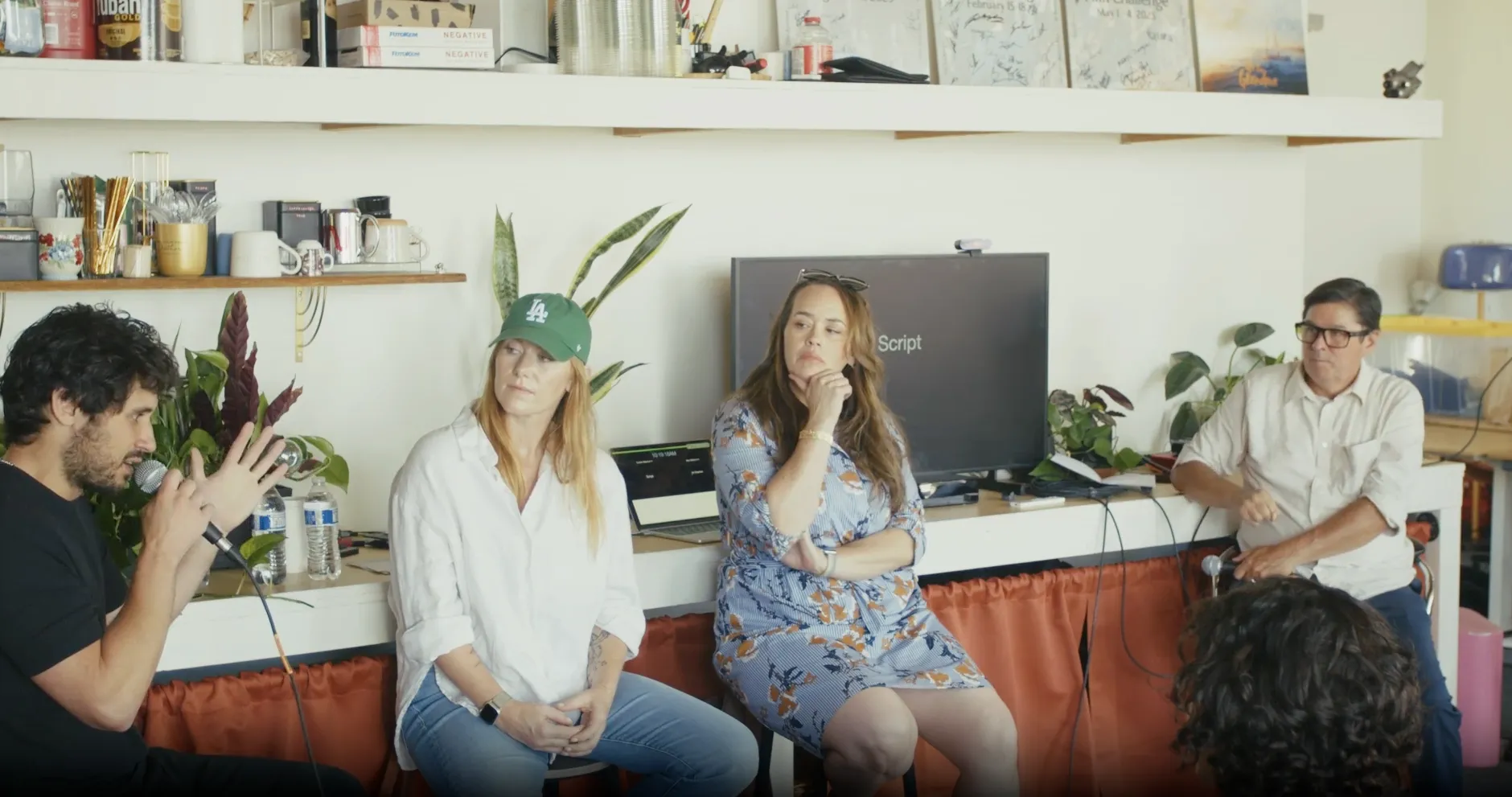
In the panel discussion titled “Three Things: The Three Keys to Cinematic Quality,” filmmakers Cate Carson (The Plumber), Mitchell Abraham (music-video director), DP Sarah Pierpont, and John Parenteau shared how to create striking films on limited budgets. Their conversation focused on concrete, repeatable tactics across script, art direction, cinematography, locations, and post.
Start With The Script — Design From Constraints
- Write to the limits. Cate explained she wrote The Plumber specifically to minimize cast and crew (about eight people total) and to be producible under pandemic restrictions. Start by asking: What can I realistically film with my available people, locations, and time?
- Work backward from the production constraints. Identify the largest logistical pressures (number of actors, location complexity, safety/permitting) and rewrite to avoid costly solutions.
- Be honest with page count. Shorter, tightly focused scripts (Kate targeted ~6–7 pages for a short) reduce shooting days and expense while making the story sharper.
Quick script checklist
1. Identify the essential characters and scenes. Cut the rest.
2. Note which scenes require permits or large crowds and consider alternatives.
3. Make the story visually compact — small objects, recurring props, or a single recurring motif can communicate a lot.

Art Direction — Small Budget, Big Impact
- Spend time aging and detailing instead of buying everything. Kate and the panel emphasized prop houses and selective rentals (key pieces) plus DIY aging: staining curtains, wire-brushing surfaces, creating patinas, and reusing crates and set pieces across scenes.
- Repurpose rented items to appear in multiple contexts. A few well-chosen, rented pieces can populate several scenes if repurposed artfully.
- Location scouting is part of production design. Cate found a burned house that already had character and negotiated a favorable rental — find locations with built-in texture.
Art-direction tactics that cost little
- Rent one or two period/character items; age the rest yourself.
- Use prop houses for “hero” items, DIY everything else.
- Recruit friends for a short workshop (aging props, sewing, painting) — small favors add up.
"Motivate everything. If you're putting a drone shot or a spaceship in the frame, it should serve the story, not just look cool."

Locations — Think Outside The Big City
- Go where permits and interference are minimal. Mitchell described how shooting out of Los Angeles (sand dunes, high-altitude locations) allowed much more freedom with small crews.
- Scout at the time-of-day you’ll shoot (especially for night exteriors). Sarah scouted streets in daylight and again at night to choose existing fixtures and plan minimal, strategic lighting.
- Be nimble. Cate rewrote location needs to fit LA spaces that could pass for Warsaw in her period film, leaning into texture and localized details to sell the world.
Cinematography — Plan Shots That Do Narrative Work
- Define the purpose of every shot. Sarah stressed asking: “What is the point of this shot? What emotion must it convey?” If it doesn’t advance story or character, you likely don’t need it.
- Use the environment to tell the story. Sometimes a wide frame that makes the character tiny in a large night sky says more than a series of close-ups.
- Field-of-view and depth-of-field are cheap production value tools. Shallow depth-of-field can hide limited backgrounds; wide shots establish scale without complex set dressing.
- Choose cameras and lenses with intention. For low-light night work, Sarah tested cameras to pick one with strong low-light performance and planned post color work with a collaborator.

Simple DP tools and workflows (low cost)
- Previs/animatics: Use apps like Previs Pro to visualize shots and communicate with the director and DP. The panel recommended creating a simple animatic to align tone and beats.
- Location visualization: Cadre / Artemis-style apps let you simulate lenses, aspect ratios, and framing on a phone during scouting.
- Shot Deck & Shot references: Use image-board tools to build a common visual vocabulary with directors and departments.
Camera Movement And Intention
- Movement must be motivated. Don’t default to handheld because it’s easier. If you shoot static (a la Deakins-style compositions), design the frame like a painting; if handheld, use it deliberately to convey panic or disorientation.
- Avoid “shooting a person against a wall.” Pivot the camera, create depth, or use shallow DOF to give dimension to small spaces.

VFX, Practical Tricks, And “Selling” Big Moments
- Use atmosphere, distance, and silhouettes to sell VFX. Mitchell advised burying CGI behind haze, particles, or distance and compositing practical elements — silhouettes or models — into the scene.
- Use small practical models or sourced footage when possible. Cate used a model truck and licensed or repurposed archival footage (lightly enhanced) rather than trying to craft a full CGI sequence.
- Keep VFX minimal and story-focused: establish the world with one or two strong moments, then let practical photography carry the rest.
Post-Production — Plan For It, But Don’t Over Rely On Fixes
- Collaborate with colorists and editors early. Sarah planned to lean on a colorist to shape low-light footage she purposefully captured, understanding what could be fixed or enhanced in post.
- Avoid planning coverage as a crutch. Sarah argued that heavy coverage often masks pre-production indecision; if you do your prep, you can film what you need precisely and spend less time (and money) fixing things later.
- Make an animatic/previs to guide edit and photography — it saves time during shooting and gives editors a clear target.

Post checklist
- Confirm colorist/editor availability and discuss expected deliverables before shooting.
- Export camera tests and dailies early so post collaborators can prepare LUTs/workflows.
- Use minimal, tasteful VFX; plan for compositing needs (plates, tracking markers) on set.
Crew, Favors, And Realistic Budgeting
- Many low-budget shoots rely on favors, discounted rates, and multi-role crew (producer as DIT, director doubling as production designer, etc.). The panel was frank: that’s common, but not the same as paying union or professional rates.
- Stagger prep staffing. You rarely need every person on every prep day — bring people in only when their work is required to avoid unnecessary cost.
- Be careful when comparing budgets. Public myths about “$5k classics” often omit deferred payments, family loans, or significant favors. Count sweat equity honestly.
Final Practical Tips From The Panel
- Previs Pro, Cadre, and Shot Deck: learn one visualization tool to communicate shots.
- Scout at the time you’ll shoot and plan around existing fixtures (streetlights, signs).
- Age props, choose a few rentable hero pieces, and DIY the rest.
- Make every shot serve story; minimize gratuitous coverage.
- Build a small list of key shots and commit to nailing them rather than capturing everything.
Where to watch the work mentioned
- Cate Carson (The Plumber): catecarson.com
- Mitchell’s music video (Aerosol Jezus — “Cozey”): available on YouTube
- Sarah Pierpont’s work (including Juliet): sarahpierpont.com; some films are on festival circuits and may be available later online
Low-budget filmmaking is largely a planning and collaboration problem — not just a gear problem. Script tightly, design smart, scout proactively, choose shots with narrative intent, and use simple VFX and grading to enhance what you already have. Constraints force creative decisions; use them to tell focused, cinematic stories.