Table of Contents
Three Key Takeaways
- John Riva’s Murphy’s Ranch draws from real-world history, exploring a hidden Nazi sympathizer compound in the Santa Monica Mountains.
- Working with legally blind actor Lee Pugsley brought crucial authenticity and a fresh perspective to the film’s portrayal of underrepresented communities.
- The film is a proof of concept aimed at building momentum toward a feature-length expansion, blending grounded suspense with horror and folklore elements.
John Riva’s Murphy’s Ranch, an official selection at HollyShorts 2025, is a grounded thriller that blends suspense with speculative fiction rooted in real history.
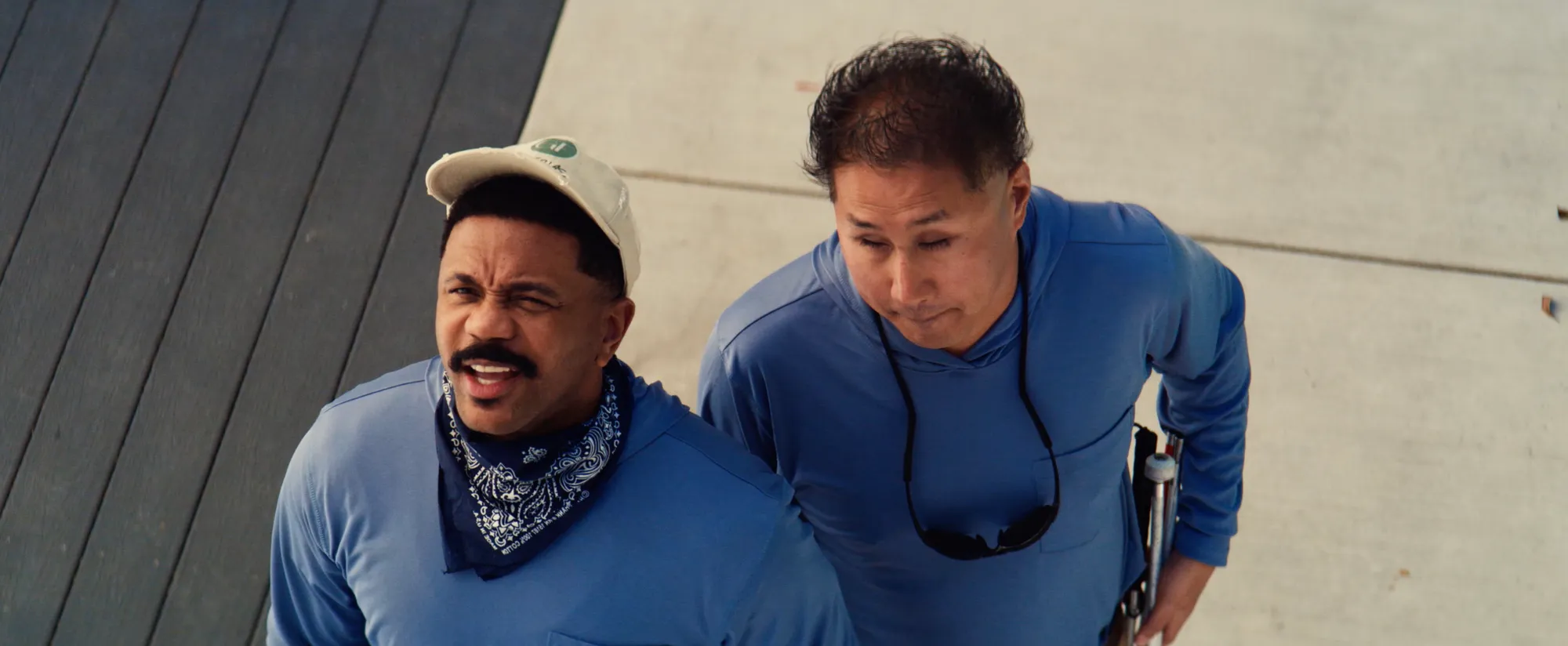
The film stars Hosea Chanchez, Lee Pugsley, Edward Fletcher, and Jack Doke, with Pugsley’s portrayal of a legally blind character providing a uniquely authentic voice. Riva’s short explores hidden truths and unlikely heroes, confronting a chilling Nazi cult lurking in the Los Angeles hills.
Q&A Interview
What drew you to make this film? Why this story, and why now?
I’m making Murphy’s Ranch because it speaks to something deeply personal and urgent. The story is loosely inspired by a real location in the Santa Monica Mountains near where I grew up—a place I used to hike as a kid. Along the trail were the eerie ruins of a 1930s Nazi sympathizer compound, known as Murphy’s Ranch. The idea that something so dark could exist in our own backyard haunted me. As a storyteller, I’ve always been drawn to the hidden, uncomfortable truths buried beneath the surface of American history. With this film, I wanted to confront that darkness through genre—and tell a story where unlikely heroes aren’t just caught in the crossfire, but rise up, take initiative, and fight back.
“I’ve always been drawn to the hidden, uncomfortable truths buried beneath the surface of American history.”

What surprised you most about the filmmaking process this time—creatively or logistically? Was there a moment on set or in post that completely changed how you saw the story?
To be completely honest, I had never worked with an actor who was low vision and legally blind before this project. There’s a common stigma that it might be a challenge—but in truth, working with Lee Pugsley was one of the most rewarding and essential parts of the process. His presence and performance became core ingredients in the “secret sauce” of our short. I genuinely can’t imagine this film succeeding without him. Lee brought not only authenticity, but a perspective I hadn’t anticipated—helping me better understand his character and ensuring the representation felt real, accurate, and empowering rather than tokenistic. He elevated everything.
“Working with Lee Pugsley was one of the most rewarding and essential parts of the process. His presence and performance became core ingredients in the ‘secret sauce’ of our short.”

Is there a moment in the film that feels the most you—something only you could have made?
That’s a tough one. But I’ve always been a fan of opening shots that come full circle into a powerful closing image. It’s such a satisfying way to bookend a story. And honestly, one of the biggest creative luxuries on this project was working with my composer—who also happens to be my best friend. He really understands how to make something feel uniquely “me.” I told him I wanted that "Lethal Weapon", LA-in-the-‘90s vibe, (which is very much me...), and I think we nailed it.
What was the hardest creative decision you made while making this film?
A lot of the tougher choices came during post-production, especially after digesting all the feedback from our initial test screening. Once we started noticing similar notes popping up, we knew we had to take action. That led to some significant sequence changes. We realized we were giving away too much, too soon—so we pulled back and decided to hold the tension and key information until the climax. It made a huge difference in the pacing and overall build of the story.

What do you hope audiences take away from your film?
Murphy’s Ranch is a grounded thriller with horror elements, made for people who appreciate suspense, folklore, and speculative fiction rooted in real-world fears. I hope audiences walk away with two things: first, a desire to see more of the story unfold in a feature version, and second, a deeper awareness that the film is inspired by a real place with a disturbing history. It’s also important to me that the film highlights communities often underrepresented in genre storytelling, and shows them not as victims, but as the ones who take action and fight back.
How has this film shaped or shifted the kind of stories you want to tell next?
My favorite films span across genres and eras. I love pulling from different styles of cinema while maintaining a unified tone that feels true to the story I’m telling. This particular project helped me better understand the mountain I want to climb next—which is the feature. It clarified not only the kind of stories I want to tell, but how I want to tell them: grounded, atmospheric, and layered with meaning beneath the thrills.
What’s a tool, technique, or resource that really helped you during production?
We used an early model of Strada—an alternative to cloud-based software that allows multiple parties to share and download footage and files. It was a huge asset during post-production, but it also came in clutch during principal photography. Because it’s such an organized platform, we had immediate access to our dailies, which made it easy to check continuity and confirm that we had the shots we needed. If we had to do a quick pickup or reshoot, Strada helped us move fast and stay efficient.

Independent filmmakers often rewrite the rules out of necessity. What do you think is the greatest strength of independent filmmaking, and how did you lean into that on this project? Is there a lesson or breakthrough you’d share with others navigating this path?
“I think the greatest strength of independent filmmaking is the spirit of collaboration.”
Most of us are here not just to make something great, but to learn, grow, and build our careers. Since indie filmmaking often comes with conservative budgets and lower rates, it’s even more important to foster a healthy, respectful atmosphere on set—one where people feel encouraged to ask questions, try new things, and gain real insight. I love it when someone wants to shadow me or when a crew member takes the time to explain why they made a specific creative or technical choice. Those moments turn a production into a learning experience for everyone involved, and I think that’s a huge asset in the indie community.
What does it mean to you to have your film selected for HollyShorts?
It’s such a great honor. I’ve had the privilege of screening work at HollyShorts for the past three consecutive years, and each time it’s been a rewarding experience—meeting new creatives while reconnecting with familiar faces from past festivals. I especially love that it takes place in my hometown. There’s something really special about a festival that not only celebrates independent film but does so in the heart of Hollywood, at such an iconic venue. It truly captures the spirit and legacy of this city.


How do you hope being part of HollyShorts will shape the life of this film?
Honestly, I just want eyes on this thing—and HollyShorts is the perfect platform to make that happen. Every year I’ve screened here, the theater has been packed. It’s an incredible opportunity to share the film with an engaged audience, connect with fellow filmmakers, and hopefully spark interest in where this story could go next.
Where do you see this film going next?
Absolutely—the feature is the next step. I’m currently in the middle of a rewrite, and the process of making the short has inspired some really welcomed changes to the larger story. This screening is our world premiere for the proof of concept, so the goal now is to build as much momentum and awareness as possible as we move toward the feature.
“At the core of all my work is a desire to help people escape reality and gain a new perspective, which they can then bring back to their lives."
Cast & Crew
- Hosea Chanchez
- Lee Pugsley
- Edward Fletcher
- Jack Doke
- John Riva (Director/Writer)