
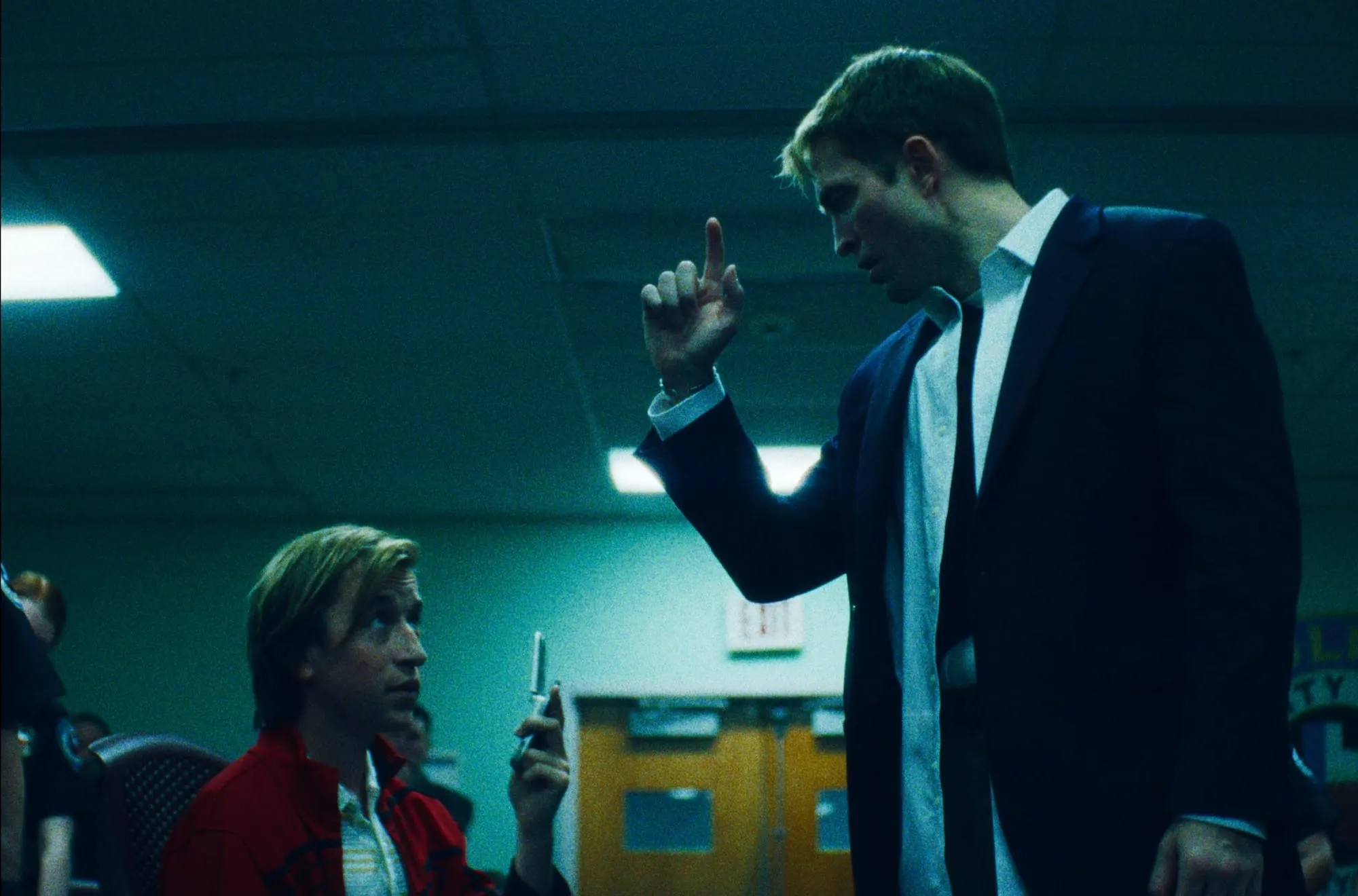
Primetime came out on a month ago on September 25th and gives us a dramatized look at the behind-the-scenes of the popular show To Catch a Predator. Robert Pattinson’s 2026 can be summarized as an almost psychotically successful year, from The Odyssey, The Drama, Dune, Part III and now, Primetime. Pattinson takes on the role of the protagonist, Chris Hansen. But there are other things that are attracting viewers to the theatre. One of them being Phoebe Bridger’s acting debut as a key member of the Dateline NBC film crew, as well as it being the directorial debut of a narrative film by Lance Oppenheim.
Going into this film, I had a lot of questions. How much of this film would be focused on the show? How much would be focused on the effect the show had on Hansen? How would Hansen's affair play into the narrative and how would Oppenheim put all of this into a fluid film?
To say the least, I was thoroughly impressed by Oppenheim’s creation.
To Catch A Predator aired in November of 2004. It was one of the first crime shows that gripped the United States. Now 22 years later, Americans watch pedophile stake-out videos online and the average person can almost be a vigilante. But To Catch a Predator began to normalize this idea of a vigilante. It was both journalism and a type of justice that the average person could seek out.
This film isn’t just about the way that Americans consume, report, and witness crime, it's also about Hollywood. The people that make a show like To Catch a Predator. Hollywood, with all its vulgarity, is embodied by Andie Bender, who's played by Merrit Wever.
In an almost contrarian manner, the film works as a debut for Bridgers and Oppeneheim but a veteran space for others, like Pattinson. Bridgers plays Del, a voice actor that helps to lure in predators via telephone and email. Del helps to coach Dan Plum, the new actor joining the Dateline show, played by Skyler Gisondo. This is one of Gisondo's first heavy weight roles after appearing as features like The Amazing Spiderman and Booksmart.
Embed from Getty ImagesOppenheim chooses to put the viewer, not in his directorial chair, but on set of To Catch A Predator. Whether giving them a view of a quad camera shot or showing the point-of-view from the green room on set. Now that the film has been out for around a month, it is safe to say that viewers have voiced their opinions. The film has an 86% on Rotten Tomatoes , but has received some negative feedback from viewers.
A review that caught my attention seemed less than pleased with the fame of certain cast members:
"I see the artistic vision of the movie... but it's really blurry. When I tried to put my glasses on to see it through the eyes of the director, I got distracted by Robert Pattinson."
Though I don't fully agree with this review—in terms of getting distracted by the star-studded cast—I do see the root of the concern. The events that unfold have genuine consequences; they aren't just scripted for ratings. There was, and still is, a true danger in what happened to Bill Conradt Jr., the unorthodox victim in the film and the District Attorney whose life unravels on screen.
There are a few characters who take on more weight than they're seemingly able to handle. A good example of this can be seen in Dan's character, or as Hansen describes him, "Decoy Dan". The trauma that Dan specifically faces in his role is very heavy, but on set, there is an unrelenting pressure to stick with the job and become comfortable in his role.
Overall, Primetime, as a period piece, is a reflection on how dangerous it can be to be a self-made vigilante. While dangerous vigilante acts make for addictive television, these shows deal with real people and their actions. As a film it is a disturbingly realistic look at how every person's decisions affect others , even when no one in the party is aware. Even when that decision is just to tune into Dateline.


