Table of Contents
When Tim Burton’s Alice in Wonderland hit theaters in 2010, the response was as split as the Cheshire Cat’s grin. On one hand, it was a juggernaut, pulling in over $1 billion globally and securing two Academy Awards for Art Direction and Costume Design. On the other, critics derided it as hollow spectacle: too much CGI, too little Carroll. Fifteen years later, Burton’s film still divides audiences. But with Burton-mania in full swing—Wednesday Season 2 on the way, Beetlejuice 2 generating buzz, and TikTok’s #AliceInWonderland hashtag topping 12 billion views—it’s the perfect moment to revisit this strange, uneven, and arguably misunderstood blockbuster.
Rather than dismissing Alice in Wonderland as a failed experiment, maybe it’s time to see it as a proto–dark fairytale that set the stage for the genre’s renaissance, anticipated today’s visual maximalism, and reframed Alice not as a dreamer but as a proto-feminist heroine.
From Naive Dreamer to Gothic Heroine
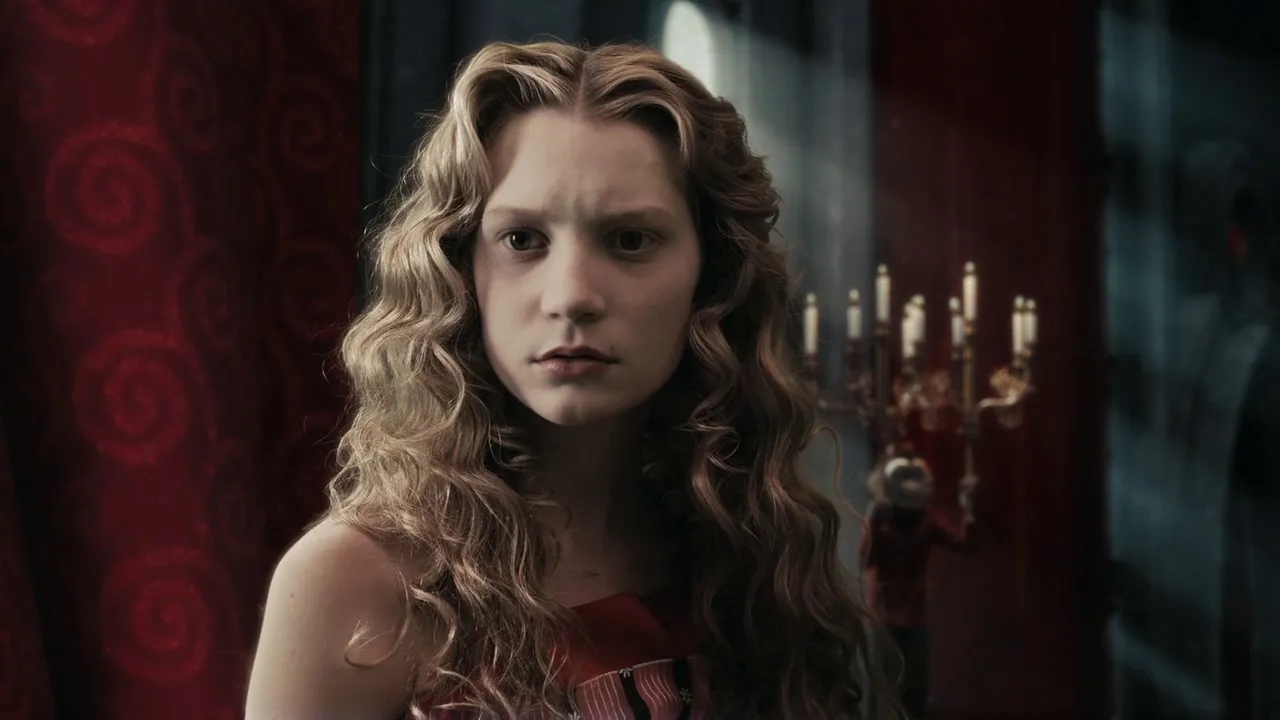
Lewis Carroll’s original Alice was a child—a passive wanderer who stumbled through surreal nonsense. Disney’s 1951 animated film softened her even further, giving audiences a wide-eyed innocent mostly reacting to madness around her. Burton’s Alice, however, is no child. Played by Mia Wasikowska, she’s a young woman on the cusp of adulthood, suffocated by societal expectations and pressured into marriage with a pompous aristocrat.
Burton reimagines Wonderland (or “Underland,” as it’s called here) not as a dreamscape, but as a battlefield. Alice isn’t just tumbling down the rabbit hole; she’s reclaiming agency in a world that demands her compliance. Her refusal of marriage, her eventual armor-clad confrontation with the Jabberwocky, and her insistence on defining her own path all reflect a quietly feminist reworking of the Victorian fairytale.
In hindsight, this was radical. Disney live-action remakes of the last decade—Beauty and the Beast, The Lion King, even Aladdin—tend toward nostalgia and safe updates. Burton, however, broke from formula, creating a version of Alice that resonates with a generation raised on girlboss narratives and female-led fantasy. On Reddit, threads debating the film often circle back to this: Was Burton’s Alice misunderstood because she was too ahead of the curve?
CGI, Excess and Influence
If the feminist slant was subtle, the visuals were anything but. The most consistent critique in 2010 was that the film’s CGI looked plastic, overstuffed, and garish. And, yes, by today’s standards, some effects feel uncanny. But here’s the paradox: Burton was pushing technology as far as it could go at the time.
The film combined motion capture, performance-driven CGI (see Helena Bonham Carter’s Red Queen with her digitally enlarged head), and stylized digital landscapes that rejected photorealism in favor of baroque surrealism. While critics scoffed, the industry took note. The Academy honored it with Oscars for production design and costumes, recognizing its bold hybrid of digital and practical artistry.

And looking at what came after—Maleficent (2014), Snow White and the Huntsman (2012), even Marvel’s Doctor Strange and the multiverse aesthetic—it’s hard to deny Alice’s influence. Its mix of surreal environments and gothic spectacle set the tone for a decade of dark, digitally-enhanced fairytales.
Even TikTok seems to agree. The #AliceInWonderland hashtag has racked up more than 12 billion views, with users remixing Burton’s visuals into fashion inspo, cosplay tutorials, and aesthetic edits. What once felt uncanny has now been absorbed into the language of internet visuals: maximalist, gothic, and slightly unhinged.
Burton: Then and Now
Part of why Alice in Wonderland was dismissed comes down to timing. By 2010, critics accused Burton of self-parody. His gothic aesthetic, which was once groundbreaking in films such as Beetlejuice (1988) and Edward Scissorhands (1990), they were seen as predictable. Combined with Disney’s push for a global family blockbuster, many assumed Alice was Burton on autopilot.
But reevaluating from 2025, the story shifts. Alice can be interpreted less as Burton selling out and more as him experimenting within the film industry. He created a billion-dollar hit that was, visually and tonally, far stranger than what Disney usually allows. Today, as audiences embrace Burton’s sensibility anew through Wednesday and eagerly await Beetlejuice Beetlejuice, his Alice looks more like a blueprint than a failure.
On Reddit, younger viewers often defend the film passionately, noting how they grew up with it and how it shaped their tastes in fantasy. Many argue that while the film isn’t perfect, it introduced them to darker storytelling and female agency in a way few blockbusters did at the time.
A Divisive Legacy
The divisiveness of Alice is part of what makes it interesting. Some may interpret it as the peak of Hollywood’s overreliance on CGI, indicating a cautionary tale about style over substance. Others see it as a bold reimagining of a classic, one that paved the way for the dark fairytales of the 2010s and beyond.
There’s truth to both. The narrative is uneven, Johnny Depp’s Mad Hatter performance veers between inspired and overindulgent, and the climactic battle feels more Lord of the Rings than Carroll. But the very messiness of Alice is also its strength. It refuses to be tidy nostalgia. Instead, it pushes the fairytale into strange, grotesque, and sometimes uncomfortable territory—territory that blockbuster cinema still struggles to reach.

How It Resonates Today
In this day and age when Disney’s live-action portfolio leans toward safe remakes and risk-free adaptations, Burton’s Alice in Wonderland stands out as an outlier. It was messy, ambitious, and visually daring, even if it wasn’t loved by critics. In hindsight, it may have been the film that paved the way for Hollywood to experiment with darker, more mature fantasy/dystopian storytelling.
Now, with Burton back in the media's spotlight, it’s worth acknowledging that his Alice wasn’t just a billion-dollar hit, it was a film that dared to reimagine a beloved story in ways that were polarising but undeniably influential and beautiful.
So maybe it’s time to stop seeing Burton’s Wonderland as a failure and start seeing it as what it really was: a strange, risky blockbuster that reflected its cultural moment—and maybe even shaped the one we’re in now.
The Big Question
In the end, Burton’s Alice is less about nostalgia and more about redefinition. It’s a gothic fairytale that dared to get messy, dared to experiment with digital spectacle, and dared to give its heroine something Carroll never did: A choice. And isn’t that worth revisiting?