Table of Contents
Frankenstein’s Monster is one of the most referenced characters in film, with over 400 movies featuring an interpretation of the bulky green figure. His bride, while still an iconic and recognizable character, has had significantly less representation. In the 1935 film The Bride of Frankenstein she only appears for four minutes at the end – it was only a matter of time before she got her own story. This is where Maggie Gyllenhaal’s The Bride!, starring Jessie Buckley and Christian Bale, comes in.
Although I have felt a sense of exasperation with the over-saturation of remakes, adaptations, and sequels that have been coming out in the past decade or so, I found myself excited for The Bride! Buckley’s performance in Hamnet blew me away, and the story of Frankenstein’s bride sets an interesting framework for exploring themes of women’s bodily autonomy. The gothic 1930s Chicago setting also seemed aesthetically promising. However, I found myself disappointed by this film on multiple fronts.
The plot felt familiar in an unoriginal way. The plot draws from all sorts of tropes, such as a Bonnie and Clyde lovers-on-the-run narrative and a Harley Quinn and Joker-esque romance. I was also disappointed by the lack of depth to any of the film's feminist themes. The Bride! touched on reclamation of identity, but didn’t offer any new or particularly interesting ideas to the conversation. While violence against women was certainly a prominent theme, with the Bride seeking revenge on a mob boss who committed multiple acts of femicide, it was somewhat sidelined for a muddled plot.
The film begins with the death of Ida, a young woman who is murdered by members of the mob after having an outburst at a restaurant. Her body is then dug up by Frankenstein or “Frank,” who has enlisted the help of a mad doctor, played by Annette Bening, to revive Ida as his companion. The majority of the film is spent following the two on the run from the police, detectives, and members of the mob.
The mob members weren’t a consistent presence throughout the film, surfacing occasionally among the other threats to Frank and the Bride. The detective duo, Jake Wiles (Peter Sarsgaard) and Myrna Malloy (Penelope Cruz), was another disappointing aspect of the film. Their investigative work was underwhelming, and Malloy, a secretary trying to prove herself as a detective, is given more screen time than is warranted for an underwritten character.
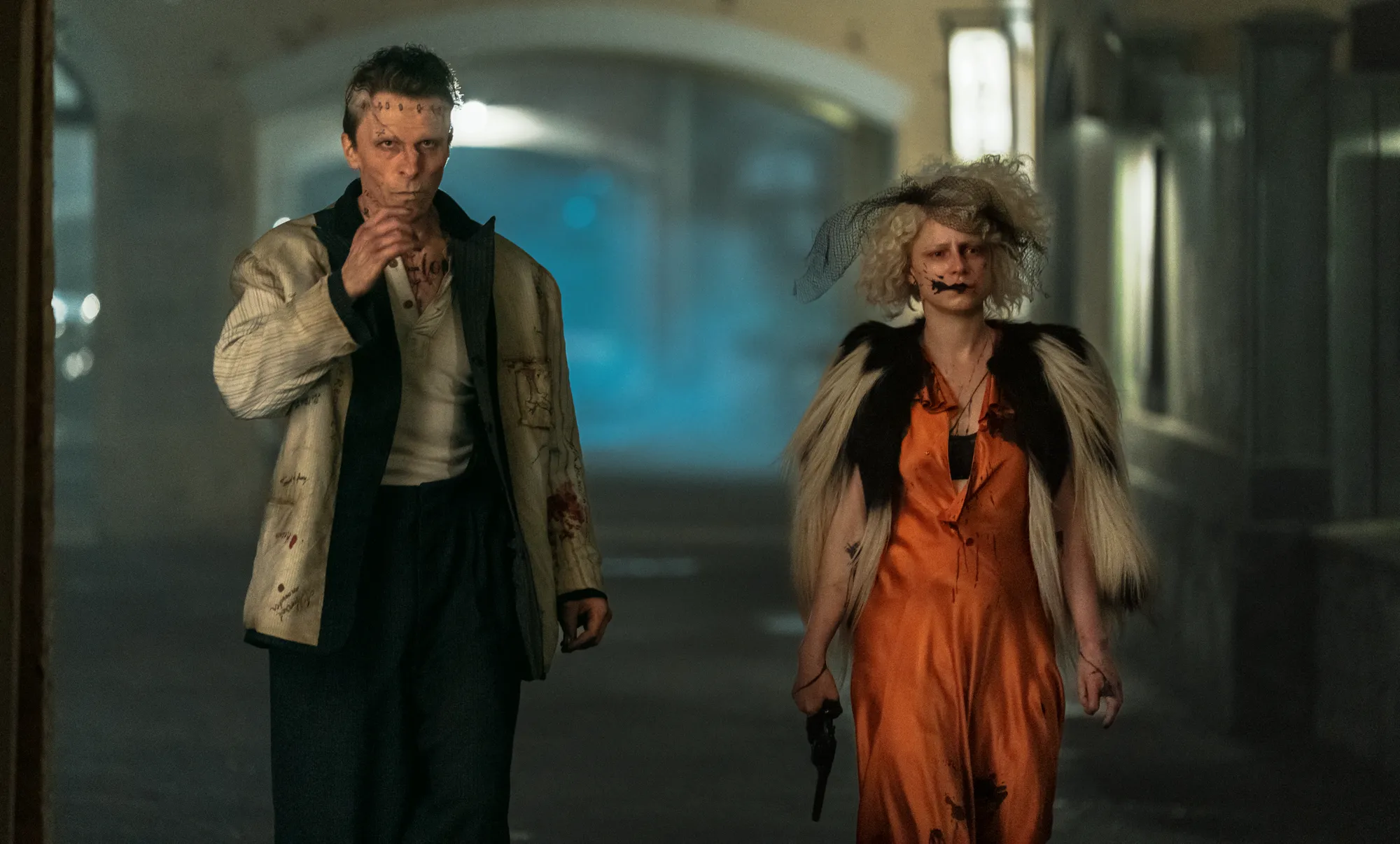
I was most impressed by the makeup and costume design. I loved the special effects on Frank in particular; Bale’s face was transformed in a way that didn’t mar his acting but fully embodied the monster-like features. The stitches up and down his body also looked gruesome yet realistic. Both Bale and Buckley committed to their performances, embracing their wild and misunderstood characters. In Buckley’s case, however, I found the acting to be too over the top at times. I attribute this more to the script than Buckley’s skills, as it was often overwritten and trying too hard to be clever, particularly the Bride’s tangents.
Gyllenhaal’s ambition and dedication to going all out in her direction are admirable. There were many bold and interesting choices made, like choreographed dance scenes, experimental moments integrating the characters into 1930s cinema, and Mary Shelley (also played by Buckley) in a narrator role. However, these more experimental moments mostly muddled the already messy plot. Some may gain more from this film, but I ultimately left disappointed.