Table of Contents
Mise-en-scène is everything that appears within frame—costumes, set design, props, makeup, and actor placement—and how these elements contribute to the film's meaning. It's French for "placing on stage". I think to best understand its in-depth definition we would have to look at a film case study. Let's take My Darling Clementine, the 1946 Western film by John Ford as our example.
To make a long story short, Western films are the depiction of hero and anti hero. There are two types of heroes though; the Official Hero and the Outlaw Hero. The Official Hero is the hero who abides by law and duty, doing their service for society. They are your sheriffs and teachers. Where as, the Outlaw Hero is someone who abides by the natural law of humanity, not what serves a society necessarily. The Outlaw Hero values freedom, morals, and they are known to challenge the norms of societies. An example of this is Robin Hood who's deemed an Outlaw Hero while Superman is deemed the Official Hero. The Civil Servant versus the Wanderer.
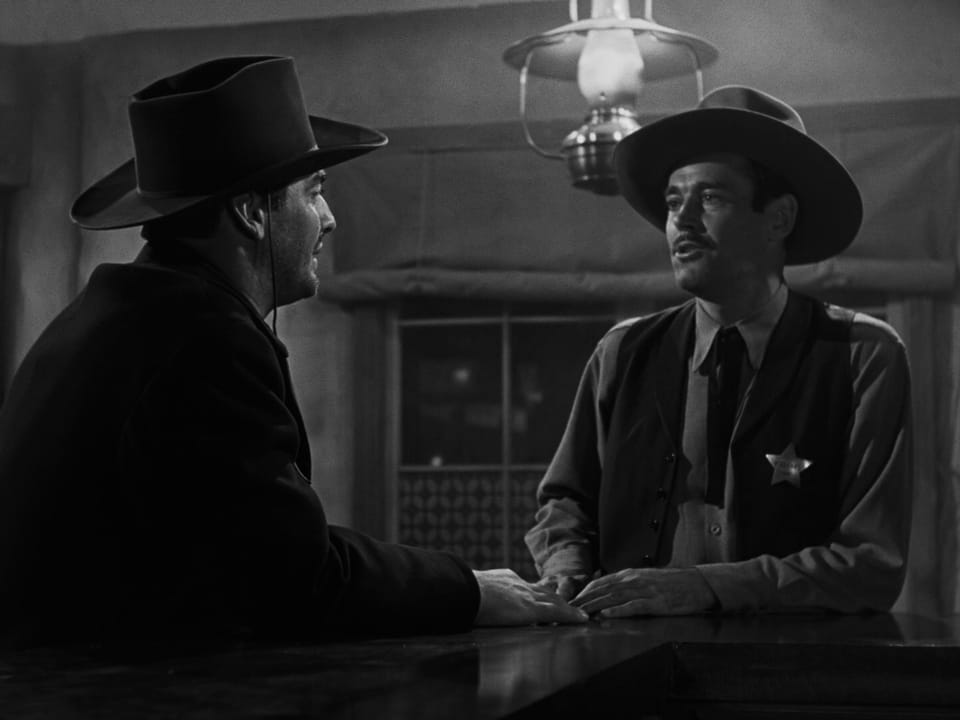
With the film My Darling Clementine, John Ford takes an interesting twist to the typical hero versus anti hero story. He decides to place two heroes in one film. We are presented with both the Official and Outlaw hero to save the day. Take a look at this picture, and take a guess who you think is the Outlaw and who is the Official hero. Take into consideration this concept of "placing on stage".
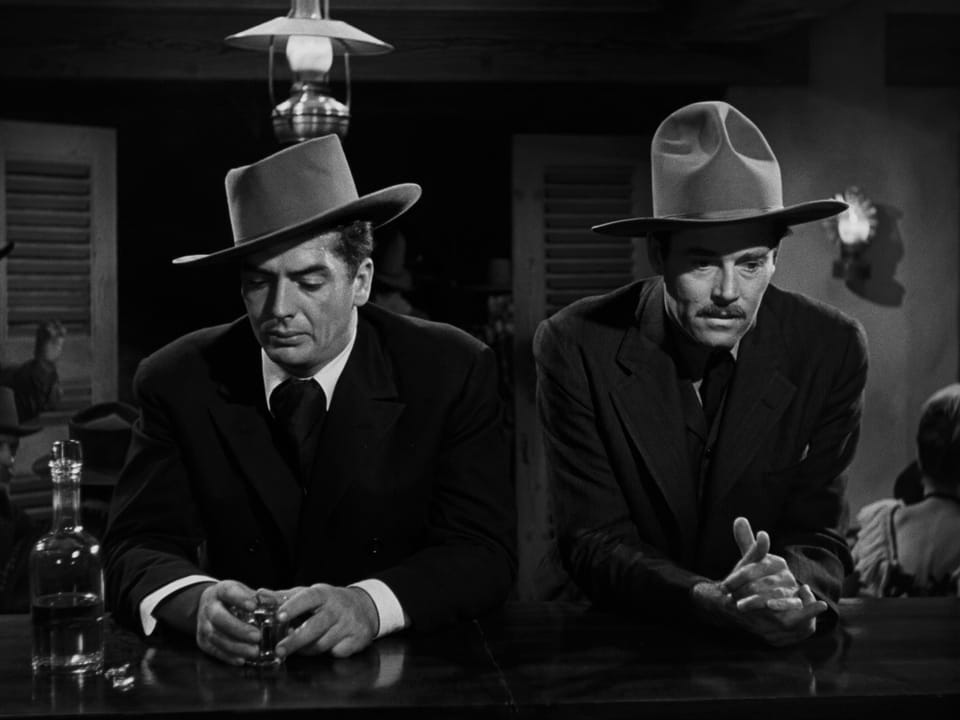
If you guessed that the person to the left is the Outlaw, and the person to the right is the Official hero, ask your self what about the frame and the staging allowed you to come to that conclusion?
Now if you said, the placement of their hats is what gave it away, then you are absolutely correct!
One challenges a societal norm by placing his hat slanted on his head while the other hero keeps his hat on straight. This is essentially what mise-en-scène is! It's all about how to tell a story not just using dialogue. You can ask yourself a variety of questions as a filmmaker to help you tell a story and not just rely on the verbal aspects of a film.
Questions such as :
How do the colors set the mood?
How does the lighting in the scene tell your story? Where is the light coming from?
What does having mainly close up shots for one character say about that character?
What does it mean if the camera angle never has a character in frame, but always off frame?
How has the costume changed, and why does it change?
With My Darling Clementine, they decided to utilize this question: "how has the attitude of the characters changed, and why?". The film starts out letting us know who's classified as which type of hero –Outlaw or Official– while still allowing the audience to ask: is the Official Hero actually the Outlaw Hero, and vice versa? Take a look at this picture.
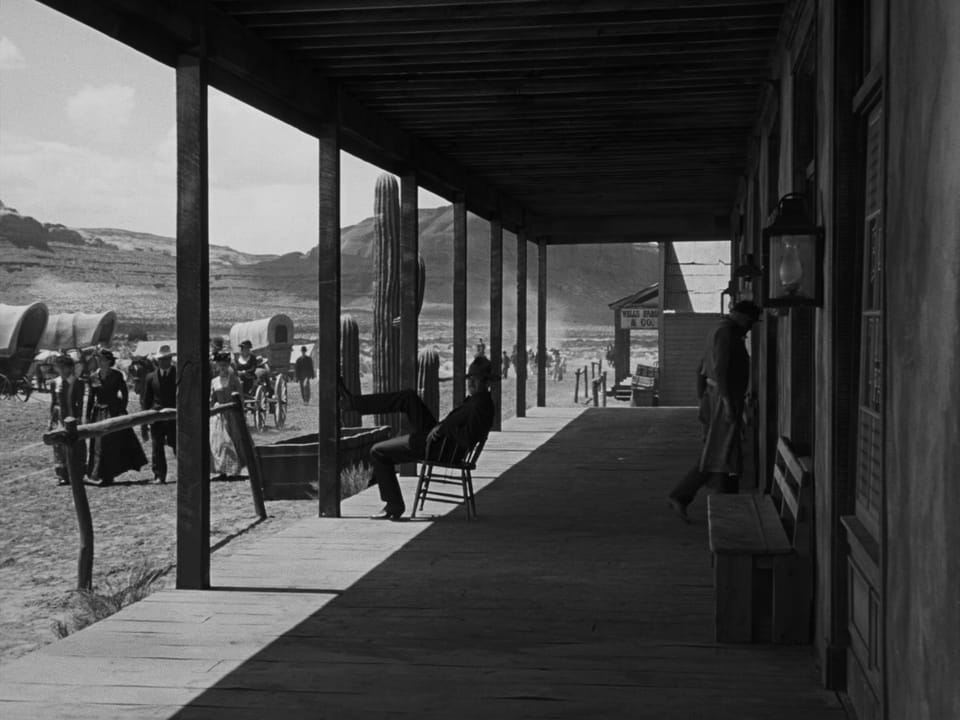
The man in the chair is the Official Hero, the Sheriff of the town, but his stance doesn't really match someone who is a regarded as the highest enforcement official. He sits as though he couldn't care less about what's happening in town. Especially because he does this in public, during the day for all to see, it makes you question this Official Hero. The film progresses to inform us that the Official Hero is naturally the Outlaw, and vice versa with the Outlaw actually being the Official Hero.
Mise-en-scène really means utilizing everything one possibly can to help tell the story, and maybe other storylines that the director decides not to verbalize. My Darling Clementine is a masterpiece of a film, whether you've seen it or not, I suggest watching it to better understand mise-en-scène. Use what you know to help you dissect what else the story wants to tell us, but doesn't explicitly.