Table of Contents
Three Key Takeaways
- Unwavering bridges historical activism with contemporary issues of racial justice and inclusion.
- Collaboration and trust among a multi-hyphenate cast and crew were key to overcoming creative and logistical challenges.
- The film is a deeply personal and collective story that inspires courage, community, and ongoing dialogue about identity and representation.
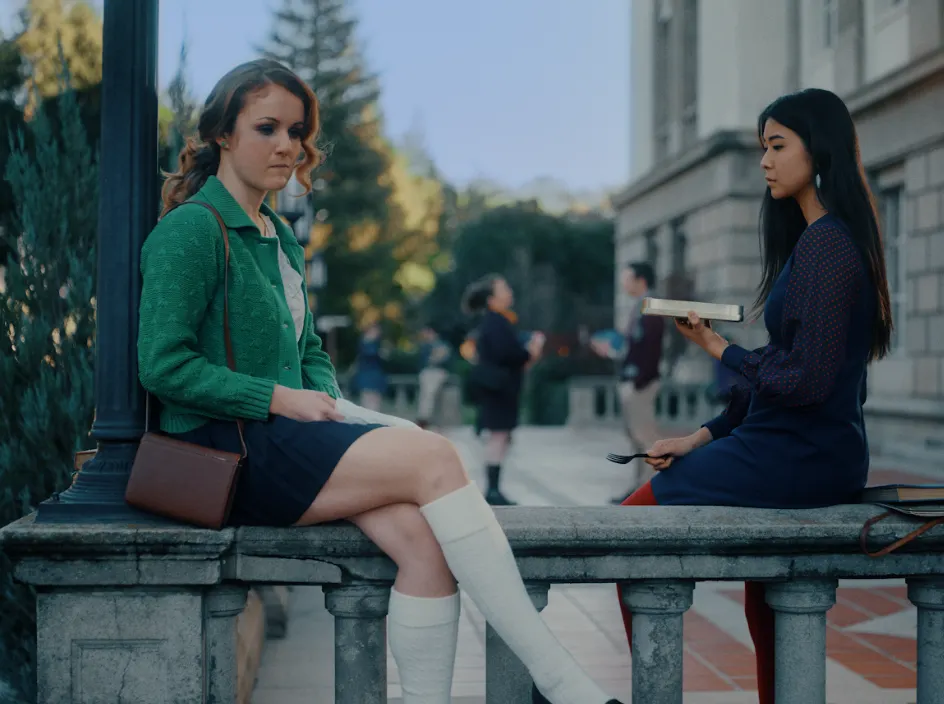
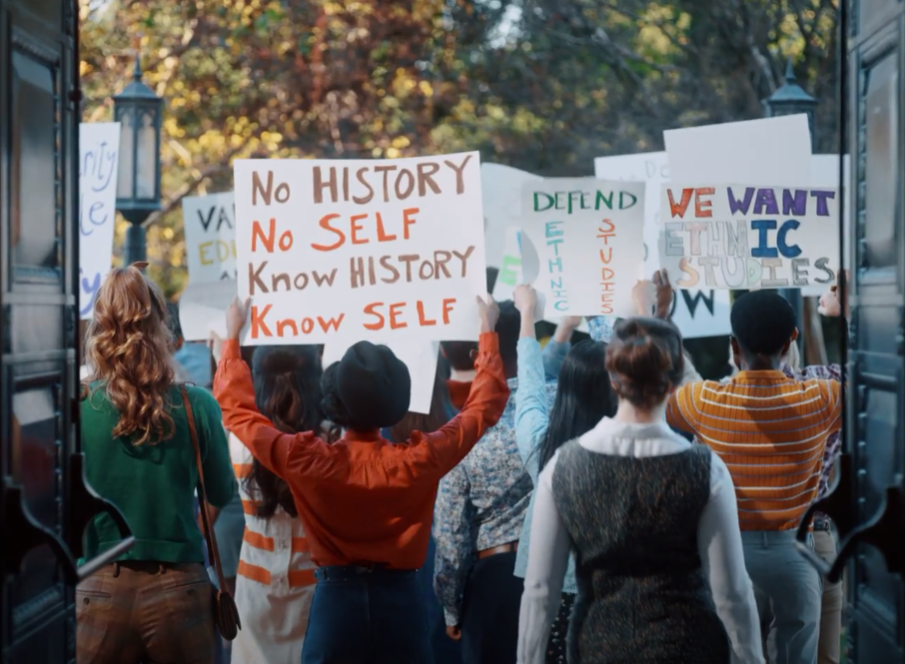
Christine Hughes, writer, producer, and lead actor in Unwavering, teams with director Alexandra Hsu to bring to life a poignant 1960s drama about a Korean-American college student’s involvement in the historic Ethnic Studies movement.
Featuring a talented ensemble including Ami Park and Elizabeth Hales, the film resonates through its authentic storytelling and timely themes.
Selected for the TRC Shorts Fest, Unwavering exemplifies the power of independent filmmaking to inspire social change.
What drew you to make Unwavering? Why this story, and why now?
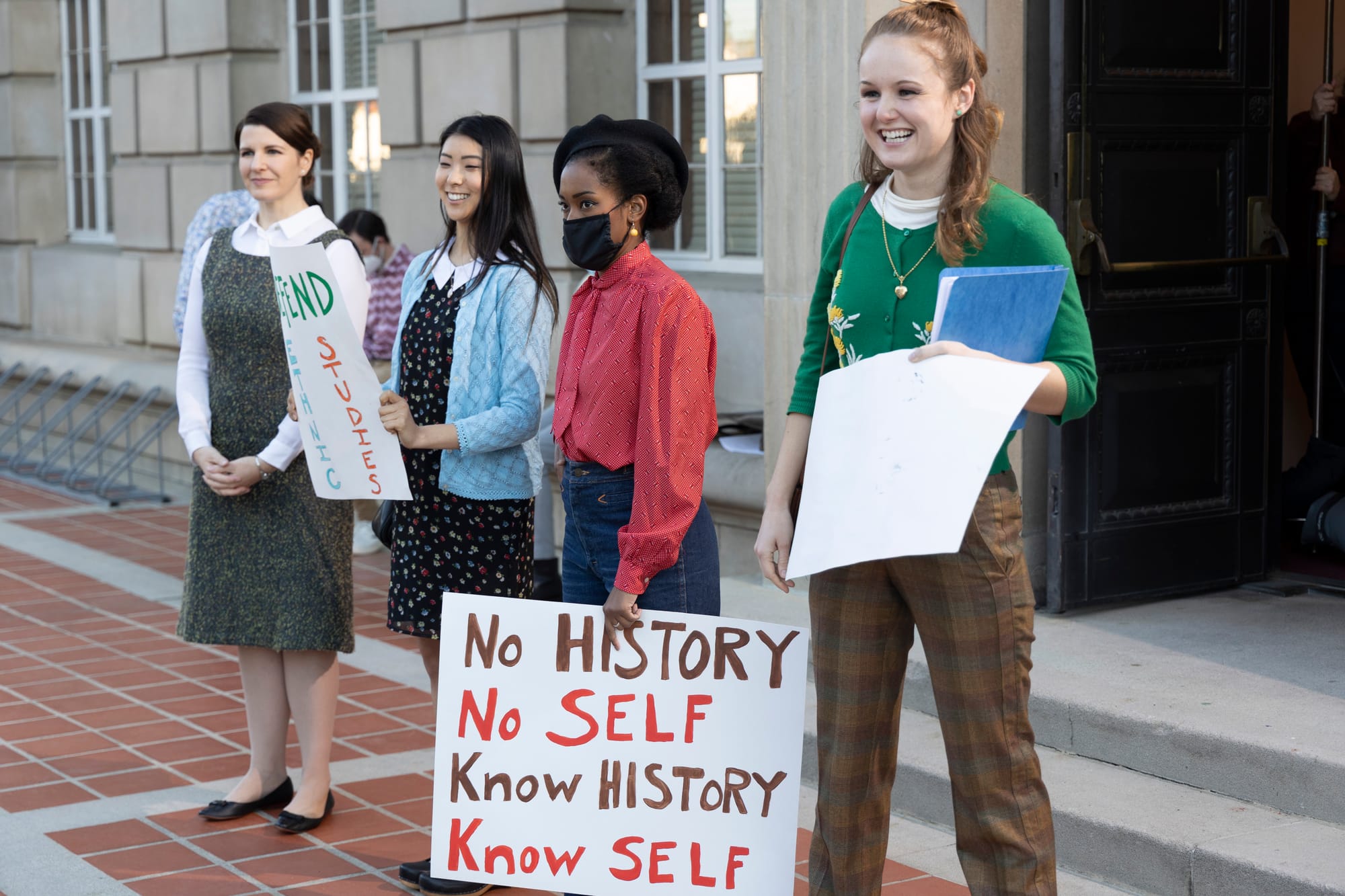
From Christine Hughes — Unwavering began during the pandemic shutdown, when me, Ami Park, and Elizabeth Hales decided to create a short film together. It was 2020, in the midst of COVID-19, an uptick of violence towards Asian Americans, and the emergence of BLM protests in response to the murders of George Floyd and Breonna Taylor. We wanted to make a period piece that we could all fit into, that resonated with audiences. It morphed into a real mission to make a story that mattered to us—a story that reflects current events, as well as teaches, educates, and inspires others to step outside their comfort zones and make bold choices. Ultimately, Unwavering is about more than educational and racial equality. It’s about courage, community, and standing up for what’s right, even when it’s difficult or comes with risks. At its heart, it’s a story about inclusion—about finding people who make you feel seen and valued.
"Ultimately, Unwavering is about more than educational and racial equality. It’s about courage, community, and standing up for what’s right, even when it’s difficult or comes with risks." — Christine Hughes
What surprised you most about the filmmaking process this time—creatively or logistically? Was there a moment on set or in post that completely changed how you saw the story?
I really enjoyed the process—one that reminded me why I’m drawn to collaboration, and why I love working with writers in both film and television.
I really enjoyed the process--one that reminded me why I'm drawn to collaboration, and why I love taking the words from writers and making them come to life on screen.
Is there a moment in the film that feels the most you—something only you could have made?
From Alexandra — This was a challenging question.
This is a challenging question. The second, "Miss Unisphere," is inspired by a family story about a young Chinese American woman crowned during the 1960s New York World’s Fair. The second "Queens" is inspired by a family story about a young Chinese American womancrowned during the 1960s New York World’s Fair.
What was the hardest creative decision you made while making this film?
We were torn—how could we honor historical truth while still celebrating representation and the film’s broader message? We were torn--how could we honor historical truth, while still staying true to our project's mission and story?
What do you hope audiences take away from your film?
From Alexandra — I hope audiences walk away feeling inspired to use their own voice. Confidence has been something I’ve personally struggled with, particularly in the industry, and Unwavering reflects that journey—of finding the courage to speak up, even when it feels uncomfortable or uncertain. My hope is that this film, its story, and its characters will encourage others to discover that same sense of strength within themselves. Unwavering is also about how collective action can emerge from individual courage. It’s not just the story of one young woman—it’s about the ripple effect that happens when someone chooses to stand up for what’s right, even when they feel alone. I also hope the film sparks curiosity about the real student movements that helped shape Ethnic Studies, and that it inspires audiences to look to history as a guide for what we can continue to do today.
From Christine — I would love for audiences to feel inspired to be bold, stand up for themselves, advocate for the people in their communities, and to take action for causes they care about.
How has this film shaped or shifted the kind of stories you want to tell next?
From Christine — My previous short films have explored themes of mother abandonment, intergenerational relationships, racism, intraracism, and the complexities surrounding sexual assault. Directing Unwavering allowed me to return to the 1960s—to a period that has long fascinated me—and to explore racism and activism within a specific historical moment through the intimate journeys of a few characters at the start of the student movement. Working on Unwavering reaffirmed how much I’m drawn to stories that are rooted in history yet emotionally timeless. The experience deepened my desire to tell stories that bridge the past and present, particularly through the lens of Asian and Asian American women’s experiences. Being part of Unwavering—both the team and the story—reminded me of the kinds of narratives I want to continue exploring and the characters I’m longing to bring to life. It reinforced my belief in storytelling as a catalyst for change and conversation. I want to continue creating work that balances empathy and inquiry—stories that ask how we remember and what community means in moments of transformation.From Alexandra -- ... Directing Unwavering allowed me to return to the 1960s—to a period that has always intrigued me—and to explore racism and activism within a specific historical moment through the intimate journeys of a few characters at the start of the student movement.
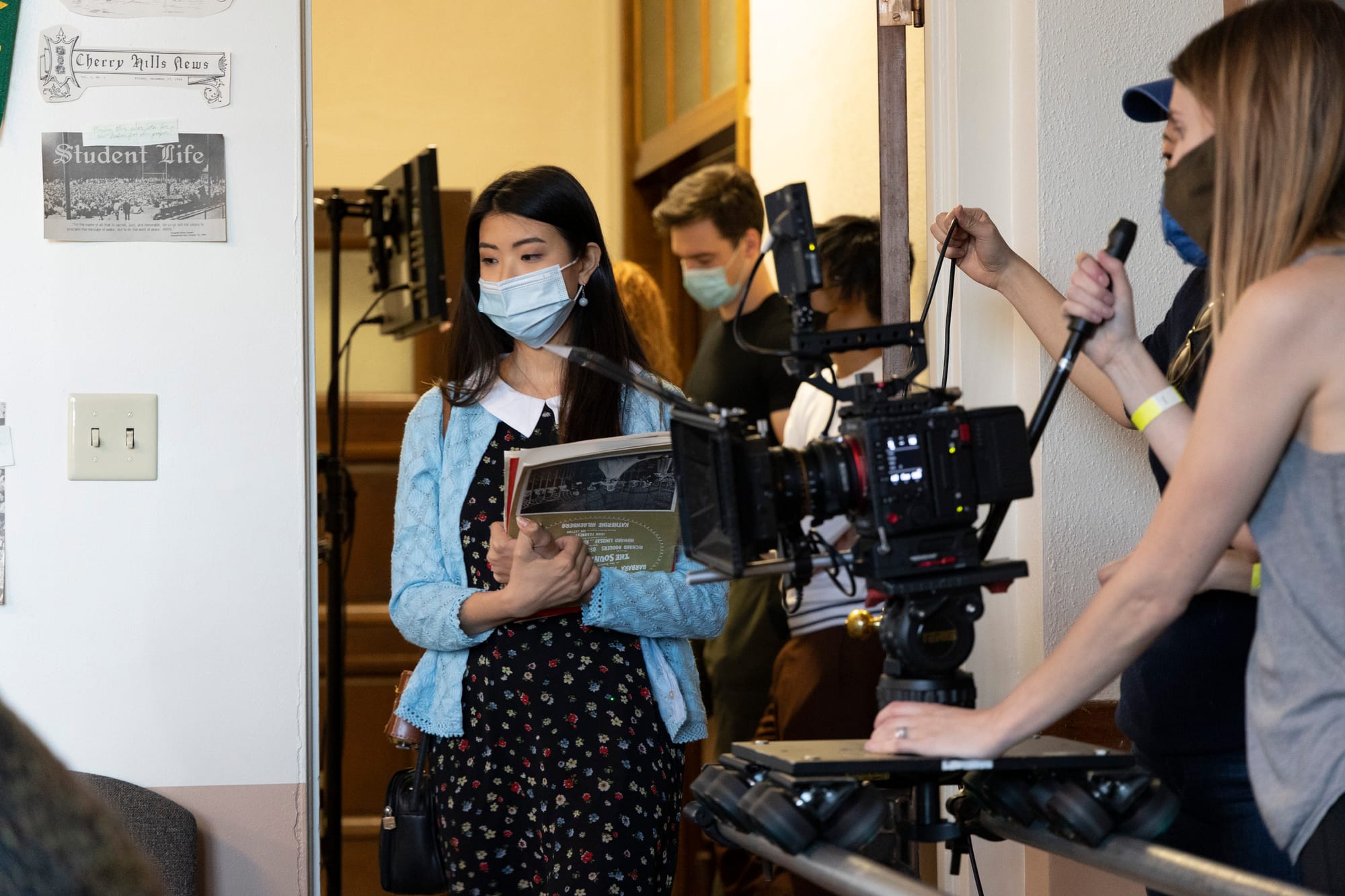
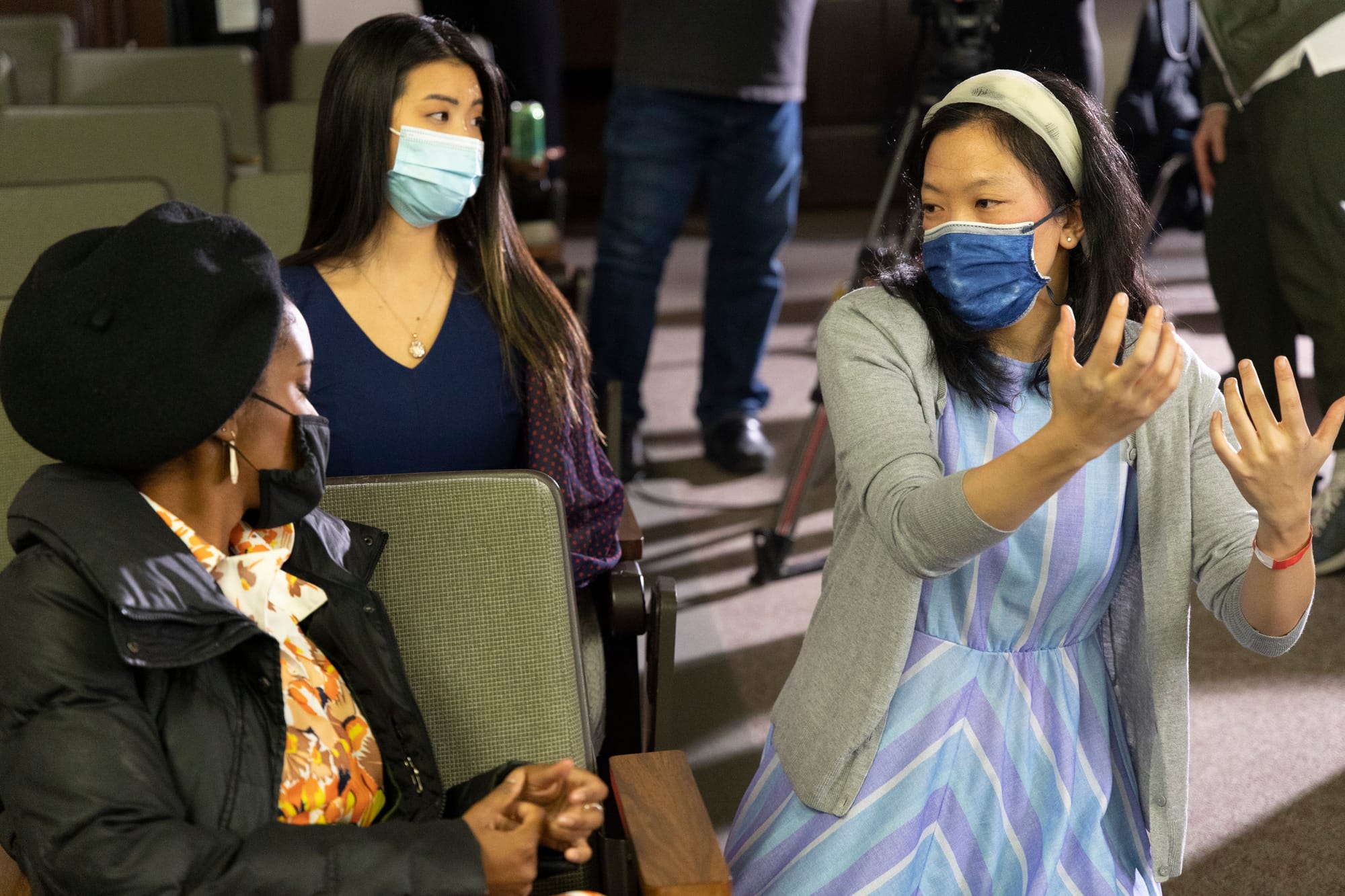
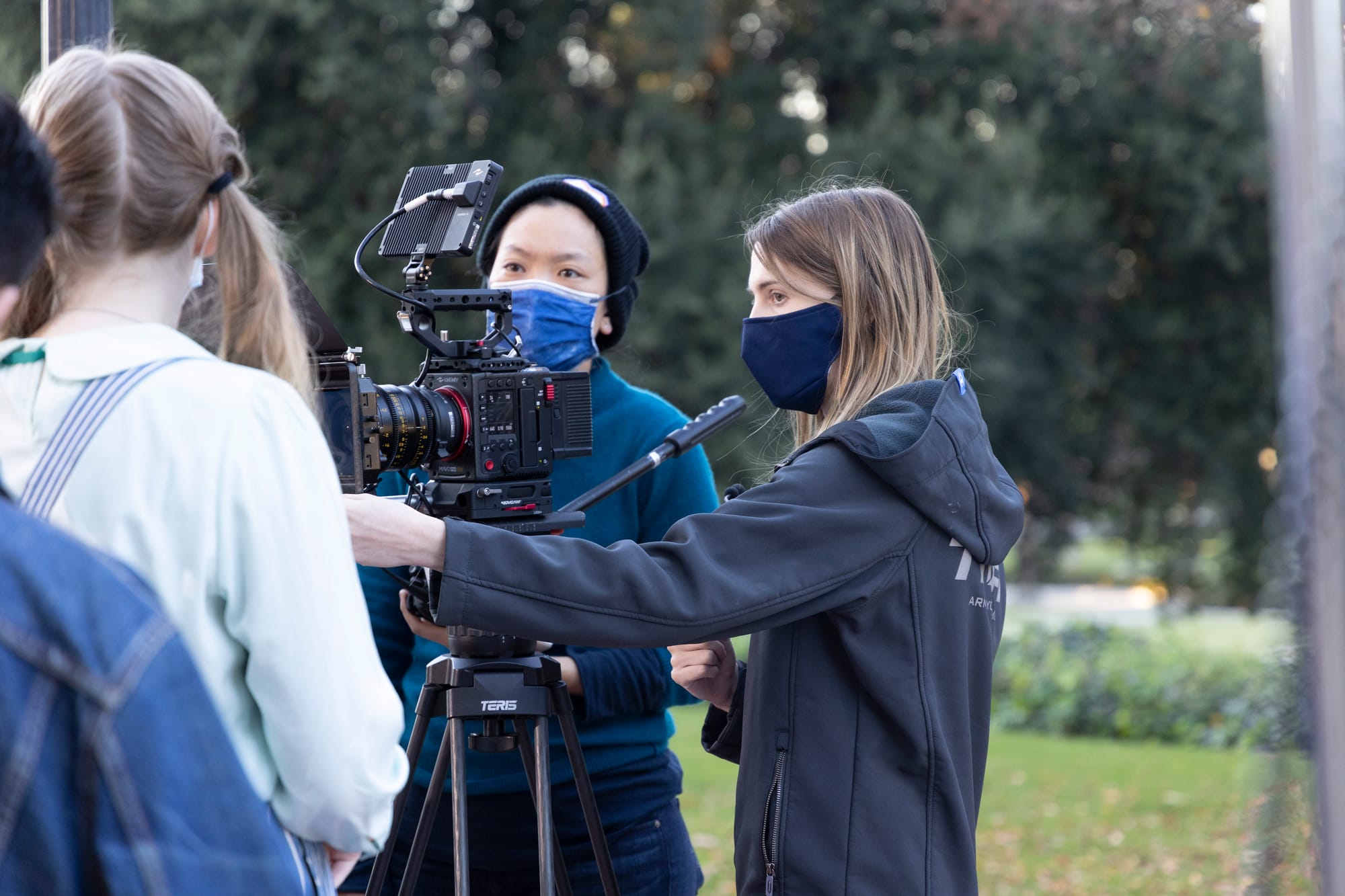
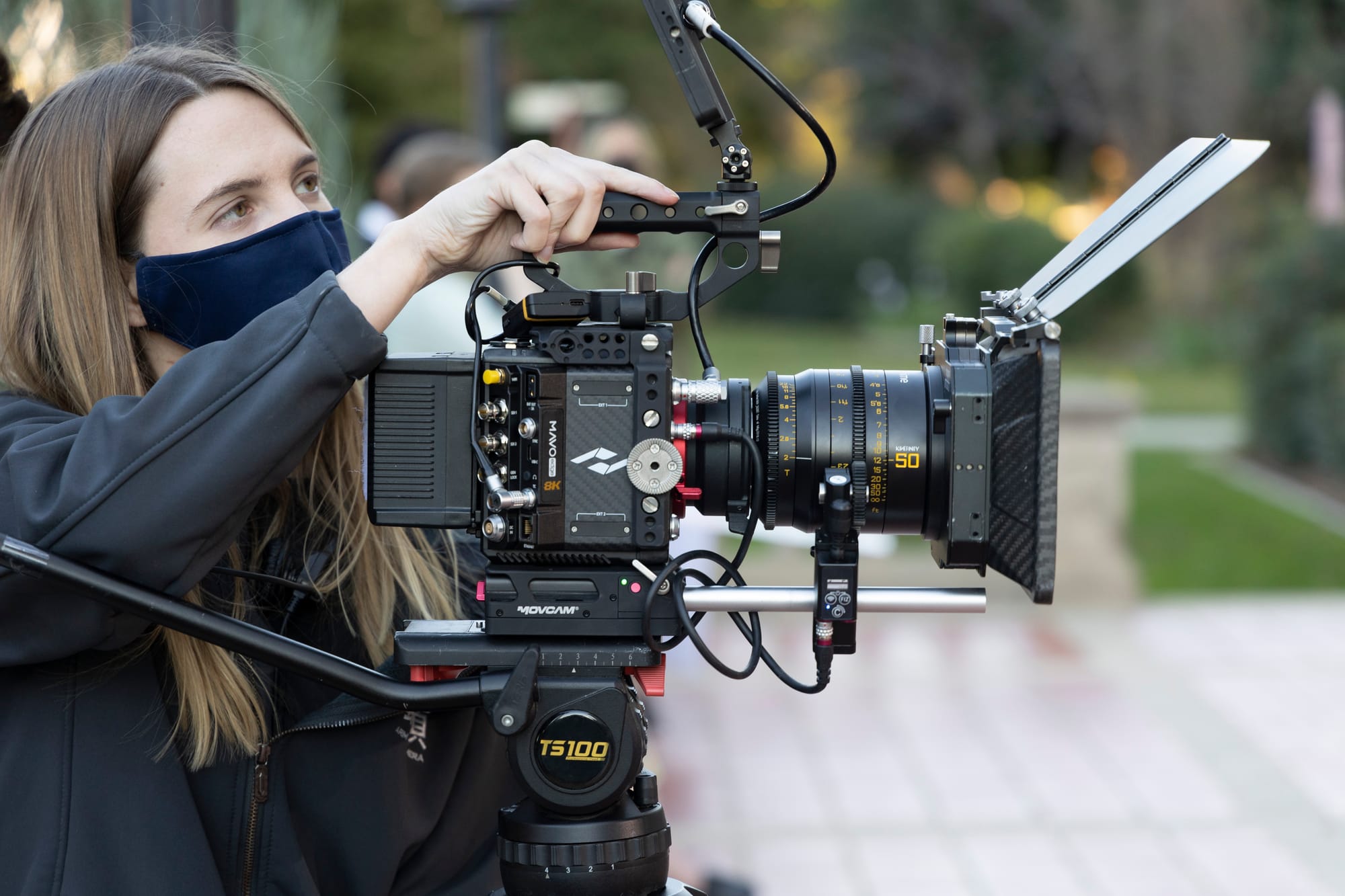
From Alexandra — The greatest resource on Unwavering wasn’t a piece of equipment—it was the team. It was a group of actor-producers who pooled all of their resources, connections, and creative energy to make this film happen. None of us knew each other going in, which made it all the more exciting. On paper, it might have seemed impossible, but that unfamiliarity turned into one of our greatest strengths. Working with our DP, Sarah Reddy, also exposed me to new equipment. I trusted her completely because we had spent time beforehand discussing style, references, and tone in depth. There’s one scene in particular—when Carolyn (Ami Park) shares a decision with her close friend Alice (Christine Hughes)—that stands out. It’s a pivotal moment in Carolyn’s arc. For that scene, we rolled without cutting, letting Ami repeat the performance multiple times in a single take. It became one of my favorite directing choices of the shoot. At the start of each production day, I led the team in a moment of collective breath and meditation. I’d begun that practice on my previous short, "Our Way Home," during a particularly stressful shoot, and brought it into Unwavering to set the tone—anchoring everyone in gratitude, presence, and focus. And, inspired by something I’d learned about Greta Gerwig’s sets, I introduced name tags for the crew. It may seem simple, but it helped foster connection, especially in the early days when so many of us were meeting for the first time. I could immediately see how useful that would be on larger productions as well.
"The greatest strength of independent filmmaking is collaboration—listening to one another, taking in each other’s ideas, and creating something together." — Alexandra Hsu
Independent filmmakers often rewrite the rules out of necessity. What do you think is the greatest strength of independent filmmaking, and how did you lean into that on this project?
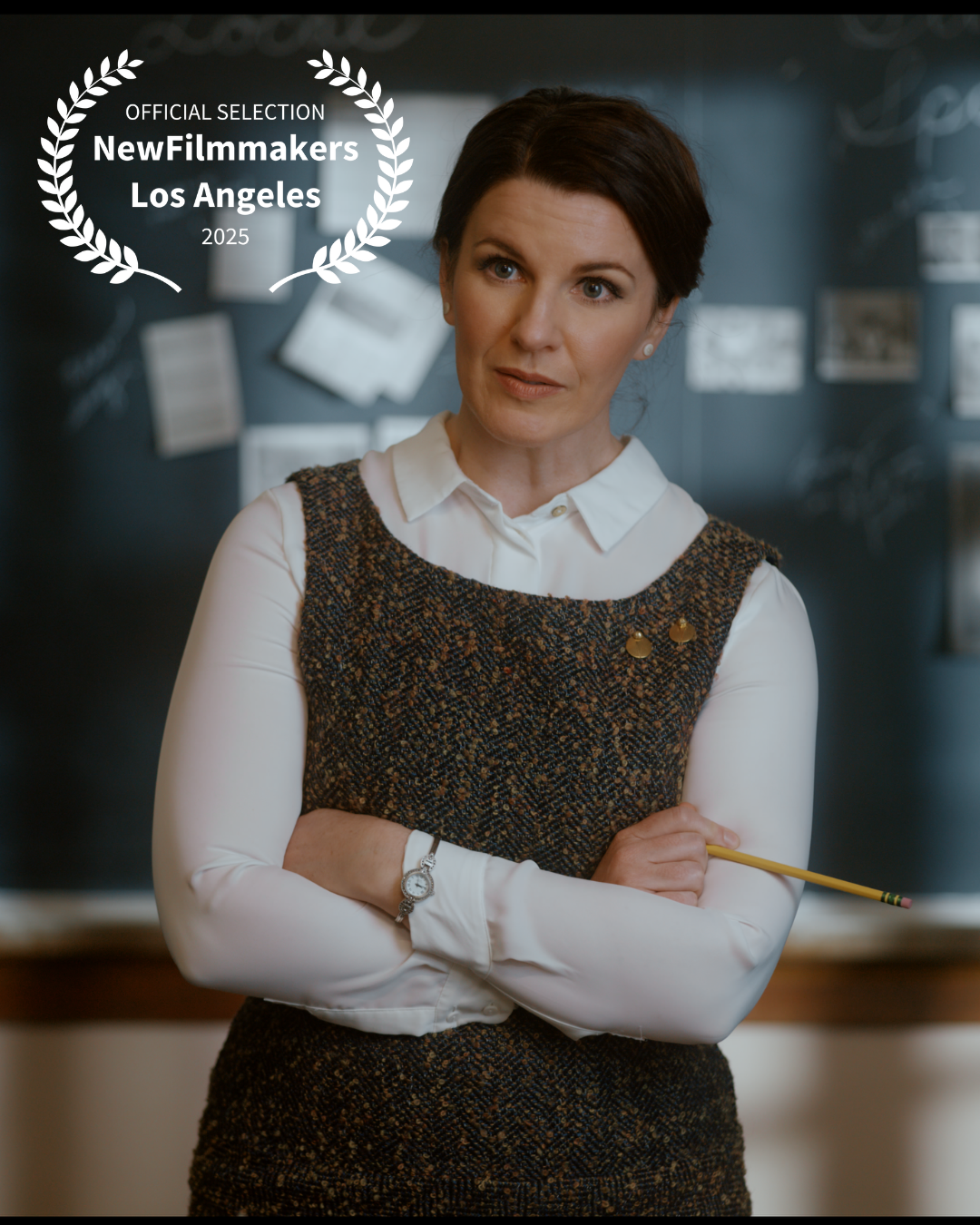
From Alexandra — The greatest strength of independent filmmaking is collaboration—listening to one another, taking in each other’s ideas, and creating something together. When everyone is personally invested, wearing multiple hats, and bringing their own creativity and excitement to the table, something pure and organic emerges. A team, a family forms. The breakthrough for me was learning to trust myself and fully recognize who I am as a person, artist, and filmmaker. I could have walked away from the project, fearful that things might not work out, but I trusted Ami, I believed in the story, and I stayed open to contributing wherever I could. I shared my experience and advice whenever it was helpful, and leaned fully into putting this film together. Even when it came to bringing on a 1st Assistant Director, I knew myself—my strengths and weaknesses—and what I needed to balance my personality with someone else’s. After considering and meeting with a few potential 1st ADs, I landed on Chris Laughter because I felt he complemented me well. I tend to be more quiet and reserved, and I needed someone who wasn’t a yeller, but who could be stern, straightforward, and kind to the team. In the end, Chris and I worked so well together that we became close friends—and now, we’re engaged. My biggest takeaway is to stay open, stay flexible, and trust that the process itself will guide you—and your team—toward the story you’re meant to tell.
"I hope audiences walk away feeling inspired to use their own voice." — Alexandra Hsu
What does it mean to you to have your film selected for TRC Shorts Fest? Where do you see this film going next?
From Alexandra — It’s an incredible honor to have Unwavering selected for TRC Shorts Fest. For me, this marks my second short film to be part of the Shorts Fest—my earlier film, "Rencontres Paysannes – Farmers Dating," was also selected. This is my second short film to be part of the Shorts Fest—my prior short film, "Rencontres Paysannes – Farmers Dating," was selected in the inaugural festival in 2023. We’re proud to share a story that uplifts community, courage, and the ongoing fight for representation—in front of and behind the camera, and from the top down. Take out "in front of and behind the camera, and from the top down"
"At the core of all my work is a desire to tell stories that move audiences to feel deeply—stories that spark empathy, curiosity, and understanding, and that give voice to those who haven’t always been heard or seen." — From Alexandra
"At the core of all my work is a desire to make something that I'm proud of." — From Christine
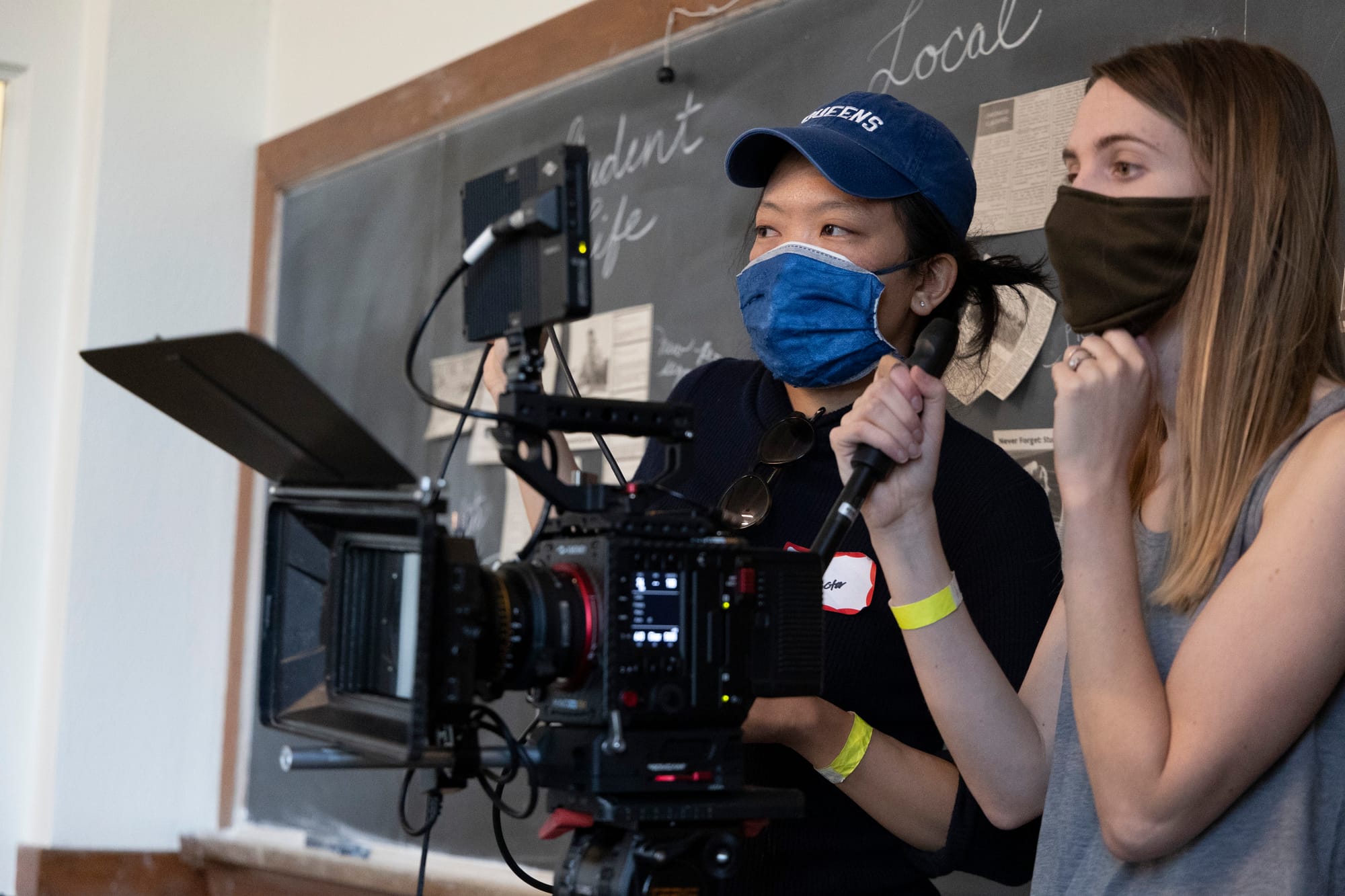
Cast & Crew
- Kourtney Bell — Actor (Verna). Graduate of University of Michigan BFA Acting, roles in "Alaska Daily," "It Follows."
- Sarah Reddy — Director of Photography. MFA in Film Production (Cinematography) from Chapman University.
- Whitney Donald — Costume/Production Designer.
- Chris Laughter — 1st Assistant Director, Writer, Producer, Director. Co-founder of Assorted Kinds collective.
- Brady Hales — Actor, Producer