Table of Contents
What if I told you that AI existed long before most of us consciously realized we were living with it?
Before ChatGPT. Before Seedance. Before every tech company started rebranding existing technologies and putting “AI” somewhere in its product description. Before the internet became flooded with AI-generated images, videos, and, frankly, a lot of slop.
We were already living in a world shaped by algorithms.
In my opinion, we have underestimated the technologies that existed before the current AI boom. We are so focused on what generative AI can do now that we forget how much of our lives were already being influenced by algorithms long before we started calling everything “AI.”
Let’s think about it for a second. Think hard about all the social media platforms you use and all the ads you see.
I remember, probably a decade ago, when most of us had much less understanding of how our data from our phones was being collected and used. I vividly remember one particular incident. I was hanging out with some friends, and we were randomly talking about different things. At some point, someone said the word “pizza.”
If I remember correctly, it wasn't about ordering pizza. Nobody was craving pizza. It was just a word that came up in conversation.
Guess what? Each of us received ads from pizza chains within 10 minutes while we were doomscrolling. Coincidence or not, it felt almost like science fiction.
This might seem very basic in the sci-fi world we are living in now. But a few years later, algorithms learned us—our behavior, our lifestyle, the things we like, the things we skip, the things we do frequently, our spending patterns, our desires. In one word, “Everything.”
In some cases, these apps learned more about us than we consciously know about ourselves.
Then, not so long ago, these advanced algorithms, combined with all the data we give them, started to feel like they could read our minds before our minds even had the chance to process a thought.
I was lost in my thoughts, and in the middle of thinking about something completely unrelated, I briefly thought that a new rice cooker might make my life easier. For a fraction of a second, the thought crossed my mind, and then I moved on to thinking about something else. Like any human brain does.
Some time later, an ad for a rice cooker popped up on my screen.
I didn’t have to say it out loud anymore, yet it showed up anyway.
We do not recognize technology as transformative until we see a flying car or a computer talking back to us. This is what sci-fi has done to us.
I don’t believe Artificial Intelligence’s journey began in the post-COVID era. I believe it began much earlier, with the invention of the Turing machine, the calculator, or maybe even before that.
To me, the first models of ChatGPT were essentially a search engine like Google, but on steroids. Pulling information from the World Wide Web and presenting that information in a paragraph that looks human, through models trained with ungodly amounts of human-generated data including the kind of conversations, opinions, and information people have been putting on platforms like Reddit for years and processed by incredibly powerful NVIDIA processors at lightning speed.
Don’t get me wrong. I still believe ChatGPT pulled off an excellent product, something I use in my daily life. But I would argue that what we are witnessing is more of an evolution of existing technologies than a sudden invention.
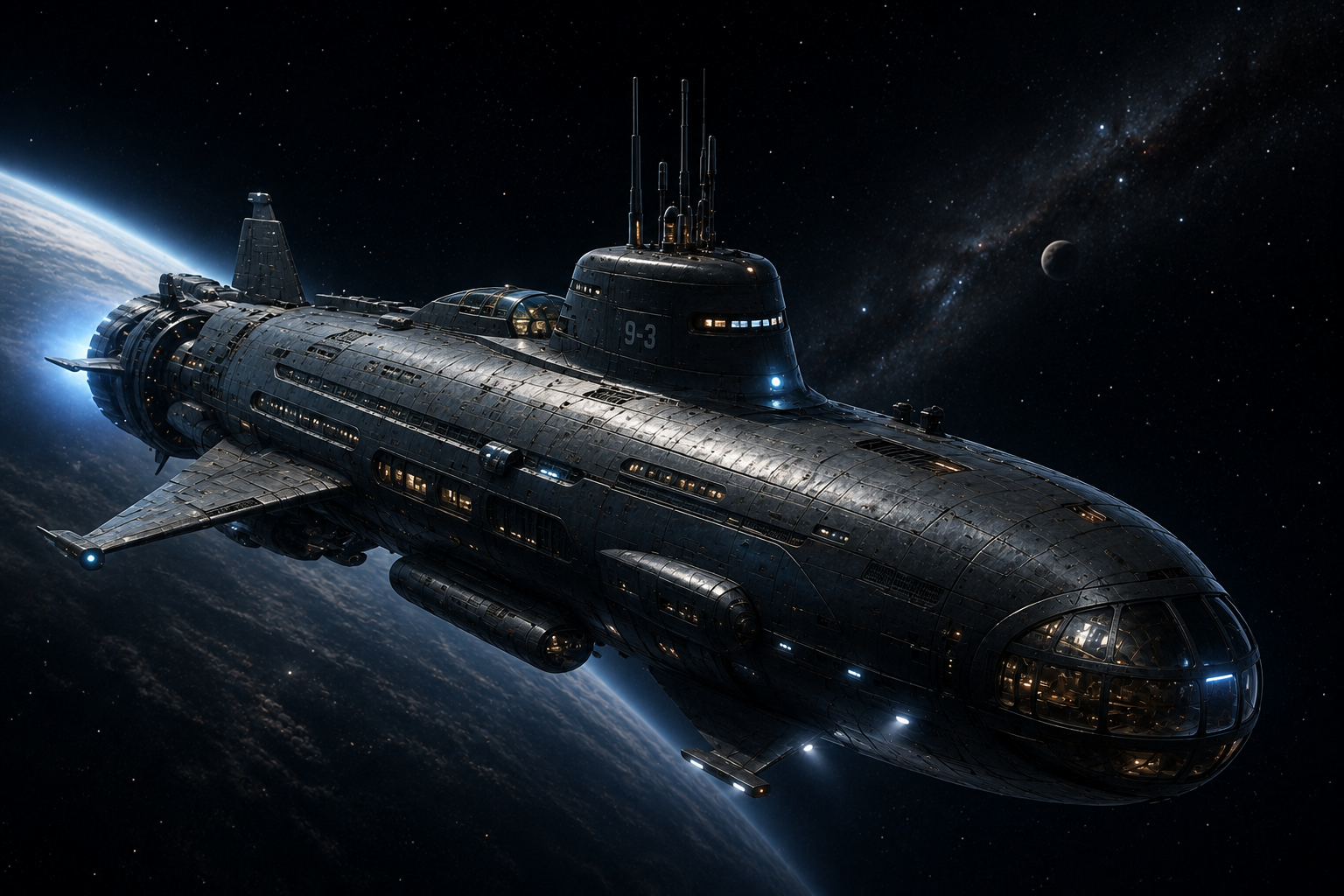
Personally, when it comes to technology, my fascination comes more from functionality than futurism. I find submarines more fascinating than spaceships.
My introduction to AI in filmmaking was when I used Warp Stabilizer in Adobe Premiere Pro. It was impressive to see how it could stabilize a shaky clip so quickly without any additional plug-in or hiring a VFX artist. Everything was happening inside the application without any human interference.
What impressed me the most was imagining what was happening in the backend: the way it matched and aligned every frame so precisely that it almost felt like the camera never moved, while still keeping the camera movement that was intentional. And Warp Stabilizer was already available in Adobe After Effects back in 2011/2012.
That was AI in filmmaking to me.
Take screenwriters and the screenwriting process.
AI can be a brainstorming tool for writers rather than something that generates stories on its own. It can be a productivity tool. Imagine a writer who can comfortably write 30 pages a week. With the help of AI, maybe they can write 60 pages. Not because AI wrote the screenplay for them, but because it can take care of some of the miscellaneous and repetitive thinking that goes into the process, such as research, organizing information, and brainstorming.
AI will be a tool for artists and creatives, like an assistant. It is not going to create or make art for you, but it can enhance your productivity.
This is also why most of the AI-generated content we often see is slop. If someone genuinely thinks AI-generated content, writing, or ideas are good enough on their own, imagine what could happen if these same tools were given to an actual writer. What can an actual writer bring out of powerful tools at their disposal?
The most pragmatic way of using AI, in my opinion, is refining your original idea. While GenAI generates slop, an artist knows what can actually be a bad idea and can discard it. They can look at multiple ideas, take inspiration from them, take small elements from each idea, and come up with something completely unique.
GenAI can also be an incredibly helpful tool for indie filmmakers, especially those who are early- to mid-career and don’t have millions of dollars in funding from studios and production companies to hire a VFX studio to make animation, visual effects, cleanup, or rotoscoping more accessible.
At the same time, I keep thinking about how digital cameras shaped and reshaped the entire filmmaking workflow, especially editing. When films were only shot on film, filmmakers were heavily limited in what they could do in post-production. Digital technology changed that workflow completely. Even today, most films that are actually shot on film are edited digitally.
This is why I think it is important for us to draw a fine line between something being completely generated by AI and something being enhanced with AI.
How are we using it is more important than what we are using.
In my opinion, we are too hyperfocused on the replacement of artists—which I think is very unlikely to happen—without acknowledging the actual threat we should be talking about.
Intellectual property.
Remember, we are feeding these AI models with our own thoughts, creativity, and ideas. We don’t always know how our IP is being used to train these models. Is there enough of a firewall built around our prompts, our work, and our creative ideas?
That, to me, is a much more important conversation than whether AI will replace artists.
People painted with rocks in caves when there were no pencils. People wrote poetry on stones when there was no paper. People told stories when there was no stage. People sang when there were no instruments.
Artists have always created.
And at the same time, artists have always created and worked wonders when new tools were given to them.
In fact, film is one of the most technical forms of art, and its existence was made possible by the invention of the camera.
And, ironically, even this article was proofread by an AI agent.
Because trust me, as a non-native English speaker, my grammar is not that great.
With AI as a tool, the least we can do is remain curious, as long as these creations remain humane and can still transmit human emotions while we continue questioning the boundaries of its use.