Table of Contents
If you've been in pop culture spaces for a decent amount of time, you've probably heard the term "perfect trilogy" at least once. A perfect trilogy is a fan term which generally refers to a series of three films which are either equal, close in quality, or improve on each entry.
Because the term isn't official, trilogies which are considered perfect vary depending on who you ask. Still, there are a few trilogies that audiences agree belong in this category. Two of the most common series you will see included on lists of perfect trilogies are the Back to the Future trilogy and the original Star Wars films. These series are common not only because they are popular, they share a quality that I believe is the core of many perfect trilogies.
The Three-Act Structure
Almost everyone is familiar with the three-act structure from elementary English class. It's the core of most stories in western cinema and is hammered into every student who takes a screenwriting class.
If you look at any individual film in the Back to the Future trilogy or the Star Wars series, you should easily be able to identify how each plot point lines up with this structure. The moment Marty travels to 1955 is the inciting incident, the midpoint occurs as he plans to help his father take his mother to the dance, and the moment lightning strikes the clock tower ends the climax. However, these series not only use the three-act structure within the plot of each film, they also use it for the overall plot of their trilogy.
Think of each entry in the trilogy as its own act. In screenwriting classes, we are taught that each act has its own purpose: act one is the set up and inciting incident, act two is the reversal and low point, and act three is the climax and conclusion. In a perfect trilogy, each film will serve the same purpose as its corresponding act.
Let's take a closer look at the Back to the Future trilogy. The original Back to the Future sets up the idea of time travel. It shows the audience how it functions and reveals the consequences of messing with the timeline; it ends with Marty returning to his new home having changed the present for the better.
Yet, all is not well in Hill Valley. Doc Brown returns from 2015 to inform Marty that there's a problem with his kids.
In Back to the Future Part II, Marty not only needs to save his future, but also stop Biff from creating a worse one. As the second act of the trilogy, Back to the Future Part II contains the series' midpoint and sets up Marty's character arc for the rest of the trilogy. When Jennifer goes to her future home, she sees that Marty will get into a car accident if he doesn't change his ways. Meanwhile, Marty unintentionally causes Biff to turn Hill Valley into a dystopia by giving him the idea to take a sports almanac to the past.
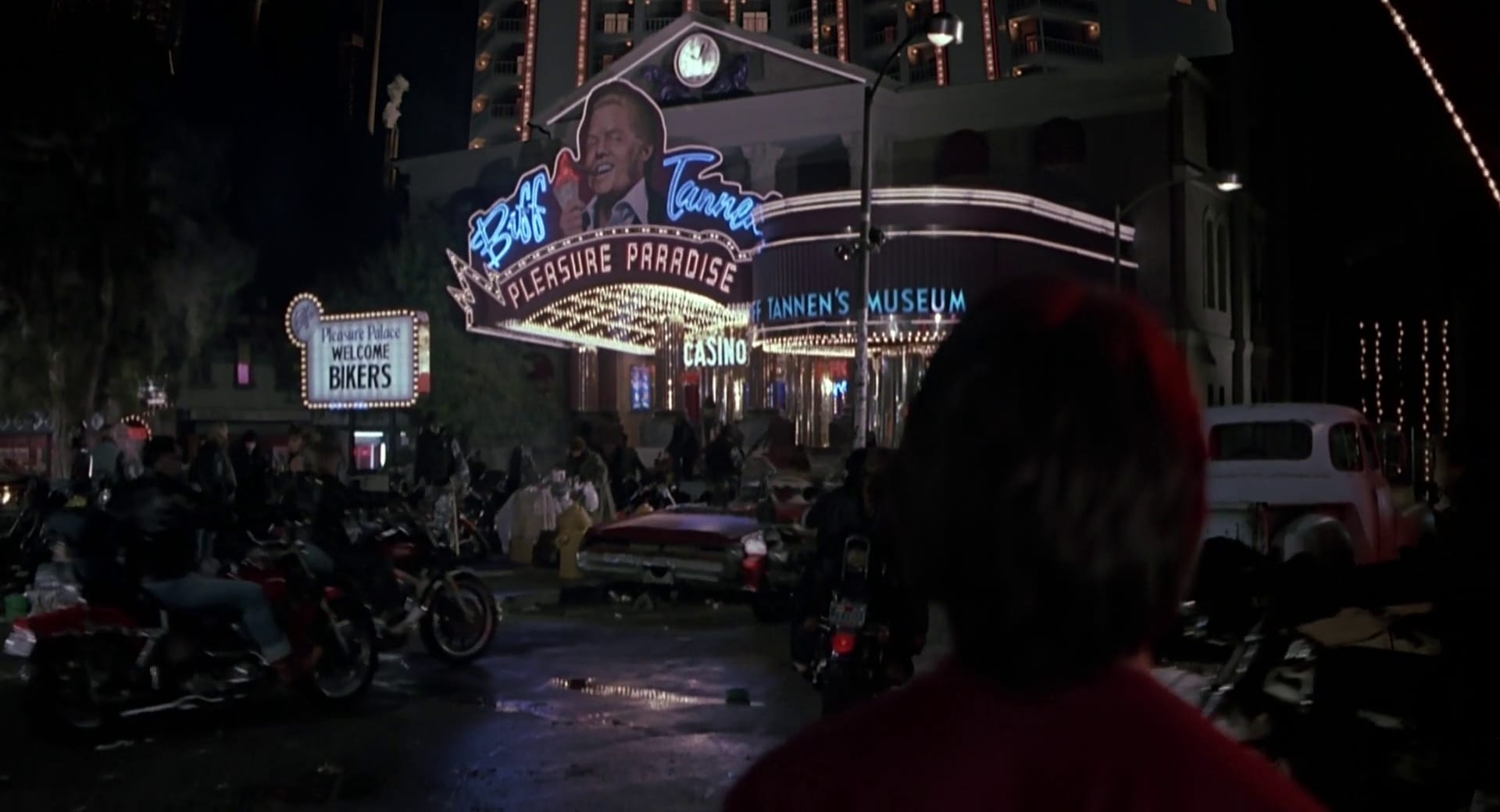
In act two of this trilogy, Marty learns that he can't continue to make impulsive and arrogant decisions. He needs to grow up if he wants a good future. At the end of this act, Marty makes the choice to save the future by not only sacrificing his chance to be rich (by burning the sports almanac), but also his relationship with Doc Brown. When Doc tells Marty not to come looking for him in 1885, Marty must decide if it is worth it to risk damaging the timeline in order to save his friend.
Back to the Future Part III is the climax and resolution to this story. In the previous two films, Marty has learned everything he needs to know about time travel and life, now all he has to do is display this knowledge. Biff's great-great grandfather, Buford tempts Marty into going back to his childish ways, but Marty is able to keep a level head. Along the way, Doc, who has been adamantly against telling people about the future, learns from Marty that some people are worth risking the timeline for. In the end, Doc and Marty are able to pursue their relationships while securing a better future for themselves and their families.
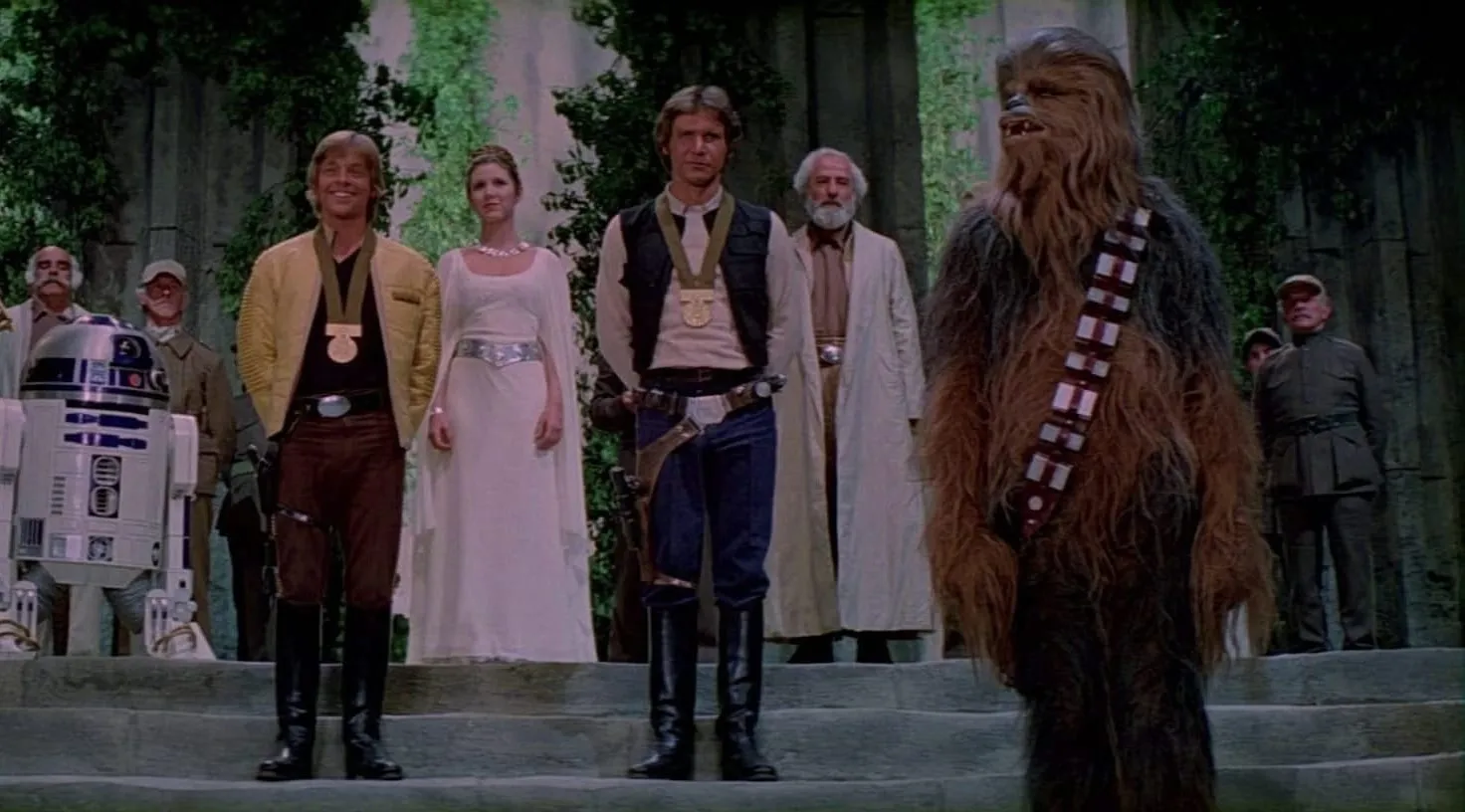
The original Star Wars trilogy, despite not originally being written as a trilogy, also follows this pattern. Star Wars acts as Luke's introduction to the Force, The Empire Strikes Back introduces the reversal when it is revealed that Darth Vader is Luke's father and contains the series' low point when Han is frozen in carbonite. Return of the Jedi contains the climax and resolution when the Empire is destroyed and everyone lives happily ever after. Each film builds on the story and themes of the last to create one amazing space epic.
This pattern also reveals why some trilogies aren't perfect, such as The Godfather trilogy.
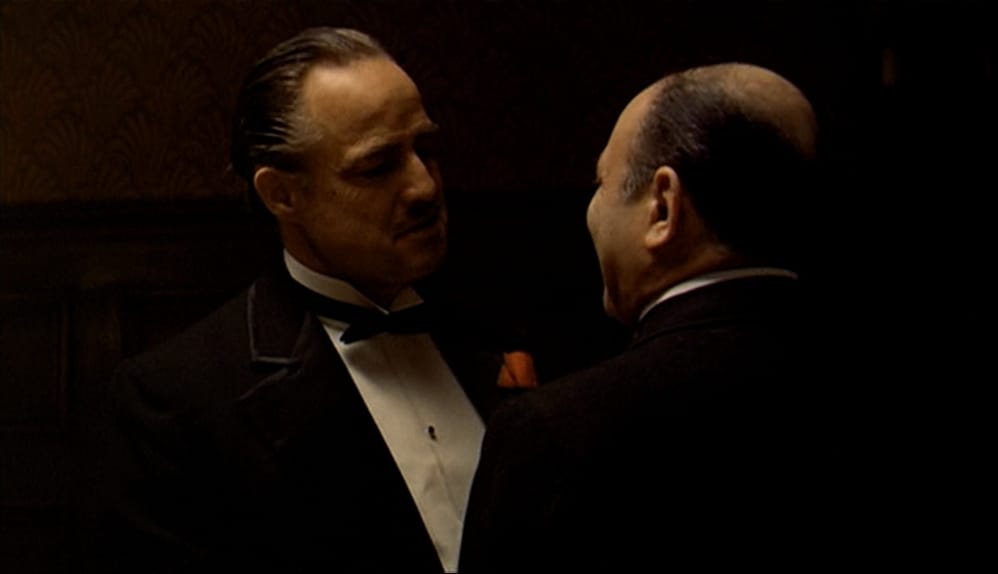
In all fairness, The Godfather series was initially intended to be a duology, not a trilogy. However, if you look at the entire series through this lens, you can see why the third film isn't on the same level as the others.
The Godfather sets up the Corleone's world of crime, violence and family. Over the course of the almost three-hour film, we see Micheal go from being uninterested in his family's business to being in charge of it.
The Godfather Part II continues Micheal's descent into evil while giving perspective on his father, Vito. If we see this film as act two of this story, then the ending where Micheal has his brother, Fredo, assassinated, serves as the series' low point. The question on our minds going into act three: how will Micheal live with what he's done?
The Godfather Part III acts more like an epilogue to the first two films. This could work fine, however, the film's main issue is that it focuses too much on characters who weren't in the first two films. Much of the runtime is taken up by a romance plot between Micheal's illegitimate nephew and his daughter, as well as a mentorship plot between said nephew and Micheal. These plots are not only gross, but distract from what the audience really cares about: Micheal's relationship to his past. While some moments in The Godfather Part III satisfy this desire, the film keeps the series from being a perfect trilogy because of these distractions.
I would also argue that even if The Godfather Part III had been on the same level as the other two films, the entire trilogy would not be considered a perfect trilogy– at least not in the same way as Star Wars and Back to the Future.
Unlike the former films, The Godfather films work better as stand alone films than as one large story. When accounting for the fact the series was originally only supposed to have two films, you'd think that the end of The Godfather would be the series' midpoint. However, the moment where Clemenza calls Micheal "Don Corleone" feels like its own conclusion. The story could end here if it had to.
The events of The Godfather Part II feel separate from the first film, not only because much of the run time is about Vito, but because this is a new story about how Micheal runs the family, not how he fell into it. Unlike the Star Wars films, Michael doesn't continue on the same arc of doing anything for his family (his blood relatives), instead he takes up a new arc of doing anything for the crime family, (the crime organization) even if it means turning against his own brother.
Ultimately, the recipe that creates a perfect trilogy is good storytelling. When creating a series of any length, writers need to remember where each installment takes place not only chronologically, but also structurally.