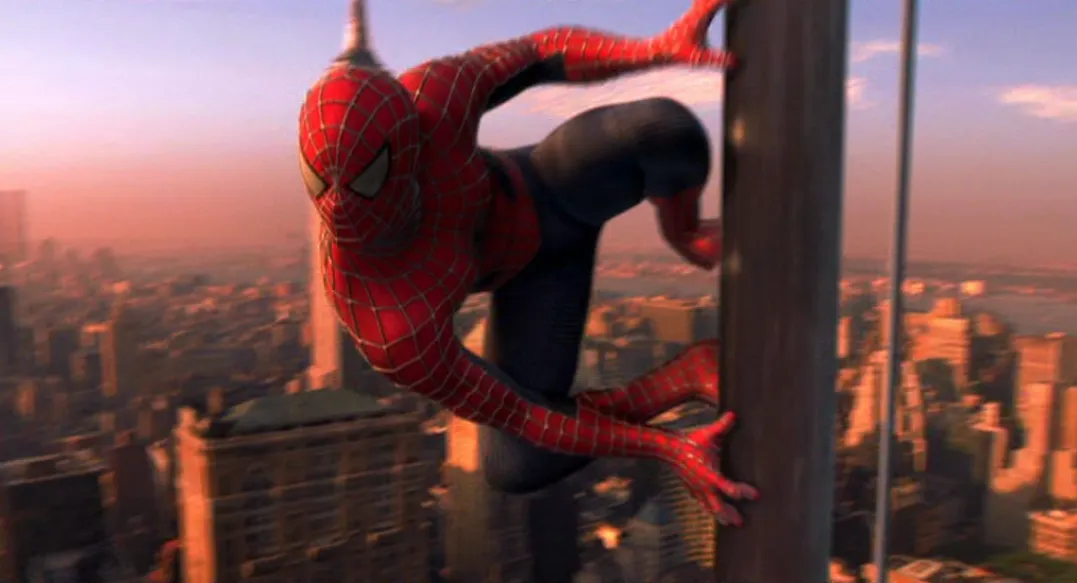
In preparation for the release of Spider-Man: Brand New Day (2026), I treated myself to a re-watch-athon of every live-action Spider-Man movie. For eight consecutive nights, I ended my day by revisiting and reminiscing about the movies that made me who I am.
By far my favorite phase of this re-watch process was returning to the Sam Raimi Spider-Man trilogy starring Tobey Maguire. These three films not only entertained me for days on end as a kid, but they introduced me to my favorite character while teaching me what it means to be a hero, even if I didn't realize it at the time.
I'm relieved to say that years later, the trilogy is just as amazing as I remember, but I can't ignore the clear elephant in the room. Spider-Man 3 (2007) was one of the films I was most nervous to revisit, while I may have loved it as a kid, the more I've grown, the more I've heard people complain about it, with many calling it one of the worst comic book movies of all time.
I assumed watching the movie with a more developed frontal lobe would lead me to a similar conclusion, so as I pressed play I braced myself to be disapointed by my childhood hero. But nearly two and a half hours later, I was more confused than disapointed, not by the movie, but by the countless people I'd heard belittle this film, which, in my opinion, passes the test of time with flying colors.
There are many arguments I've heard echo throughout the internet as to why this film is subpar at best, but each stems from one core idea: too many antagonists with too little quality. I'm not only going to explain why all three villains in Spider-Man 3 are spectacular, but how each serves to create a marvelous film that brings a satisfying end to a historic trilogy.
Sandman
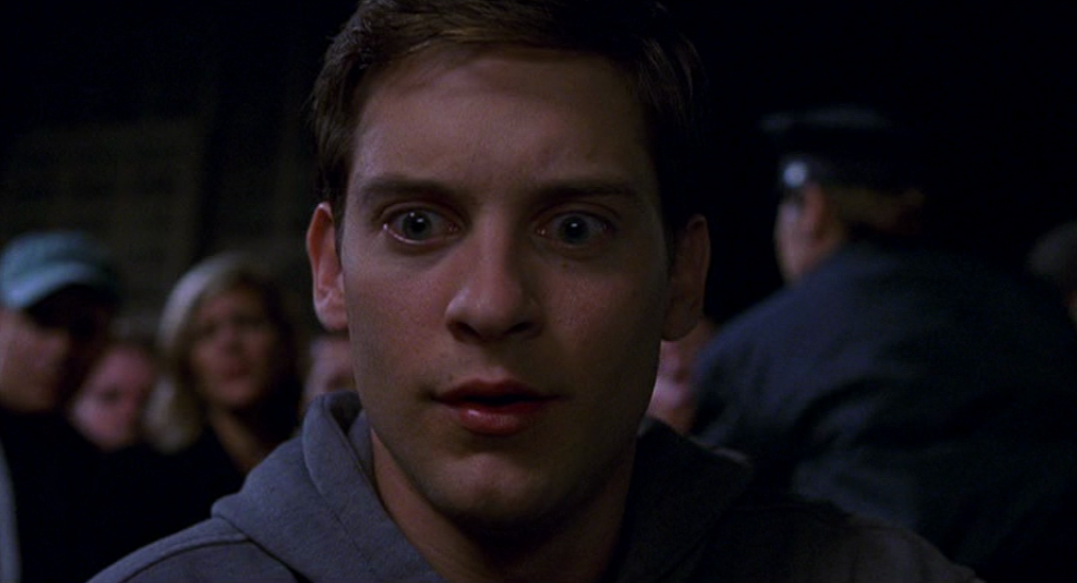
Starting with the antagonist who gets the least amount of hate, Thomas Haden Church's Sandman still deserves, in my opinion, far more appreciation.
Beginning with the obvious pros, it's well agreed that the scene where he gains his powers and wills himself together to hold his daughter's photo, is cinematically top-notch, especially when paired with Christopher Young's masterful score. The slowness and silence of the scene really stand out from the rest of the action blockbuster, giving audiences one of the most grounded moments from a villain in the entire trilogy.
And I think grounded is the right word to use there, because, despite Sandman being one of the more fantastical opponents Spidey faces in these films, he still feels the most realistic. He may be a giant monster made of sand, but at his core he's a dad with a sick daughter who's willing to do whatever it takes to help her and won't let any masked menaces get in his way.
Now I'll be the first to admit that he isn't written perfectly; his partnership with Topher Grace's Venom feels unmotivated, and his character's abrupt ending leaves a lot up in the air, but those are flaws that are vastly overshadowed by his ability to explore such a different part of Peter Parker that audiences have never seen.
The reveal that Sandman was the man who killed Uncle Ben pushes Peter to a place we've never seen him go before. The only man he's ever "killed" is the robber he once thought murdered his uncle, and while it's clear he regrets it, we don't really see much of where Peter draws the line of who lives and who dies. Spider-Man 2 (2004) shows us that he's willing to let Otto drown himself to save the city, but what happens if Spider-Man wants you dead? The film doesn't shy away from giving us an answer: Spider-Man gets what he wants.
It is only Aunt May's shocked reaction when Peter reveals that Spider-Man avenged Uncle Ben that leads him to consider whether his actions were just. This discussion with Aunt May teaches Peter a valuable lesson about the power of forgiveness over vengeance, a lesson he will pass to another Spider-Man in need of guidance over a decade later.
The lesson, crucial to the Spider-Man ideal, wouldn't have been learned and shared had it not been for Sandman.
Venom
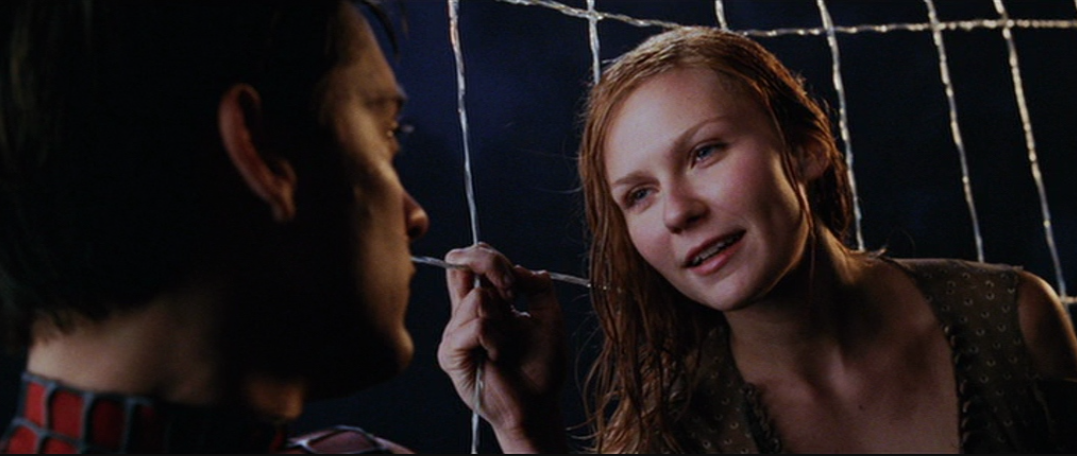
While Sandman gets the least hate of the three villains, Venom gets the most, and I can understand why. His depiction is a far cry from Todd McFarlane's classic imagining of the lethal protector. The comics depict Eddie Brock and the symbiote that inhabits him as a large, hulking monstrosity with arms the size of tree trunks and a tongue that could strangle an elephant, Raimi's Venom feels more bite-sized.
And while I understand being disappointed by Eddie Brock's Venom, even the strongest haters of this film agree that Peter wearing the black suit leads to many of the best moments in the trilogy. From the initial reveal of the suit, with Peter waking to find the symbiote staring at itself in the inverted reflection of a skyscraper, to how he later uses it to hunt Sandman in the sewers, using its deep blacks to submerge into the shadows and take his prey by surprise and grinding his head against a subway train. Watching the Spider-Man most known for being reserved and withdrawn go all out is bound to elicit a "hell yeah" from even the most cynical viewers.
Furthermore, while the symbiote has always been known to manipulate its host, lowering their inhibitions and increasing their aggression, many fans are upset by how this was represented in the film. The "Bully Maguire" scenes, as they've been not-so-affectionately dubbed, though hated by many, are some of the most fun parts of the movie for me, and I think I know where the divide stems from.
It's important to understand that when Peter is dancing down the street, snapping his fingers and ogling women, the audience isn't supposed to think that this is what a cool, edgy version of Peter Parker looks like; rather, it's what Peter thinks a cool, edgy version of Peter Parker looks like.
We aren't supposed to take him seriously when he thrusts his hips after buying new clothes on clearance; we're supposed to laugh at him the same as the women he thinks he's impressing. This is a version of Peter Parker who feels not only on top of the world, but above it, which makes it all the more meaningful when he decides to sacrifice that addictive power because he knows it's hurting the people he loves, and why it makes so much sense when Eddie Brock, after losing everything he loved, would rather die than give up the only power he has left.
While it may be easy to dismiss the Venom of Spider-Man: 3 as a poor attempt to squeeze in a studio mandate and sell more toys, I argue there is a much deeper theme to be found, one of addiction, sacrifice, and what true personal power looks like.
The New Goblin
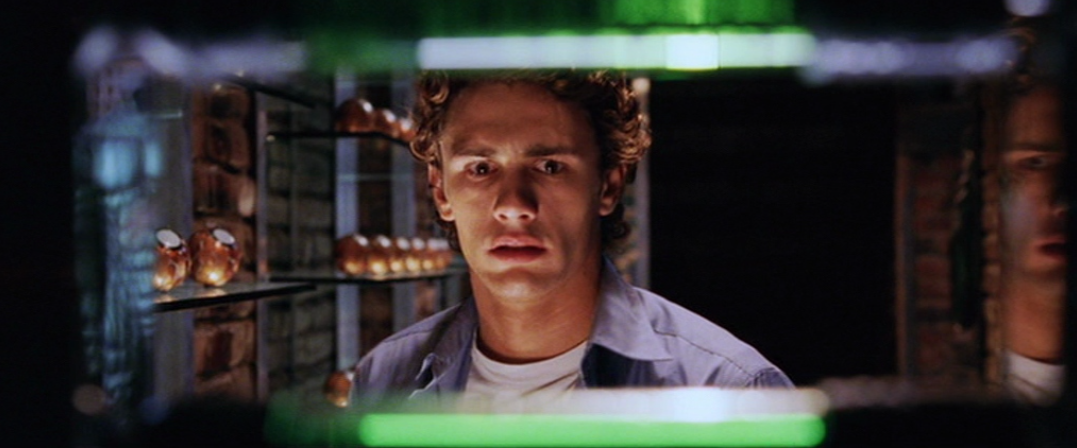
It truly baffles me that we don't see more discussion and appreciation of James Franco's Harry Osborn. I applaud Raimi's patience in developing his character, his friendship with Peter, and his hatred for Spider-Man over a decade-long trilogy.
Despite his admittedly laughable title as "The New Goblin" (I mean, seriously, Hobgoblin was right there), there are very few similarities between Harry and Norman's versions of the character. While Norman (Willem Dafoe) is driven by a potent blend of insanity and obsession, Harry is fueled by a mix of revenge, frustration, and self-hatred that rarely gets the appreciation it deserves.
Harry begins the trilogy in a way that would be easy to write off as one-note: a preppy rich kid desperate for his father's approval, and while that isn't a false initial characterization, it is exactly those traits that fuel his arc throughout the trilogy. His father is one of the most powerful and respected men in New York, and he's Harry's entire world. He wants nothing more than to prove both to Norman and the rest of the world that he's just as capable as his father, and just as worthy of respect. The problem is, he's not.
Failure is the key theme of Harry's character. He fails to earn his father's respect before he dies; he fails to run Oscorp successfully; although his plan to pay Octavius to capture Spider-Man succeeds, he fails to kill him. Even after accessing the Goblin Armory, finally gaining the power to fight Spider-Man toe-to-toe, he fails yet again, losing all memory of who Spider-Man is or what he did to his father.
This amnesia is the most tragic part of Harry's journey, as it gives us our only glimpse at what his life could've been had he been able to shed the ghost of his father. We see a Harry who's stress-free, laughs, cooks, and writes; his relationships with Peter and MJ thrive (maybe a little bit too much in MJ's case, but that's a different article), and we feel like Harry might get a happy ending. This only serves to make the return of his memories, pain, and hatred all the more devastating.
Harry and Peter's next battle is a key moment in their relationship. Peter, wearing the symbiote, is tired of trying to convince Harry of his innocence. Harry looks at Peter and no longer sees his childhood best friend whom he had to protect from bullies, but the man who stole his father's love, then his life. He is more determined than ever to kill him. But failure remains the theme of Harry's story, as the fight ends with Peter disfiguring Harry's face.
The next time we see Harry, he's at his lowest. He knows that no matter what he does, he can't beat Spider-Man or avenge his father, and everything Norman told him feels justified. He doesn't just hate Spider-Man anymore; he hates himself, he hates his weakness and his inability to live up to his father's name.
Seeing Harry's slow fall from grace hits hard to this day. Many people, I'm sure, can relate to the idea of having immense expectations that you feel you need to live up to, but no matter how hard you try, you just can't seem to reach them. We've all been in Harry's shoes and felt like we'd hit rock bottom, but those are the moments when we, like Harry, need to make choices. And that's exactly what he does.
It is only after stepping out of his father's identity and choosing who he wants to be that Harry succeeds at something: he sacrifices himself for the people he loves. This sacrifice not only closes the story on a character fans have been following for the better part of a decade, but that also sends them a very clear message, the same message Harry's father echoed five years earlier, and the core idea of the entire trilogy: You are who you choose to be.
And no villain represents that idea better than James Franco's New Goblin (the name still sucks though).