Table of Contents
Introduction
The filmmaking trio behind the Sundance nominated film, guts, recently brought their latest work, Uncle Johnny to the HollyShorts Film Festival. In their third project together, they continue to prove that their creative partnership is nothing short of lightning in a bottle.
Anatomy of a Team
A film is a living, breathing work of art—and so is the team behind it. Like the film itself, a creative team evolves, adapts, and grows stronger with each project.
The team's director, Margaux Susi, is an ambitious and levelheaded leader who keeps her eyes trained on the vision of the film and dictates with intention and passion. With sharp focus and constant consideration of her teammates' needs, she steers the team forward and ensures the story never loses its sense of purpose.
Producer, Grayson Propst, is the pragmatic engine, the one who makes creative aspirations attainable. With her diligence, people skills, and mastery of the big picture, she keeps every limb moving in sync. In a process that often feels like juggling hundreds of moving parts, she ensures the project never stalls, or spins out of control.
Writer and actor, Angela Giarratana, gives each project a pulse with her magnetic energy and vulnerability. She breathes life into her characters, giving the team's work its beating heart and emotional resonance.
With a brain, body, and heart, the team operates with undeniable synergy. They know when to lead and when to follow each other’s lead, each rising to the occasion when an obstacle calls for their particular strength. Together, the trio has brought to life three films: The Sperm Bank, guts, and Uncle Johnny.


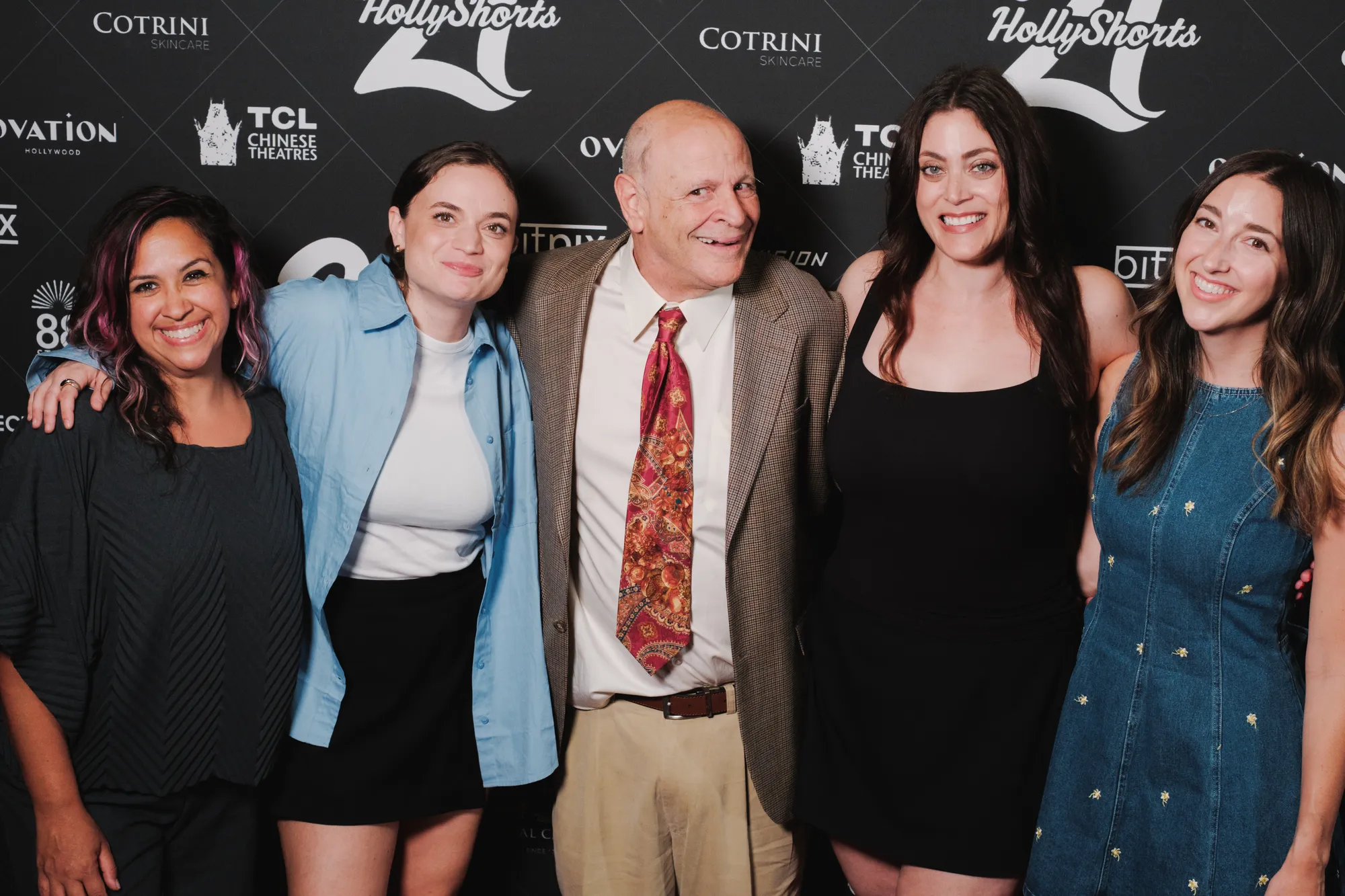
Margaux Susi, Grayson Propst, and Angela Giarratana at the Hollyshorts Film Festival (Image Credit: Charlie Nguyen)
Creative Backbone
The partnership between Susi, Propst, and Giarratana exemplifies the rare magic of finding one’s creative soulmates. Their work is bound by a shared sensibility—a commitment to intimate, personal, character-driven storytelling. As director Margaux Susi explains, “We really love our slice of life moments, where you can drop in and do anything, and they can be in any time, at any place.”
Both guts and Uncle Johnny center on just two characters. And their passing encounter with one another illuminates the humanity and complexity in seemingly ordinary moments.
Continuing to characterize the team's work, Susi adds: “One of the things that we do well is we explore some pretty dark topics through comedy. I think that’s kind of where our bread and butter is."
Drawn to the same kinds of stories, the Uncle Johnny filmmakers have forged an identity as a team, and, together, uncovered the creative backbone that defines their work.
Taking Shape
Producer Grayson Propst—lovingly referred to as the group’s “secret weapon”—first teamed up with Angela Giarratana in 2017 in a string of short films and comedy projects. In 2019, Giarratana met Margaux Susi in an acting class, and the three soon joined forces.
Their first project together was the short film The Sperm Bank, co-written by friends of the team, Rob Scerbo and Jeremy Culhane, produced by Propst and Giarratana, and directed by Susi. The story was based on Scerbo’s own real-life cancer journey.
Susi notes, “We did a pretty beautiful job of telling somebody else’s story, and after that, we realized that between the three of us, there’s something really special here.”
Their follow-up project, guts–shot over a single day in a friend’s apartment with only a handful of crew members–was a stripped-down project that proved the team’s inclination toward smaller-scale films that were personal, bare-bones, and deeply resonant. The short film focuses on a woman recovering from an eating disorder, who asks a stranger to join her for a meal.
The team developed guts with playwright Jan Rosenberg, shaping it more like a stage play than a conventional film, leaving room for experimentation—testing scenes, doing read-throughs, and letting the story reveal itself organically.
Speaking on guts' festival circuit journey, Giarratana adds, “What I love about us three is that if our film is playing, we’re gonna go see it. We would go to the same block and see the same shorts over and over again.”

The year of sitting in theaters and watching short films gave them both inspiration and a sense of shared purpose. Giarratana explains, “We were all like, okay – this is the kind of graduation we all need. Both Margaux and Grayson were moving on to big long form projects. And we thought maybe guts is the last we do of these shorts. But then you watch a bunch of short films and you get inspired. So it was kind of just a year of watching movies together and getting inspired by so many different types of filmmakers. And that’s the best part about the short film scene. Your hit for inspiration goes so much faster because you’re watching so many.”
The team says that guts felt transformative to their creative partnership particularly because of the way the film touched audiences. “All three of us got so close by watching other people watch guts,” Giarratana recalls, “because we kept having all of these incredible conversations with strangers, and it was just the three of us holding back tears, meeting so many people who had struggled with the things in our film.”
From then on, the team decided that if they were to make another short, they were once again going to aim to make something real that connects with people. For this team, there was nothing more rewarding than sharing those genuine moments with people who were affected by their film.
Touching on the team's decision to lean into vulnerable topics, Susi says, "I had never spoken about my disordered eating before, so doing guts was really scary to me. And I remember when Angela had first told me about Uncle Johnny she was like, 'I'm terrified. I don’t know if I can do this one. Let’s think of something else.' And I said, 'Hold on– I think if it scares us, it’s probably for a good reason.'"
Art can be cathartic for the filmmaker and impactful for the audience. Often, when it does one, it does the other—and this is where the team discovered their creative sweet spot. Having found their collective voice, the trio was eager to reunite for another project.
Uncle Johnny
Uncle Johnny, like guts, is a two-character film, intimate in scope yet immense in emotional weight. They partnered with Madhouse Films, co-founded by Katherine Romans and Charlie Traisman, whose support was instrumental in getting the film made.
As producer, writer, and performer, Angela Giarratana wore many hats in bringing this personal story to the screen. Drawn from her experience as caregiver to her real-life uncle, the project continues the team’s motif of deeply human, character-driven narratives.
In this 12-minute film, Rose spends the day bowling with her neurodivergent uncle, as she grapples with the secret that he is dying of cancer.
The film’s first half lingers in stillness, with each shot suspended just beyond comfort, echoing Rose’s desire to be anywhere else. Ceiling fans turn lazily. Bowling balls wait untouched. A staff member struggles to stay awake at the shoe counter. At their lane, Uncle Johnny sits, reluctant to bowl, while Rose squirms with impatience.
Director Margaux Susi describes how her pre-production conversations with DP, Meena Singh, and editor Michael Scotti Jr. shaped these deliberate choices. Knowing your editor beforehand, she explains, is the greatest gift to a director, allowing you to map the pacing and emotional impact with intention. She adds, “There’s a lot of silence in the first half of the film, and I think it makes a lot of people uncomfortable. We had some feedback saying we should have some really crazy music in there – that we should have something chugging it along. But we knew it had to feel like time was going by really, really slowly. Which was torture for Rose.”

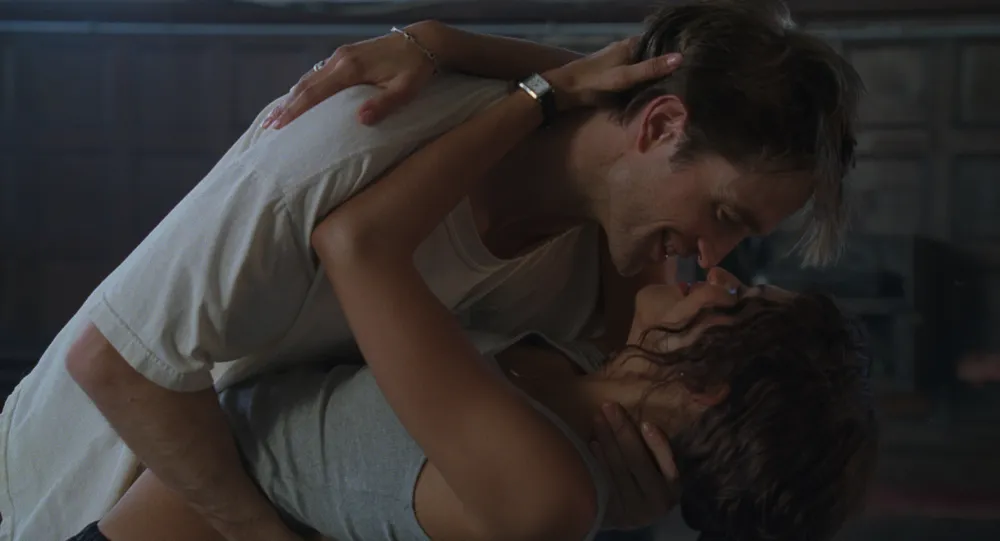
The film pivots when Rose realizes Uncle Johnny is more aware of his condition than she had thought, and the façade between them dissolves. With that, comes a breath of relief, and a beautiful montage that illustrates the uncle and niece's relationship, now unencumbered. As Susi describes: “It gets to be - what if just for a second, he doesn’t have cancer? Rose doesn’t have to be anywhere. She doesn’t have to take care of anybody. What would that joy look like?”
She continues, “I like to assume the audience is really smart, like with guts – where you drop right in and it takes people a second to orient themselves – it’s the same thing with Uncle Johnny. People might not notice every single detail that first time. But if they watch it again, all of a sudden when you get to that montage scene, you realize what this relationship really means to both of them.”
Giarratana discusses the inner conflict she faced when bringing this story to life. When her decisions might have seemed biased, Giarratana recalls that she would say "No, this is a writing thing. It has to be this way because of the writing." After reflection however, she says, "I think a lot of those obstacles were because I had multiple visions of this story. One was very rooted in truth, and one was as the writer, and one was as an actor. There were a lot of little voices in my head, but Margaux and Grayson did a great job of helping me out."
Giarratana stresses that due to the personal and vulnerable nature of this film, Uncle Johnny was truly a project she could only have made with Propst and Susi at her side. She says, “Without them, it would have been an utter disaster emotionally on my end.”
Together, they sought the most truthful way to honor the real Uncle Johnny while crafting a film that stood on its own. It was Susi’s directorial vision that provided this necessary clarity. Giarratana recalls that it was Susi who freed her from needing an actor who exactly resembled her uncle. Giarratana affirms, “Uncle Johnny was the root of this story, and the inspiration, but we were just looking for somebody who’s true behind it.” What mattered most was not resemblance, but capturing the spirit of that bond.
Propst and Susi also introduced the idea of working with accessibility coordinators. They partnered with Conrad Woolfe and Leigh Ann Smith of Indigo Casting, who maintain close ties with neurodivergent theater communities. Giarratana credits them, saying, “They’re truly doing casting like nobody’s doing it.”
Susi adds, “Not only was it important to us for it to be authentic and cast somebody with autism to honor the real Uncle Johnny, but he was also a very incredible, beautiful, deeply layered human being. So is Marc Pulver, who we ended up casting." Reflecting on the audition process, Susi says, "The many tapes we got were really beautiful and everyone was incredible in their own special way, but there was something about Marc the second we saw him. I didn’t know Angela’s real Uncle Johnny – but there was something about the stories I had heard that the second we saw Marc’s tape, we were like – this is our guy.”
Propst notes the moment that sealed Pulver as their Uncle Johnny: “What was cool, when we had the shortlist, was hearing Angela read with them. That helped solidify it, seeing her relationship with Marc who we ended up casting. There was some magic there for sure.”
The Little Details
The film’s impact was felt even in preproduction on the project. Margaux Susi notes that many more people are caretakers than you might imagine. She explains, “Caretakers are quite literally taking care of other people, so they’re not often centering themselves in that experience or talking about it.” But the team was delighted that, by discussing the film with others, they were constantly encountering caretakers who had perspectives to share. She continues, “I was quite surprised how often somebody would say, ‘Oh I was a caretaker for my uncle, or my grandmother, or my brother,’ and hearing that they felt seen.”
Beyond casting, there are many moments throughout the film that speak to the filmmakers’ attention to detail, and commitment to portraying the experience of being a caretaker with a complete, lived-in, representation.
One scene involves Giarratana’s character, Rose, entering the men’s restroom at the bowling alley to assist her uncle. Upon sharing an early draft of the script with a close friend who was a caretaker for his brother with autism, Giarratana was given a rather impactful note: There should be another person–a stranger–in the bathroom when Rose enters.
“At the time, the scene was just between me and Uncle Johnny.” Giarratana explains, “But my friend said, 'That bathroom scene made me think of all the times I’ve had to take care of my brother in the bathroom and someone is just... staring.'”
This moment underscores the discomfort that caretakers and people with disabilities, often experience in public spaces, especially when someone requires a bit of assistance. As Giarratana explains, “It’s always someone you know has never had to take care of somebody with disabilities, because sometimes you do have to get in the stall. And sometimes people stare.”
It’s the small details that capture the everyday realities caretakers experience. In a similar way, guts included nuances that only those who had struggled with disordered eating would recognize. Giarratana lightly jokes, ‘There are details that were kind of hidden Mickeys you would find if you had been through this.’"
Propst adds that this trend of theirs is “like speaking a language that only certain people know.” To which Giarratana concludes: “Real recognizes real! And that’s what’s so cool about writing the truth."

Production Challenges & Filmmaker Advice
A great team isn't just about creative compatibility, it's also about overcoming the physical and logistical hurdles that come with every production.
Director Margaux Susi credits producer Grayson Propst for steering the ship: “Grayson is the secret behind every successful film we will ever make.” From managing locations and budgets to navigating unexpected setbacks, Propst led the charge.
"The only major challenge we had was losing footage," Propst says, "but as soon as we found out what happened, I just went into ‘we gotta fix it’ mode. We got the people who were available back out there, and they were willing to work for minimum wage or free, which was incredible and gracious of them.”
"Losing footage has to happen to every filmmaker once," Susi sighs, "and that was our once. So we got it over with."
"That's the Cinderella story of a filmmaker!" Giarratana exclaims.
Regarding the other logistical challenges, such as location-booking, the Uncle Johnny team stresses the importance of respect, flexibility, and being a human being.
Sometimes you can get caught up in the business of it all, but if you make an effort to genuinely connect with people and share the heart of your project, you will find a lot more people are willing to help.
“We ended up shooting in Long Beach because we were able to get a really good deal with a bowling alley there,” Propst explains. "But we also found a bowling alley up in the valley that was willing to let us shoot for cheap because they resonated with our story. The owner had said he had an autistic son that grew up with bowling as a hobby and thought it was really cool that we were making a story about that. So even though we didn’t end up shooting there, that was an option. You just need to connect with people and share with them what you’re doing. You never know when someone finds a connection and believes in the story you’re trying to tell.”
Propst sums it up simply: “It sounds silly, but just be nice and personable. When you call locations, remember people’s first name. Ask them how they’re doing. Sometimes it just takes being a human being and staying in touch with people for them to be willing to work with you.”
Susi adds that this goodwill was important when extra hours at the location were needed after the lost footage fiasco. She stresses the way they had left the location space just as they had found it, if not better. “So luckily, when we had to call them and say we lost our footage, we hadn’t trashed the bowling alley,” she explains. “We brought donuts to the workers there. Like Grayson said, we were just kind human beings so we weren’t screwed and didn’t have to reshoot the entire film because we couldn’t get back into that bowling alley.”
The team also faced a new creative leap: shooting with two cameras. Giarratana jokes about Susi’s insistence on the matter. “Between shooting guts and Uncle Johnny, Margaux went and shadowed a bunch of huge TV projects, and came back and said, ‘We’re using two cameras or nothing.’ And Grayson and I said, ‘Oh?’” she recounts with a comedically arched eyebrow. Despite the playful teasing, the whole team agrees that it was a necessary next step to upping their game and elevating their work.
“We needed that,” says Propst, “We made it happen. But with the perspective I come from, when you shoot with two cameras, you’re not just shooting with two cameras. You’re shooting with two crews. You’re shooting with a bigger truck. You’re shooting with more equipment. There’s more labor. There’s more transport. There’s higher insurance. When you shoot with two cameras it expands everything."
By staying adaptable, thinking on their feet, and committing to kindness, the team not only overcame setbacks but also elevated their craft, proving that filmmaking is built on both the big picture and its minutiae.
Conclusion
Reflecting on their success, and giving advice to the searching filmmaker out there, Susi says, “Find the people you love to make art with and hang onto them forever.”
“It’s one of those things where you come up together making movies," Giarratana adds, "and then at some point, everyone’s on these large budget things and you’re like–when can we get our own donuts and make something in our apartment again?" Finding lightning in a bottle with collaborators doesn't happen everyday, and for that reason, this team assures that they will always be itching to reunite.
Looking to the future, Susi says, “The three of us have very diverse individual careers, but we love making art together, so hopefully we can make Uncle Johnny into a feature when time, budget, and inspiration allows."
With three powerful films behind them and the momentum of a shared vision, they’ve proven that their work resonates beyond the screen, speaking to the humanity, vulnerability, and humor that connect us all.
At this stage of their collaboration, strengthened by trust and the challenges they’ve faced together, Giarratana puts it simply, “Oh my god, this team can do anything."