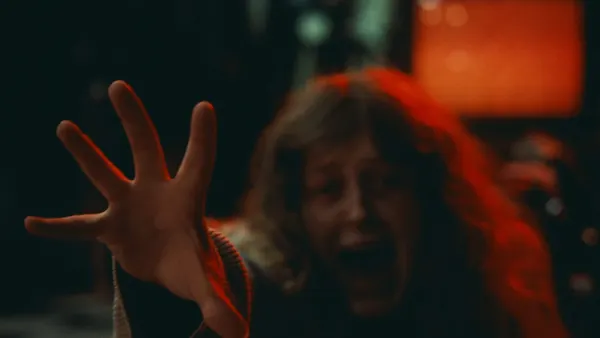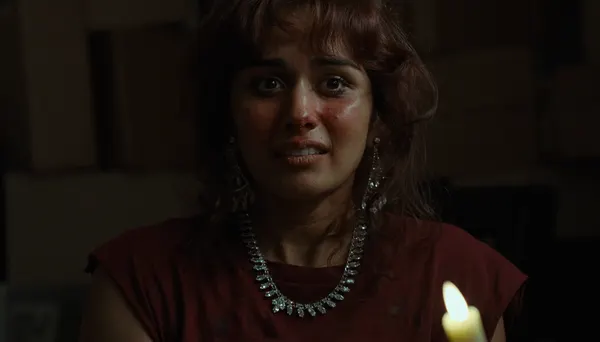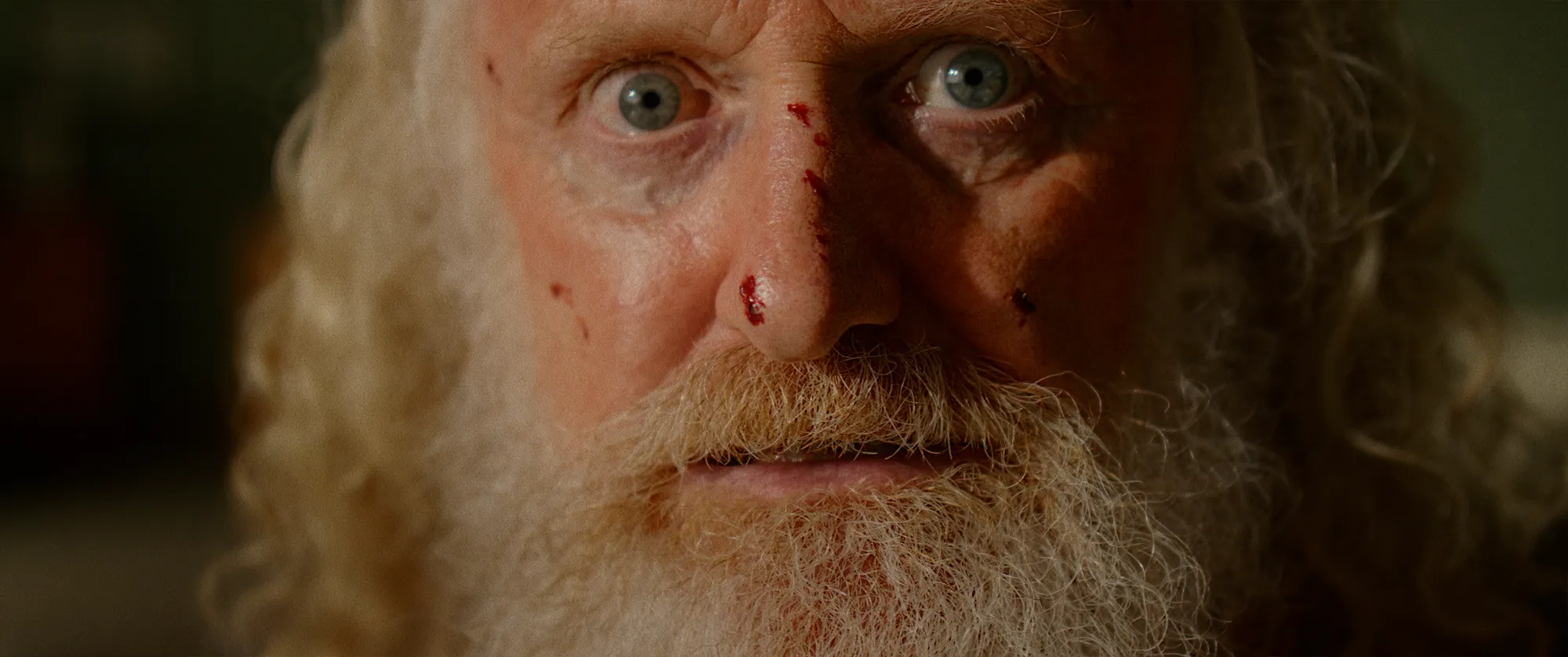
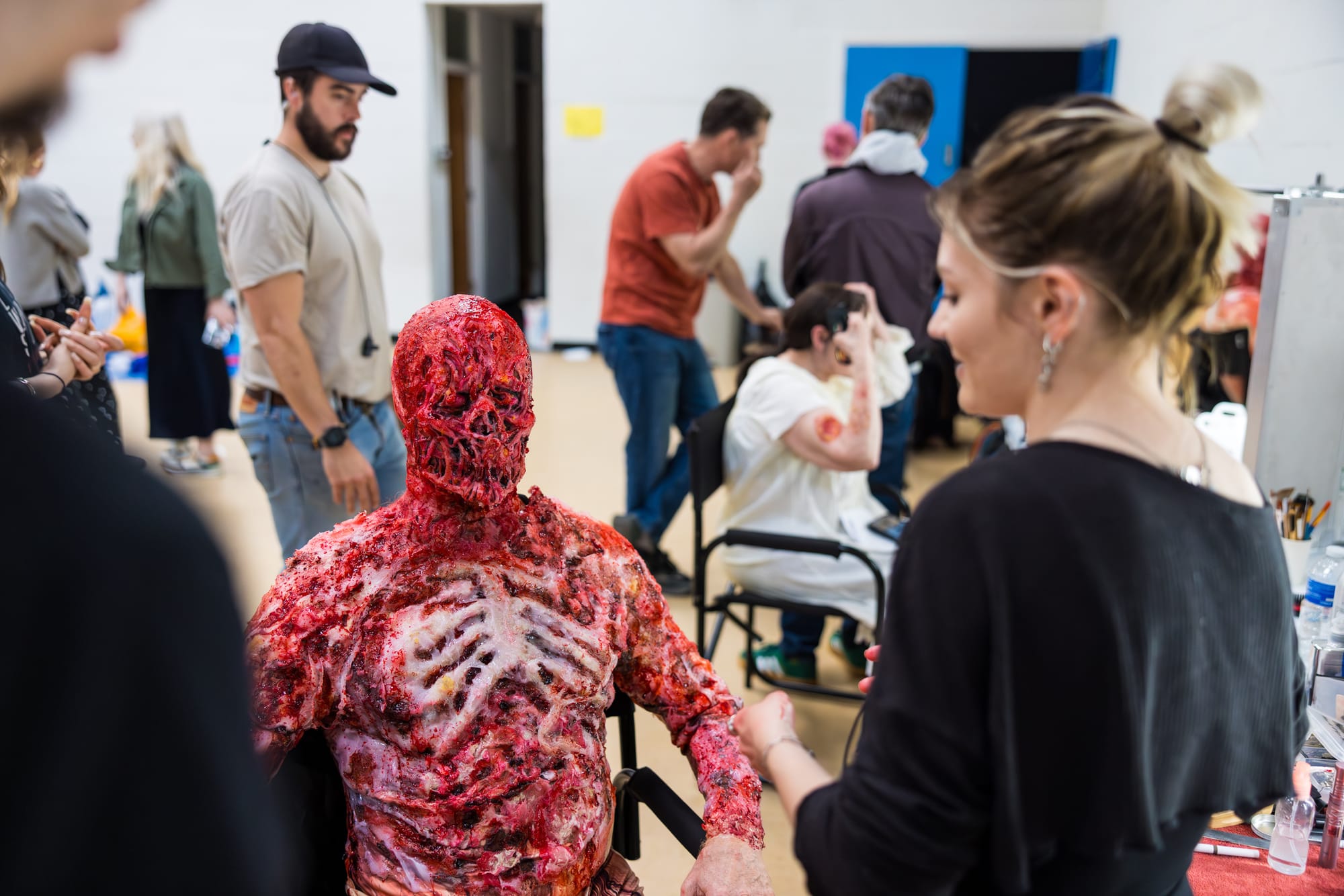
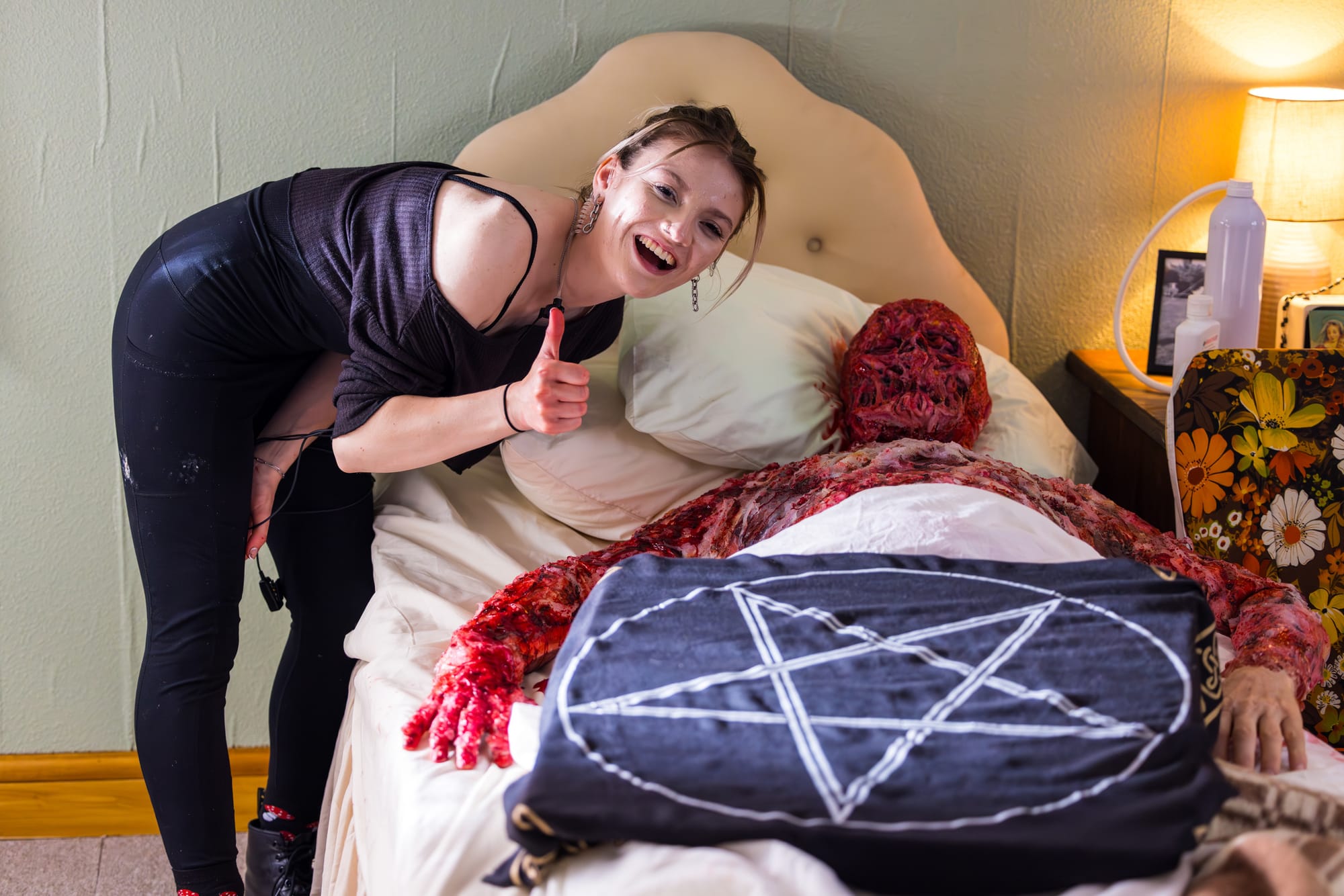
Moira has buried her husband, or tried to. Patrick's hand won't release hers, and as the grip holds, everyone in the couple's orbit — their daughter, the local doctor, a farmer, a priest, a Satanist — arrives with a solution and leaves behind a worse problem. A Hand to Hold, written by Eliza Power and directed and edited by Philip Clyde-Smith, takes the most literal possible reading of a marriage that won't end and lets it curdle into grotesque, very funny horror.
What keeps the film from being a gag is where it places its sympathy. The protagonist is an older woman, and she is not the monster; the monster is the man she married. That inversion gives the body horror its ache, and it gives Clyde-Smith's blunt advice to the audience — don't wait until you're seventy — something closer to urgency than punchline.
Key Takeaways
- Eliza Power wrote the first draft in a few hours, out of a longing to write characters with real life experience; the short now functions as proof of concept for a feature.
- The film barely shifted from script to animatic to shoot to edit, with scenes often landing in one or two takes.
- The central blood explosion, shot at 1000 frames a second with a single take available, went wrong — and the mistake made it better than anyone had planned.
Clyde-Smith spoke about collaboration, emotional editing, and the strange economics of getting a UK short to a US genre festival.
Interview
What drew you to make this film, and why this story, why now?
Eliza Power, writer: I was working on a TV show set in Ireland that featured a lot of very young characters, and I longed to write a story about people who had more life experience. One day, in a fit of frustration, I thought I would write a few scenes to include about an old married couple. Somehow, my love of horror collided with my love of Ireland and my heritage, and I finished the draft in a few hours. Writing the first draft was unexpected but it very quickly developed into something much bigger, and we realised with this short that we had a proof of concept for a much deeper, darker and even funnier story to tell. The short is just a snapshot of the toxic relationship and village — there's a lot more still to explore.
Philip Clyde-Smith, director: Why now? Toxic relationships are universal. I think sadly it's a human problem. Also I think everyone has a family relative, probably older, who is in a difficult marriage.
What surprised you most about the filmmaking process, creatively or logistically?
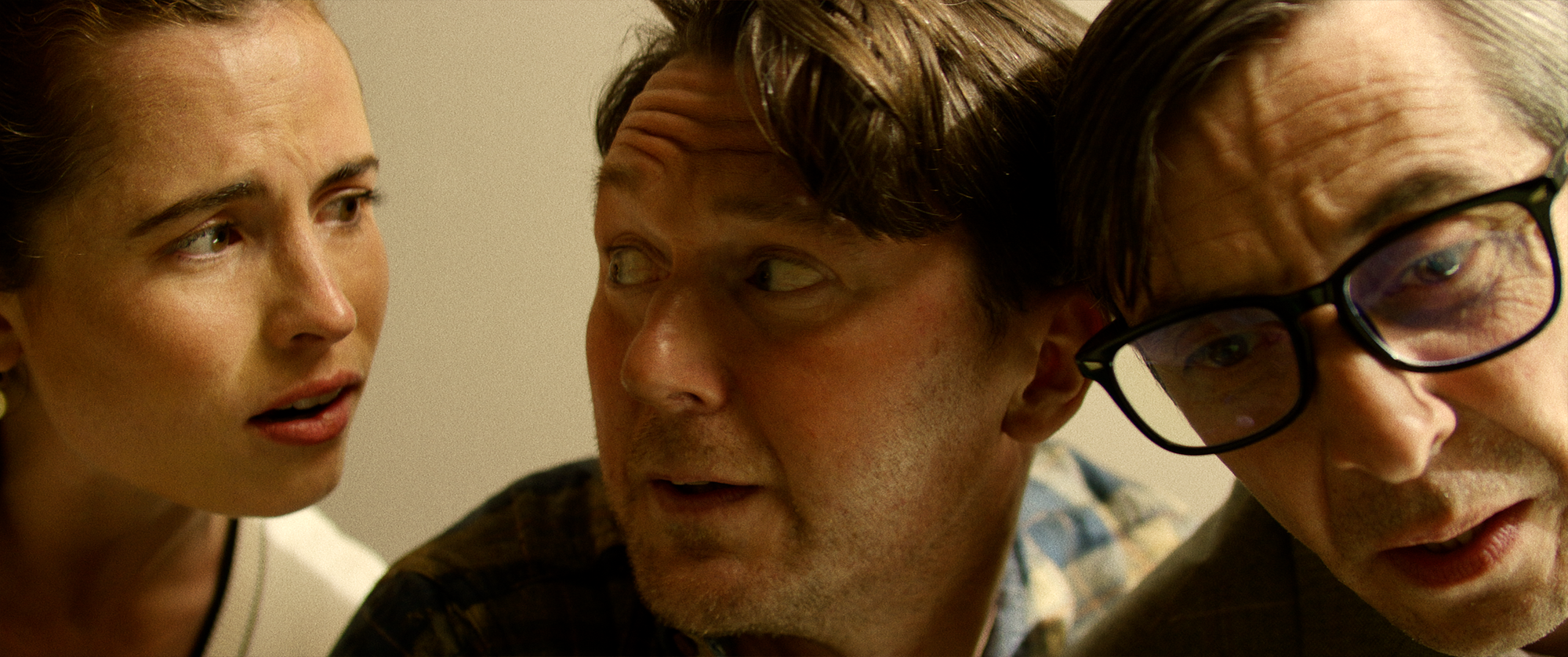
The biggest surprise is how little the film changed from the script, animatic, shoot and edit. It's pretty close to the script. I mean visually it's very close to my treatment and mood board. A lot of that had to do with the calibre of the crew and especially the actors we had. They really made it their own. We would often get the scene in a take or two. Which was crazy. Sometimes even one take.
What moment in the film feels most like you, or like something only you could have made?
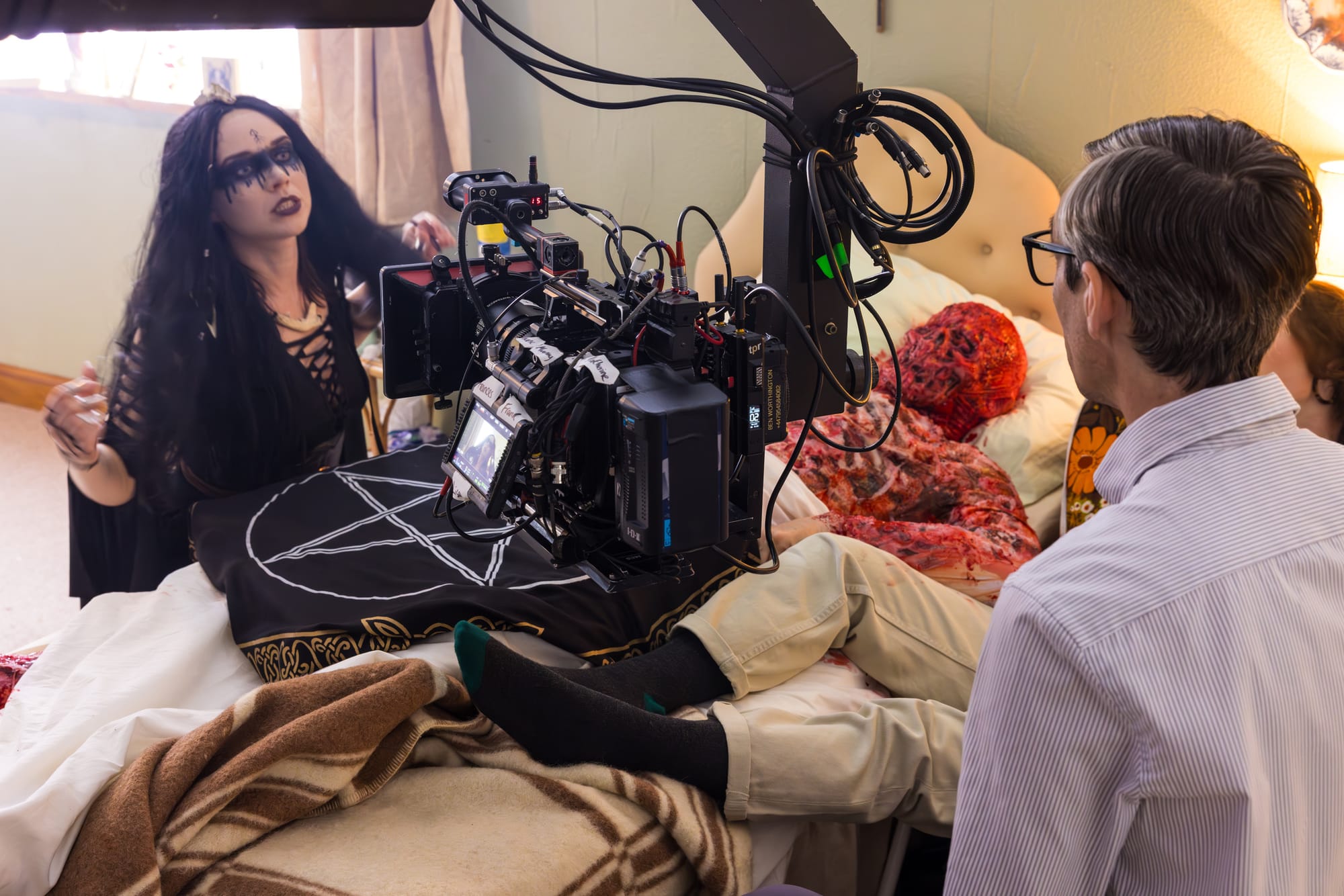
That's a hard one to answer because — and this is a cop out — directing is a collaboration. I suppose the bit that feels most me is that I got a group of very talented people in a room and steered them on a journey. It is me, this film, but also it is everyone that helped make it. I mean the script is Eliza's, the cinematography is Deane's, et cetera. My directing style is mixing dark comedy and horror and drama. I like giving audiences time to allow the story to build. Keep them guessing. Also the editing, which is done by me, is very me. I like to call it emotional editing. It's not about clever transitions or cuts but editing to carry across emotion.
What was the hardest creative decision you made while making the film?
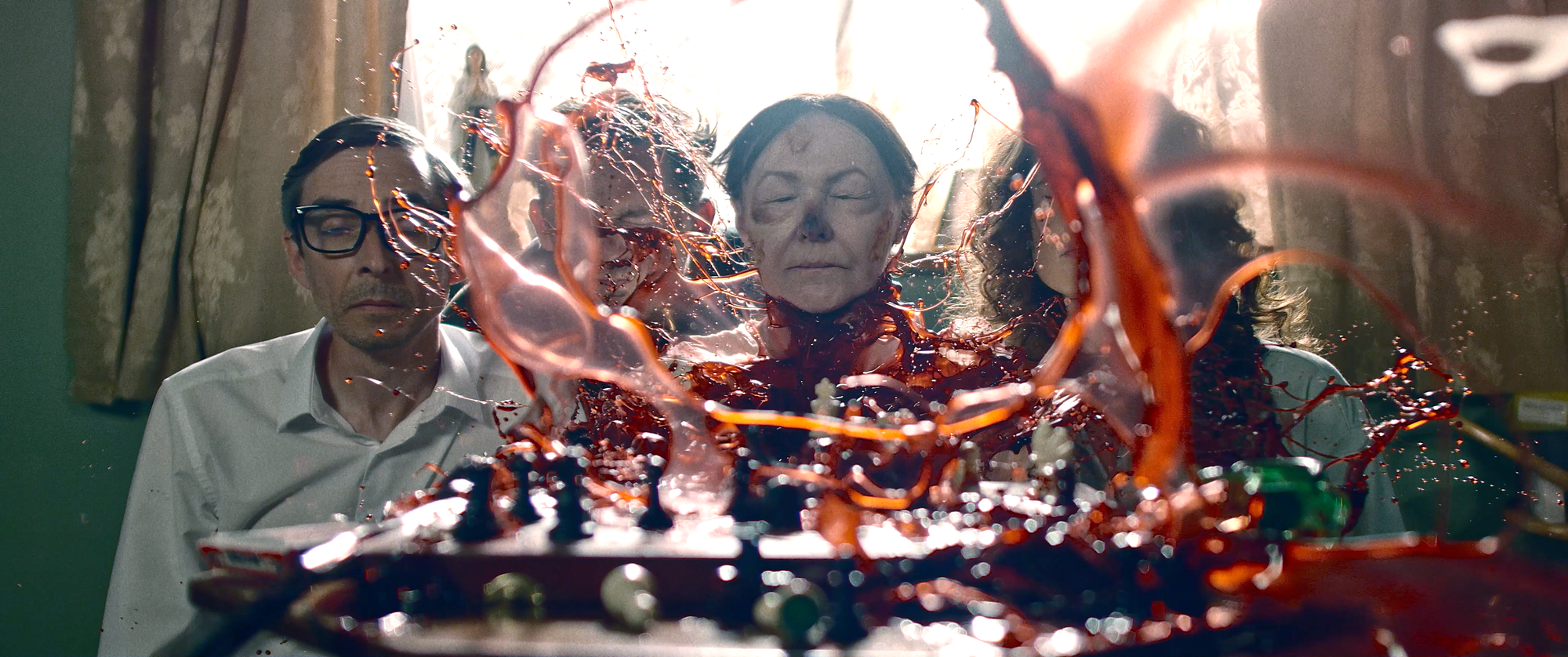
The special effects. We had this main blood explosion scene. The SFX team were going to throw buckets of fake blood and guts at the actors whilst being filmed at 1000 frames a second. I decided I would throw the bucket with the 1st AD. The SFX team had so much pressure on them. I didn't want to take that away from them, but we only had one take, and if I screwed up I could happily own it. If that makes sense. However I did screw it up — and that screw up made it better than we could have ever imagined.

What tool, technique, resource, collaborator, or mindset shift helped most during production?
Ah, that's a really good question. As a director you come in with your ideas. You've spent days, weeks, months, years prepping, and sometimes that can make you precious. So I really learnt to let go and trust the team around me to run with those ideas. Stop trying to control them, and allow their skills to take it to new heights.
How does your film fit within, or push the boundaries of, its genre or form?
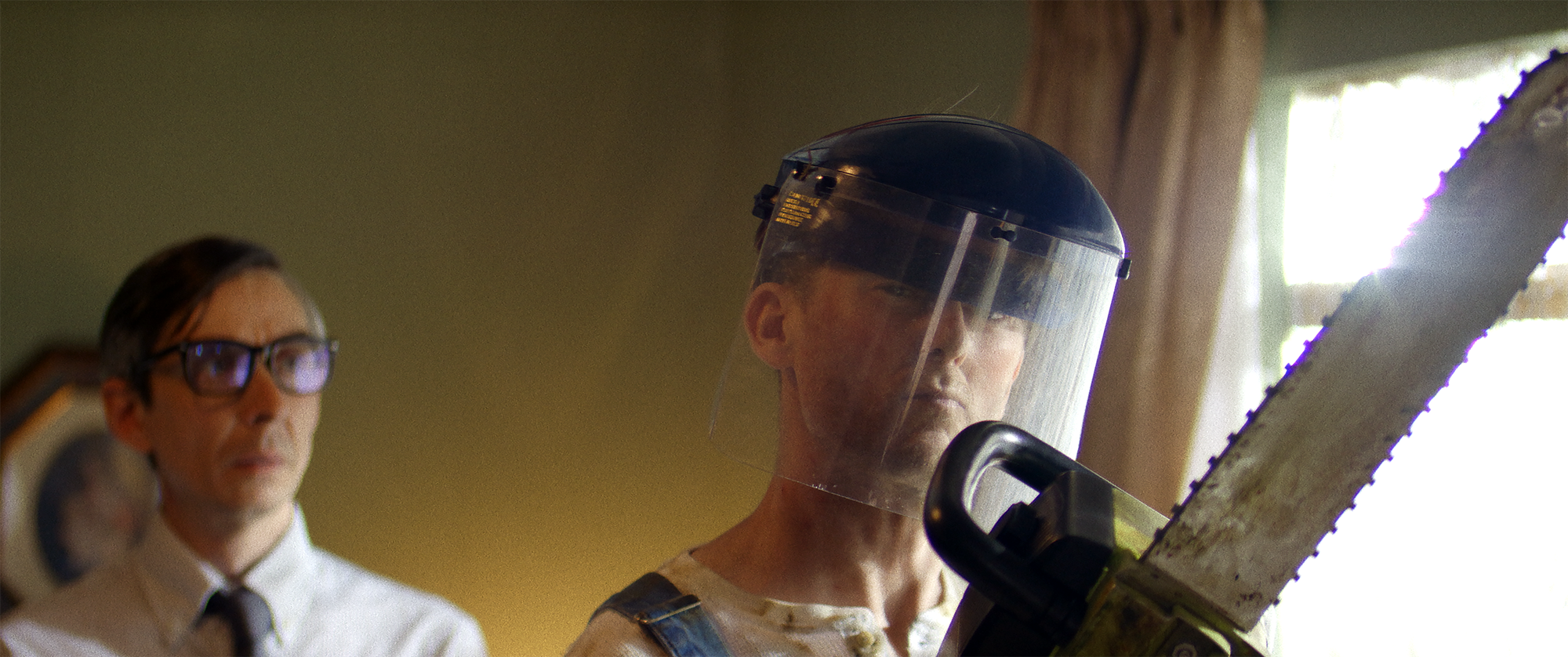
What I like about our film is that the protagonist is an older person, which I think generally is quite unique. She is not the monster. The monster is her husband. I think it's an interesting take on the body horror genre. I wish older people watched horror more, because when they do they love our film. I hope we haven't ended too many marriages — unless of course they are toxic.
And what I hope audiences take away: if you're in a toxic relationship, don't wait till you're 70. End it now.
What is the greatest strength of independent filmmaking, and how did you lean into it here?
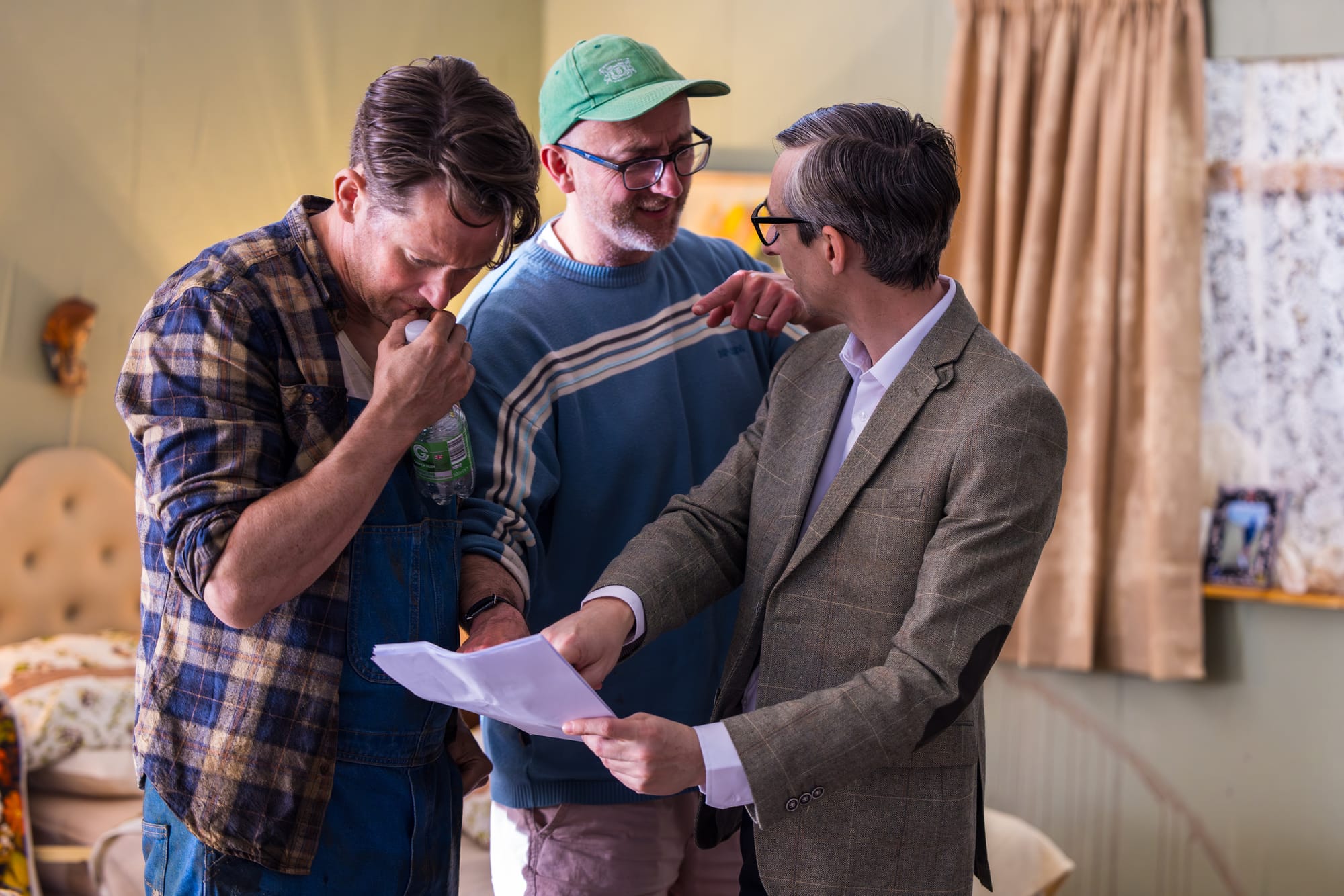
The greatest strength of independent filmmaking is that you have a tight budget, and that makes you think harder to achieve the shot. You really have to think about what you want to convey in this scene. You might only have one take. It's such a family affair too. The craft and the DIY nature of it. I love it.
What does it mean to have your film selected for FilmQuest, and where does the film go next?
Fuck me! It's insane. We're just really gutted we can't be there. It's really hard to get to all these festivals from the UK, especially the USA as it's expensive — you can almost spend as much as you did on production. I wish we could be there. We have normal jobs and family in the UK so it's not straightforward. I'm sad about it.
Hopefully some more big genre festivals, but our main goal is to get this delivered as a feature. We're developing it, and we have another short about a vengeful cat murdering misogynistic men on the London tube. I want to direct more horror, especially films where horror is exploring an emotion like revenge or hate. Also one day I want to make a musical. At the core of all my work is a desire to entertain and at the same time make people laugh, then cry.
Main Cast & Crew
- Murray McArthur — "Patrick"
- Shane Casey — "Mike"
- Frances Barber — "Moira"
- Frank Bourke — "Doctor"
- Lisa O'Connor — "Kathleen"
- Katherine Moran — "Satanic Priestess"
- Jimmy Tarbuck — "Priest"
- Written by Eliza Power
- Directed & Edited by Philip Clyde-Smith
- Produced by Greg Mills
- Director of Photography — Deane Thrussell
- Production Designer — Cheryl Lasa-Tarbuck
- Hair, Make-up & Prosthetics Designer — Eve Pashley
- Costume Designer — Alessandra Aschenbrenner
- Costume & Art Assistant — Tattia Rose
- Website
Filmmaker Opportunities
💛 Fund your next project with fiscal sponsorship
Have a project in the works? As a 501(c)(3) nonprofit, the Cinematography for Actors Institute can accept tax-deductible donations on your film's behalf — a door-opener for grants, foundations, and supporters who want to back your work. We've serviced over 100 projects to date and helped route over $800,000 in funding to filmmakers. Explore fiscal sponsorship →
📬 Grant deadlines and festival opportunities, straight to your inbox
The CFA newsletter rounds up grants, festival calls, and community news for independent filmmakers — the kind of opportunities that are easy to miss and painful to miss. Join the newsletter →
🎬 Focus on the creative — we'll help with the logistics
Production Management, CFA's newest member program, launches this November: production insurance and workers' comp, payroll, film permits, gear rental coordination, SAG-AFTRA compliance, contract drafting, production consulting, and crew recommendations — handled by a team of working filmmakers, à la carte or all in, in partnership with Creative Access Group. It's waitlist-only until launch. Join the waitlist →
League of Filmmakers is published by our parent organization, the Cinematography for Actors Institute — a 501(c)(3) dedicated to education, community, and capital for underrepresented filmmakers and actors. Learn more about CFA →