Table of Contents
Three Key Takeaways
- Mike Pappa blends his love for Westerns and supernatural horror into a moody, atmospheric 2D animated short.
- The film’s creative process was fluid and experimental, evolving through storyboards and animatics without a fixed script.
- Independent filmmaking’s freedom and constraints inspired inventive storytelling, allowing Pappa to realize his unique vision.
Mike Pappa, the director, animator, and writer behind the chilling and atmospheric short film Terror in the Valley, brings a fresh animation-driven perspective to the genre mix of Western and supernatural horror.
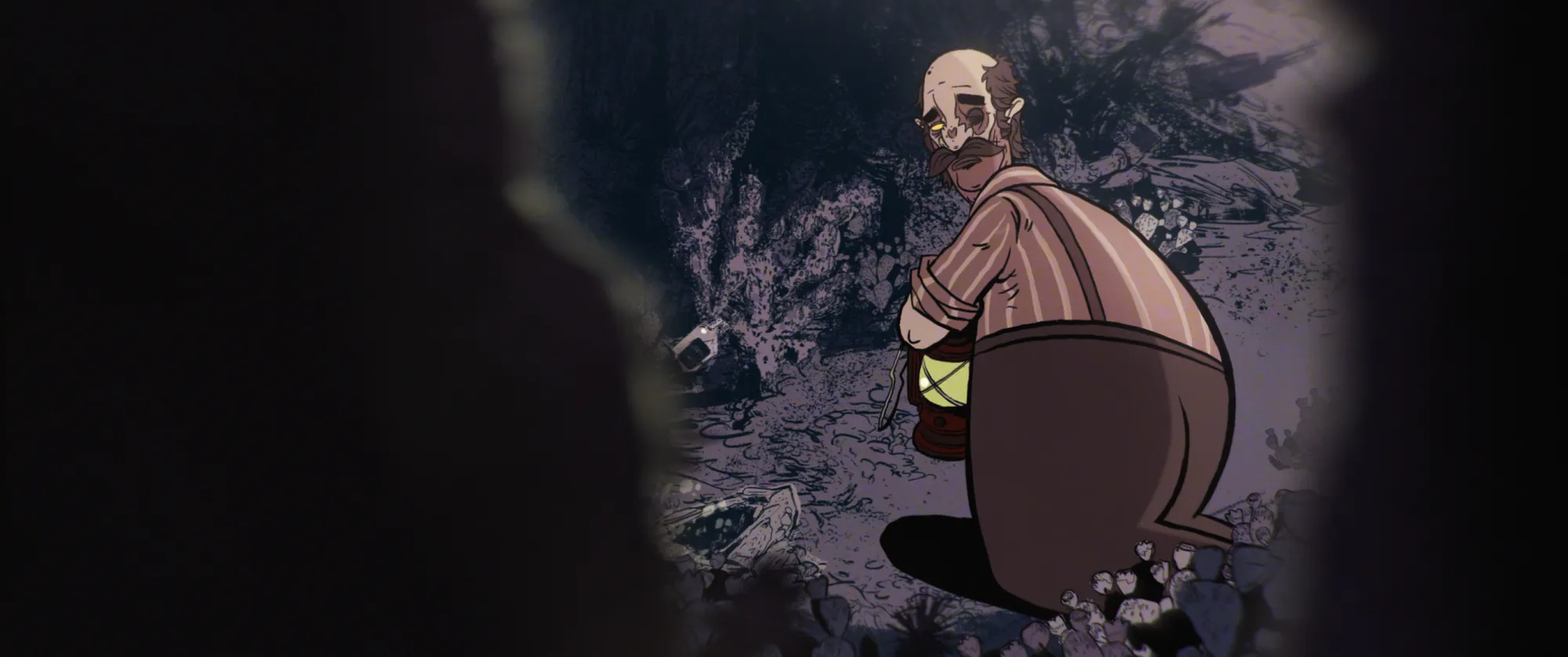
Selected for FilmQuest, one of the world’s top genre film festivals, Pappa’s film follows a drifter and his dog on a cold desert night as ancient creatures stir from the shadows.
Combining dark humor with cosmic dread, Terror in the Valley marks a bold step in Pappa’s evolving storytelling journey.

What drew you to make this film? Why this story, and why now?
I was looking to get back into 2D animation and wanted to create a simple yet atmospheric short with a jump scare. All of that combined with my love for Westerns and the supernatural.
"It’s opened new avenues in filmmaking—both live-action and animation—and shown me I want to keep exploring darker, stranger worlds driven by mood, mystery, and the unknowable."
What surprised you most about the filmmaking process this time—creatively or logistically? Was there a moment on set or in post that completely changed how you saw the story?
For this film, I started with storyboards and an animatic—there was no script. The character design and timing evolved organically, with new shots created or redone along the way, and I even developed a new look for the second half. It was a lot of trial and error, haha. For future animation projects, I’ll finalize much more before animating a single frame.

What was the hardest creative decision you made while making this film?
The hardest decision was deciding to animate the dog character and finding the balance between realism and it having a personality.
"For this film, I started with storyboards and an animatic—there was no script."
What do you hope audiences take away from your film?
I hope audiences come away enjoying the film and its dark humor and moody atmosphere.
How has this film shaped or shifted the kind of stories you want to tell next?
It’s opened new avenues in filmmaking—both live-action and animation—and shown me I want to keep exploring darker, stranger worlds driven by mood, mystery, and the unknowable.

What’s a tool, technique, or resource that really helped you during production?
The combination of Photoshop and my Surface Pro laptop.
"The freedom to create stories and characters only you can bring to life—no one can say no, and your vision is limited only by your own skills and imagination."
Independent filmmakers often rewrite the rules out of necessity. What do you think is the greatest strength of independent filmmaking, and how did you lean into that on this project? Is there a lesson or breakthrough you’d share with others navigating this path?
The freedom to create stories and characters only you can bring to life—no one can say no, and your vision is limited only by your own skills and imagination. Yet restrictions—whether budgetary or scheduling—can also spark unexpected creative solutions.
"Terror in the Valley begins as a stark Western, then pushes genre boundaries by unleashing ancient horror—turning frontier solitude into a confrontation with cosmic dread."
What does it mean to you to have your film selected for FilmQuest, one of the world’s top reviewed genre film festivals?
It means a great deal—validation that I’m on the right path, and that the worlds I create resonate with like minded genre fans and filmmakers.

FilmQuest celebrates the majesty and might of genre filmmaking across fantasy, horror, sci-fi, action, thriller, western, kung-fu, and beyond. How does your film fit within—or push the boundaries of—genre storytelling?
Terror in the Valley begins as a stark Western, then pushes genre boundaries by unleashing ancient horror—turning frontier solitude into a confrontation with cosmic dread.
"The hardest decision was deciding to animate the dog character and finding the balance between realism and it having a personality."
Where do you see this film going next?
I'm hoping it gets into a few more genre festivals, allowing others to see my work.
"At the core of all my work is a desire to pull the pulpy, illustrated worlds in my head into vivid, living form."