Table of Contents
Three Key Takeaways
- SEÁNA blends documentary and narrative forms to reveal raw, unfiltered grief through personal dialogue and archival footage.
- Audrey Lane’s background as an end-of-life doula deeply informs the film’s compassionate approach to loss and trauma.
- Independent filmmaking’s creative freedom and scrappy resourcefulness shaped the film’s authentic and experimental style.
Audrey Lane, a filmmaker and end-of-life doula, brings a deeply personal and innovative hybrid documentary to Nòt Film Fest with her film SEÁNA.
Featuring Rosalie Neal and produced alongside Seika Paradeis, the film intertwines 8mm camcorder footage, digital, and archival materials to explore the profound impact of early loss.
Audrey’s work navigates themes of trauma, LGBTQ+ identity, and community, with a focus on emotional truth and activism.
Through SEÁNA, she offers an unvarnished meditation on grief, friendship, and memory.

Q&A Interview
What drew you to make this film? Why this story, and why now?
SEÁNA was born from my desire to offer a raw, unfiltered portrayal of grief that challenges romanticized depictions often seen on screen. As both a filmmaker and end-of-life doula, I have long been frustrated by how loss and grief are idealized in cinema, particularly when it intersects with young people’s experiences. SEÁNA examines how the trauma of untimely loss not only disrupts one’s sense of self but also fundamentally reconfigures one's relationships and worldview. As our youth face unprecedented levels of mental health struggles in 2025, there is power in meeting complicated emotions with honesty, openness, and dignity.

What surprised you most about the filmmaking process this time—creatively or logistically? Was there a moment on set or in post that completely changed how you saw the story?
The process of making SEÁNA was humbling, inspiring, and filled with moments of deep attunement, reckoning, and learning. As an end-of-life doula, creating this film alongside my friend Rosalie reminded me of the sacred, singular nature of grief and that no matter how intimately we know someone, there is always more to uncover. Rosalie taught me that even after wounds become scars, they can still bleed and that the scars we carry from adolescence often run the deepest.
"SEÁNA examines how the trauma of untimely loss not only disrupts one’s sense of self but also fundamentally reconfigures one's relationships and worldview."
Is there a moment in the film that feels the most you—something only you could have made?
Ultimately, this film is Rosalie’s love letter to Seána, and my love letter to Rosalie. I’ve always believed that for the viewer to truly feel Seána’s absence, they first needed to feel the way Rosalie expresses love as a friend. The jokes, dancing, small asides emerge from our real-life friendship which I believe anchors this narrative. I see this film as an ode to friendship, youth interrupted, and the enduring imprint of a soul who lived and loved fiercely.

What was the hardest creative decision you made while making this film?
This film was originally built around a letter Rosalie wrote to Seána, but as the documentary moments unfolded, the two forms of dialogue began to compete rather than complement each other. The hardest decision I made was to remove the letter I once saw as the film’s spine, allowing the story to rest entirely on Rosalie’s vérité voice.
What do you hope audiences take away from your film?
I want this film to empower viewers to embrace love fully and to share their pain openly.

How has this film shaped or shifted the kind of stories you want to tell next?
While making this film, I sought to explore how romanticization shapes our understanding of truth. To achieve this, I experimented with blending documentary and narrative forms, letting the content itself guide the film’s shape. My next film "A Town Called Needville" is a documentary composed entirely of still photographs, animated not through motion but sound. I am committed to continue telling true stories, but I’m excited to challenge conventional ideas of what a “film” can be, using form to deepen context, meaning, and resonance.
What’s a tool, technique, or resource that really helped you during production?
Listening and trusting that every challenge and restriction will actually make the film stronger.

Independent filmmakers often rewrite the rules out of necessity. What do you think is the greatest strength of independent filmmaking, and how did you lean into that on this project?
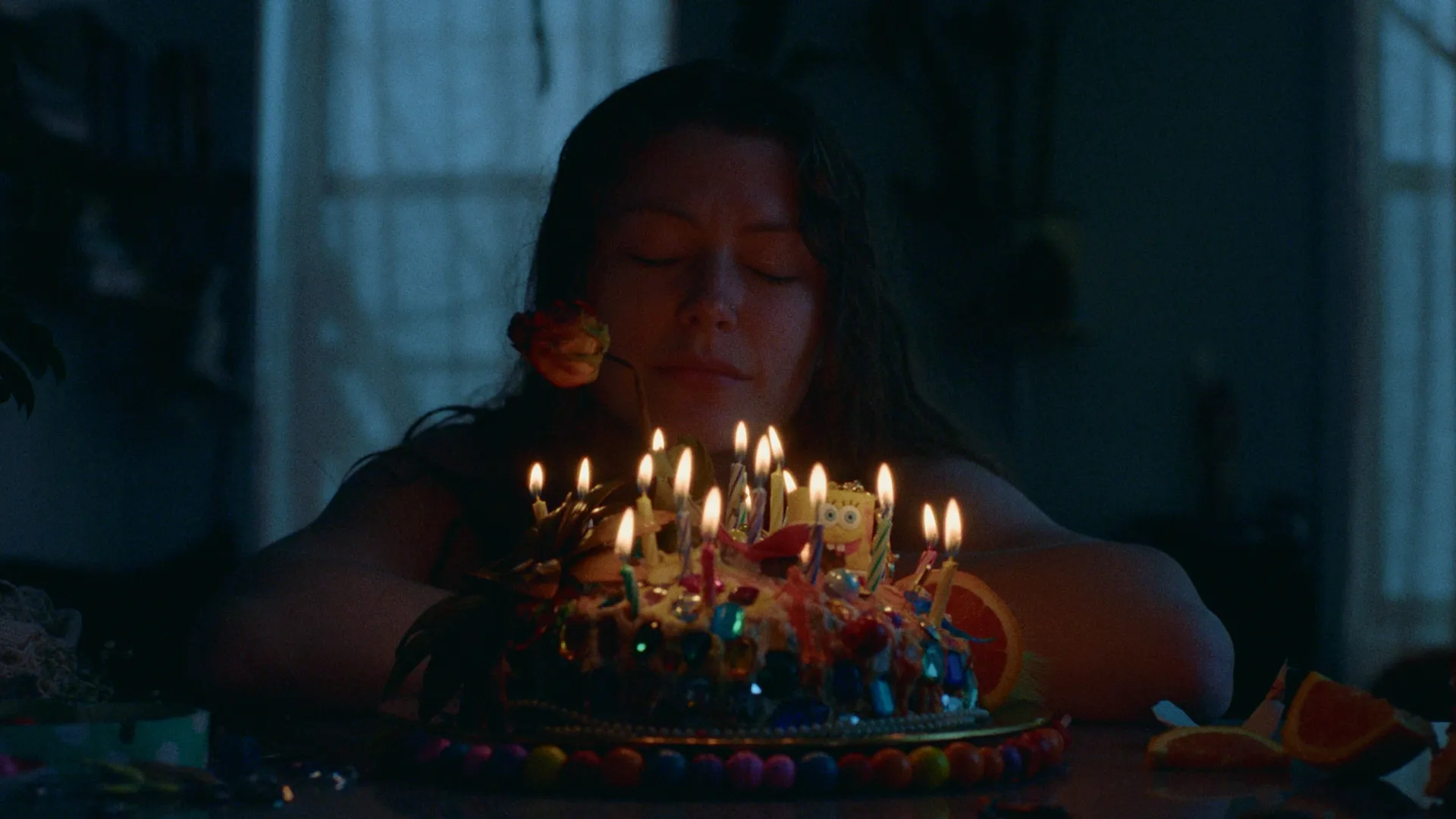
Having never attended film school, scrappy independent filmmaking became my way of learning the craft. I would write something, rally a few friends, borrow a camera and then spend months trying to make something of it all in Premiere. I believe independent film is a beautiful place to grow and exist in because it demands that we become jacks of all trades: producing, directing, editing, holding a boom mic, and, damn, even putting candles on a cake. At the same time, indie storytelling offers full creative freedom to experiment and embrace mistakes.
"Ultimately, this film is Rosalie’s love letter to Seána, and my love letter to Rosalie."
What does it mean to you to have your film selected for Nòt Film Fest?
I’ve been following Nòt Film Fest for three years now and have always been drawn to its deep authenticity and original spirit. Receiving the acceptance email was truly thrilling. I’m excited to bring SEÁNA to a festival that wholeheartedly embraces independent filmmaking and to share this experience alongside other inventive artists.

How do you hope being part of Nòt Film Fest will shape the life of this film?
I’m excited to see what emerges when a group of trailblazing, scrappy artists come together. I look forward to seeing how SEÁNA resonates with audiences at Nòt Film Fest, and I’m eager to explore opportunities around distribution, impact campaigns, and to connect with potential future collaborators.
Where do you see this film going next?
Following our festival run, we hope to bring SEÁNA to schools and community spaces across the country through impact screenings, in partnership with organizations like INELDA and the COPE Foundation, to help foster more open, compassionate conversations around loss and youth mental health. We also intend to submit SEÁNA to online platforms like Nowness, Omeleto and Film Shortage.
“At the core of all my work is a desire to bridge the gap between "what is said and not meant, and what is meant and not said" (Khalil Gibran)."

"I believe independent film is a beautiful place to grow and exist in because it demands that we become jacks of all trades."
Cast & Crew
- Cece Chan — Cinematographer
- Angie Nicholas — Editor
- Joseph Neilon Magee — Sound Designer
- Zack Chalmers — Colorist
- Jacqueline Brockel — Production Designer