Table of Contents
Three Key Takeaways
- David Labajos Sáez’s Simón blends video game nostalgia with provocative themes about simulation and faith.
- The film’s production thrived on passion and creativity, overcoming budget limits through a close-knit, collaborative team.
- Labajos Sáez embraces independent filmmaking’s inventive spirit as a foundational approach to storytelling and problem-solving.
Madrid-born filmmaker David Labajos Sáez, also known as LSDavid, brings his incisive sci-fi short Simón to FilmQuest, one of the premier genre festivals in the U.S.
With a rich background directing over 80 music videos for major Spanish artists, Labajos Sáez crafts a textured narrative about a video game character questioning his own existence.
Supported by a talented crew including cinematographer Héctor Mingote and producer Juantxu Álvarez, Simón has already garnered international acclaim with over 60 festival selections and nine awards.
What drew you to make this film? Why this story, and why now?
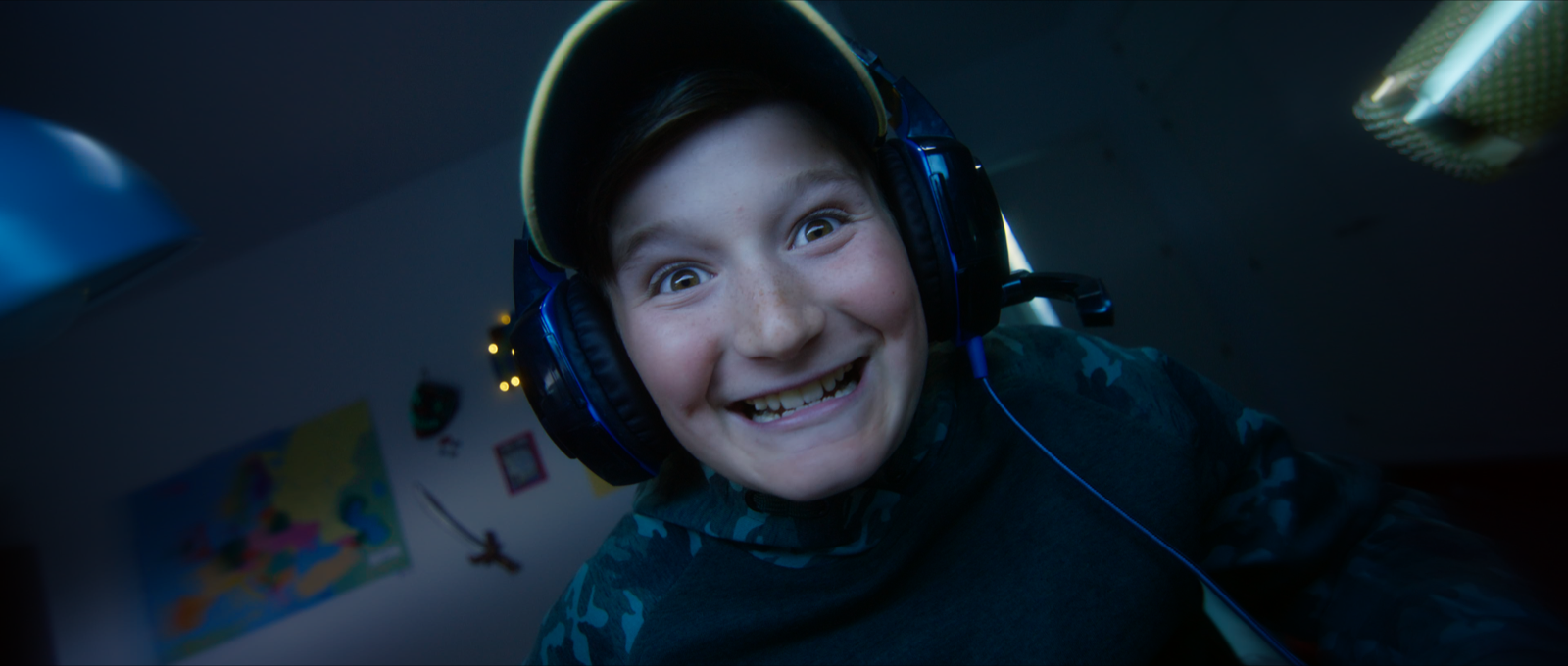
I wrote this short film nine years ago, when I was only 21. Back then, I had a YouTube channel where I uploaded sketches that mixed comedy and science fiction. It first came to me as an idea for a sketch, but I quickly realized its potential and decided to write it as a short film instead. However, it took me a long time to gain the experience and contacts I needed to make it the way I envisioned. After many years of work, learning, and saving, I finally managed to bring it to life.
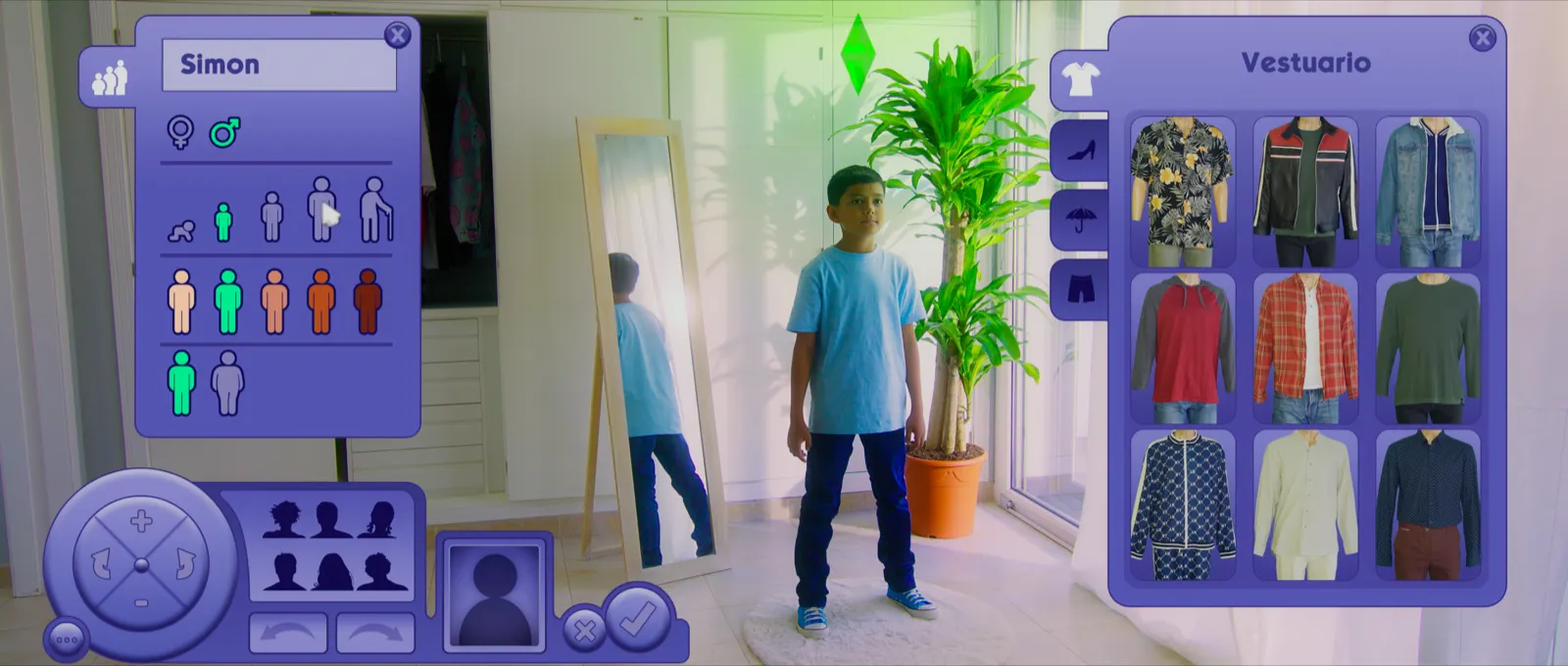
I believe this story deserves to be told now, especially with the recent advances in artificial intelligence, which are increasing the scientific discussions around the possibility that we might be living in a simulation. That’s precisely what the short film explores. I also wanted to tell the story as a tribute to my childhood—and that of many kids from my generation—who spent countless hours playing The Sims. I used that game as a vehicle to explore the themes of simulation and Christian religion.
What surprised you most about the filmmaking process this time—creatively or logistically? Was there a moment on set or in post that completely changed how you saw the story?
With this short film, I realized that a good idea can take you very far, even if you don’t have many resources. I started developing it completely on my own, and just with the script, I managed to get many professionals interested in joining the project without really caring about the budget, simply because they loved the concept.
A producer who had read the script also reached out to me and offered to contribute financially because he really liked the idea. We even managed to secure the main location thanks to the story — I contacted the homeowner online, showed him the script, and he loved it so much that he decided to let us use the house. And that’s how it went with many other things, since we had extremely limited means.
Thanks to the amazing team who believed in me and in the idea, we were able to make the film with a ridiculously small budget compared to the final result — and that’s now opening a lot of doors for me. So I’d like to take this opportunity to thank everyone who trusted in the project and in my passion.
Is there a moment in the film that feels the most you—something only you could have made?
Overall, I feel that the project reflects a lot of who I am. Even though it includes many nods to the video game, they’re presented in a very personal way. For example, there’s a scene where the Sim and the Pink Rabbit, an easter egg from the game, are smoking weed and drinking together — since they know they’re trapped in a simulation, nothing else matters.
Another very special moment for me, which represents all my projects, is the end credits, where every team member appears doing a cameo in the character creator. I try to include this in all my short films. Whenever the team is willing, they can make a cameo connected to the story, so everyone is included in the credits, their work is recognized, and people can see their faces if they want.
"Thanks to the amazing team who believed in me and in the idea, we were able to make the film with a ridiculously small budget compared to the final result — and that’s now opening a lot of doors for me."
What was the hardest creative decision you made while making this film?
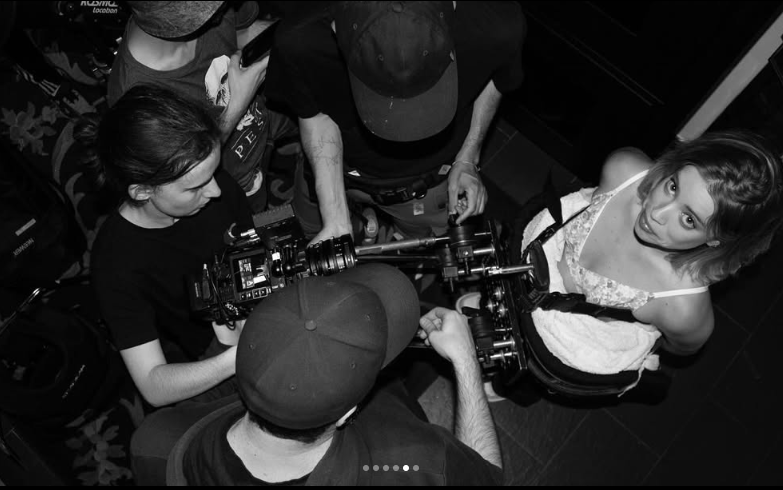
Overall, the project was full of bold creative choices, but what stands out to me now is the ending. The script originally had a different ending — or rather, it ended with the penultimate sequence — but just a few days before shooting, I came up with the perfect final touch. We had to act quickly and with very little time to adjust the plan, but I’m very proud because I feel it was completely worth it.
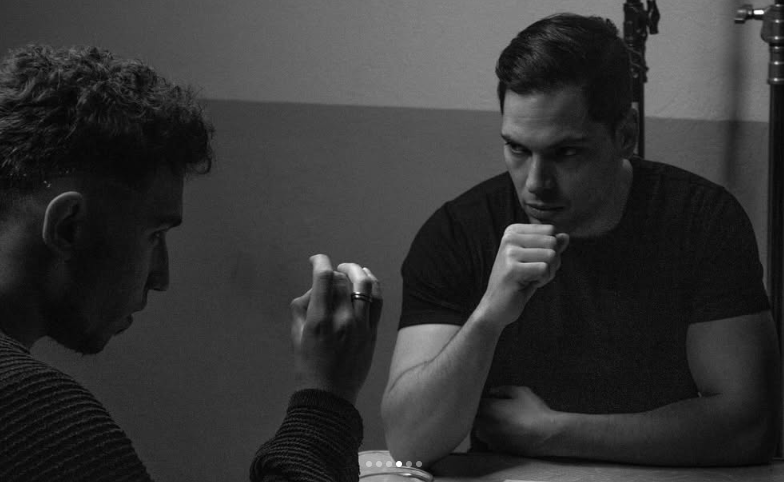
What do you hope audiences take away from your film?
The short film is meant for the audience to laugh and enjoy themselves, especially if they catch the references and nods to the video game. But what I really hope everyone takes away is a reflection on whether we might be living in a simulation and the real possibilities of that. I also like that the final approach, involving Christianity, sparks debate, suggesting that if we were living in a simulation, perhaps God would simply be the gamer controlling it.
What’s a tool, technique, or resource that really helped you during production?
I think something very important, even if it sounds trivial, is that the whole team was able to sleep and spend a few days at the location. This created a sort of film camp and turned the team into a close-knit family, working much more smoothly together. After each day of shooting, we would have a beer, discuss the day, and figure out what could be improved, which helped everyone learn for the next day.
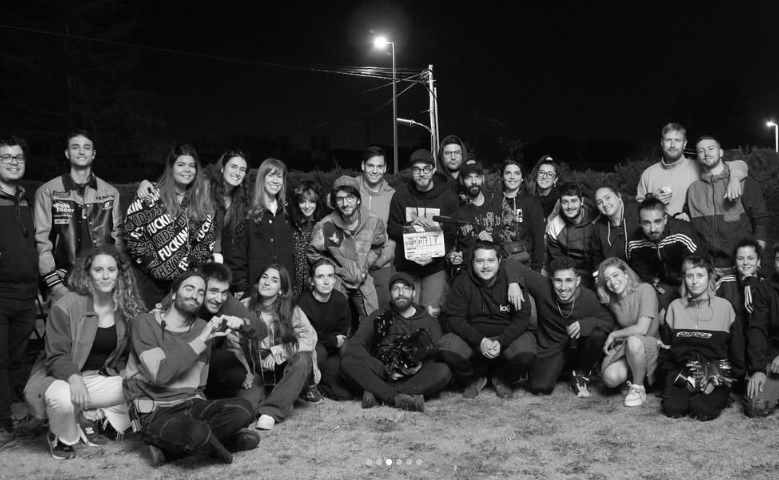
This also made everyone more invested and able to contribute more to the project. Even though many team members didn’t know each other at first, they left with many new friends, and even a few romantic relationships that still last today. It was a beautiful process, and I think it’s wonderful to be able to work this way.
Independent filmmakers often rewrite the rules out of necessity. What do you think is the greatest strength of independent filmmaking, and how did you lean into that on this project?
I feel that making independent films with limited financial resources forces you to be much more creative in solving the countless problems that arise. It’s a school I’m very proud of after 10 years of making low budget music videos and now independent short films. I believe it’s the best film school I could have had, and I don’t want to stop thinking creatively like this to solve problems, even if I eventually become part of the industry.
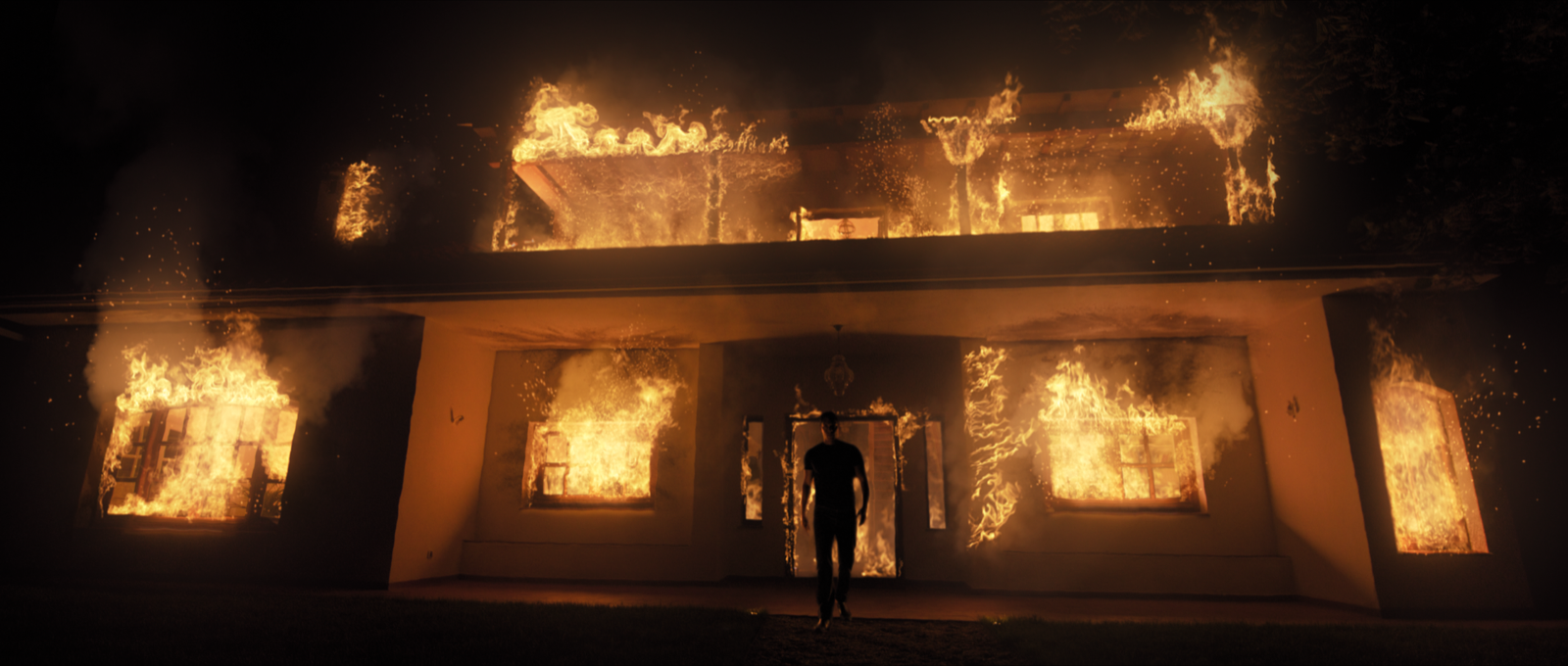
For example, there’s a shot where the house is on fire. Most people assume it required a high production value and a big budget, but we basically did it for free. We shot it on a separate day with just the cinematographer, the actor, and me. We went door to door in a wealthy neighborhood until one homeowner let us in. We set up a tripod, used a light sword to simulate fire in different rooms, and filmed continuously for over 15 minutes. Later, we composited the shot with masks to recover the fire effect in each room and added the flames in post with After Effects. The result looks amazing considering how few resources we used.
What does it mean to you to have your film selected for FilmQuest, one of the world’s top reviewed genre film festivals?
I’m very happy to be at FilmQuest, as it has always been one of the festivals I thought of when considering the distribution of the short film. In my country, Spain, it’s quite difficult and requires extra effort to get science fiction and horror projects off the ground, and my aspiration is to make films in the United States since almost all my references come from there. Having one of my works in such an important U.S. festival is a dream come true and an opportunity I definitely want to make the most of.
FilmQuest celebrates the majesty and might of genre filmmaking across fantasy, horror, sci-fi, action, thriller, western, kung-fu, and beyond. How does your film fit within—or push the boundaries of—genre storytelling?
Simón is a short film that I’ve always found difficult to categorize by genre, as it navigates between comedy, horror, and tech-driven science fiction in the style of Black Mirror.
Where do you see this film going next?
Honestly, it would be a dream for me if the short film ended up being showcased on platforms like Alter or Dust on YouTube after its festival run.
“At the core of all my work is a desire to make a living telling the stories I wish I could see on the big screen and to feel that they connect with others. In the end, I feel like a child playing — like when I was a kid making short films with an old camera — and I never want to lose that essence, fun, and enjoyment in what I do."
Cast & Crew
- Director / Editor / Screenplay: LSDavid (David Labajos Sáez), Madrid-born filmmaker with a decade of experience in music videos and sci-fi shorts.
- Producers: David Labajos & Juantxu Álvarez
- Cinematography: Héctor Mingote
- Art Direction: Irene Marco
- Sound: Nicolás Gabriel Trujillo
- Music: Iker Ramos
- Cast includes Eneko Otero (Simón), Román Reyes (SIM), Cinta Ramírez (Melissa), Abel Callen (Rogger), Román Rymar (Dios Gamer / Gamer God)