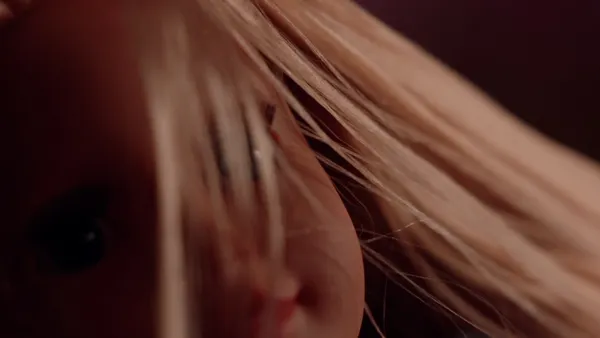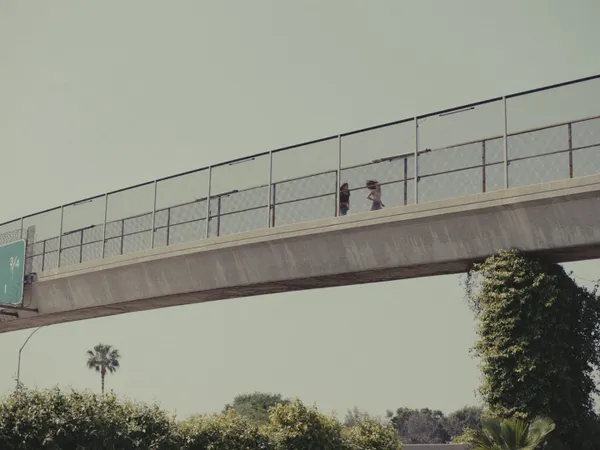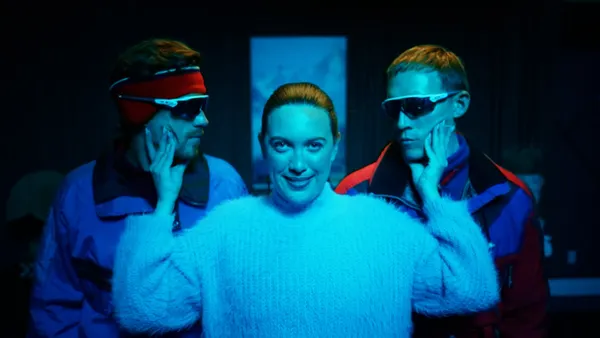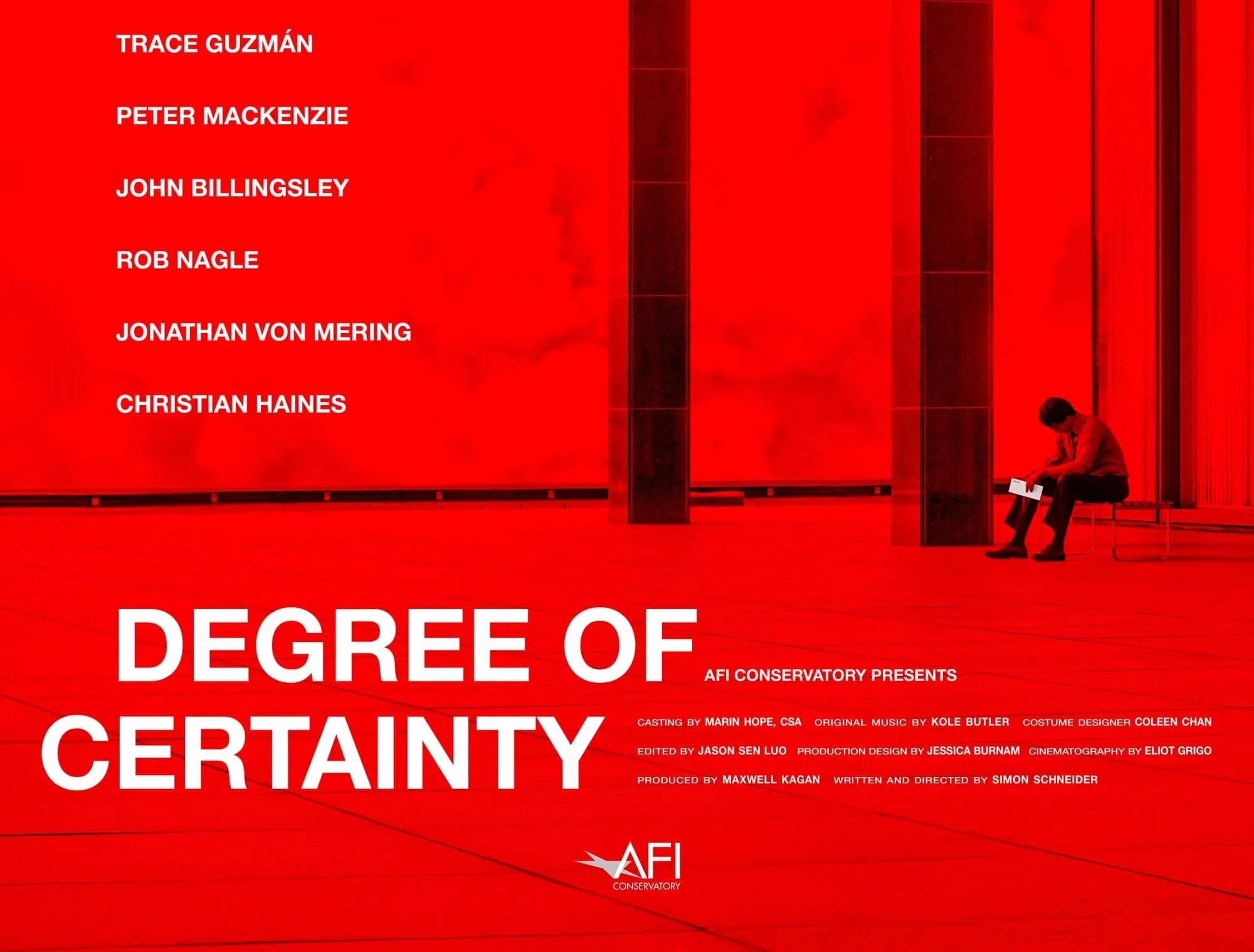
Degree of Certainty comes at a time when climate change is hitting everyone around the world. It has been the hottest summer on record in many places. Wildfires burn through Europe, and millions have died from rising temperatures. Degree of Certainty, directed by Simon Schneider and produced by Maxwell Kagan, takes on the climate crisis at the root, where it originated: Big Oil in 1982. As described in the film's synopsis, "When a young risk analyst at a major US oil company in 1982 learns that the climate research department has just discovered a rapid rise in global temperatures, he has to decide which side of history he wants to be on."
When interviewing Simon and Max, I was struck not only by their relatability but also by the film itself. Even though Max is from New York and Simon is from Germany, they have worked together for several years now. After meeting at the American Film Institute (AFI), the two began to collaborate on projects.
I wanted to understand what truly pushed them to create this film. As a young person battling the day-to-day climate realities, Degree of Certainty brought up an anger that is all too familiar for many of us.
The short film first came out in August of 2026 and is approaching a busy screening season. In August, the film screened at the HollyShorts Film Festival, and it just played this month at the Climate Film Festival, where it won Best Narrative Short. Climate change and education movies often struggle to condense an intangible topic into a two-hour film, or they require an enormous set and budget, such as the one seen in The Day After Tomorrow, which operated with a $125 million budget. Simon and Max took on the incomprehensible and managed to create a 16-minute film about our changing world on a thesis budget. The following is my highly enjoyable interview with Simon and Max.
Q: How did you come to the decision that you wanted to make this film together?
SIMON: At AFI, you are studying the different departments. There is the directing track, production track, screenwriting track, etc. So, AFI wants you to team with different people throughout the 2-year program. But when it comes to the thesis, which is the final film at the end of the 2nd year, everyone teams up again and decides who they want to work with. For me and Maxwell, it was quite clear that we wanted to work together because we had such a good experience on the first project in the first year of AFI.
MAXWELL: And we spent a lot of time trying to figure out, as Simon said, what the actual project would be and [everything that] ended up being Degree of Certainty. It was something that Simon had come up with, and we talked about for a long time, not thinking it would even be possible to do as a short because it's such a big story. But the more we talked about other ideas, the more we realized that the only one we wanted to do was this story because it was so urgent, and we felt we needed to tell it.
Q: What drew you to this specific story, besides the ongoing climate crisis that we live in?
SIMON: I'm always trying to make sense of the world we live in and understand the political systems and the economic systems that shape our daily lives. I always knew that the big oil corporations were involved in the denial of climate change. What was new to me is that it was actually these institutions that discovered it and basically came up with the concept of corporate climate denial. So, I started researching more, and was very surprised that [this story] was never done before in a live-action film, because it feels like one of the big stories of our time, similar to the 2008 financial crisis or Watergate. Just a pivotal point in history, that shows how powerful the corporations, governments, and people are that make decisions that impact us.
MAXWELL: I'm always drawn to stories that I feel need to be told. You know, making a film is a really hard thing to do. For me as a producer, if one is going to go to the effort to do it, it should be for a good reason. This was quite a logistical challenge in terms of what we had to pull off. Because the story was so captivating, and as Simon said, it was a turning point in history, I felt that we had to at least try and see if we could pull it off.
Q: How closely did you guys align the plot with what you learned? Or is the story the same?
SIMON: We took the big plot points of the true events, such as the oil corporation learning about the climate crisis and laying off their climate science department. All of those things are true and they happened. However, we do blend it with our own dramatic storytelling choices to try to make a film that works in a short amount of time. Some of the characters are based on real people. There were really CEOs like the ones we portray that we found in our research. But it is not like we found this one risk analyst and he told us his story. But to tell it from a young person's P.O.V., and a person whose job it is to evaluate risk for the company and shield the company from harm, felt like the right angle for us. So, true events and fictionalized characters.
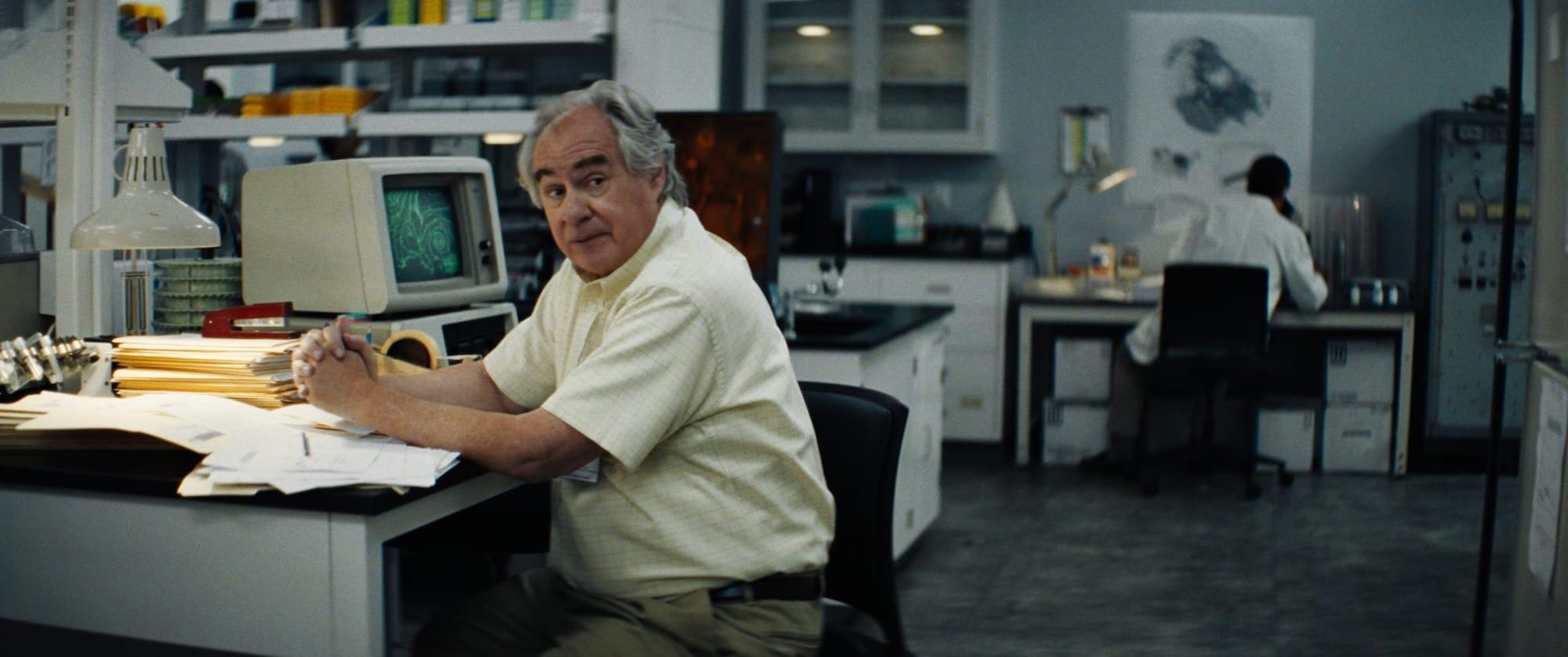
Q: Do either of you see yourselves in Jackson's story, even in your day-to-day?
SIMON: I see myself a lot. At so many points in my life, being part of different institutions, I was like, “This doesn't feel right. I want to say something. I want to go to the higher-ups”, but then there's always this [concern]: what happens if I do that? Do I compromise something else? On the one hand, you want to have a flourishing career, and you also have an economic need. We are all dependent in some way, but we also all have values.. So I really tried to put my mind into this moment of history and imagine what it actually would be like to be in the protagonist's shoes.
MAXWELL: I would add that one of the things I love about Simon's script is that you can relate to every character in it, even if you don't agree with what they do. That was something that Simon and I talked a lot about. So, you asked: Do you relate to Jackson? Of course, you relate to Jackson. I think if you put yourself in the shoes of each of these people, you can kind of understand where they're coming from, which makes them great characters, even if they make the wrong decisions.
Q: How did you create this film within the budget that you had?
MAXWELL: I think Simon and I, when we zeroed in on the concept, we agreed that what was most important to telling the story was convincing the audience that we were in the world of the story. Which, as you mentioned, for a student film budget is already a really tough task. It's gonna be a period piece. It's going to be in a high-level corporation. There are all sorts of costuming details and production design details and location details and things that we knew that if we didn't pull any of those off, then the illusion would be shattered and no one would buy it. So we made sure that, as we continued to talk about the script, that was always the focus and that resources were pooled into those things. We spent a lot of time looking at specific locations, bringing on really talented heads of department, [people] who knew how to focus on those specific areas without a lot of money and still make it seem realistic.
Q: What was the thing that was going to be the make-or-break factor that you knew you couldn't sacrifice?
MAXWELL: I have to shout out one of our primary filming locations, LA Center Studios, which is a wonderful studio based here in downtown Los Angeles. They shot a million things there. Mad Men shot there, for example, for many years. And, you know, it's not the kind of location that you can usually shoot a student film at, but we were really fortunate to have the support of Ken Johnson, who runs that studio, and a lot of other people who work there, allowing us to shoot there for several days. And without that location, we wouldn't have the film that you have today. There simply wasn't, you know, a backup that we could have shot at that would have convincingly pulled off the world of the film.
SIMON: Right. It is locations. That's the trickiest thing. The audience, even though they might never have seen a ’90s, ’80s [era] oil corporation, they know what this looks like. We immediately know if this is authentic or not. So we needed the scale of it, and the right materials to tell the period. And then you have to fill the spaces with set dressing, which Jessica Burnham, our production designer, did so wonderfully. You then also have to find the right angles to shoot it, in a way that maximises your limited resources. I worked closely with Elliot Grigo our cinematographer, on this. And lastly, you then also have to populate it with extras and all of your cast. I feel like 80, 90% of our energy went into creating the world and making that place convincing.
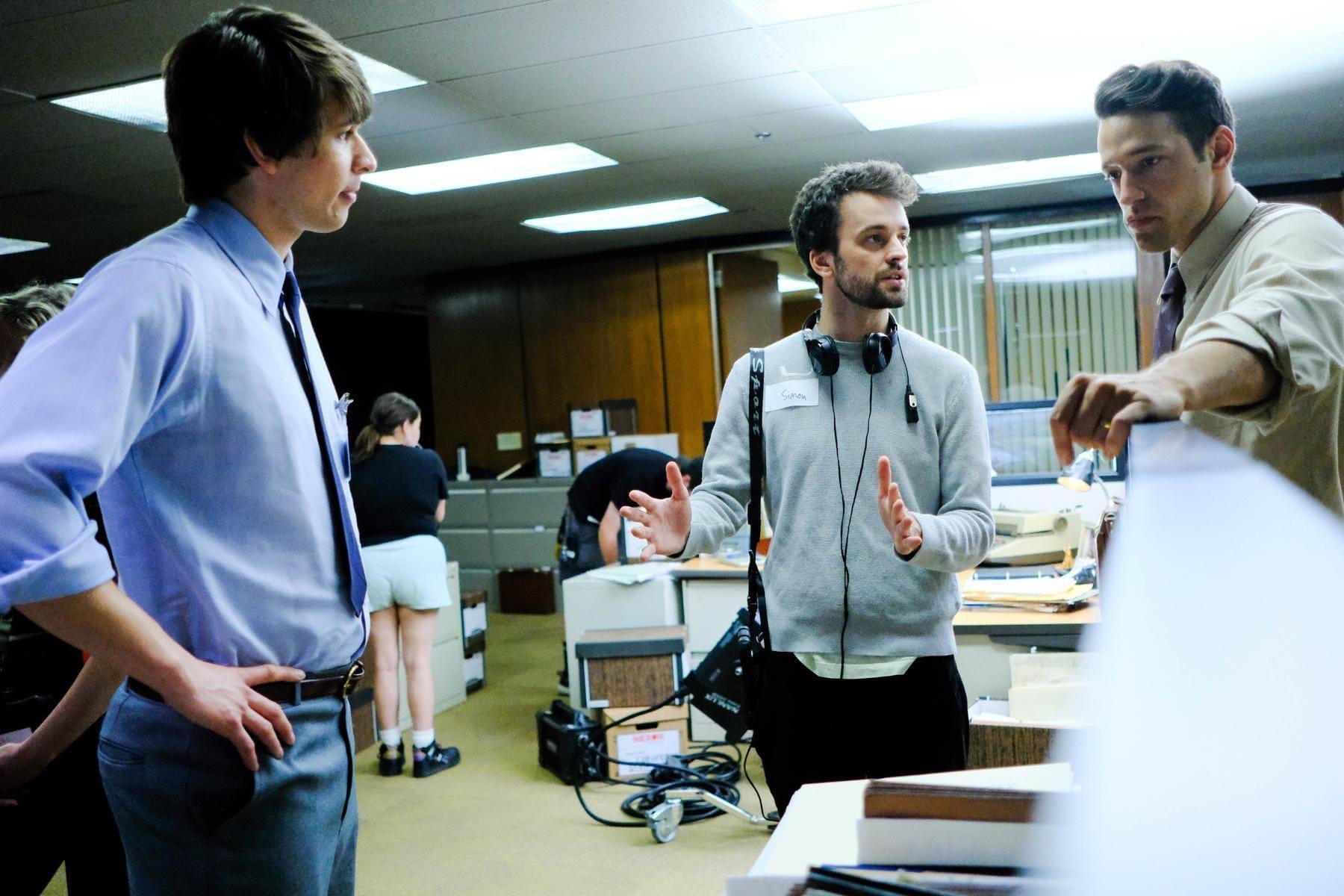
Q: And were you happy with the outcome of the location that you had created?
SIMON: Yes, I think it even exceeded our expectations. The place we shot in, the studio that Maxwell mentioned, was the oil union building in the 1960s. And the other building we shot at was the Department of Water and Power headquarters in Los Angeles, the John Ferraro Building, which is also an energy department building. They embody the DNA of those corporations and had the right architecture that you can’t fake.
MAXWELL: Then [for] the crew and the cast and everybody working on the project, the benefit of these locations is you could feel the history when you start filming there. And I think it made everybody working on the project really lock in, and that's part of why you see what you see on screen. Everyone understood how exciting it was to get to shoot at these kinds of places and be telling the story at these kinds of locations.
SIMON: The other thing that helped to make the world convincing is the film techniques we used, like the zooms and the lenses from that specific period. We really tried to bring back the look and feel of the time. As a student film, we didn’t have the funds to shoot this all on film, but our cinematographer, Elliot Grigo, went into engineering mode to find a way to emulate the film look as closely as possible, working together with our colorist Matt Wallach from Company 3, who did James Bond and the new Dune and is one of the top people in the world doing that [type of work]. And what we did is that we created a LUT that was on all the monitors on set. With that look, we basically turned a digital camera into a film camera and lit it in an old-fashioned way. That made a huge difference in why this movie looks like a film from the 80s.
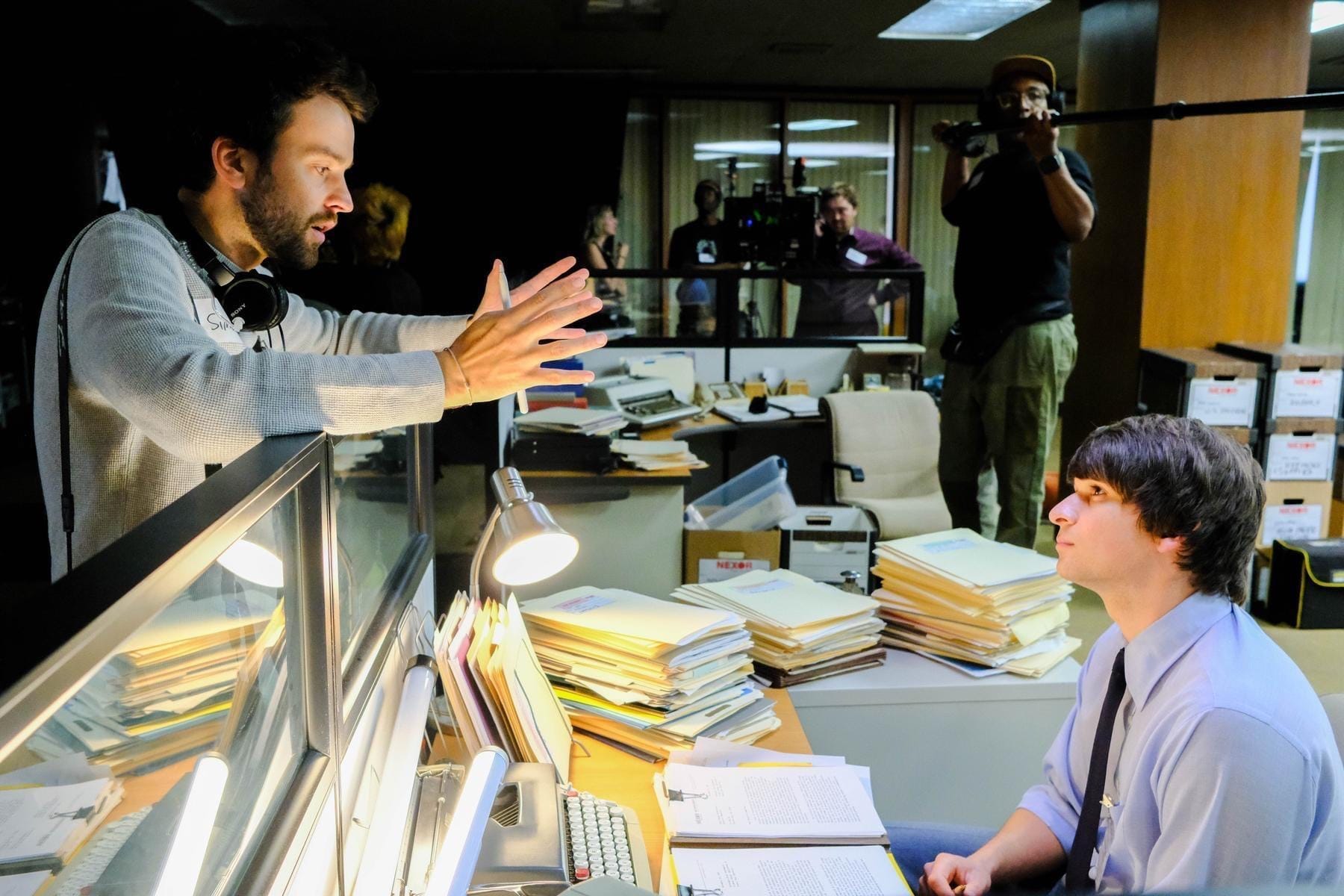
Q: What is something that you want a reviewer, or perhaps a climate denier, to take away when they watch this film?
SIMON: I think the biggest thing is that the reality we live in is not set in stone; it's created by people in power. For me, the way I grew up, I always learned that it is possible and necessary to stand up for a better world. We can advocate for a broader systemic change and make better decisions in our own lives. I didn't really do the film to convince the climate deniers. I didn't have that in mind, because I feel like our society is so divided that I wouldn't even know where to start. But I think there's a big impact in just stating facts and reenacting what happened. That often speaks for itself. These are the types of films we were fascinated by, like All the President's Men or Spotlight. They just show the process of something that happened without telling you “this is good or this is bad.” They just tell you: “This is just how it is.” And I think there's a lot of value in that.
MAXWELL: I would agree with that. The story is so powerful by itself that it creates a lot of momentum. I would add on to what Simon said, which is that at a certain point, things become so polarized that it's easy to forget that this all started because a group of people in a room made a decision. You know what I mean? And I find that so fascinating. Ultimately, that's how most of history happens, right? It's people in rooms making decisions that most of us are not privy to, which is both infuriating and very depressing. But it does allow you to realize that you can change things, because if people can make these decisions, then [we can advocate and fight for] people to make other decisions.
NANCY: Is there anything else that you guys want our readers at League of Filmmakers to know about the film or anything at all?
MAXWELL: We're developing it into a feature adaptation, which we're very excited about.
SIMON: And the festival journey continues. We just played at the Climate Film Festival at Climate Week in New York this month, where we won Best Narrative Short; AFI Fest in October; St. Louis International Film Festival and Aesthetica Film Festival in November in the UK, the BAFTA qualifying festival, where it will have its UK Premiere. And we are excited to share more news on all of that and see people in the theater.