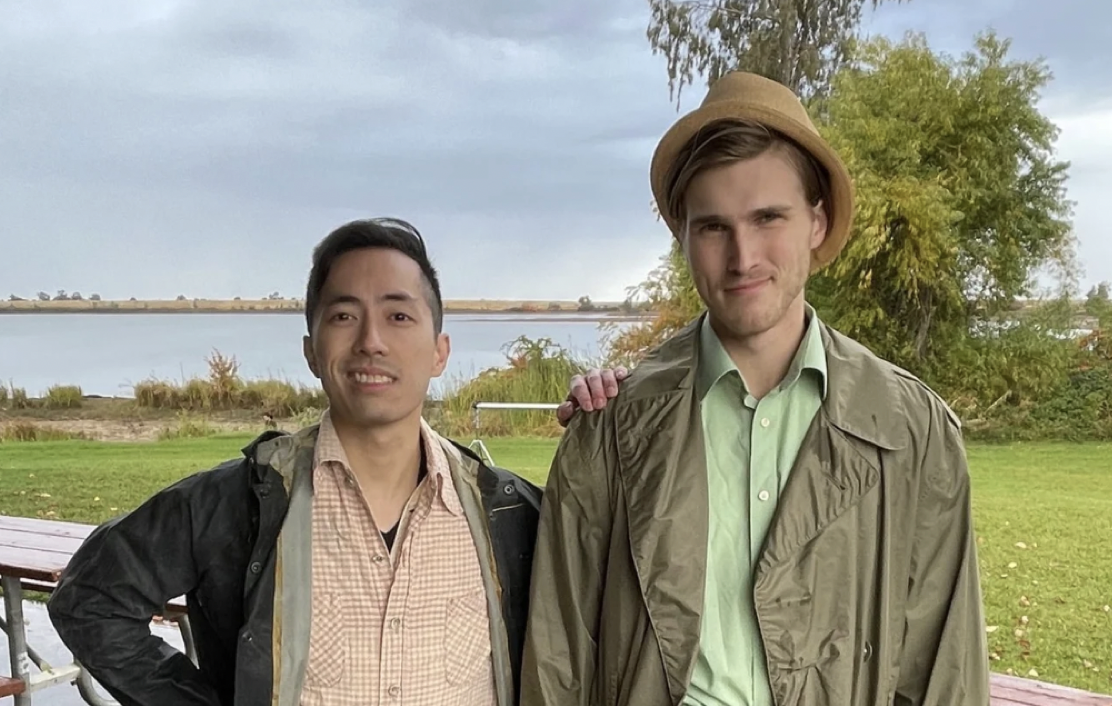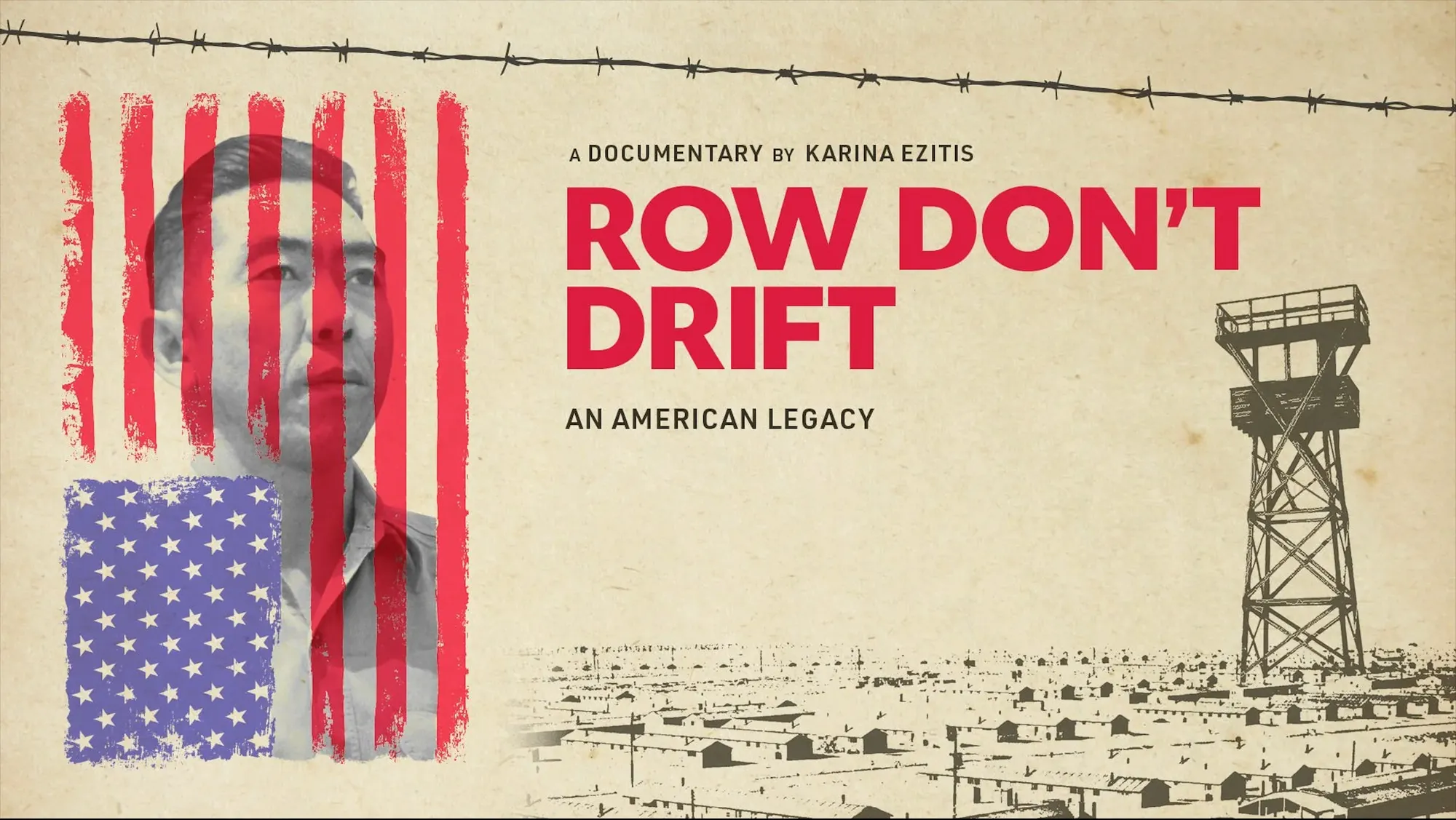
What does it mean to be an American? A felt identity? A document the government oh-so graciously grants you? Hooting and hollering at a football game in a bar with your buddies? What makes someone an American? Row, Don’t Drift: An American Legacy, the debut feature of independent filmmakers Karina Ezitis and Craig Colvin, aims to answer just that.
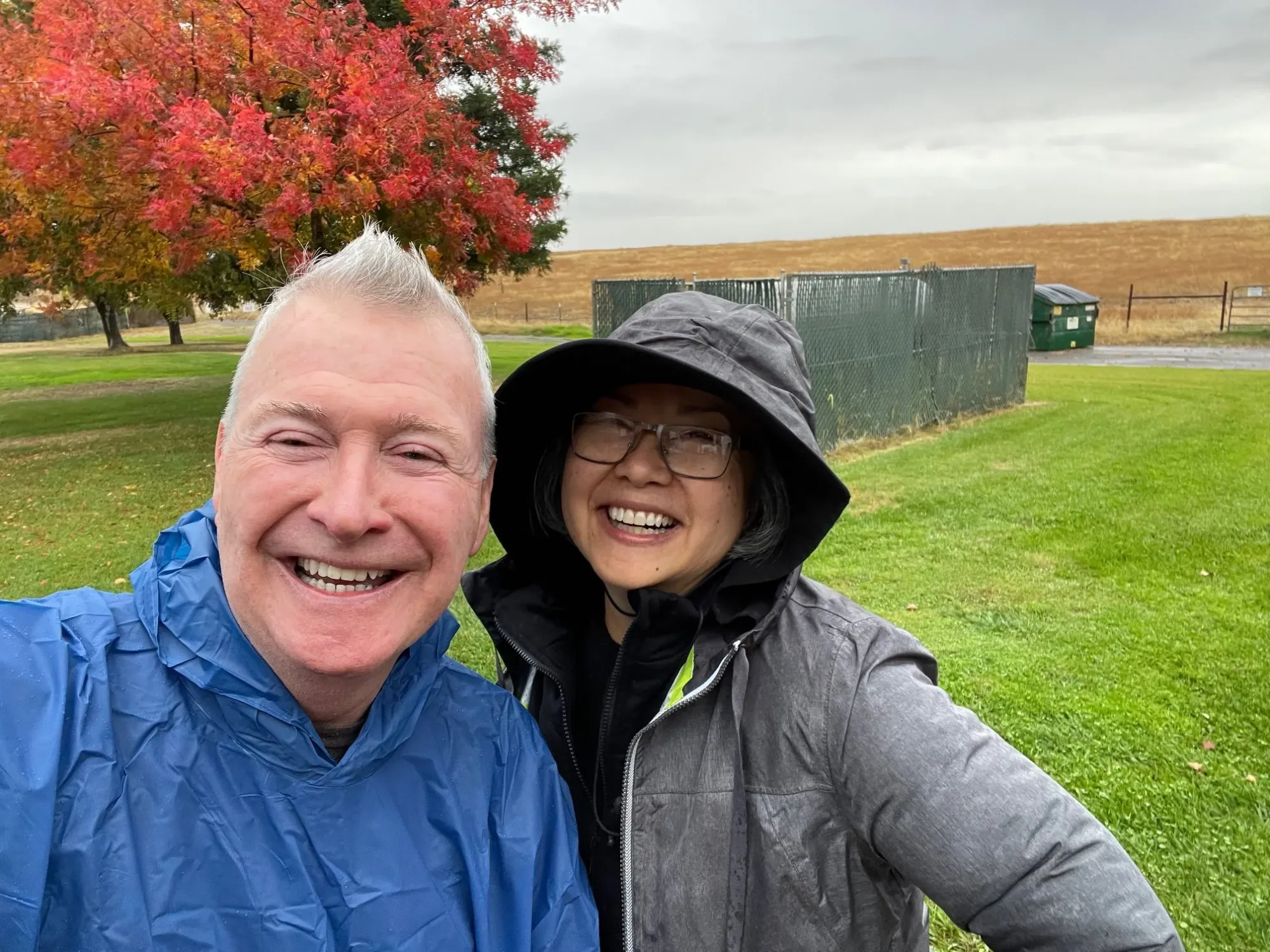
By complete chance, I met these two at the annual Portland Film Festival at a panel for independent filmmakers. Immediately, I was enamored by Karina’s impassioned wisdom and Craig’s sage charm. Together, they tell the previously unsung story of Yoshi Kubo, one of the 120,000 Japanese Americans who were incarcerated in internment camps during World War II under the Japanese American exclusion policies. Of these 120,000, over two thirds were American citizens. Yoshi Kubo was one of those citizens. Their documentary premiered at the Portland Film Fest, where I discovered it to be every bit of the heartbreaking yet inspiring odyssey I’d hoped it would be. Eerily relevant to current events, enlightening, and made with a hell of a lot of heart, Row, Don’t Drift is an absolute triumph of independent filmmaking. See below Karina and Craig’s insight on history, its propensity to repeat itself, and how to rebel in the face of a failing government.
Q: What were your roles in the making of this film?
Karina: I was the director, but in independent film you gotta wear a lot of hats, so I was also a writer and our set designer.
Craig: I actually do most of my work in casting direction, but for this project, however, I was also the producer. It didn’t start out that way, but I wanted to help my friend, you know? Ease some of the workload off of her shoulders so that she could focus on directing.
Q: What compelled you to tell Yoshi’s story?
Karina: For me, growing up, I heard the stories about the internment camps. And I remember thinking to myself, because I got mistaken for Japanese, even though I'm half—well, technically I actually am Japanese, but I grew up thinking my mom was fully Korean and my dad was white, but every time people see me, they think I'm Japanese. So when I heard about people being relocated, pulled out of their homes and being put into these kinds of camps, I took it very personally. Even though I'm not of the generation that experienced that, it was just, wow, that happened. When this story came available to me, it was just like I had to. I just had to explore that.
Craig: I grew up in the Florida school system, and it was actually part of our history classes. So I knew of it, like a good overview. When Karina approached me about getting involved, I got to look at Yoshi's journals and see his writings and realize what kind of a person he was, that he was All-American, basically. There was no reason why he should have been locked up, and so it was just a story that had to be told–plus I wanted to support my friend in seeing her vision through–I dove more into it than was originally intended. When I mentioned the project to a couple of friends of mine, a lot of them didn't know about it. In the state of Florida right now with our current governor, history is being taught in the way he wants it to be remembered and not giving people the chance to learn the real history and make their own decisions. When you don't have the history to learn from, mistakes get repeated.
Karina: Which almost happened. It almost happened after 9/11. They wanted to lock up every person who was Muslim, and Congress was going to do it. Not because they did anything wrong, just because they were Muslim. Senator Danny Noe and Norman Mineta got together and approached Bush and talked him out of it because they'd actually been in the internment camps as children. Back then, of all the people with Japanese blood, American-born citizens or not, not one person was ever convicted of spying! Yet hundreds of thousands were locked up because they could be spies since they had Japanese blood. A lot of the children who were put in the internment camps grew up and went into politics to make a difference, and I think that’s what makes a difference in our world: when we say, "Hey, I can step in and help make a change."
Craig: I was telling my niece, who's educated in the California system, you would think they would know something about it, but she knew very little about it. I was telling her, “I'm going to make this film," and she said, “Why would you bring that up?” and I was just like, “So that we don't repeat it,” and this is before ICE agents. This is before any of that. We didn't see that on the horizon, but here we are. We're getting to the end of finishing our film in post-production, and all of a sudden people are being dragged into camps again!
Q: How did they determine if a Japanese-American was innocent or not?
Craig: They had a loyalty questionnaire. So Yoshi was born and raised in the US. He had no loyalty to the Empire of Japan, never lived there, yet it asked them on the questionnaire: “Do you forswear your loyalty to the Japanese Empire?” And he's like, “I shouldn't even be asked. I'm a US citizen.” So he refused to complete it because it was worded as though they were guilty. It also had religious questions. You know, if you practice certain religions, because they were trying to find out who might basically be an enemy combatant, even though none of them were.
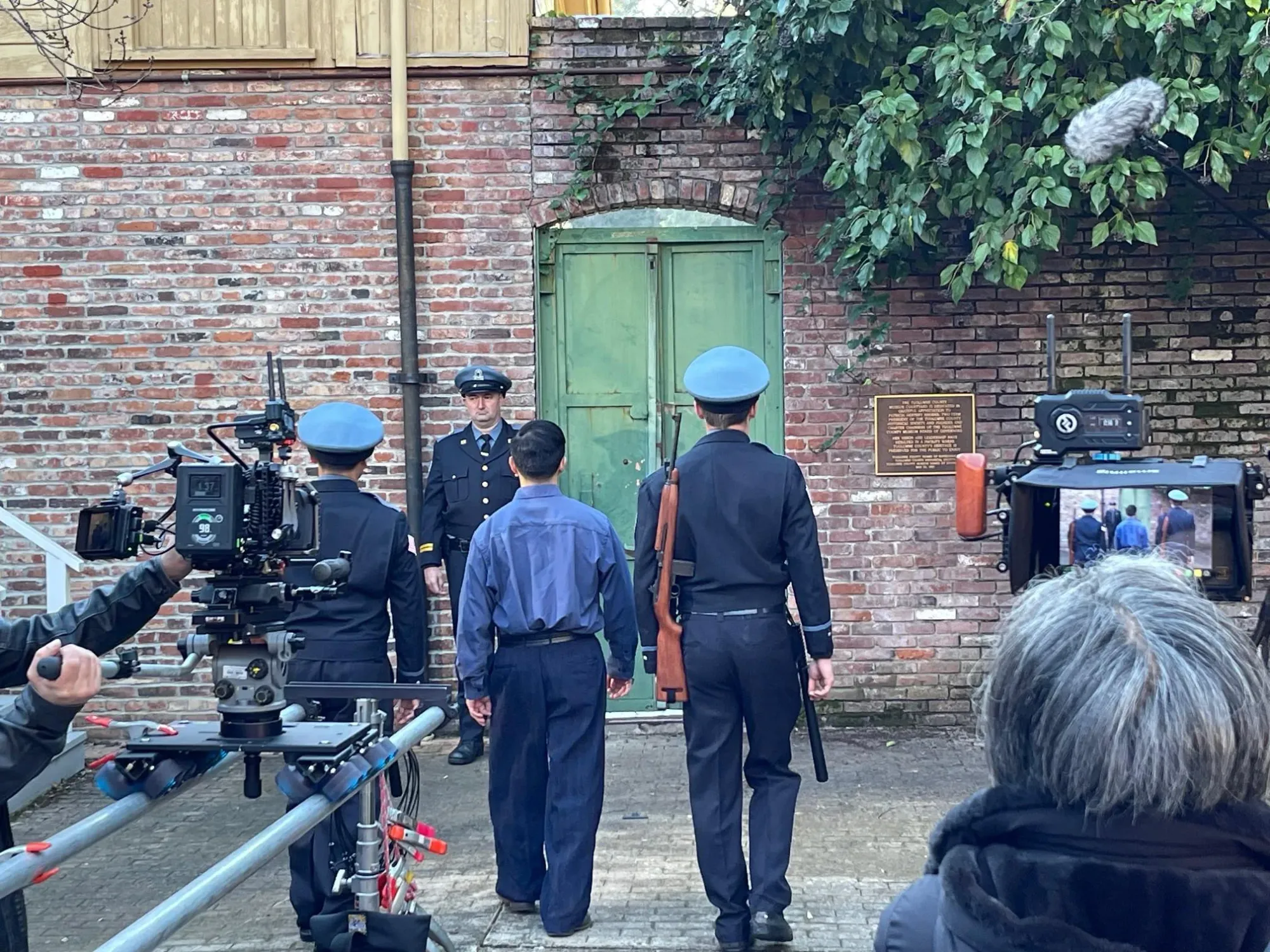
Karina: That’s right. They were all prisoners. Actually, in the film, there's a map of the internment camps, or as his sister called them in her interview, concentration camps. We made a graphic in our film of a map that connected the locations of each camp with barbed wire, and it turns out that it's the exact kanji that means prison! Yeah! We had no idea when we designed it! We verified it with Yoshi's daughter-in-law; she speaks full Japanese. She said, "Yeah, that means prison." Complete coincidence. It was unbelievable. I got chills.
Q: Some men in the internment camps agreed to fight in the war because they wanted to prove their loyalty to the States. Did Yoshi?
Karina: Within twenty-four hours after Executive Order 9066 went out, anyone who was Japanese who was serving presently in the military were all dismissed, so they lost their military careers. By the middle of '42, the government all of a sudden says, "Because we're in the middle of a war, we're losing bodies. We need more bodies.” And so then they started drafting. So the 442nd Regiment came to be, and that was the only all-Japanese regiment. It was predominantly guys from Hawaii, who had no idea about the internment camps on the mainland. A few from the mainland that were in internment camps signed up, but the majority of them were reluctant because the government stripped them of their citizenship rights. In fact, Yoshi Kubo stood in that resistance. He says, "I'm not doing this. They've already tried to take our farm away, our livelihood. They've put us in these camps. We don't know when we're getting out, and so now they're asking for my blood.” He felt it was unfair, and it was. Yoshi was like, "Release my family. Let us go back and work our farm. We've done nothing wrong.” So as a conscientious objector, he was one of the few that really stood his ground.
Q: How many others resisted?
Karina: Out of his entire camp, only 10 resisted. Out of thousands of people, only 10 had the courage to stand up against the injustice. A lot of the Japanese Americans felt a lot of disdain for their own culture at this point, felt ashamed more than angry. It's kind of like what goes on today. Whatever's the dominant thought, it influences a lot of people. A lot of people are shy and quiet about stuff. You know, nobody wants to stick their neck out.
Q: What happened when they were released four years later?
Craig: Even when it was over and everybody could go home, there was never an apology. It wasn't until Ronald Reagan that the official apology happened. Not one person had been convicted of spying, and still the damage was done – they were all defamed. I mean, a lot of them couldn't even go home because they couldn’t pay property taxes with the money they made in the camps, and they ended up having to create new communities in desolate areas. They had to start over rather than be reintegrated into society.
Karina: They were not welcome back. Once they were released from the camps, I mean, we were at war with Japan, and so people didn’t want them in their neighborhood – even their former friends who grew up with them and knew them as equals. And it was just so much more personal than just like, “You guys might be spies.” It was an Asian hate train based on fear.
Q: How did this impact future generations?
Karina: What's interesting is it's not commonly taught or talked about with the younger generations, but whether or not they know the reason why, I think it made everybody that had to start over more ambitious – not only to prove that they belong, but also so that they could take care of themselves. But one thing with Yoshi's family that was interesting was how the grandkids didn't know a lot of the details because he didn't talk about it.
Craig: Yoshi talked about it to his sons, who didn't talk about it to the girls. It wasn’t intentional sexism, but these are hard truths and he wanted to protect them from [those truths].
Karina: The thing with the Japanese is there's a big deal about shame and honor. They absorbed the shame of being put into camp. Rather than saying the shame belongs to the government and the society that permitted this, they took on the shame of having been put in the camps. That shame kept everyone silent. They’d tell the kids they were American. “You're not Japanese, you're American.” They didn't raise that next generation to speak the language just to fit in and to take away one reason why somebody could discriminate against them.
Craig: In fact, in preparation of leaving their homes and so forth, a lot of them literally burned or buried whatever pointed toward Japan. Any family heirlooms and so forth were destroyed, lost forever. They really wanted to say, "We are American. We're American. We have this culture, but we're American." But unfortunately, because of how they looked, they were treated as separate. That was the thing about Yoshi – he was the perfect example of the All-American. I mean, he played baseball, loved fishing, was on the fair committee, did all this civic stuff, and was a farmer on top of everything. He was more of an All-American than some people who weren't of Japanese descent – people that could have been sympathizers with communists or stuff like that. He was as All-American as you could be and this happened to him. And he had no say so, no control.
Karina: I love being an American citizen. I love this country, you know, but we have our flaws. Traditionally, America has never liked to admit its flaws.
Craig: Rather than say, “Yeah, we messed up, and now we're gonna do it differently or learn from it, we’re just gonna own this, dig our heels in the sand.” America always pins its shortcomings on the fight for freedom, but that’s just not always the truth of the matter.
Q: Do you feel close to Yoshi after all this?
Craig: Oh, I do. It feels like we were friends. Through reading his letters and stuff like that, you really get a sense of him. You could really create a picture in your mind. We were fortunate to have access to that.
Q: Was there a part of you that wanted to do this for him? To tell his story for him?
Karina: Oh, yeah, it definitely was. He was one of the ones that needed to be honored. Because when you put it all together with everything you see, at the end of the day he was just a great guy. He was very well respected and a community leader and everything like that. So yeah, definitely he needed a story told. He's [Yoshi] talked with the family about the fact that the history you learn in school is not everyone’s history, so we wanted to show people his history. Part of it was honoring the family too, that their true history gets out, and for all the hundreds of thousands of people that were affected by it.
Q: What do you want people to take away from this film?
Karina: For me, without a doubt, I want people to focus on community. Please, connect with other people, even if they come from a different background. We can honor each other for our differences. Value connection and respect for one another, and find some place to connect and say, "Hey, we're human beings. We're all trying to walk through this life," you know, and to help one another when the opportunity arises.
Craig: Basically, don't judge a book by its cover. I mean, bottom line, when you do that, you do a disservice as a human being to the rest of the humans in the world. Be a good human for the world, but also, you miss out on so much when you judge a book by its cover – all the friends you could have and all the people you could have interactions with based on skin tone. You're missing out on so much.
Karina: Well, there's a part of the story we haven’t covered: how he got his farm back. Before he was put into the internment camp, he decided to ask his very best friend, who was Caucasian, who was not a farmer. He was the guy that would deliver gas to the farm, and he said, "Would you look after this place while I'm gone?" and Hilmar, who faithfully looked after the land, took great care of his friend’s farm, not knowing what might happen to him.
Craig: Everyone else went with the Growers Association, but he had the foresight to sell it to Hilmar, and Hilmar gave it back. This is his white friend, who after the war was still friends with him. Hilmar was one of the ones that… it didn't matter to him! Like, it's Yoshi! You’re not a spy from Japan, you're Yoshi. And they still went fishing and remained friends when everybody was released from the camps. He was a good guy. That’s the kind of person you need in times of strife: someone who cares about who you are, not who the world says you are.