
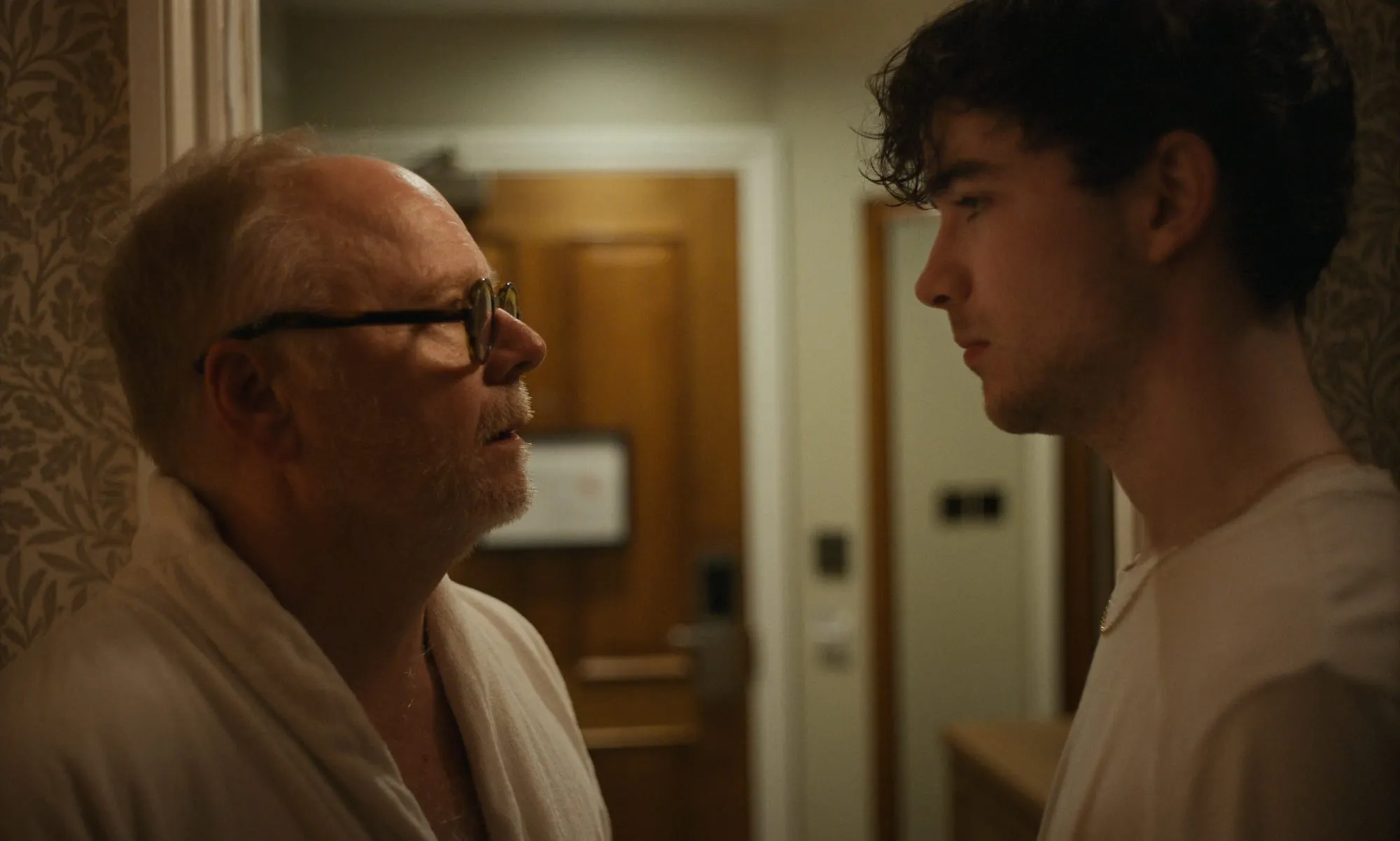
Based on a true story, Geronto follows a young man whose secret attraction to older men leads to an unexpected bond, until a painful misunderstanding threatens to shatter their fragile connection. The film is directed by Mark Pluck and written by Christopher Sherwood, who based it on his own experiences of being attracted to older people. Jason Watkins and Noah Valentine lead the cast, credited as Older and Younger, with music by Sister Bliss of Faithless.
Pluck calls the film "a delicate exploration of some of the issues surrounding age-gap relationships." Pluck says the draw was that the story came from Sherwood's lived experience. Pluck also notes that intergenerational relationships are rarely portrayed on screen, which made the film a chance to challenge audiences' preconceptions.
Key Takeaways
- Pluck found that across script development and post production, "the more we removed, the stronger the story became."
- Pluck shot an exterior night "walk and talk" scene in a single take. With no filming permit to light it, the team had to find a long stretch of pavement with adequate street lighting.
- Pluck names Intimacy Coordinator Olivia Heggs as the collaborator who helped most, by making the actors feel supported and secure during the more intimate moments.
Below, Pluck answers our questions in writing.
Interview
What drew you to make this film, and why this story, why now?
Geronto is a delicate exploration of some of the issues surrounding age-gap relationships. I was drawn to the fact that the story came from our writer Christopher Sherwood’s honest, lived experience.
Intergenerational relationships are rarely portrayed on screen, so it felt like a real opportunity to bring one to life and challenge audiences’ preconceptions of what authentic relationships can look like.
What surprised you most about the filmmaking process creatively or logistically, including any moment on set or in post that changed how you saw the story?
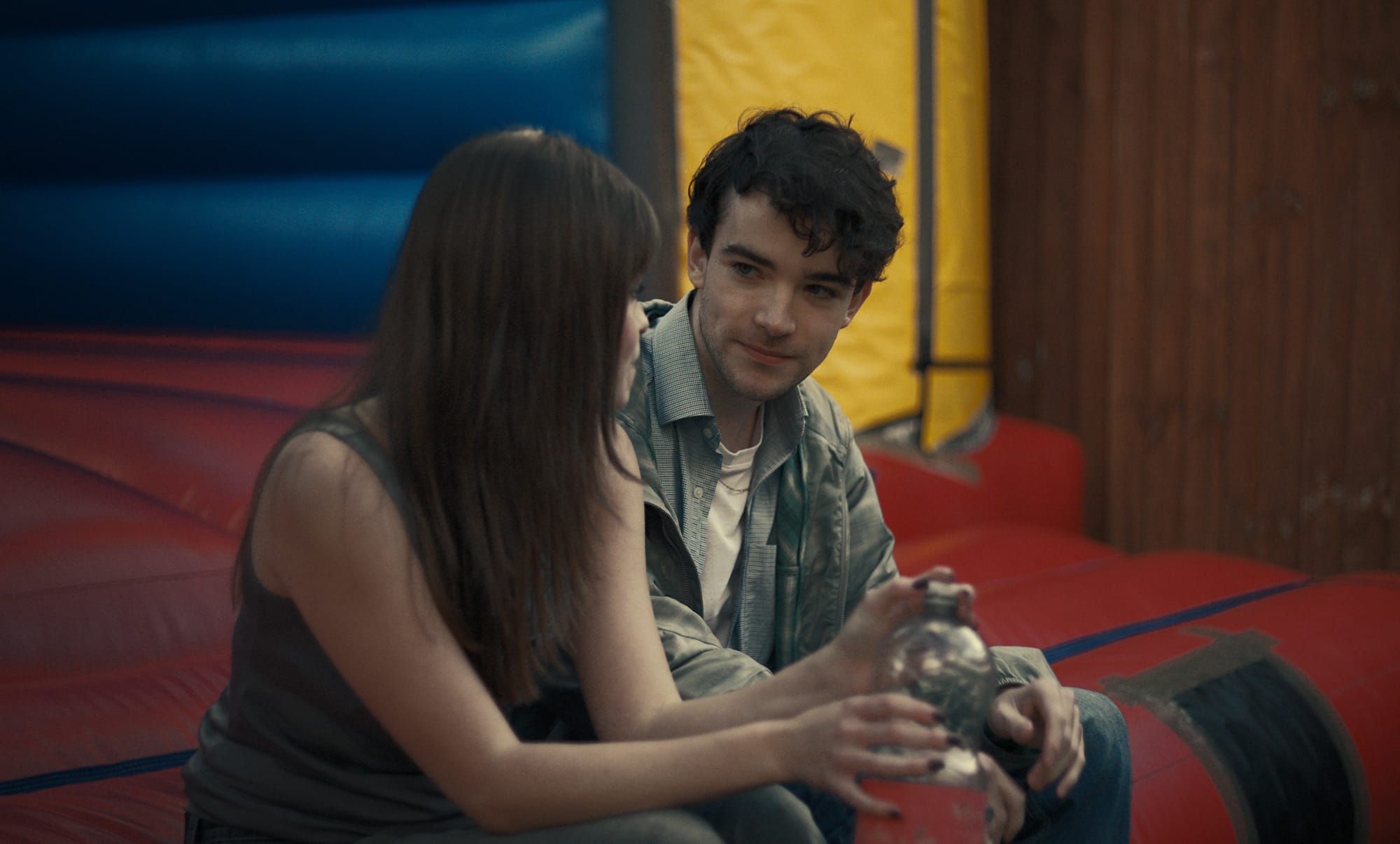
It might sound cliché, but less really can mean more. Throughout the development of our film, that has continually rung true. Whether it was in the script development or in post-production, the more we removed, the stronger the story became. There are obviously limits, and it’s a balancing act, but I was continually surprised by just how little hand-holding an audience needs.
“Whether it was in the script development or in post-production, the more we removed, the stronger the story became.”
What was the hardest creative decision you made while making the film?
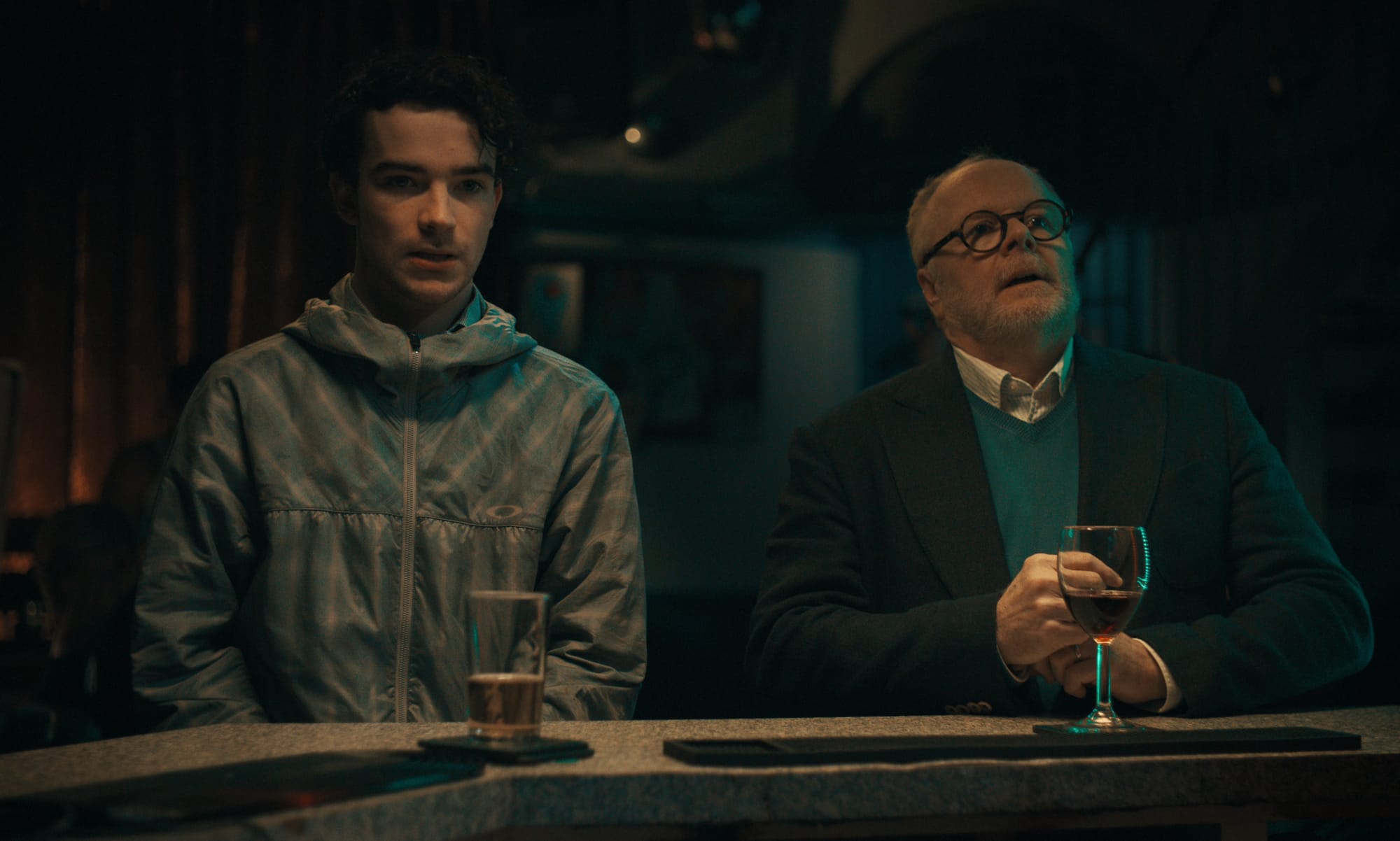
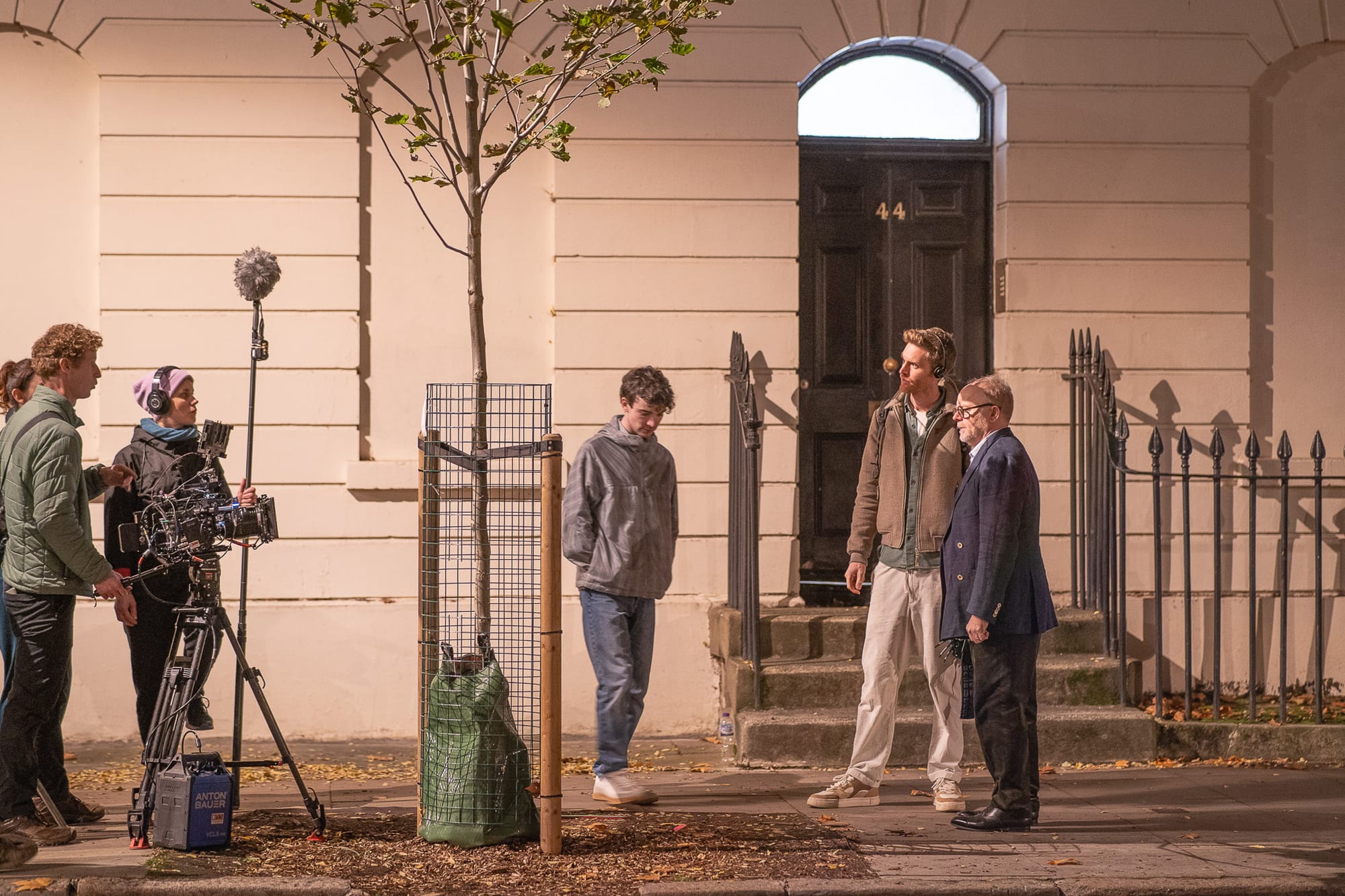
I chose to shoot an exterior “walk and talk” night scene in a single take. I wanted the moment to feel as natural as possible, letting the conversation unfold without cuts, allowing the performances to play out uninterrupted, but it was hard for two reasons. The first was that I was trusting my two actors to perform the scene from start to finish, without me being able to edit it. The second was that we couldn’t light the scene artificially, as we had no filming permit. We therefore had to find a location with adequate street lighting, along a stretch of pavement long enough for the actors to complete the scene!
What moment in the film feels most like you, or like something only you could have made?
There’s a scene in the film where our two lead characters become intimate for the first time. It’s a moment of sexual awakening, which I chose to approach with a very particular visual style. People have commented that it feels unique in terms of how an intimate scene is portrayed. It was also one of those rare moments where a scene turns out almost exactly as I imagined it in my mind’s eye, so for that reason I’d say it’s the moment that feels most like ‘me’.
“It was also one of those rare moments where a scene turns out almost exactly as I imagined it in my mind’s eye, so for that reason I’d say it’s the moment that feels most like ‘me’.”
What tool, technique, resource, collaborator, or mindset shift helped most during production?
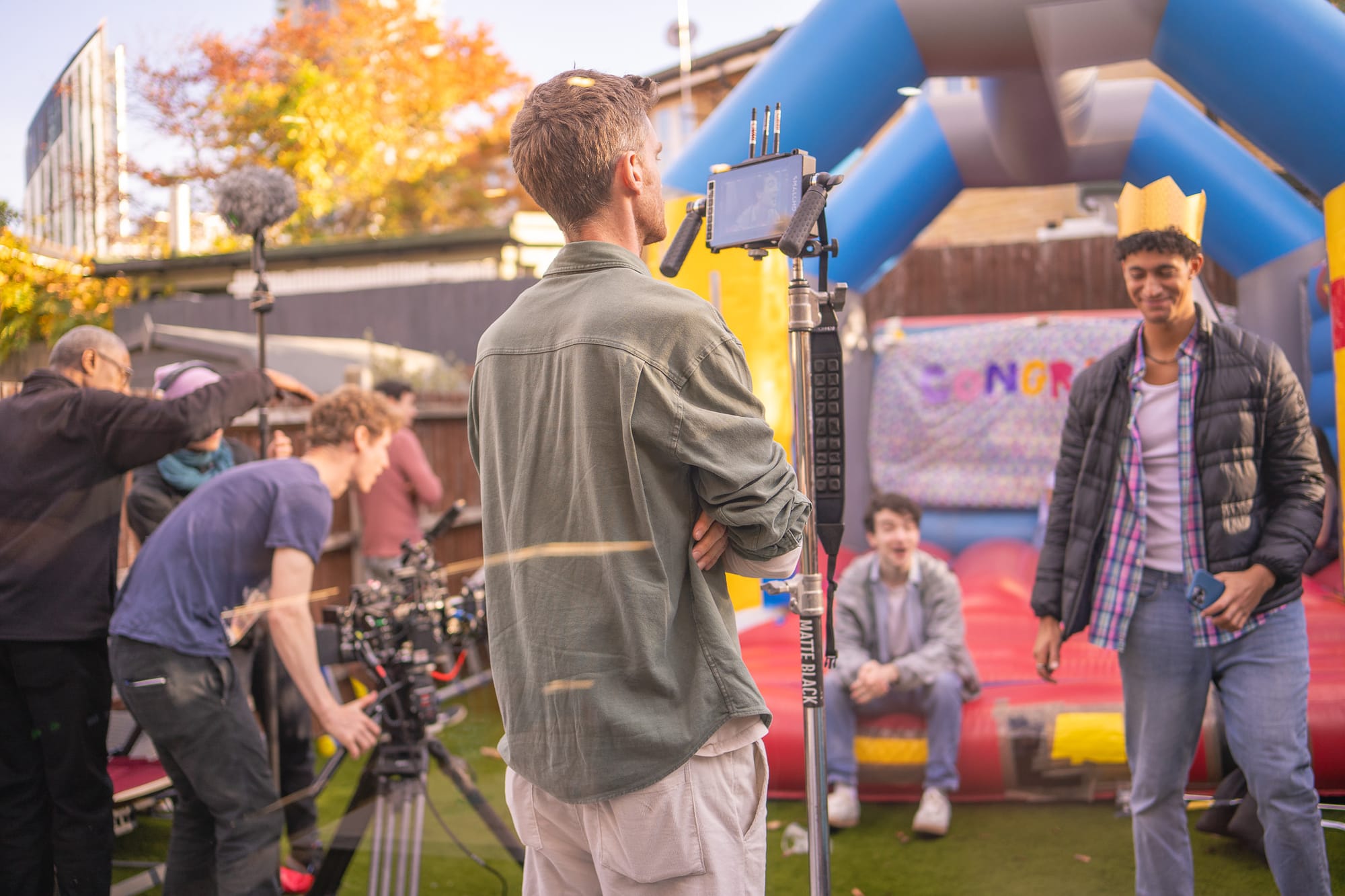
It’s hard to highlight a single thing, as you rely on many different elements throughout the filmmaking process. But if I had to pick one, it would be working with our Intimacy Coordinator, Olivia Heggs, a hugely valuable collaborator. As I mentioned before, it was so important to me that the relationship at the heart of our story felt believable, and Olivia was central to that. By making the actors feel supported, secure and free to explore – especially during the more intimate moments – she helped them give authentic performances without holding back.

How has this film shaped or shifted the kinds of stories you want to tell next?
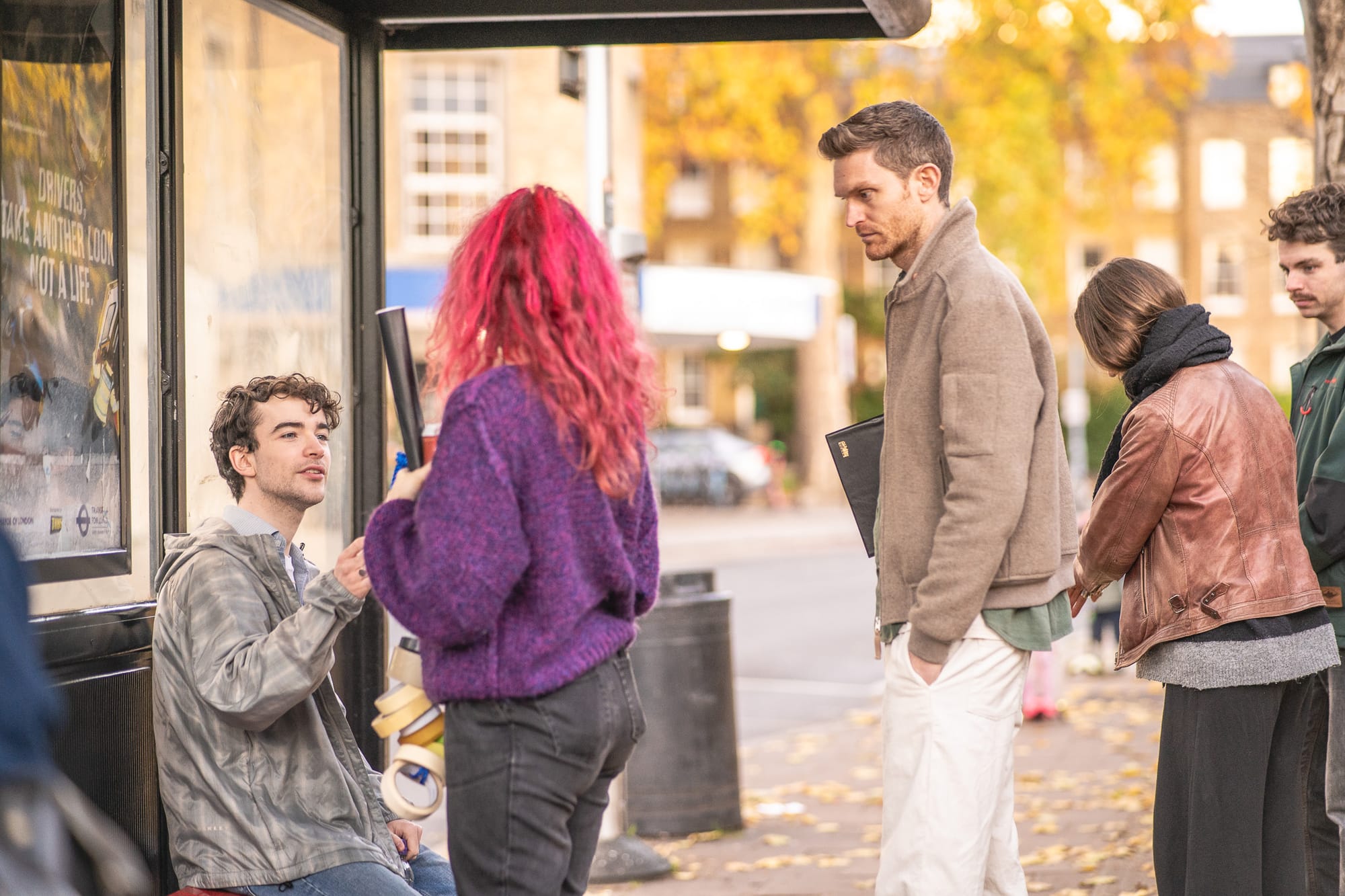
Making Geronto confirmed what I’m most drawn to as a filmmaker: people’s inner worlds (their private thoughts, feelings and desires) versus how they present themselves outwardly, and the tension between the two. Life is, in many ways, a performance. Why do we do it, and what does it cost us? Geronto explores those questions as a quiet, intimate drama, and I’d now like to push them further in other genres, such as horror or psychological thriller, and see where that goes.
Where do you see this film going next?
We’re only a few months into our film festival run. It’s been a great journey so far, which has led us to some extraordinary places. I hope we can continue to do more of the same. Further to that, there is a feature film version of Geronto in the works. The story we tell is well suited to the shorter format, but there’s so much dramatic potential beyond it, and plenty of thematically rich ingredients that could be expanded on in a longer format.
For other independent filmmakers, Pluck offers a method for planning against the clock: "I use a traffic light system: green for the shots I absolutely have to capture, because without them there’s no scene; orange for the second most important; and red for the “nice to have”." Asked what lies at the core of all of Pluck's work, the answer is to "invite audiences to think differently. And entertain."
Main Cast & Crew
- Director: Mark Pluck
- Writer: Christopher Sherwood
- Producer: Tom Taplin
- Director of Photography: Rob Wilton
- Cast: Jason Watkins (Older), Noah Valentine (Younger), Adam Lahraoui, Emily Jo Young, Philip Honeywell
- Casting: Bailey Francis
- Editor: Guy K Ward
- Music: Sister Bliss of Faithless
- Sound Design: Gustaf Jackson
- Production Design: Anna Riot
- Costume Design: Terri Higgins
- Hair and Make-Up Design: Fraggle Jury
- Intimacy Coordinator: Olivia Heggs
- Executive Producers: Lee Dean, James Baker, Douglas Lind, Christopher Sherwood
Follow the Film
Filmmaker Opportunities
💛 Fund your next project with fiscal sponsorship
Have a project in the works? As a 501(c)(3) nonprofit, the Cinematography for Actors Institute can accept tax-deductible donations on your film's behalf — a door-opener for grants, foundations, and supporters who want to back your work. We've serviced over 100 projects to date and helped route over $800,000 in funding to filmmakers. Explore fiscal sponsorship →
📬 Grant deadlines and festival opportunities, straight to your inbox
The CFA newsletter rounds up grants, festival calls, and community news for independent filmmakers — the kind of opportunities that are easy to miss and painful to miss. Join the newsletter →
🎬 Focus on the creative — we'll help with the logistics
Production Management, CFA's newest member program, launches this November: production insurance and workers' comp, payroll, film permits, gear rental coordination, SAG-AFTRA compliance, contract drafting, production consulting, and crew recommendations — handled by a team of working filmmakers, à la carte or all in, in partnership with Creative Access Group. It's waitlist-only until launch. Join the waitlist →
League of Filmmakers is published by our parent organization, the Cinematography for Actors Institute — a 501(c)(3) dedicated to education, community, and capital for underrepresented filmmakers and actors. Learn more about CFA →


