Table of Contents
Three Key Takeaways
- Nee Kirschman’s Scissor Sleepover boldly centers women as agents of their own graphic violence, blending girly-pop aesthetics with gore.
- Independent filmmaking thrives on community and collaboration, a lesson Kirschman embraced to elevate her debut horror short.
- The film’s sharp balance of dark humor and suspense marks a fresh take on classic slasher tropes, poised for expansion into a feature.
Director, producer, and co-writer Nee Kirschman makes a striking horror debut with Scissor Sleepover, selected for FilmQuest 2025.
With a talented cast led by Taylor Shurte and a crew including co-writer Zachary Foster and cinematographer Jake Southard, the short film fuses stylish gore with dark humor.
Kirschman’s background spans everything from children’s PBS programming to semi-finalist puppetry on America’s Got Talent, culminating in this twisted yet relatable story of friendship gone fatally wrong.

What drew you to make Scissor Sleepover? Why this story, and why now?
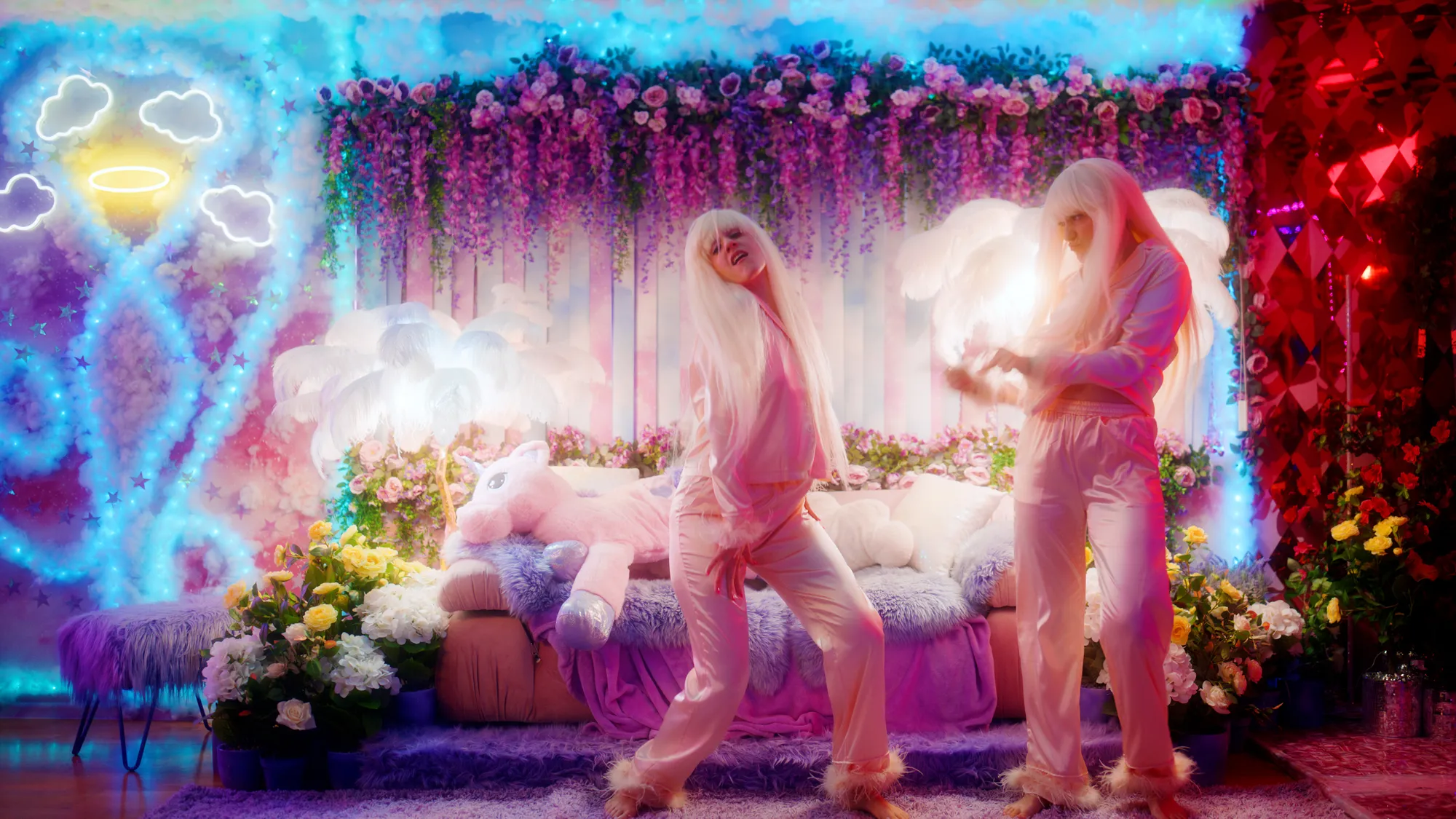
I was drawn to making Scissor Sleepover because I wanted to make a film that centered women in a graphically violent situation that was completely of their own making — the violence isn’t being done to them, they’re doing it to themselves. I love when women get to perpetuate the violence in horror — like Serial Mom or the end of Hostel 2 — so when my partner, in life and art, Zachary Foster, told me about this sketch idea he had about a decade ago, where this girl gets her eye stabbed with scissors at a sleepover, I knew I had to do it. I really loved juxtaposing the girly with the gory — it’s killer Barbie. With zero percent of their budget.
What surprised you most about the filmmaking process this time — creatively or logistically? Was there a moment on set or in post that completely changed how you saw the story?
I was most surprised that I didn’t listen to the one thing I had been telling myself for days before shooting — no matter what, get the inserts! I’m an editor (as well) and so I often found myself in situations in post that could easily be solved by an insert that didn’t exist. But then when we were shooting, we were pressed for time, because always, so I skipped the insert shots. It worked out without them, but still, they’re nice to have. I also had a producer friend give me a note on my first cut that repeats in my brain all the time now — you don’t have to use every shot. I know it’s obvious, but it really reframed things in my head. I know that a full day of shooting was dedicated to the scissors in Brittany’s eye and we got incredible coverage of it and it looked so good so I wanted to show it off — but it killed the reveal and the pacing. That note really opened up the whole cut.

Is there a moment in the film that feels the most you — something only you could have made?
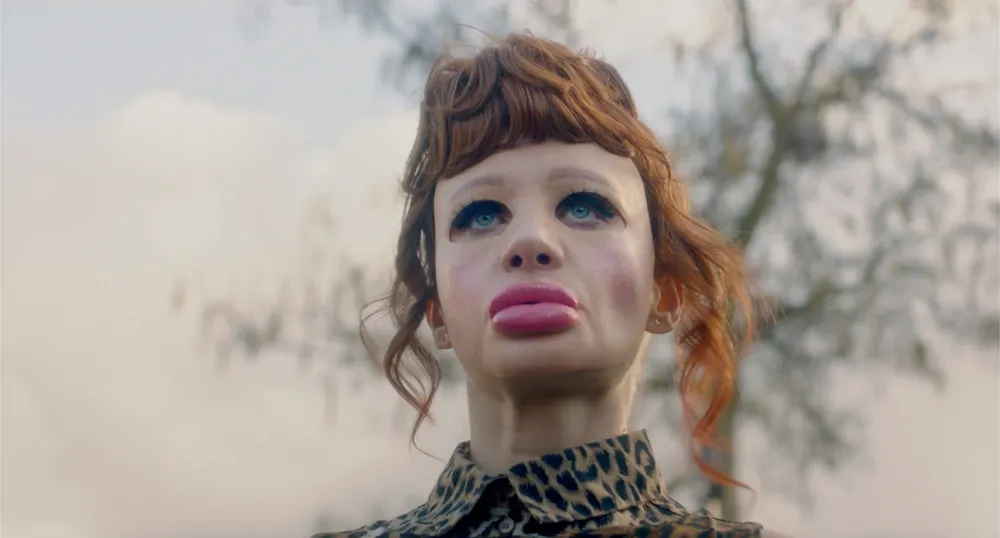
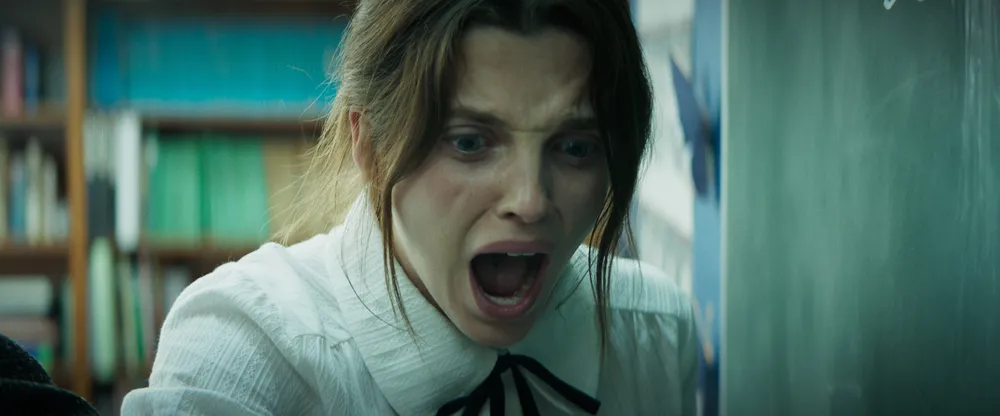
The scene where Brittany, played by Taylor Shurte, puts the girls (her friends) in their place after gouging out her own eye — flinging the eyeball scissors at them — feels very uniquely me. This is my first horror and the first thing I’ve directed, so I feel like Scissor Sleepover as a whole uniquely represents me as an artist — visually, tonally — it’s dark and twisted, but still relatable.

What was the hardest creative decision you made while making this film?
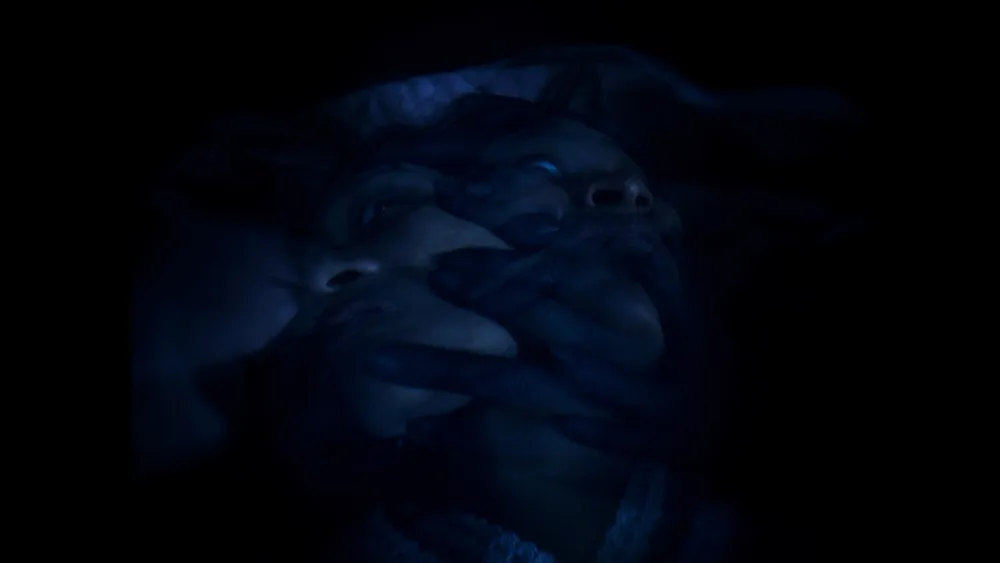
The hardest creative decision was everything around the initial scissor-eye-stab. I didn’t have the resources to actually show the scissors going into the eye, so it was about figuring out how to fake it and sell it — before and after the stab — building tension and creating shock.
“I love when women get to perpetuate the violence in horror — like Serial Mom or the end of Hostel 2 — so when my partner... told me about this sketch idea... I knew I had to do it.”
What do you hope audiences take away from your film?
I just hope they walk away having laughed and had a good time. Scissor Sleepover has layers and themes and motifs and I hope women can get a little extra kick out of it, but my ultimate goal is to entertain everyone.

How has this film shaped or shifted the kind of stories you want to tell next?
Scissor Sleepover had me thinking deeply on group dynamics and peer pressure and group think, so I definitely want to do another ensemble piece. But all my focus right now is the Scissor Sleepover feature.
What’s a tool, technique, or resource that really helped you during production?
The biggest resource was having a bunch of talented friends who would work for basically free — people who are in it for the love of the game. And also, the public library was an incredible resource — I could get free covid tests, printed scripts, storyboards, and schedules for everyone for virtually nothing.

Independent filmmakers often rewrite the rules out of necessity. What do you think is the greatest strength of independent filmmaking, and how did you lean into that on this project? Is there a lesson or breakthrough you’d share with others navigating this path?
I think the greatest strength of independent filmmaking is its reliance on community and need for humility. In independent film, everyone is doing some sort of favor, whether it’s doing a job they don’t really do or don’t do anymore or taking a pay cut, whatever it is — so it was really important for me, as the director, to set a tone where people felt like they had agency and could speak up, with a critique, an idea, doesn’t matter. I like the collaborative nature of film. The breakthrough I had was realizing the more I listened to other people’s ideas the more secure I became in my own ideas — not all the ideas were gold, but some were and it made for a better shoot and short.
“You don’t have to use every shot... That note really opened up the whole cut.”
What does it mean to you to have your film selected for FilmQuest, one of the world’s top reviewed genre film festivals?
Filmquest topped my list of genre festivals I wanted to get into so I couldn’t be more excited. I've had friends come back from Filmquest raving about how incredible the environment and atmosphere are so I'm glad I'll get to experience it firsthand!

FilmQuest celebrates the majesty and might of genre filmmaking across fantasy, horror, sci-fi, action, thriller, western, kung-fu, and beyond. How does your film fit within—or push the boundaries of—genre storytelling?
Scissor Sleepover is greatly inspired by the slashers of the 80s/90s and hopefully the feature version of Brittany will be reminiscent of those horror greats like Freddy and Chucky. But it pushes the boundaries of genre storytelling by pairing girly-pop aesthetics and subjects with horror and suspense — girl world meets gore world.
Where do you see this film going next?
The feature script is forthcoming and the goal is to be shooting the feature next fall.

“At the core of all my work is a desire to make you uncomfortable then grant you relief with laughter.”
Cast & Crew
- Nee Kirschman — Director, Producer, Co-Writer; a serial creative whose work ranges from children’s TV to horror shorts.
- Zachary Foster — Co-Writer, Producer; Kirschman’s partner in life and art.
- Taylor Shurte — Actor, plays Brittany.
- Teya Patt, Sherry Mandujano, Jonaye Kelsey, Lauren Mayer — Actors.
- Jake Southard — Director of Photography.