Table of Contents
Three Key Takeaways
- Alex Chew crafts horror with a heart, centering strong, nuanced women of a certain age without resorting to stereotypes.
- Embracing limitations creatively, the film’s confined setting mirrors its protagonist’s trapped condition, turning budget constraints into artistic strength.
- The film is a deeply personal ghost story inspired by Chew’s own experiences, blending emotional rawness with classic horror sensibilities.
Filmmaker Alex Chew brings a fresh, emotionally charged voice to the genre with I'll Sleep When I'm Dead, a haunting tale premiering at FilmQuest 2025.
Co-founder of Sequence 8 Films alongside Iris Davis-Quick, Chew draws upon a talented Texas-based team—including cinematographer Tori Rice and producers Ashley Robinson and Tika Cook—to deliver a story centered on an ailing woman in a nursing facility confronting an unexpected visitor.
Featuring powerful performances by Lucretia Johnson and Judy McMillan, the film explores themes of aging, loss, and supernatural mystery through a distinctly female lens.

What drew you to make I'll Sleep When I'm Dead? Why this story, and why now?
I made this film for my loved ones of a certain age whose health has been up and down over the years. I hoped it would remind my dad, in particular, to take better care of himself or else. And I wanted to make a horror movie that centered women of a certain age without making "the aging woman" inherently scary.
"Our limitations traps us in a room the same way our leading lady feels trapped in bed."
What surprised you most about the filmmaking process this time—creatively or logistically? Was there a moment on set or in post that completely changed how you saw the story?
The core concept never changed, but the location sure did. At first, we had access to a million-dollar home that mimicked a high-end retirement center, which was perfect. I even changed my script to add shots of my leading ladies walking out of their room, through a nice open recreational space, and onto a balcony to watch the sunrise. After losing that location, my project returned to being a true one-room movie, which felt risky. But, ultimately, I think our limitations traps us in a room the same way our leading lady feels trapped in bed. And it was quite a feat to pull off so much on such a small budget and with such little time.
Is there a moment in the film that feels the most you—something only you could have made?
I think the most “me” moment of the film is the twist at the end for the woman stuck in bed. Let’s just say I love a good ghost story that tugs at the heart strings. I had buried my dad just two months before our one-day shoot, so the emotions I brought to the story were raw.

What was the hardest creative decision you made while making this film?
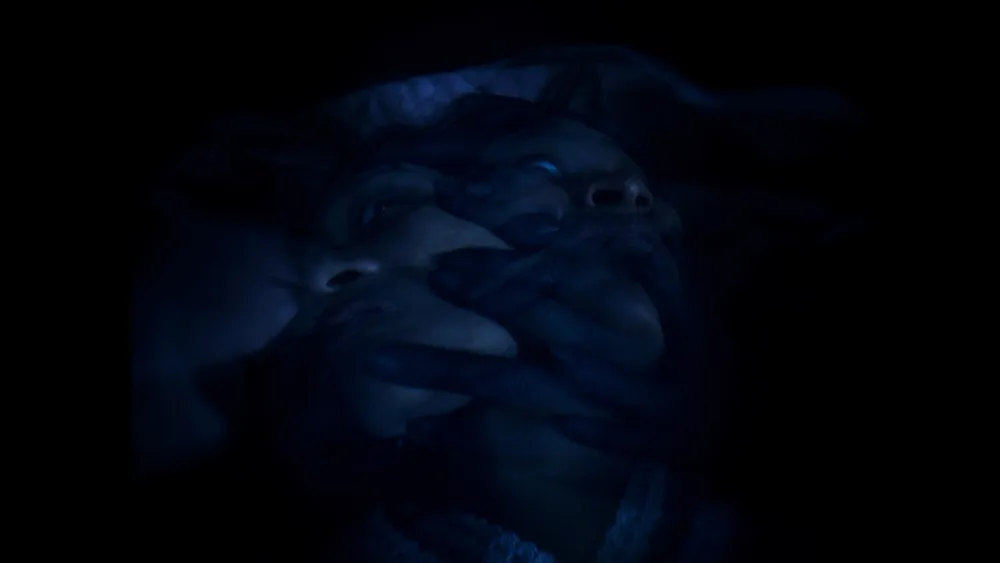
It was hard to decide how to depict the supernatural presence in the film given our tiny budget. I had to try practical effects and lighting setups that were new to me. Glad I made myself just do it so I could learn from the experience. And—thanks to my lovely DP, Tori Rice—I love the way it turned out aesthetically.

What do you hope audiences take away from your film?
My favorite ghost stories (The Sixth Sense, The Orphanage, The Others) make the hairs on the back of your neck stand tall, and then leave you warm and fuzzy by the end. I hope audiences walk away from I'll Sleep When I'm Dead with a similar feeling.
"I had buried my dad just two months before our one day shoot, so the emotions I brought to the story were raw."
How has this film shaped or shifted the kind of stories you want to tell next?
A: I want to tell more horror tales with strong emotional cores centered around Black Southern women, misfits, and antiheroes. As a Black Southern female horror nerd—it’s the only POV I got and I selfishly want to see more of it in my favorite genre!

What’s a tool, technique, or resource that really helped you during production?
My greatest resource is my writers group. We call it "The Night Job" and workshop each other's scripts every Wednesday. We're great friends, collaborators, and champions for each other. My Sequence 8 co-founder, Iris Davis-Quick, is a member of that group but also goes above and beyond to bring all our films from script to screen. She is a structure queen who has taught me so much about screenwriting. Her passion for independent cinema is unmatched. I can't imagine doing any of this without her.
Independent filmmakers often rewrite the rules out of necessity. What do you think is the greatest strength of independent filmmaking, and how did you lean into that on this project? Is there a lesson or breakthrough you’d share with others navigating this path?
Orson Welles once said that a lack of limitations is the enemy of art (or something like that). I'm all about embracing our limitations as indie artists, because without all the Hollywood connections and studio money—our scripts have to be tighter, our production logistics more creative, and our paths to the distribution line must be laid with absolute fearlessness.

What does it mean to you to have your film selected for FilmQuest, one of the world’s top reviewed genre film festivals?
It means everything to premiere I'll Sleep When I'm Dead at FilmQuest. Jonathan and his team are like no other. They really foster a sense of camaraderie among all the filmmakers who attend. The quality of every single showcase is consistently chef's kiss. Everyone there injects me with a lot of hope for the future of horror.
"Without all the Hollywood connections and studio money—our scripts have to be tighter, our production logistics more creative, and our paths to the distribution line must be laid with absolute fearlessness."
FilmQuest celebrates the majesty and might of genre filmmaking across fantasy, horror, sci-fi, action, thriller, western, kung-fu, and beyond. How does your film fit within—or push the boundaries of—genre storytelling?
My films often combine drama, mystery, thriller, and horror. They're also what Golden Age Hollywood critics might have called “women’s pictures”, because I always center the ladies and their rawest emotions—including rage, terror, lust, vengeance, and hope. They also invoke a classic cinema aesthetic. They might not be groundbreaking, but hopefully they’re nostalgic and timeless.

Where do you see this film going next?
The next step for all my shorts is finding investors and producers who can help turn my proof of concept into a feature! My full-length scripts are ready to roll.
“At the core of all my work is a desire to see and be seen."

Cast & Crew
- Lucretia Johnson & Judy McMillan — Lead actors delivering powerful performances