Table of Contents
July 1st marked the return of Marvel Animation's X-Men '97, two years after the revival's first season blew audiences away with stunning animation, action, characters, and a compelling story to tie it all together.
With its return comes fan-favorite members of Marvel's mightiest mutants such as Cyclops (Ray Chase), Storm (Alison Sealy-Smith), Wolverine (Cal Dodd), and Jubilee (Holly Chou), and of course their arch-nemesis-turned-ally-turned-nemesis Erick Lensherr, A.K.A. Magneto (Matthew Waterson).
I'm thrilled to say that season one did Magneto, one of my all-time favorite villains, justice by remembering what makes him an especially interesting antagonist to the X-Men: the fact that he isn't one; he's fighting for the same ideals and wants the same things that our heroes do, with conflict only arising in the depths he's willing to delve to get them.
For any readers unaware of Magneto's story, it is one of tragedy, renewed hope, and continued disappointment. As a child, Erik was a victim of the Holocaust, bearing witness to the depths of human cruelty when he vowed he would never again allow such tragedy to reign.
Which is why, after surviving the genocide, and discovering his mutant ability to bend magnetic fields to his will, and witnessing the rise of mutant hatred and persecution by mankind, he is so adamant about rescuing his species from extinction. He shares this goal with close friend and leader of the X-Men, Professor Charles Xavier (Ross Marquand), who, while also fighting for mutant equality, envisions a future wherein mankind and mutants coexist rather than one forced into submission.
One way Magneto stands out so well in '97 is by being the perfect execution of a twist villain. When writing a twist villain, many stories end up falling into one of two categories: a) the twist is extremely obvious and therefore un-impactful (i.e., Evelyn Deavor (Catherine Keener) in The Incredibles 2 (2018)), or b) they aren't set up well and feel completely random and therefore unsatisfying (i.e., Ares (David Thewlis) in Wonder Woman (2017)). Magneto in '97 avoids these pitfalls by playing into audience expectations, easing viewers into a false sense of predictability; this is easier said than done, so let's take a look at the character's key moments throughout the season to see how exactly writer Beau DeMayo made it happen.
When episode one ends by revealing that Magneto has been left in charge of the X-Men, the characters and audience are on the same page: this can't possibly end well. At this point, viewers are expecting Magneto's betrayal, being given no valid reason to believe he's changed from the Magneto we saw in the '90s, so what does DeMayo do? He gives us a reason.
In episode two, the X-Men are confronted by the forces of the United Nations, who swarm their lawn with helicopters and gunmen to demand that Magneto stand trial for his crimes. At first, Magneto does exactly what we expect him to do, using his power to turn their helicopters against them. But we soon get the first real hint that something's changed, as instead of slaughtering the soldiers on his lawn, Magneto agrees to be put in cuffs and stand trial for his actions.
Note that the audience is not yet convinced that Magneto is any different; this could all be a ruse or step in a grand scheme to put mutantkind back on top. Erick hasn't proven himself yet.
We next see Magneto standing trial, pleading his case, and pleading it well. He explains to the council that he's seen where the path of bigotry leads, and he's only ever acted to steer humanity away from it. Things seem to be going well, and for a moment, audiences aren't sure whose side the council will take, or whose side they should take; unfortunately, all quickly becomes irrelevant as a horde of anti-mutant protesters breach the courtroom and one of them, the X-Cutioner (Lawrence Bayne), shoots Storm with a powerful beam that removes her powers.
In a fit of rage, Magneto raises the council and the X-cutioner high into the atmosphere, looking down at Earth. This is a crucial moment for Magneto, and it's exactly what audiences are expecting. We know what's going to happen next, Magneto will kill them, and the X-Men will have to clean up the mess, that's the formula; that's how the story goes. We know because it's been happening since the 90s.
But this is when everything changes, when Magneto changes. He doesn't throw them into space or send them plummeting to the Earth; he talks to them, explains the promise he once made to his friend Charles Xavier, and how he's trying hard to keep it, to change. This is when audiences realize that we aren't dealing with the same character; this is a new Magneto.
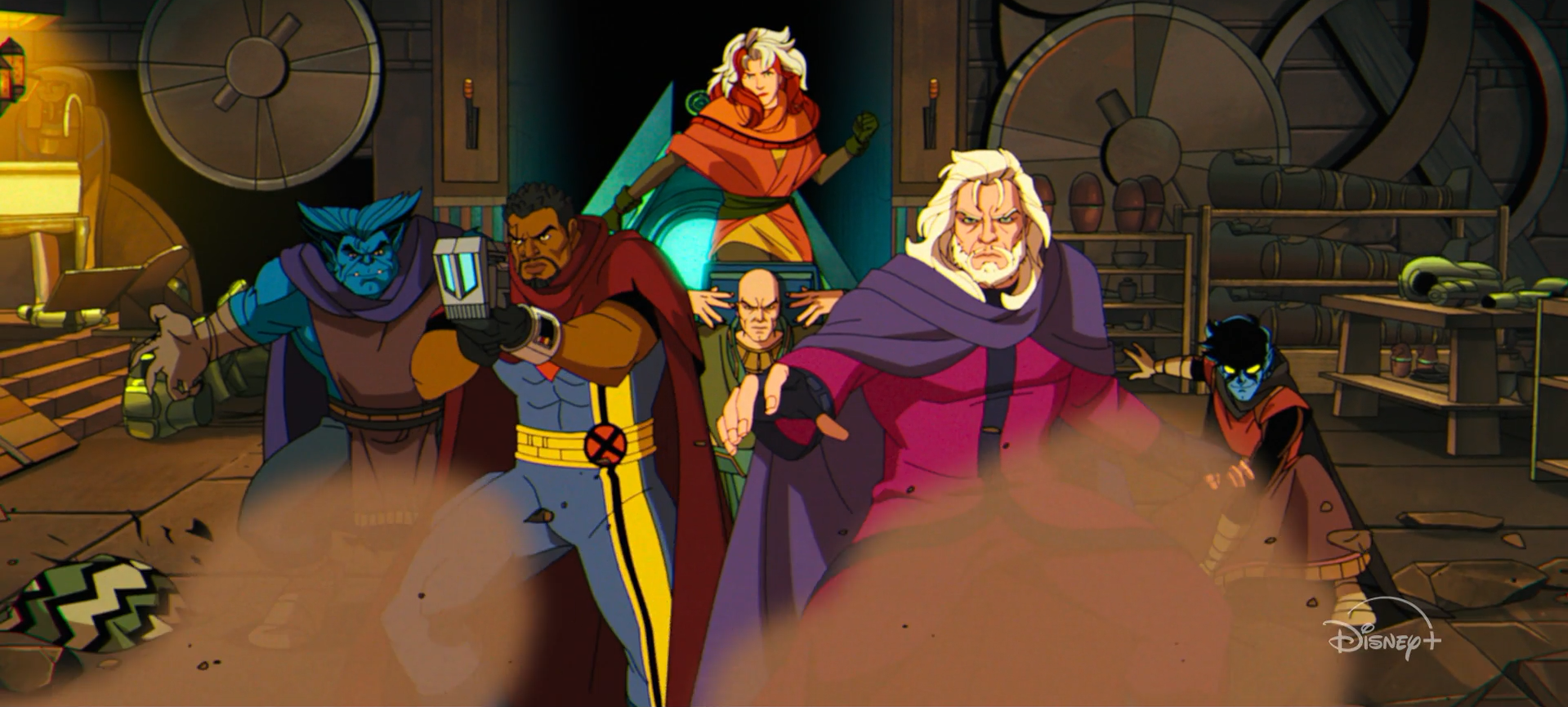
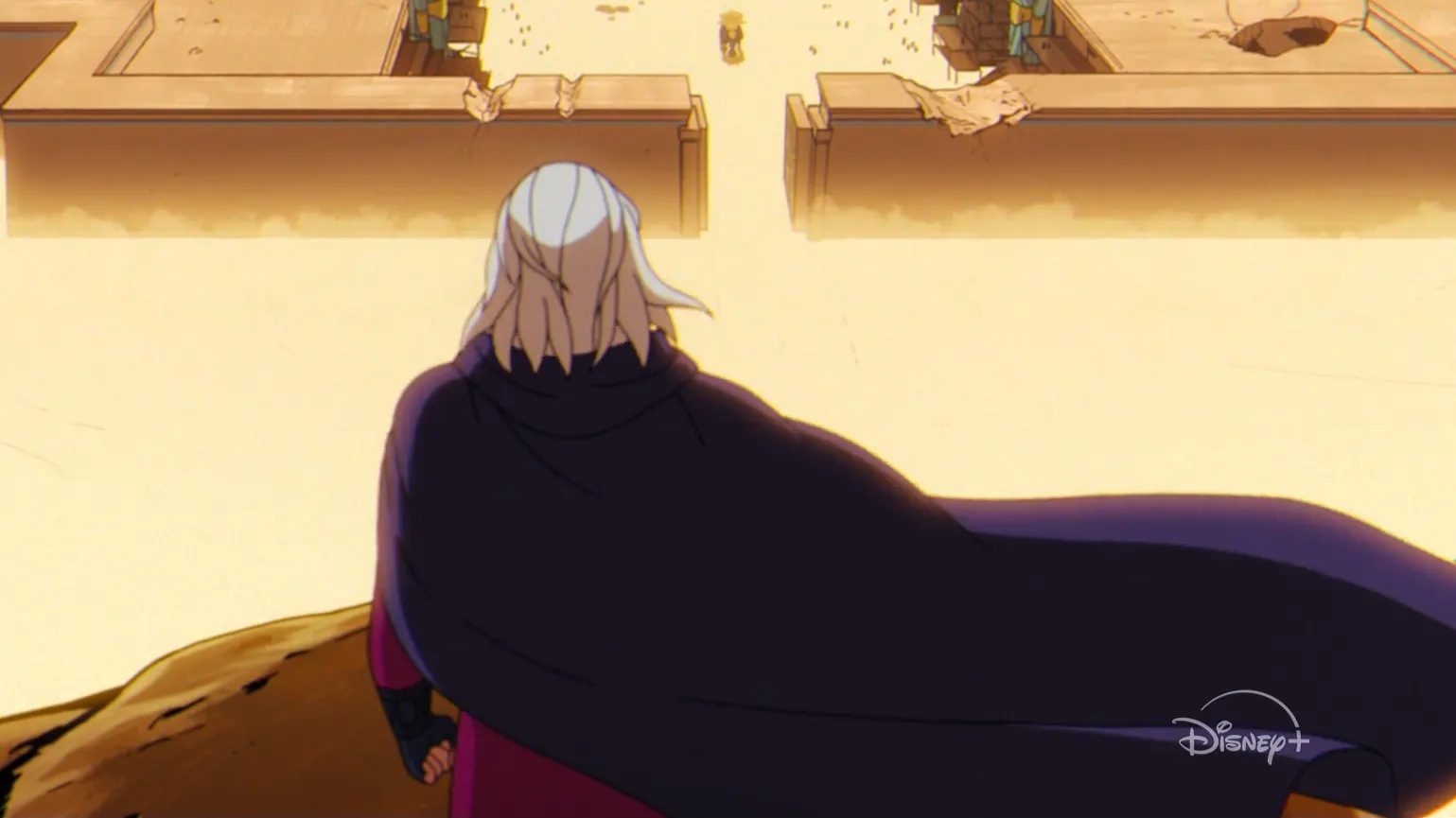
Over the next two episodes, we see more of this new character as he slowly earns the cast's trust. At this point, we don't think he's a villain, but he still doesn't seem as heroic as the rest of the team; that is, until episode five, when we truly see the kind of man Magneto is.
Episode five of X-Men '97: season one, "Remember It," is one of my favorite episodes of television for many reasons, and it is due in no small part to Magneto. To set the scene, we are on the heavenly island of Genosha, a mutant utopia free from the discrimination and restrictions of the outside world. Here, instead of hiding, mutants are free to use their abilities, to create their own art, music, government, and culture. It's everything the X-Men have been fighting for since the 60s.
Genosha is Xavier's dream come true. At the head of mutant salvation sits Magneto, regarded as the leader of mutantkind, and in truth, he's a perfect fit. There are no secret brainwashing facilities, no clandestine power grabs or plots to build an army against humanity. Magneto loves the people of Genosha, and they love him.
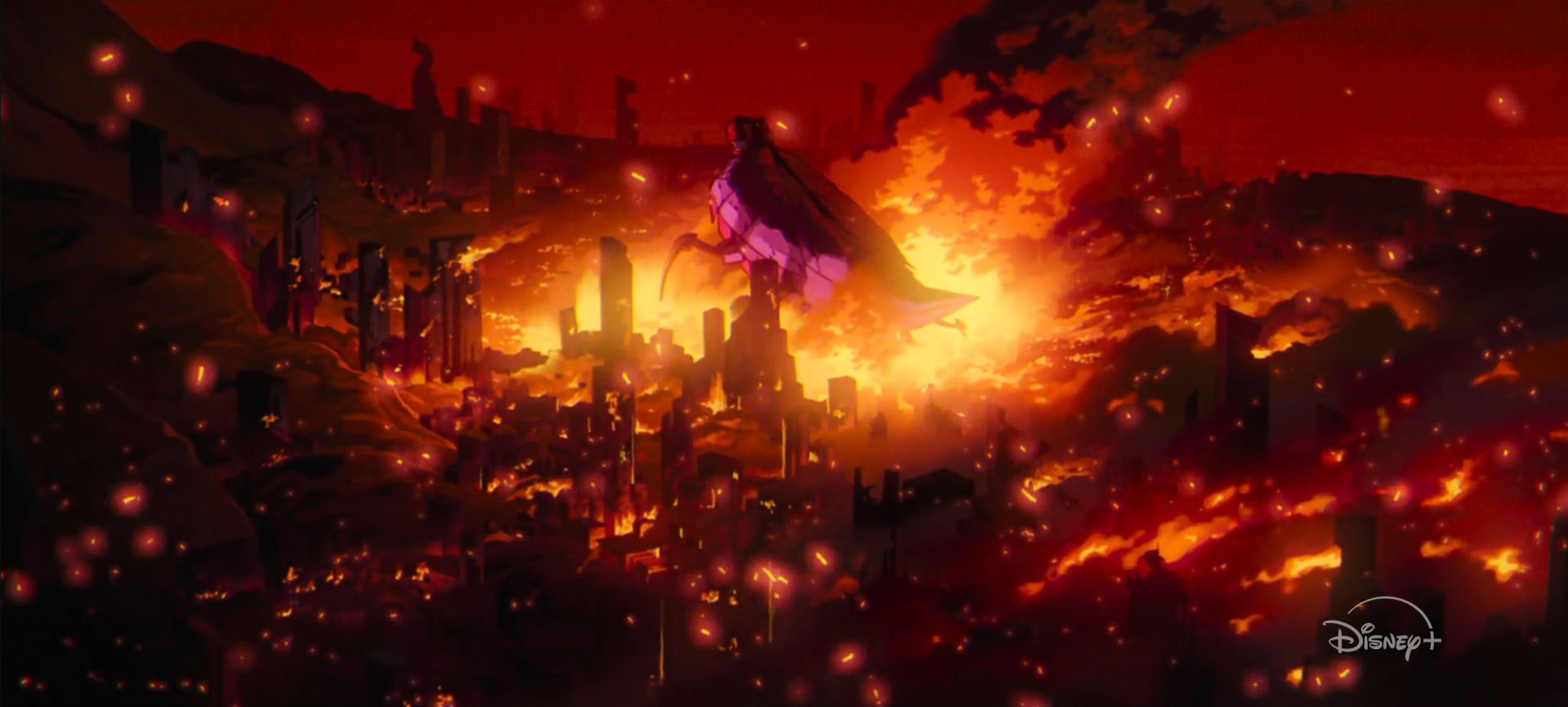
Which makes Genosha's annihilation all the more devastating. In a matter of hours, the entire island is reduced to rubble by a legion of Sentinels. Genosha's survivors become refugees, and its culture becomes history. In the ensuing battle, Magneto sacrifices his life to protect his people.
In his final act, Magneto becomes a martyr. And with his death follows that of any reservations about his loyalties or ideals; audiences are now fully convinced that Magneto was a hero.
Had Magneto's redemptive story of a man turned terrorist turned savior ended here, it would have left enough heads spinning, so when Magneto was revealed to be alive and captured by Bastion (Theo James), the half-human, half-sentinel behind the attack on Genosha, all bets were off.
The next time we see Magneto, he's been eroded by the heartbreak of vindication. He followed Xavier's path into the graves of thousands. How many more must suffer before Charles faces the truth Magneto was subjected to as a child: that tolerance is extinction.
This shift is demonstrated expertly in his interaction (or lack thereof) with the head of the U.N., Dr. Cooper (Catherine Disher), whose guilt about Genosha and the part she played in it, leads her to free Magneto. After removing his bindings, she begs him to forgive her, to talk to her. But Magneto leaves in silence. What's left to say? He's already said everything, and he's tired of repeating himself. When words fail, actions must take their place, and it's time for him to take action. To do what he should've done decades ago, what Charles convinced him not to do, what could've saved thousands, what could've saved Genosha. It's time to end humanity.
It is now, as Magneto destroys Earth's magnetic field, causing a worldwide blackout, guaranteeing the end of humanity in a matter of hours, that Magneto again resembles the villain we saw decades ago. Only now, something's different; we aren't sure if we should be on the X-Men's side, and neither are they, which is why Rogue (Lenore Zann) and Sunspot (Gui Agustini) ultimately take his offer and leave the X-Men to join his side.
And although Magneto is ultimately defeated, thanks to the return of Professor X and his mental manipulation, the tone is more somber than victorious, as audiences aren't sure who the X-Men really were fighting. Was it the sinister master of magnetism always in the X-Men's way? Was it the King of Genosha, saviour and leader of mutantkind into a brighter future? Or was it Erick Lensherr, a boy nearly drowned in the depths of human cruelty, who now captains a life raft in search of refugees adrift in smothering waves of oppression?
It is this question, its many answers, and how they shift throughout the season that make Magneto in X-Men '97 the perfect twist antagonist.