Table of Contents
Three Key Takeaways
- Rene Rivas blends his passion for rock music and genre films to create the suspenseful horror-thriller Grunge.
- The film features a hypnotic, psychedelic slow-motion sequence that stands as Rivas’s signature creative moment.
- Independent filmmaking’s resourcefulness and collaboration were critical in overcoming budget constraints to realize the film’s vision.
Rene Rivas, an award-winning writer, director, and cinematographer based in Arizona, brings his latest short film Grunge to this year’s FilmQuest, one of the premier genre film festivals.
The film stars Sam Quin, Lestonja Diaz, and David Rice, and features a strong creative team including cinematographer Peter Fuhrman and executive producer Alex Liebeskind.
Rivas’s production company, Rene Rivas Productions, has earned acclaim for high-quality independent shorts, and Grunge continues this trajectory with its blend of suspenseful horror and rock music culture.

What drew you to make this film? Why this story, and why now?
After years and years of playing in rock bands, and being a long time lover of genre films. The two more or less collided and thus, Grunge was born!
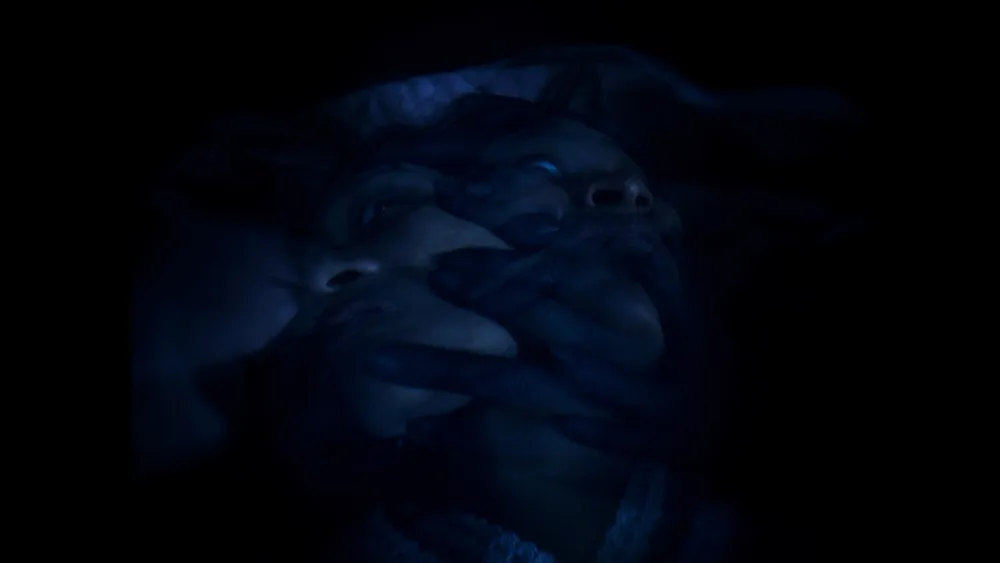
“The psychedelic slow motion performance sequence holds a special place for me. It’s so raw, so hypnotic, it’s beautiful, yet it juxtaposes this horrible scenario happening before and after the sequence.”
What surprised you most about the filmmaking process this time—creatively or logistically? Was there a moment on set or in post that completely changed how you saw the story?
It’s always an exciting process, seeing how your talent brings the written word to life, seeing how they take the material and bring their talents to the words. (After creative direction given) - Everyone really brought their A game during this production, and I couldn’t be more proud of our team for what everyone brought to the table.
Is there a moment in the film that feels the most you—something only you could have made?
The psychedelic slow motion performance sequence holds a special place for me. It’s so raw, so hypnotic, it’s beautiful, yet it juxtaposes this horrible scenario happening before and after the sequence. It’s a possibly my favorite sequence in the film.
What was the hardest creative decision you made while making this film?
Budget cuts, re-writing certain beats and scenes to adhere to our limited budget.

What do you hope audiences take away from your film?
We hope it keeps them on the edge of their seats, and when the credits roll... our goal is to have them foaming at the mouth to want to see more/see what happens next with this band in peril!
“Everyone really brought their A game during this production, and I couldn’t be more proud of our team for what everyone brought to the table.”
How has this film shaped or shifted the kind of stories you want to tell next?
Generally, I would consider myself a horror director (at this point in my career) but this film really demonstrates a level of comfort in the suspense-thriller style of storytelling. Which is more so my personal writing/directing style that I gravitate towards the most. Yes, I’ve done straight up horror exploitation fun, but feel that my wheels are most cranking in this sub-genre of horror. Dread induced suspense/thriller narratives.

What’s a tool, technique, or resource that really helped you during production?
We shot the production on my RED V-Raptor 8K Vista Vision, with Vespid Prime cinema lenses. That combo really gave us the latitude we and our DP needed to take these visuals to the next level. From the high speed sequences, to stellar lower light capability, to best utilizing the vista vision sensor to garner as much depth as we could. It was just a great overall combo to help our team tell the story. Really love the characteristics of the Vespid prime cinema lenses as well, paired with the vista vision sensor, the results were lovely.
Independent filmmakers often rewrite the rules out of necessity. What do you think is the greatest strength of independent filmmaking, and how did you lean into that on this project? Is there a lesson or breakthrough you’d share with others navigating this path?
Independent filmmaking is tough, resources are always slim, and we have to forge on and utilize these resources to the best of our ability. Leaning on each other, and problem solving to circumvent these limitations through creative and alternative methods (that sometimes) create lighting in a bottle.
What does it mean to you to have your film selected for FilmQuest, one of the world’s top reviewed genre film festivals?
It’s an honor to be joining the family, and to be amongst great company at this year’s FilmQuest!
“Leaning on each other, and problem solving to circumvent these limitations through creative and alternative methods (that sometimes) create lighting in a bottle.”

FilmQuest celebrates the majesty and might of genre filmmaking across fantasy, horror, sci-fi, action, thriller, western, kung-fu, and beyond. How does your film fit within—or push the boundaries of—genre storytelling?
Grunge fits within the Suspense horror-thriller sub genres respectfully.
Where do you see this film going next?
Hopefully into the feature version!
“At the core of all my work is a desire to inspire, motivate, and see a different perspective of how one can tell a story."

Cast & Crew
- Matthew Vorce (Donovan), Emma Raimi (Hayden) — Principal cast
- Quin Davis — Special Makeup Effects
- Darren Barton — Sound Mixer
- Paige Spann — Makeup Artist
- Additional key crew: Arthur Mirzabekian, Norman Hanley, David Adams (Producers), Dan Crowley (Gaffer), Andrius Hahn (Key Grip), Matthew Miller (Grip, Unit Stills/BTS), Stephen Huffman (1st AC), Jack Ieronimo (Colorist), Sam Spence (Key PA)