Table of Contents
Three Key Takeaways
- Wendy Wang channels personal experience and genre influences to delve into psychological horror through the eyes of children.
- The film’s nuanced portrayal of Stockholm syndrome challenges audiences to confront unsettling questions about loyalty and manipulation.
- Independent filmmaking’s freedom enables Wang to craft a character-driven story with emotional depth and originality.
Wendy Wang, a Los Angeles–based writer-director and USC alum, brings her latest psychological horror short, The Man Upstairs, to FilmQuest 2025.
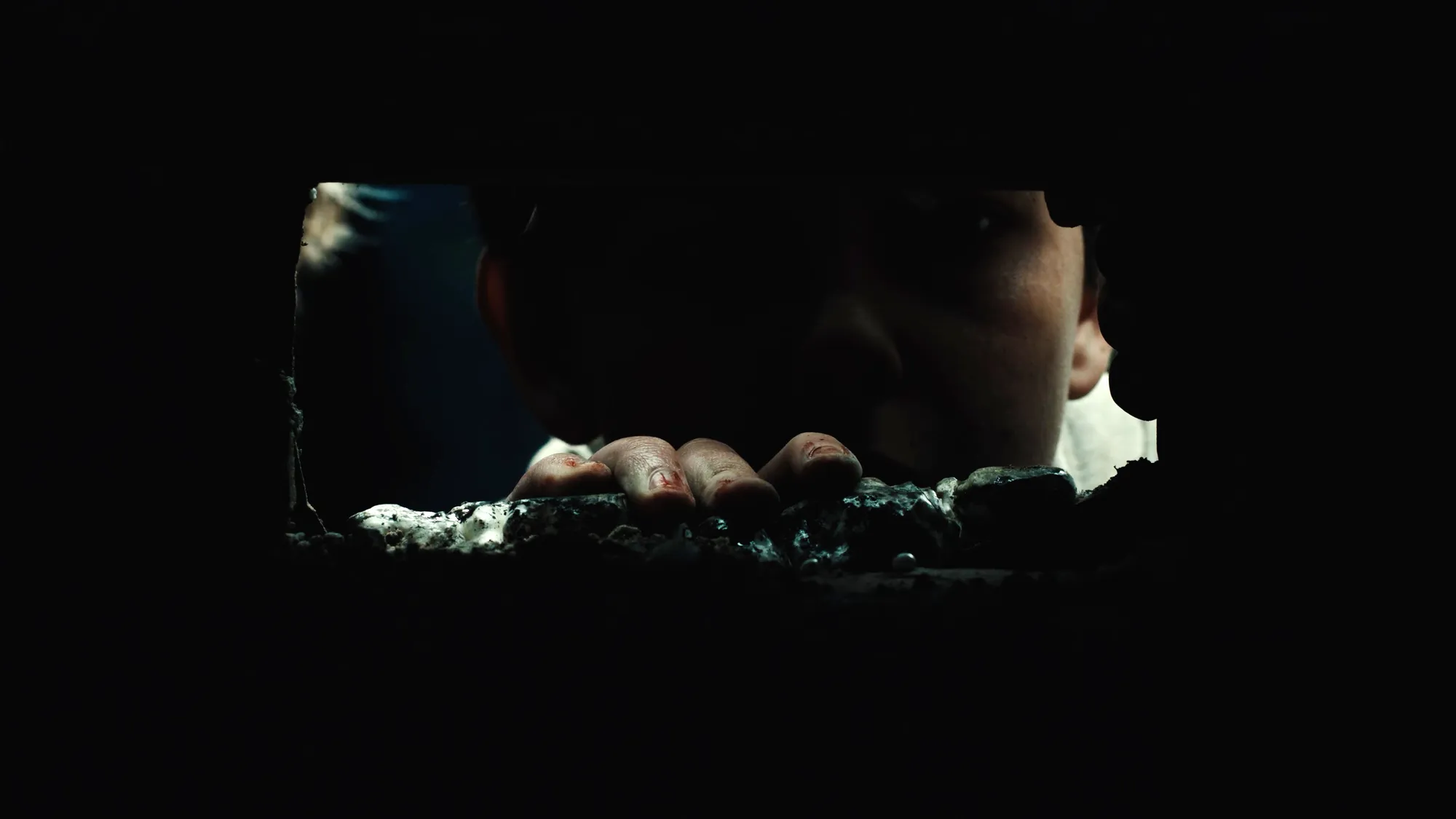
Featuring haunting performances from Kennedy Taylor, Mark Sodukh, and Eric T. Johson Jr., the film explores the harrowing survival of two boys trapped with a manipulative captor.
Wang’s work reflects her passion for character-driven storytelling, blending striking visual style and intimate psychological themes.

What drew you to make this film? Why this story, and why now?
I started writing the feature version of The Man Upstairs a couple of years ago before adapting it into a short film as a proof of concept. While fictional, the story draws deeply from my own experiences growing up in an environment shaped by fear, control, and the constant pressure to perform in order to feel safe. The Man Upstairs became a way for me to transform that fear into something visible. On top of that, I’ve always been fascinated by true crime and the psychology of survival. Making the story of survival through a genre lens becomes a very natural progression. The story structure itself is loosely inspired by Mark Twain’s The Prince and the Pauper, but reimagined through a darker lens: what happens when role-switching and identity become survival tactics rather than acts of curiosity or privilege? It is an exploration of Stockholm syndrome. And by creating the kind of villain so manipulative that his victims, two children, may not even want to escape him, we bring the audience into the twisted world of psychological manipulation. At its core, the film asks a simple but unsettling question: would you still do the right thing by someone you care about, even when there’s no clear reason in doing so? I want to give our protagonist all the reasons to seek self preservation, but he is still choosing to do the right thing by his friend. In today’s social climate, I believe that is what we all wish our community would have done for us. Beneath the horror, it’s really a story about resilience, connection, and the quiet, often invisible ways we fight to hold onto ourselves when the world tries to take that away.
"At its core, the film asks a simple but unsettling question: would you still do the right thing by someone you care about, even when there’s no clear reason in doing so?"
What surprised you most about the filmmaking process this time—creatively or logistically? Was there a moment on set or in post that completely changed how you saw the story?
I was very surprised by both how hard and easy it was to cast the Man. It is definitely an interesting role for actors, and we have received thousands of submissions and hundreds of tapes, and I was ready to spend weeks in auditions and agonizing over decisions. However, when I watched the self tape from Kennedy Taylor, I knew immediately this is the guy. It was fear at first sight and he was everything I hoped the character to be. This is the first time I have ever experienced that. I still did my homework and watched every submission, but the decision remains the same—Kennedy is the best choice. Even with scheduling conflicts, I held on to my decision and knew he was worth scheduling the production around. This is one of the best decisions I have made on this project. During the production process, I was surprised by how accommodating and supportive the parents of the children are. While having children in horror movies is a long standing tradition, it is still a sensitive subject matter. I made sure to communicate with the parents early regarding each specific aspect of the project—both creatively what we needed to see from the kids, as well as the safeguards we put in place (studio teacher, stunt coordinator, rehearsal, etc.) I felt very honored that the parents trusted our team with their children. Our production team made sure to keep the vibe on set fun and light as well. The kids, on the other hand, were not bothered by the genres at all. They actually had a lot of fun and were very excited about all the stunts and gores. Working with them actually reminded me just how fun this process really is! And how cool it is that we get to make horror movies to scare our audience!

Is there a moment in the film that feels the most you—something only you could have made?
While I have crafted the dialogues, blocking, scores, even paint choices…basically infused my DNA in every aspect of the project, I’d say the part that feels the most me is the ending. The goal of the last scene is to showcase Stockholm syndrome in a way that’s not only observed by the audience, but the audience, too, is under the Man’s manipulative spell. I have received a lot of feedback where the audience has reflected that in the particular moment, while they know the Man is evil and dangerous, they can’t help but wishing they can be a real family. In that moment, I pull the rug from under their feet to truly showcase how far the Man would go if things don’t go his way. I like to fill every frame and every moment with a lot of nuances to fully immerse the audience in the cinematic journey with the character. And the ending of the short is a successful example of that.

What was the hardest creative decision you made while making this film?
The hardest creative decision is also with the ending. In the feature version there was a character death that I was not planning to include in the short. However, after receiving notes from a few trusted friends, I realized the death defines both the tone of the movie, as well as the psychological change for the protagonist. I rewrote the ending and it became one of the most defining moments of the film.
What do you hope audiences take away from your film?
I’m hoping this project will create a deeper understanding of Stockholm syndrome, as well as the bravery it takes to fight back. It is alluded in the very beginning that our protagonist Julian comes from an abusive home environment, which makes him more susceptible to manipulation and Stockholm syndrome. Corey, however, comes from a healthy family, so he was able to keep his eyes on the goal of escaping. These details created the foundations for these characters and how they react to the kidnapper. I’m hoping by showing the contrast of the two boys’ behaviors, and to tell the story through the lens of the children, the audience will understand Julian’s journey and the decisions that he makes along the way.
"The goal of the last scene is to showcase Stockholm syndrome in a way that’s not only observed by the audience, but the audience, too, is under the Man’s manipulative spell."
How has this film shaped or shifted the kind of stories you want to tell next?
Writing The Man Upstairs helped me solidify my creative voice as a writer/director. I realized that I love telling stories from a child’s perspective. Especially in pre-teen years, that’s when children start to develop their own moral standings, and begin to come to their own agencies as individuals. By throwing them into difficult situations—external and internal—it forces the characters—as well as the audience—to really examine the decisions and choices that they make. My next story is another horror story told through the lens of a child. But I am shifting the setting more in Asian culture, which would be the first time I have done that as a narrative filmmaker.

What’s a tool, technique, or resource that really helped you during production?
As I’m sure it’s apparent, The Black Phone was an important reference for The Man Upstairs. While our themes and story arcs differ, both films explore the fear of children trapped in confined spaces. During pre-production, I rewatched The Black Phone with director commentary, which gave me a deeper understanding of this specific subgenre. It helped me analyze not only what techniques Scott Derrickson used effectively, but also what choices wouldn’t serve the tone and perspective of my own film. Beyond that research, my biggest resource was my team. My production designer, Fabio Del Percio, built the basement set from scratch. Together we painted the room, distressed everything, and made the drawings on the wall. My DP, SungKuong, and I spent countless hours on location, blocking scenes, designing camera movements and transitions, and creating detailed overheads so the entire crew could visualize the plan. In the end, what truly carried the production wasn’t just tools or references. It was a collaboration. From friends who gave notes to every person in post-production, the collective belief in the film became the strongest tool I had, and the foundation of my every creative venture.
Independent filmmakers often rewrite the rules out of necessity. What do you think is the greatest strength of independent filmmaking, and how did you lean into that on this project?
The greatest strength of independent filmmaking is the ability to have less red tape to create something that the audience truly wants, also something new and original, not based on original IP or how the data dictates we must make the 4th remake of an existing franchise. While it’s not a new technique, it’s to put children in the front and center of a complicated emotional journey. There are fewer cooks in the kitchen. The story can be crafted mostly by the writer and director (which are often the same person in the indie world.) We are much less likely to wait weeks and months for notes from Executives before we can move on to the next step. There is also more creative freedom as well. For example, we can focus on casting based solely on who’s best for the roles, and don’t have to worry about studio and streaming metrics when it comes to offers. However, the other side of the indie, is that there are less accountabilities in terms of the storytelling as well as the production. This means the filmmakers have to set their egos aside and be extra diligent in seeking advice and notes to make sure the story is being told the best possible way. We can’t default back to 'they just don’t get the story,' but listen to the notes beneath the notes even if we feel resistant to them.

What does it mean to you to have your film selected for FilmQuest, one of the world’s top reviewed genre film festivals?
While I have participated in FilmQuest a few times prior to this year as a producer, it is my first time to enter as a writer/director. It is an absolute honor to be a part of this year’s line up. I am aware of a few projects this year through previous festivals, and I know I’m in amazing company. It is no secret that the team behind FilmQuest are really invested in its community. I have felt very taken care of during this process personally as well. It feels very validating as a creative to know that this project resonates with the right audience. Both the film and I, as a filmmaker, are finally heading where we belong.
"What truly carried the production wasn’t just tools or references. It was a collaboration...the collective belief in the film became the strongest tool I had."

FilmQuest celebrates the majesty and might of genre filmmaking across fantasy, horror, sci-fi, action, thriller, western, kung-fu, and beyond. How does your film fit within—or push the boundaries of—genre storytelling?
Children have long been a staple of genre storytelling. Films like Children of the Corn, Poltergeist, and The Black Phone have shown how powerful their presence can be in heightening fear and empathy. While working with minors can be a production challenge, I believe that centering children in genre stories creates an experience that is both deeply relatable and uniquely unsettling. In The Man Upstairs, we didn’t use a child character as a simple MacGuffin or symbol of innocence in danger. We fully committed to telling the story through his eyes. Experiencing horror from a child’s perspective amplifies the emotional stakes: it’s not just about what happens to Julian, but how he understands the terror around him. That perspective both honors genre tradition and pushes it further, refusing to let the audience feel safe or detached. In The Man Upstairs, children are not protected by the rules of the world, and that’s what makes it truly frightening.
Where do you see this film going next?
At the moment, The Man Upstairs’ next festival stops are Soho Film Festival and Anchorage Film Festival. So far, our festival run has included both celebrated genre showcases and broader, general film festivals. We are so happy to see this story resonates with horror and thriller fans and beyond. As the short continues its journey, we’re also actively looking for the right producing and financing partners to help bring the feature version to life. We’re excited to expand the world of The Man Upstairs and invite audiences deeper into this dark, unsettling story that ultimately leads to a surprisingly hopeful ending.
"At the core of all my work is a desire to be understood."

Cast & Crew
- Annalea Fiachi — Producer with experience across global brands and award-winning shorts
- SungKuong — Director of Photography; known for thoughtful collaboration and creative leadership
- Fabio Del Percio — Production Designer; blends mood and technical skill to create immersive environments
- Joe Carugati — Editor
- Robert Mai — Composer
- Cullen Herron — Sound Designer