Table of Contents
Three Key Takeaways
- Adrian Țofei and Duru Yücel’s We Put the World to Sleep is a daring blend of metaphysics and guerrilla filmmaking, evolving over nine years across multiple countries.
- The film anchors itself in the conscious rational mind, bridging a spiritual trilogy that explores the lower, middle, and higher selves through radically different yet interconnected stories.
- Its unique improvisational method and mockumentary style challenge traditional filmmaking norms, pushing genre boundaries and demanding emotional endurance from its creators.
Adrian Țofei returns with We Put the World to Sleep, a provocative apocalyptic film co-starring and co-written with his wife and creative partner, Duru Yücel. Selected for FilmQuest, one of the premier genre film festivals, this project marks the second chapter in a spiritual trilogy that began with Be My Cat: A Film for Anne and will conclude with Pure. Over nine years, Țofei and Yücel have blurred reality and fiction, crafting a film that wrestles with AI, consciousness, and the human psyche through a raw, improvised lens.
What drew you to make this film? Why this story, and why now?
My ambitious goal for We Put the World to Sleep was to combine the metaphysics of 2001: A Space Odyssey with the realism of The Blair Witch Project, two of the movies that impressed and influenced me the most as a filmmaker. What followed was a wild odyssey not only on screen but in real life as well over the 9 years of production, with numerous unforeseen obstacles — from the pandemic to financial and creative ones — during which Duru Yücel and I partially lived in the characters we played.
"The themes that were purely Sci-Fi when we began production in 2015 — such as AI and the confusion between what’s real and what’s not — by the time we completed the movie they became real worldwide fears."
The script mostly consisted of plot points. While creating and maintaining an alternative psychological reality for our characters, we shot countless hours of footage improvising guerrilla style in various locations across Romania, Turkey and Ukraine, using a diverse international cast, then we put together the details of the story in post-production.
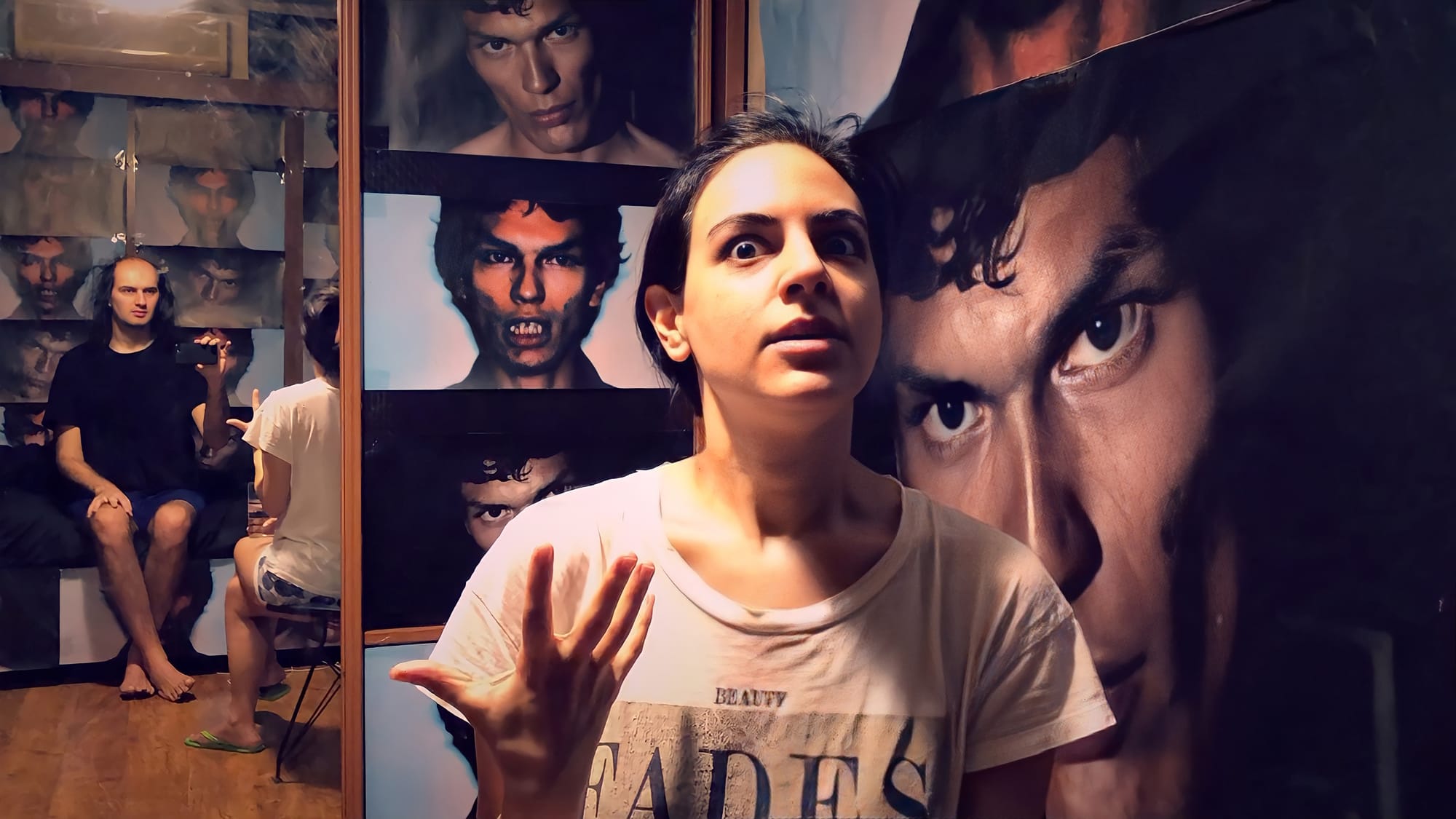
What surprised you most about the filmmaking process this time—creatively or logistically? Was there a moment on set or in post that completely changed how you saw the story?
This is the second entry in a spiritual trilogy made together with my wife and creative partner, actress and writer Duru Yücel. All three movies are very different in style and substance, yet forming a cohesive universe. Be My Cat was anchored in the lower self (irrational instincts and impulses, the subconscious), We Put the World to Sleep is anchored in the middle self (the conscious rational mind), and Pure will be anchored in the higher self (mysteries beyond reason, the supraconscious).
Duru and I met in 2015 in a film festival as a result of my first movie Be My Cat: A Film for Anne, and around that time we began developing We Put the World to Sleep. We shot it over a period of 9 years in 13 cities, villages and remote locations across Romania, Turkey and Ukraine, using a diverse international cast. It’s the most ambitious, difficult and disturbing project we ever did, facing numerous challenges due to the extensive periods of living in character, the pandemic, a scamming producer, the improvisational nature and the very long editing process to bring the 150 hours of footage down to 1h 23min.
"Since this project was so personal to both me and Duru, almost everything we did during the 9 years of working on this movie couldn't have been made by anyone else."
A main goal was to combine the metaphysics of 2001: A Space Odyssey with the realism of The Blair Witch Project. Yet my first inspiration for the movie came in 2015 when I watched a documentary about serial killer Anatoly Onoprienko. When asked by authorities why he killed a baby after killing its parents, he said he didn’t want the child to grow up without parents and suffer as he did. This explanation inspired the movie’s concept: ending the world not to cause pain, but, in the characters' twisted minds, to save humans and animals from future suffering.
Is there a moment in the film that feels the most you—something only you could have made?
Since this project was so personal to both me and Duru, almost everything we did during the 9 years of working on this movie couldn't have been made by anyone else.
What was the hardest creative decision you made while making this film?
The most frustrating moments during production happened when the improvisation either went in a direction where we no longer felt the need to record while in character, or went in directions which weren't doable due to budget limitations. Those directions were truthful to the story and character development, yet impossible to apply in practice, therefore we had to break character for weeks, put the entire production on hold and find new directions to move forward.
What do you hope audiences take away from your film?
Well, this is part of what I always hope from my films: to inspire audiences both personally, and professionally in case they wish to venture into indie filmmaking.
How has this film shaped or shifted the kind of stories you want to tell next?
The description of our trilogy best answers this question: The movies Be My Cat: A Film for Anne, We Put the World to Sleep and Pure are part of a trilogy made by Adrian Țofei and his life and creative partner Duru Yücel. All three movies are radically different from each other, yet together they form a cohesive universe. The trilogy is symmetric in three essential ways:
- Be My Cat anchored in the lower self (irrational instincts and impulses, the subconscious), We Put the World to Sleep anchored in the middle self (the conscious rational mind), and Pure anchored in the higher self (mysteries beyond reason, the supraconscious).
- Be My Cat 50% scripted and 50% improvised, We Put the World to Sleep 25% scripted and 75% improvised, and Pure 75% scripted and 25% improvised.
- Be My Cat with Adrian Tofei starring in the lead role, We Put the World to Sleep with both Adrian Tofei and Duru Yücel starring in the two lead roles, and Pure with Duru Yücel starring in the lead role.
What’s a tool, technique, or resource that really helped you during production?
My filmmaking method usually consists of working for months or even years on an alternative psychological reality for the actors including myself, partially living in character, so that when we start improvising, I mainly need to record the unfolding events and to make sure the improvisation goes in the right direction. The script mostly consists of plot points. I shoot tens of hours of footage guerrilla style, and then I watch the footage like a documentary filmmaker would and I create the details of the story in post-production during the editing process. This method of filmmaking, combined with the mockumentary / found footage approach, leads to incredibly creative and realistic results in terms of both acting and storytelling, but it’s almost impossible to work in the system this way. Since there’s no traditional script, I have no traditional ways to convince investors and production companies to finance my films, other than the success of my previous works. Therefore I rely on crowdfunding and those who appreciate my films and trust my method.
Independent filmmakers often rewrite the rules out of necessity. What do you think is the greatest strength of independent filmmaking, and how did you lean into that on this project?
"Maybe don't rewrite the rules as much as we did with this project, haha, it's not healthy to live in character on and off for years, it's dangerous."
Plus super stressful to constantly adapt and rediscover the story for such a long period of time.
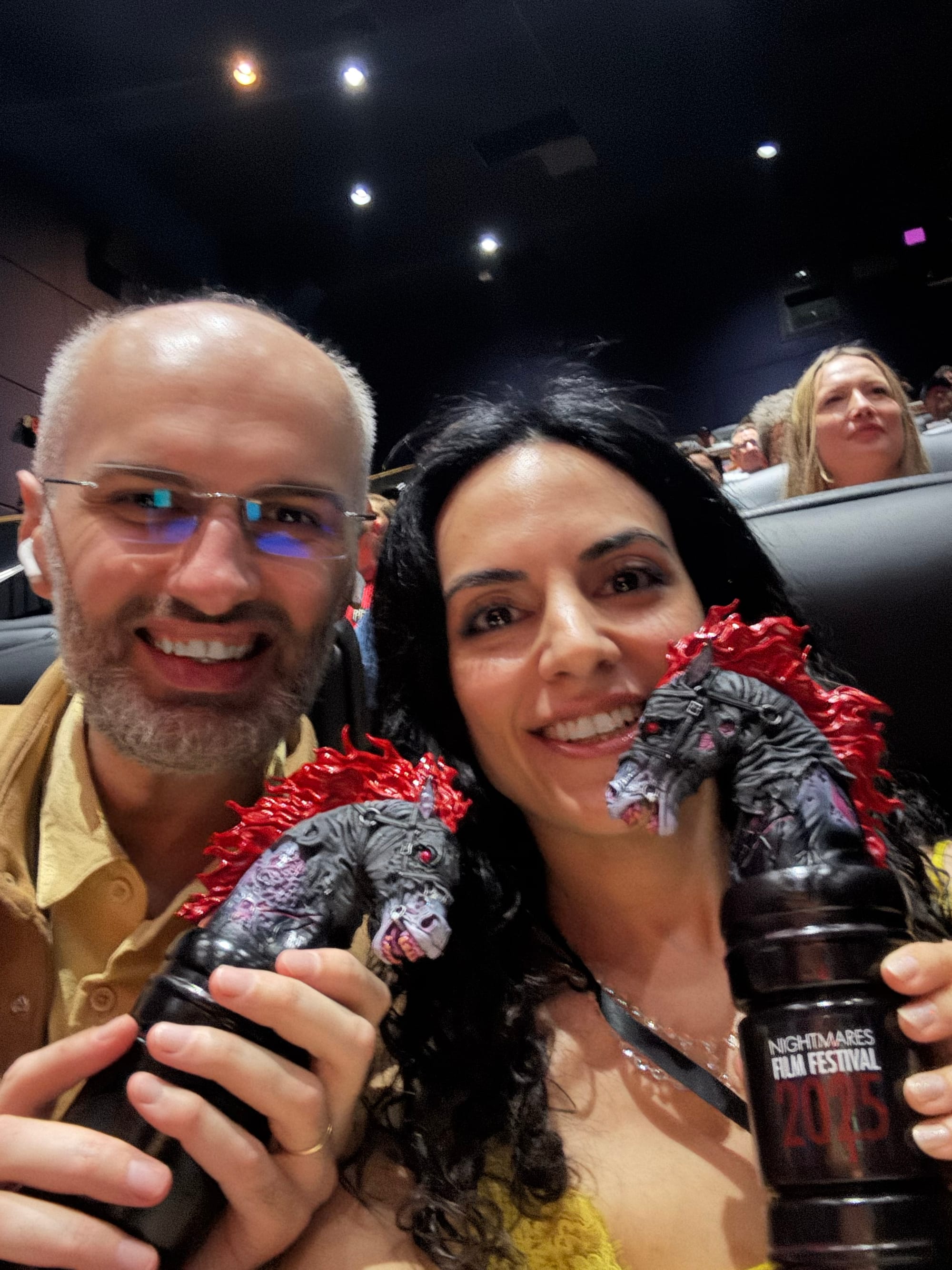
What does it mean to you to have your film selected for FilmQuest, one of the world’s top reviewed genre film festivals?
HUGE — you can see from our super enthusiastic initial social media post.
FilmQuest celebrates the majesty and might of genre filmmaking across fantasy, horror, sci-fi, action, thriller, western, kung-fu, and beyond. How does your film fit within—or push the boundaries of—genre storytelling?
I think it pushes the boundaries probably more than it fits.
Where do you see this film going next?
More festivals (including a good European premiere, hopefully) and then a successful commercial release.
“At the core of all my work is a desire to contribute to a better world."
Cast & Crew
- Adrian Țofei (director/co-starring/producer/co-writer)
- Duru Yücel (co-starring/producer/co-writer)