Table of Contents
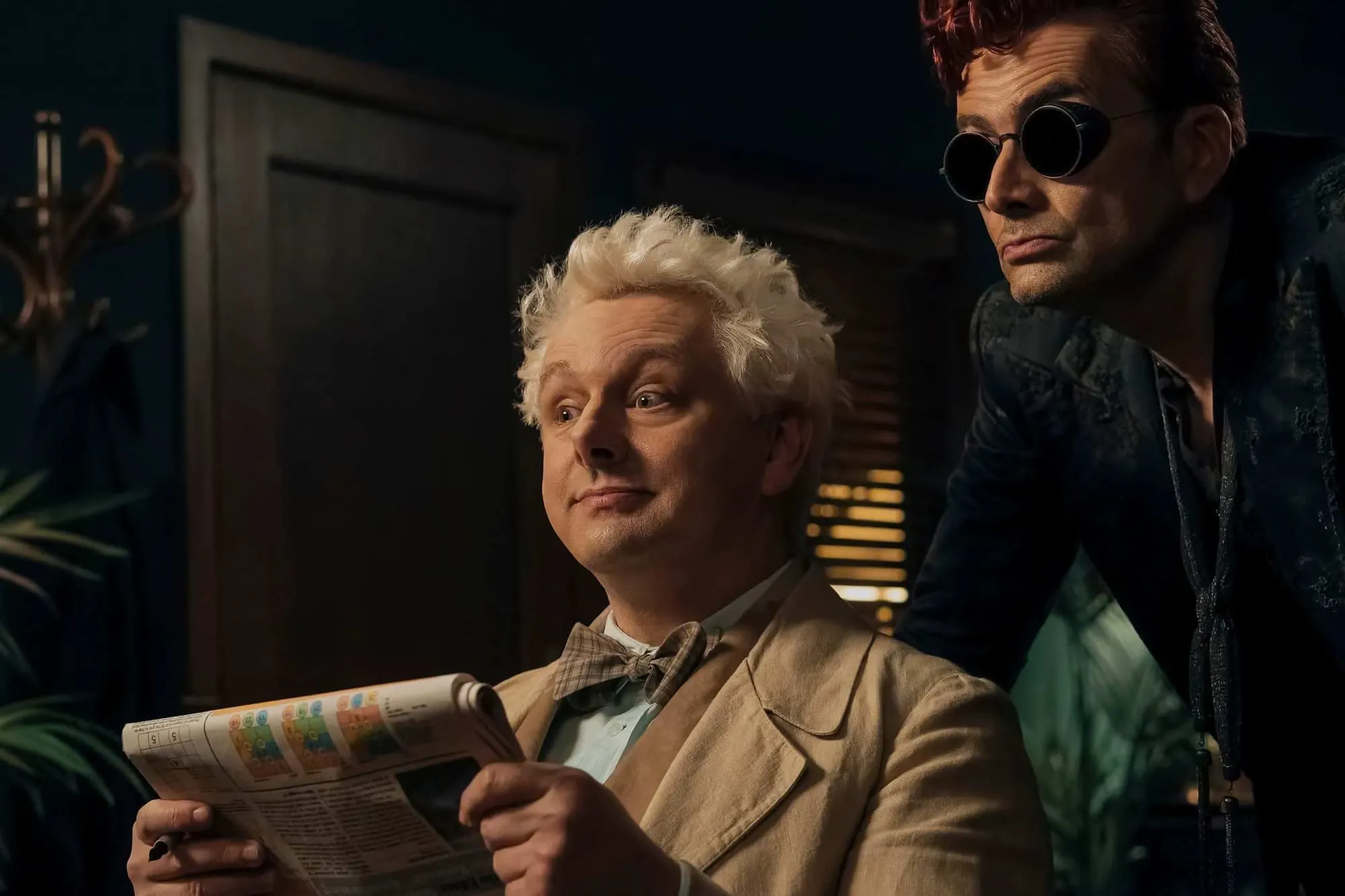
Three years ago, Season 2 of the late Terry Pratchett's and Neil Gaiman's beloved fantasy adaptation Good Omens shook its fandom with a shocking finale: a heartbreaking kiss shared between its leading angel and demon.
It was a kiss that broke the internet. For months afterward, the infamous clip of Aziraphale (Michael Sheen) and Crowley (David Tennant) circulated the web: it was discussed at great lengths throughout online forums, in YouTube video essays, and across the various virtual sanctuaries Good Omens enthusiasts congregated in.
But the fervent fanaticism came to a halt in 2024 when sexual assault allegations against Gaiman surfaced. The controversy stymied initial plans for a six-episode final season when the surviving co-creator stepped away from the project, leaving the future of everyone's favorite divine duo uncertain.
That is, until this May, when Good Omens returned with a concluding installment to the seven-year saga simply titled "The Finale." Prime's hasty damage control resulted in a singular, feature-length episode shaved down by writers Michael Marshall Smith and Peter Atkins, and directed by the distinguished Rachel Talalay (Sherlock, The Flash, Doctor Who).
Naturally, the script's biggest weakness is its pacing. Condensing six episodes into one is no easy feat; neither is covering the Second Coming in 90 minutes. And while some of the writing consequently suffers, the series redeems itself through its foundational pillar: the relationship between the two main characters.
Good Omens chronicles the 6,000-year-long history of the angel Aziraphale and the demon Crowley as they navigate their respective loyalties to a bureaucratically reimagined Heaven and Hell. Over the course of Seasons 1 and 2, the unlikely pair teams up to find the missing Antichrist, thwart Armageddon, and harbor an amnesic archangel Gabriel. They come to terms with the self-serving toxicity of both celestial sides, and instead escape to their own side. All the while, their friendship unfolds; and, after millennia of slow burn, it develops into something more.
Since its 1990 publication, Good Omens has amassed something of a cult following. Some, however, have denounced its take on the Bible as blasphemous. But in its own tongue-in-cheek way, it's fair to say the parody preaches many of its source material’s timeless lessons.
At its core, Good Omens is a soulful, sharp-witted spiritual satire—but by no means is it anti-religious propaganda. On the contrary, it reinvents an age-old tale with a 21st-century twist, introducing less-than-divine characters occupying a moral middle ground—the "shades of gray,” as Aziraphale christens it—that we humans can more easily relate to.
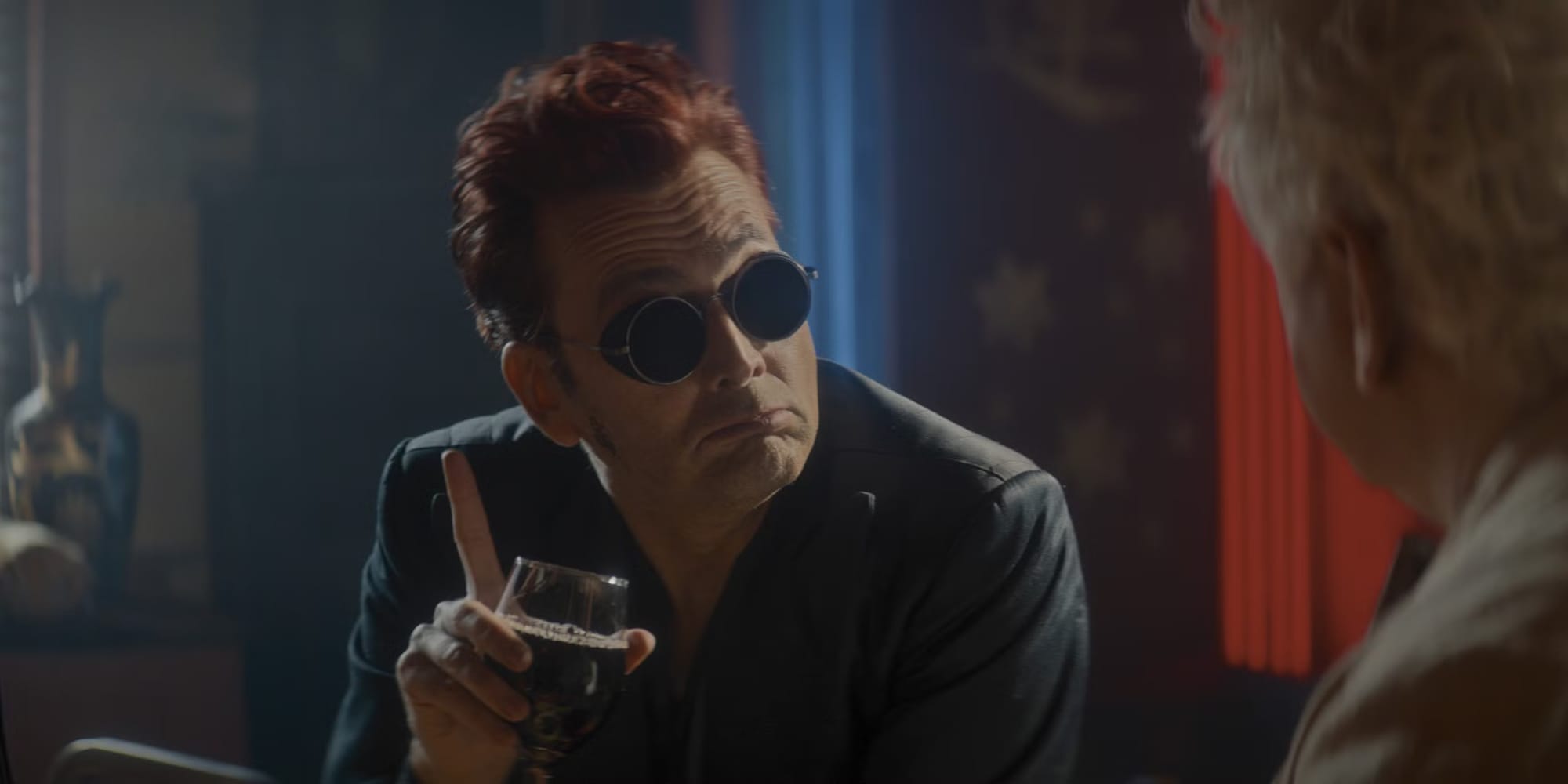
Good Omens explores modern themes through a theological lens, allowing us to reflect on where today’s society might fall in the Great Plan (and vice versa). And, incredibly, it's all achieved through a medium more fitting for a contemporary audience: a quippy rom-com with a dash—a heap, rather—of homoerotic subtext.
Any romantic speculation was confirmed with Season 2 when, after six episodes of suggestive character foils and one-sided pining, Crowley confesses his love to his angel with a single, desperate kiss—a kiss to which Aziraphale crushingly responds: “I forgive you.”
Their falling-out sets the stage for the pair's last adventure together, in which they must resolve emotional tensions and repair their relationship—all against the backdrop of an impending apocalypse.
Queerness and religion is a dynamic that Good Omens inevitably brings into question, as many fans have noted. Homophobia is never outright discussed or depicted in the series; for all we know, in this fantasy world, it doesn’t exist. But unfortunately intertwined as the topic is with fundamentalist beliefs, we would be remiss not to make some parallels.
Nonetheless, the series' depiction of non-heteronormative characters offers a refreshing perspective on the subject. Gaiman has previously entertained the idea of a wider umbrella of sexuality and identity encapsulating the angel and demon, but concluded that "whatever Crowley and Aziraphale are, it's a love story." And the nature of their relationship is never truly labeled, which gives their love a certain purity: the kind that transcends traditional, myopic understandings of affection.
From one standpoint, "The Finale" reveals the courage of those championing queer expression amidst dogmatic oppression. As Aziraphale says once reunited with Crowley: "You showed me what it meant to be brave, and to make a difference. To stand up for what I believed in." (Take that as you will.)
On the other hand, Good Omens as a whole largely analyzes their connection concerning their divine identities: that of an angel and a demon; two sides eternally at odds with one another; a rivalry that still weighs heavily on Aziraphale's conscience.
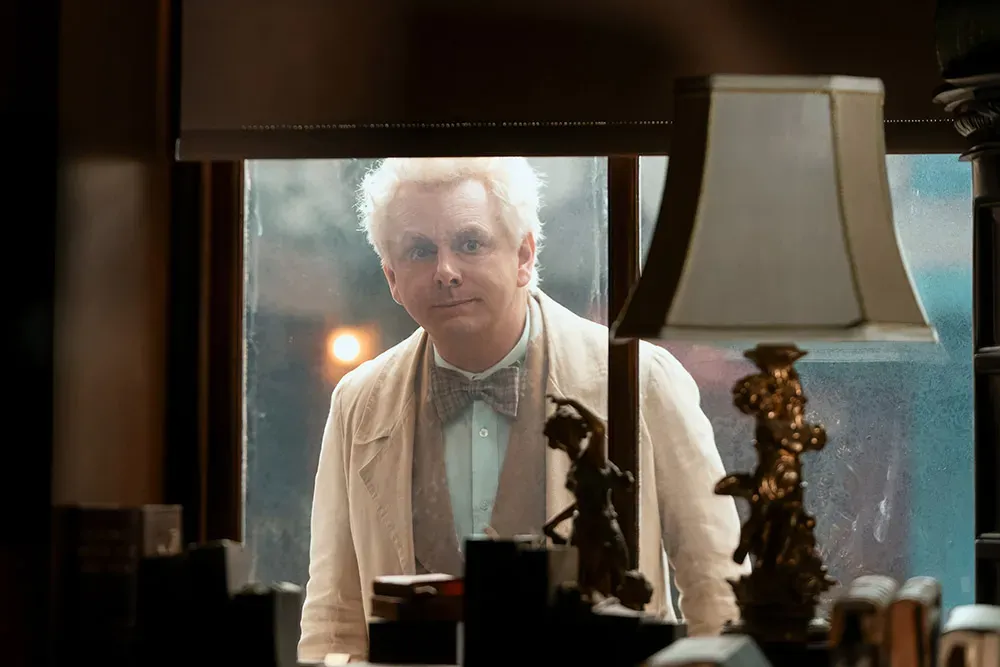
Aziraphale returns to Heaven for the coveted title of Supreme Archangel and abandons Crowley on Earth. In his saintly naïveté, Aziraphale believes he can "fix things" upstairs. His conditioned devotion to Heaven anchors him to the “toxic” mindset he and Crowley fought to break away from, and it wracks him with religious guilt. But Crowley eventually enlightens him about the bitter truth: there's always someone above them "stacking the deck."
This series-long idealogical conflict comes to a head when Aziraphale and Crowley confront God (Tanya Moodie) and Satan (Toby Jones), reproving the rigged game of cards Heaven and Hell call a universe. Instead, they propose a revised blueprint for humankind: a godless universe, a universe of free will. "People deserve the chance to be in the real world," Crowley concludes. "Even if there are no angels. No demons. No us."
In choosing an existence devoid of divine intervention over a life together in their present minds and bodies, Aziraphale and Crowley once again prove their overwhelming love for humanity. After all, isn't the greatest demonstration of love sacrifice?
To cushion the fall, Good Omens graciously grants us a fairytale ending for our star-crossed lovers. Their human counterparts fall in love through a classic bookshop meet-cute, get married, and live a long, happy life together in their parallel universe. Saccharine? Maybe. But a welcome conclusion considering the alternative.
It’s understandable that some fans are disappointed in how their celestial story ended. As a result of their final wish, Aziraphale and Crowley effectively vanish, and with them, 6,000 years of memories. Many also criticized the choice not to include a make-up kiss between the two.
I would disagree. If anything, the decision solidifies that their love for one another extends beyond the physical—something that director Talalay noted about the finale. And while it would’ve healed some old wounds to see a smooch, or perhaps even an “I love you,” a rushed execution would've felt like the writers throwing their ravenous fandom a bone (an unsavory parallel, no matter how good the bone tastes).
Furthermore, the fact that Crowley and Aziraphale's human versions still find each other in another lifetime, and still have a life together, suggests that their love is unconditional, everlasting, and even universal. I think the beauty of this notion gives us ample closure.
If anything, the finale is insufficient in giving Aziraphale and Crowley enough time to unpack their emotional baggage. Their devastating breakup from the previous season is skirted around for much of the episode, and sometimes even downplayed entirely.
Instead, a hefty portion of the runtime is allotted for grating bits of comedic relief—like the prolonged gambling subplot—that attempt to relive some of the duo’s previous lighthearted hijinks while glossing over their lover's quarrel. The dissonance of the two doesn’t sit right, and leaves a sour taste throughout.
Still, considering the circumstances, we should thank our lucky stars that we got anything at all. Tennant and Sheen’s heavenly chemistry sells their relationship no matter how it manifests. And as for Crowley and Aziraphale, their witty banter and intergalactic escapades will be dearly missed.
Whether fans decide to praise the finale or curse it, we ought to count our blessings.