Table of Contents
The New Hollywood generation is still to this day one to be remembered. With filmmaking auteurs such as Steven Spielberg, Martin Scorsese, Francis Ford Coppola, and Paul Schrader taking over the reins, cinema began to find a new pathway towards evocative storytelling.
While themes like excessive violence and sex continuously dominated the industry in a variety of ways, a more obscure sub-genre that made a lasting impact on both critics and audiences particularly during the 1970-80s was what was often considered the Alt Femmes era. I've always been curiously fascinated by this sub-genre, since it revolved around female-centered stories where women essentially went against the grain and paved their own paths in society. The rejection of traditional customs resulted in a string of films that brilliantly balanced somber depictions of the punk rock era with compelling narrative neorealism. Quite a few of these films have also delved into what has been barely communicated by modern filmmakers since then... nihilism. While the auteurs mentioned above frequently conveyed neorealism in their works during this era of cinema, very few (in my view) have been able to convey a nihilistic story as successfully as Dennis Hopper with his 1980 drama Out of the Blue. As Christopher Sharrett from Film International phrases it in his article Rebellion and Cataclysm: Dennis Hopper's Out of the Blue (1980):
"Yet Hopper strode across the postwar youth counterculture like few others."
It's very likely that most people who read this have not seen this film, let alone even heard of it. A part of that somewhat saddens me, but at the same time I'm not too surprised; it's not an easily digestible narrative and is by no means a film that everyone can watch and be entertained by. However, as a tremendous cinephile who constantly seeks to feel emotionally aroused in unexpected ways, I firmly believe that Out of the Blue is an essential film that establishes nihilism as one of the most profound themes of our time. So why exactly is it a "lost" theme these days? Well... I have a lot of thoughts.
First and foremost, what makes Out of the Blue a forgotten gem?

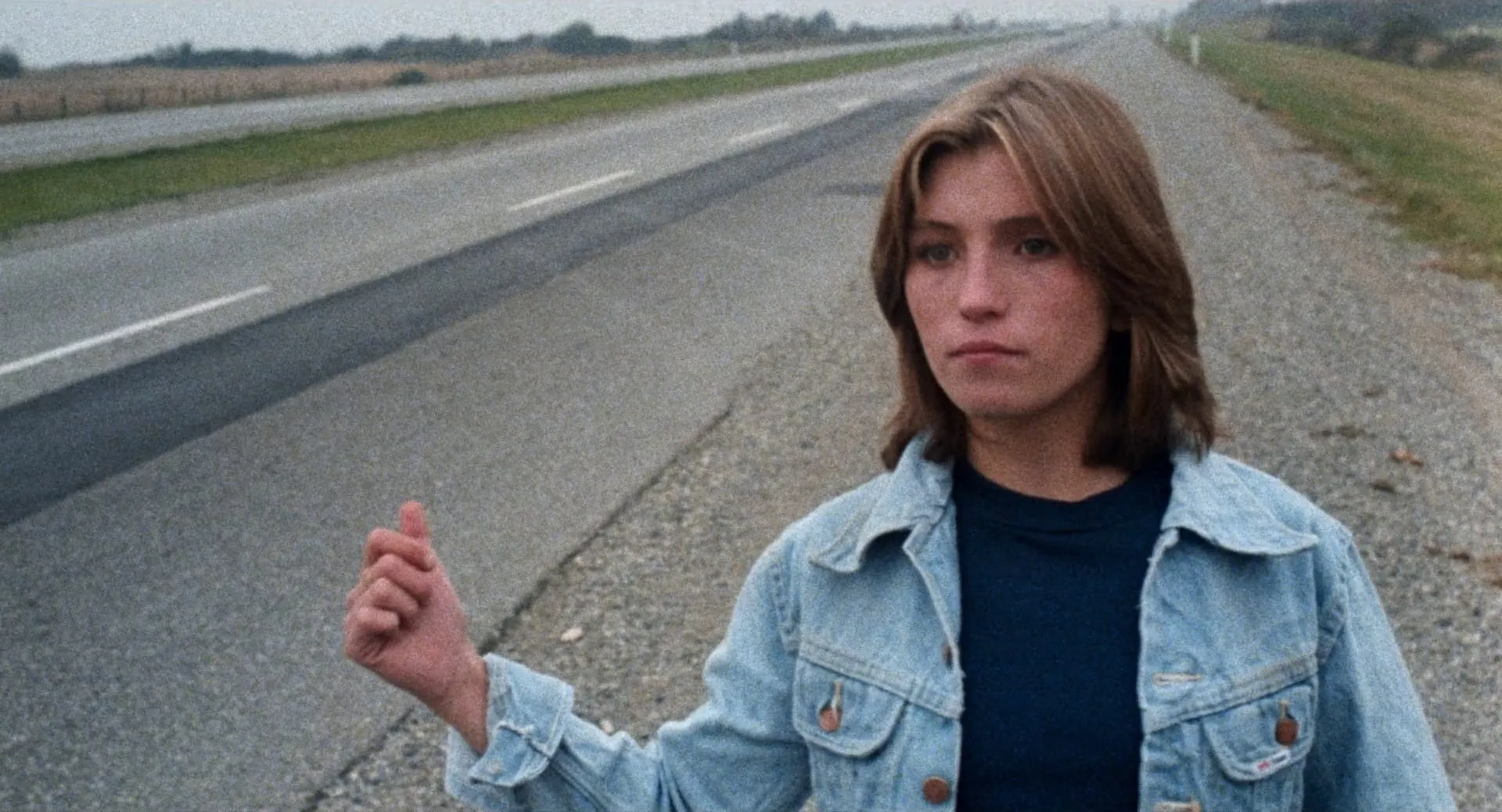
This film depicts nihilism in a rather upsetting yet strangely empathetic manner. We experience this sensation through the eyes of Cebe, played marvelously by the late Linda Manz, highlighting its complexity and inescapability based on the life that surrounds her every moment of every day. It almost holds a François Truffaut flair, and Dennis Hopper's approach to his film can unquestionably be compared to Truffaut's 1959 masterpiece The 400 Blows. Hopper's directorial vision remains mesmerizingly simple, and he was able to balance the Alt Femmes style with realistic social commentary on the punk rock culture — how it was meant to be a form of escape for the weak in mind and spirit. Hopper's way of showing the harsh nature of post-1960s society and how a single family gradually crumbles into despair is still seared into my brain. A lack of stability in Cebe's family life allows the film to ask us: at what point does hope become meaningless, and is family misery ultimately redeemable? These are questions that many filmmakers seem to ignore in today's world, and it has me perplexed. Why is that? Let's elaborate.
**SPOILERS AHEAD**

Hope is a term that can be interpreted in several ways; some feel that it can either lead to prosperity or intense sorrow, with no in-between. Based on this film, I frankly think hope involves both. One thing this story does very well is show small hints of childlike innocence amidst a dying world, finding personal and artistic liberation through 1960s music and rebellious adventures. With Cebe's intense love for Elvis Presley and her teddy bear (that being an ironic combination considering Elvis' song Teddy Bear plays in the background during one scene), hope for a while appears to be a satisfying way of coping with a difficult family life, until it isn't.
We learn very early on that Cebe's father (played by a disturbingly charismatic Hopper) is a criminal who was with her as a little girl when he crashed his truck into a school bus, killing all the children. Alongside that, Cebe's mother (an excellent Sharon Farrell) is strongly addicted to drugs, which negatively affects Cebe's potential at a joyful connection. When the outside world offers more comfort to a teenage girl than her own relatives, that is a dangerous place to be in regarding hope... which leads me to the ending, an incredibly effective illustration of nihilism.
Cebe's disturbing decision to kill herself and her mother by burning themselves up in a junkyard vehicle heavily contrasts with a scene in the beginning. At the start of the film, Cebe finds subtle hope and comfort in this junkyard vehicle through her childlike/tomboyish persona, whereas the ending — after a whirlwind of depressing situations that fails to add any purpose to her life — reveals a complete absence of hope within her soul. This powerfully brings the film's title full circle; Neil Young's featured song 'My My, Hey Hey (Out of the Blue)' contains the lyrics 'it's better to burn out than to fade away.' What a masterclass in storytelling.
The final few minutes appear to answer the two questions brought up earlier. Hope becomes meaningless when even society doesn't have anything to offer you as a human being, and family misery ultimately can only be redeemed if you choose to embrace suffering. In this case of this film, however, burning out quickly was the only way to reach ultimate liberation. The world is a flawed place, but there's still so much meaning to be found in the smaller moments that don't seem significant to the individual soul.
So why is nihilism important in the long run? Hopper masterfully portrays its deep, thought-provoking nature to the world and shakes people by the collar by reminding them that perspective is one of the most valuable aspects of cinema. People don't want to experience more pessimism today through art, and I don't blame them. But the reality of nihilism is that it exists, and individuals believe in it. The way I view nihilism in film is the same way I view the nature of living. We can't really live unless we experience suffering, and I truly believe that filmmakers and audiences today need to "experience" suffering and hopelessness in order to appreciate the beautiful things of the world even more.
While the world itself does not need nihilism, we as individuals need to understand nihilism in order to understand the world — Out of the Blue is undoubtedly one of those reminders.