Table of Contents
Three Key Takeaways
- Lo Sguardo is a visually evocative giallo thriller that delves into the psychological impact of the male gaze on women.
- Gloria Zingales’s filmmaking journey was shaped by balancing creative vision with practical compromises, ultimately choosing to trust her instincts despite external pressures.
- The film is both a personal and universal exploration aimed at fostering empathy and sparking conversations about women’s experiences in a male-dominated world.
Italian-American actor and filmmaker Gloria Zingales brings her short film Lo Sguardo to Nòt Film Fest, a haunting giallo thriller about a woman’s solitary journey home as she confronts dangers that blur reality and paranoia. With a talented cast including Ariana Raygoza, Nicole Kang, and Molissa Fenley, and a skilled crew featuring producer Tom Culliver, editor Camilla Hayman, and composer Joi Marchetti, the film examines the male gaze and its psychological effects with a layered, visual storytelling style.
Q&A Interview
What drew you to make this film? Why this story, and why now?
I wrote this script originally in 2018 after a conversation with a friend, we joked that if you strung together all the various moments of feeling watched as a woman it would be a horror film. I wrote the first version of the script in one night. That script evolved over time and there were many moments I put it aside but current events or things in my personal life throughout the years would always make me come back to it. Something about the topic is, unfortunately, timeless. I also think this looming world that I wrote and the layered experiences of women in a man's world felt and still feels almost infinite as a topic for me.

"This film is, of course, for women to feel seen... but it's also for men to enter the emotional life of a woman for 10 minutes."
When I finally decided to make it, it was because I felt determined to talk about something that is seemingly small and part of everyday life for women but that deeply affects us. Among many other things, our world's slide into conservatism and... fascism, solidified my desire to make this film. In the making I asked myself constantly: What does it mean for women to be under the watchful of man? How does it shape us? Who does it ask us to become?
What surprised you most about the filmmaking process this time—creatively or logistically? Was there a moment on set or in post that completely changed how you saw the story?
Making this film and filmmaking in general is about compromise or rather about translating a vision into a real-world piece. For me that meant confronting all the ways I had to adapt an idea into a reality. You want this exterior shot but now the lighting is off and it's raining. Ok so now how do you make the best version of what you have in front of you.

You can't know which moments will turn out exactly as you imagined but don't hit as hard as others that you never imagined. I was surprised by certain shots or scenes that struck me immediately even with very little editing. You can't plan for that it just happens. I've Francis Ford Coppola say that a film is alive and at some point will begin to impose itself on you.
Is there a moment in the film that feels the most you—something only you could have made?
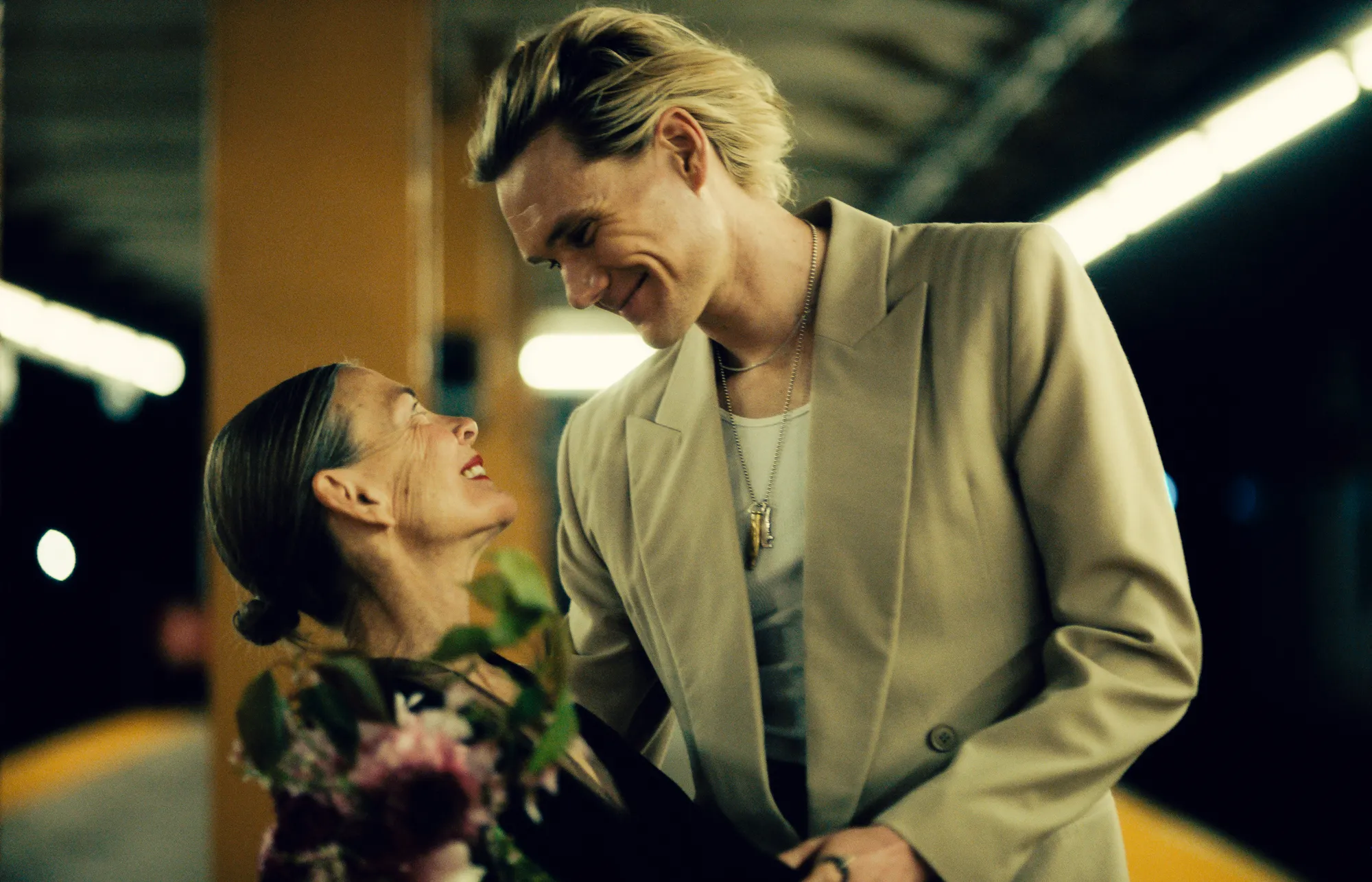
The scene when an older woman (Grazia) walks in with a much younger man and smiles at the protagonist! The protagonist is hypnotized by the sight of her and this younger man who seems enraptured by her. That scene came to me as a vision and is almost identical to how I imagined it. This short is about the male gaze but has a lot of easter eggs into related themes. To me, this scene is purely visual and opens the door to themes of aging as a woman, our contradictory desires of wanting to be freed from objectification but also wanting to feel beautiful, the safety that women provide each other in public spaces, and whatever else the viewer sees in it.
What was the hardest creative decision you made while making this film?
One of my EPs didn't like the film as it was edited and he shared some pretty drastic notes on the final product. The notes were valid and shared with the intention of improving the work but would have completely changed the piece and my vision for it. It was painful but I decided to stick with what I had because I didn't want the story to be lost. It was tough because I didn't have the certainty that I had made the "right" choice I just knew that this was how my creative expression revealed itself to me.
"Film is first and foremost a form of expression. It's one of the truest channels to bring the world of dreams into reality."
After a private screening with over 80 people, I was taken aback by how much of the same moments that the EP had suggested cutting ended up being the same ones that really resonated with people. I know that ultimately there is a version of this film that could've been different and that's something I'll take with me for the next film I make. What I learned from his notes and also from staying true to my own creativity.
What do you hope audiences take away from your film?
After a private screening I held for donors, so many men told me that this film and its images stuck with them for a long time and made them look at things with a new perspective. That was one of the best compliments to receive. This film is, of course, for women to feel seen (double entendre there) in what it means to carry the weight of the male gaze everywhere but it's also for men to enter the emotional life of a woman for 10 minutes. In an ideal world, after watching this film maybe some men will move differently, with more empathy. For my ladies, I hope they can take away that they are not imagining things and that, at the core, they have the power say ok fine you are looking at me? Well now I am looking at you too...

How has this film shaped or shifted the kind of stories you want to tell next?
This was my first time directing and I loved it. I loved creating images and bridging emotion with visuals and music. This has certainly opened the door for me to continue directing. I'm learning through this film that my strong suit is in creating emotionally evocative visual worlds and it has inspired me to continue believing in myself as a filmmaker. I also learned A LOT about what not to do :) I'm working on a feature inspired by this story that dives into much more detail and challenging myself to work on structure as a response to where this short film falls... short :)
What’s a tool, technique, or resource that really helped you during production?
A good set of headphones and my community. The headphones so I could hear all the incredible layers of music and sound design my composers and sound designer sent me. My community to help me keep pushing forward when I was feeling unsure or wanting to give up. My producer and my DP at different points encouraged me by saying the goal of this film is for you to finish it and get to the end and to become a filmmaker, something you can only be by doing it all the way through.


Independent filmmakers often rewrite the rules out of necessity. What do you think is the greatest strength of independent filmmaking, and how did you lean into that on this project?
I think it's very, very easy to forget that film is an art form. We are told it's a business, it's an industry, it needs to have ROI etc etc. Yes, ideally, we make money from our films but, to me, film is first and foremost a form of expression. It's one of the truest channels to bring the world of dreams into reality. Because our subconscious works in imagery and suggestion more than words, films have a way of reaching deep deep parts of us we cannot even speak to at times. Independent filmmakers are often people who don't have "formal" training which can sometimes stifle authentic creativity. The strength of indie film is therefore not being confined by how things are 'supposed to be' done and being free to make what is true to us.

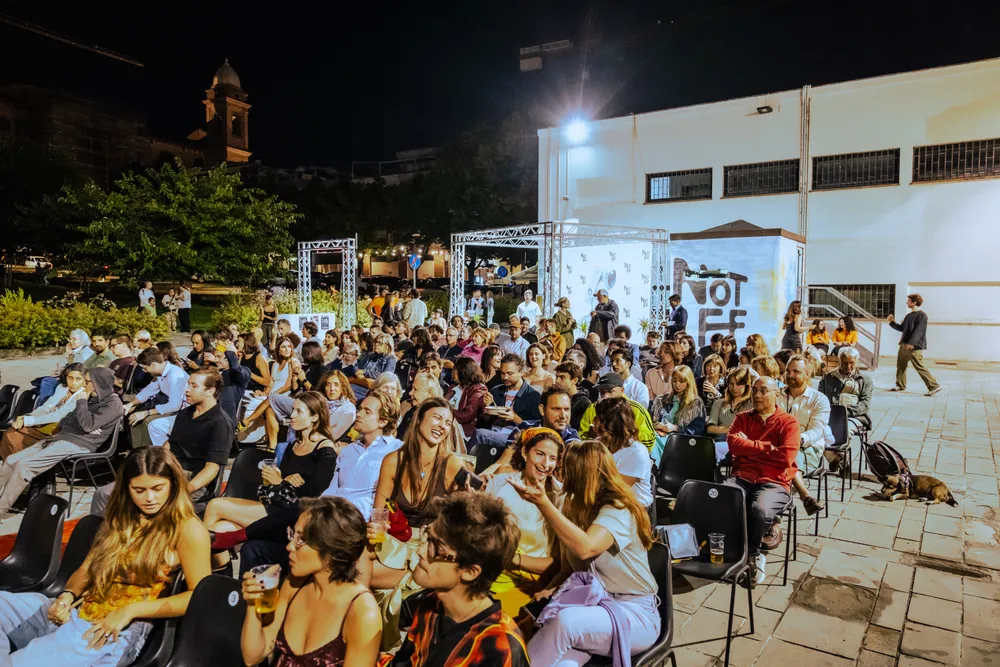
What does it mean to you to have your film selected for Nòt Film Fest?
It genuinely means the world to me. My first short GAETANA was selected in 2021 after I randomly applied. Attending the festival for the first time was one of my most cherished experiences. I felt truly surrounded by so many authentic talented people. Since then, I put a Nòt acceptance as a goal for this film when I was working on it. I put it on my vision board for years and just kept dreaming about it. Knowing that I actually achieved that, knowing the caliber of films they select each year, means so so much to me.


How do you hope being part of Nòt Film Fest will shape the life of this film?
Meet more collaborators that can help me bring this story into a feature. Help gain traction and momentum to get into some US festivals. Find ways to continue screening this short even in educational contexts or alongside other films that discuss this topic!
Where do you see this film going next?
I've submitted to more festivals in hopes of getting a US premiere! This past year I've been really enjoying writing a feature inspired by these characters and this world. I'm currently working on polishing it and learning how to talk about it and pitch it.
"At the core of all my work is a desire to express layered emotional life."
Cast & Crew
- Gloria Zingales (Sole) — Italian-American actor & filmmaker based in NYC focused on expanding Italian-American women’s narratives.
- Ariana Raygoza (Maria) — Actress known for HBO shows "Barry", "Insecure", and "High Maintenance".
- Nicole Kang (Trinity) — Korean-American actress and filmmaker known for "Batwoman" and "You".
- Molissa Fenley (Grazia) — New York-based choreographer and performer with an extensive international career.
- Tom Culliver (Producer) — Australian writer/producer working with Cassian Elwes, recently executive produced Sundance and Venice selections.
- Camilla Hayman (Editor) — Australian editor based in LA with credits including "Tiger King" and "Be Somebody".
- Joi Marchetti (Composer) — Composer for theater and film with works featured in NYC and San Francisco festivals.