Table of Contents
Family is perhaps the most universal aspect of life. Whether chosen or inherited, we all seek a support system that gives us a sense of belonging. And when we go through especially difficult times, we turn to family for strength and compassion.
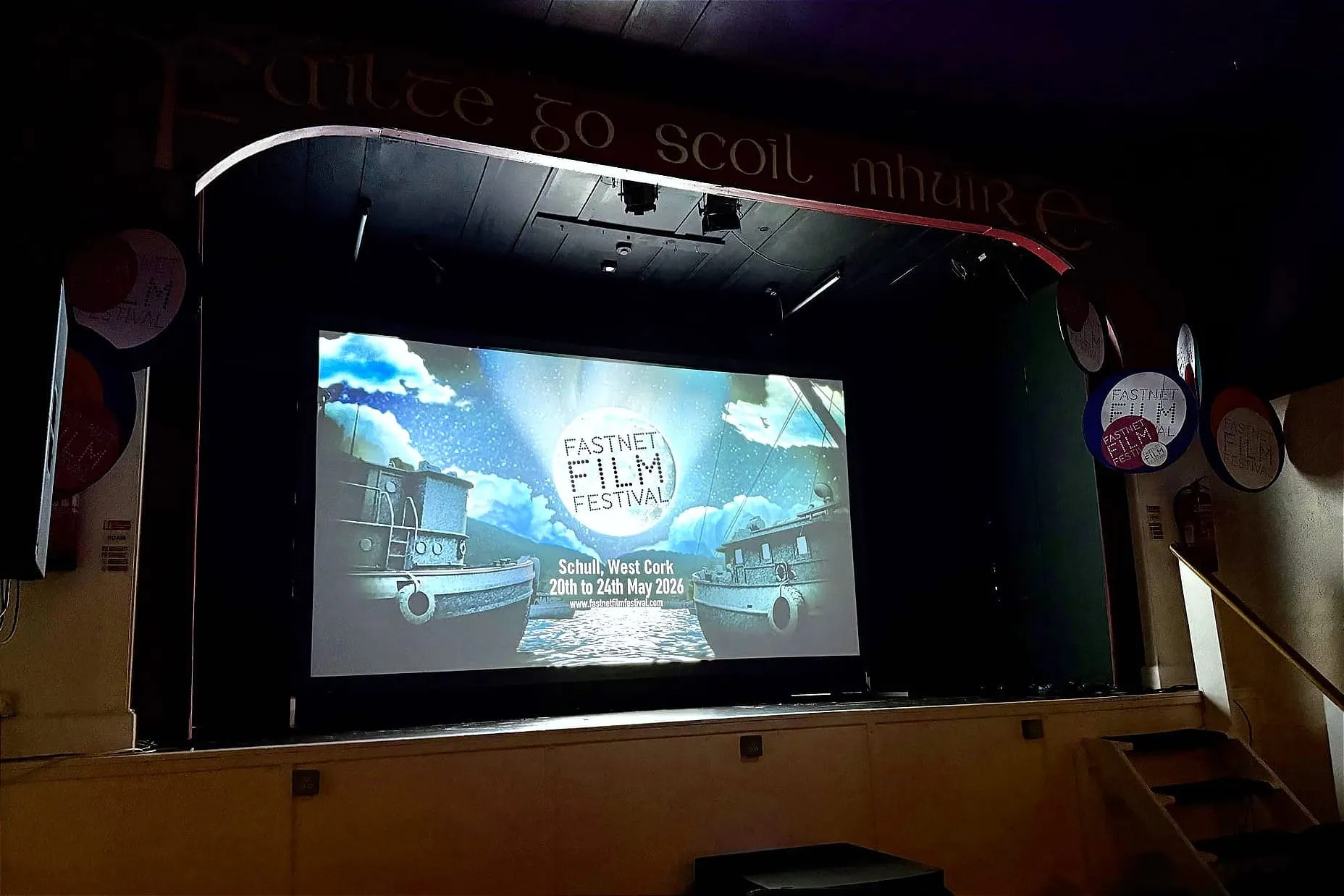
The following shorts from the 2026 Fastnet Film Festival explore our understanding of family and how familial relationships shape us.
Brown Bread
Shaunagh Connaire | Irish | Ireland
Brown Bread tells the story of Áine, who is driven to New York by professional ambitions, but brought back home by her godmother's passing. Returning to her parents in rural Ireland, she's confronted with turbulent family dynamics as she struggles to balance grief and guilt.
A particularly strong point of this short is its ability to juggle multiple convoluted themes. Underlying the central conflict is a thematic debate between personal success and familial bonds. Underneath that is a poignant reflection on the emigrant experience and what it means to leave home. Brown Bread gives audiences quite a lot to chew on, but does so in a natural, digestible way.
The film's title references a Cockney euphemism for the deceased, but also introduces a captivating scene between Áine and her mother. Their relationship is especially strained: they both have strong personalities, and their shared emotional baggage manifests in pointed fingers and raised defenses. Even as the two bake a loaf of bread, their warring dispositions engage in battle over the ideal method.
Áine's mother is rooted in tradition and the confidence of her own seasoned knowledge; Áine instead fixates on the recipe, plays by the book, and finds virtue in certainty. They argue over how long to proof the bread: her mother claims it's had nothing but time, while Áine says it hasn't had enough. As the dough and the tensions rise, we reflect on how the metaphor reveals their personal philosophies, reactions to loss, and their evolving relationship.
Áine's father is the polar opposite of his wife: he is reserved, but steadfast, and sentimental in his own quiet way. When they finally share a daddy-daughter moment—and a hit from Áine's vape—it's a much-needed emotional catharsis for them both.
Brown Bread is so deeply grounded in reality, it's hard not to feel a connection to its characters. It gives an honest portrayal of what family means and all that comes with it—the good and the bad.
Fragmented
George Lynch | Student | Ireland
Fragmented is a historical fiction film about an Irishman who enlists in the British Army, leaving his family behind during the First World War. When he returns after the armistice, he is a changed man—both physically and mentally. The entire lower half of his face is obscured by an uncanny mask, and he is silent, detached, and emotionless.
The story focuses on his daughter Maggie and how she processes her father's drastic transformation. They share a heartfelt scene before the war that shows their closeness, making their subsequent alienation all the more devastating. After a disillusioning reunion, Maggie reflects: "I'm still waiting for him to come home."
Shot in the style of its time period, Fragmented champions a visual aesthetic of black-and-white tones, prolonged single shots, and artful lighting. While this approach could easily come across as a cheap impersonation, Fragmented executes a complex look with commendable grace. The shots feel authentic, elegant, and thoughtfully composed.
Fragmented is also a film characterized by its minimalism. The framing is simple and character-focused. The dialogue is equally direct; each interaction is purposeful, and each line powerful. These qualities give us a more intimate view into this family’s lives.
Considering the fact that Fragmented is a student film, its subtlety is a praiseworthy accomplishment. It doesn’t try to be anything more than it needs to be. Instead, it lets the story take center stage—and it proves its stand-alone merit.
Magic Markers
Jason Branagan | Irish | Ireland
As the title suggests, Magic Markers is a magical realism film about a boy who discovers his markers can bring his drawings to life. Inspired by his favorite fraternal western starring two rowdy cowboys, Jack draws himself an older brother, Andy, to protect him from school bullies.
Andy is the ideal older brother: he’s cool, courageous, and Jack's best friend. But when Jack needs him most, he disappears, leaving his little brother to fend for himself. Jack must learn to be brave in Andy's absence, no matter what his future holds.
Appropriately, the film feels as though it's told from a childlike perspective. It immerses us in the harsh realities of prepubescence through a young boy's lens. The adults are treated like side characters in Jack's story, and his boundless imagination is given free rein. The powerful performances of the child actors—especially lead James McGowan—certainly elevate the film.
While the simplicity of the storyline suits its straightforward nature, it leaves little room for nuanced thematic exploration. More figurative elements feel misplaced, on-the-nose, or sometimes confusing, like the yellow cap that emboldens Jack to stand up to his bullies. This is a metaphor that seems to recall Jack's first drawing of a yellow car—but the connection is uncertain. (Though it's admittedly preposterous, perhaps a cowboy hat would've been more fitting?)
Nevertheless, Magic Markers is a touching tribute to brotherhood. It's a feel-good story about overcoming obstacles and growing because of them—a familiar story, but an uplifting one.
Save Me From Heaven
Seán Treacy | Student | Ireland
Framed as a high-stakes, ticking-clock dystopian drama, Save Me From Heaven traps us in a virtual purgatory where the recently deceased must remember who they once were, or be deleted from existence. Rachel has just entered this digital afterlife with no memory of what came before. But with the help of someone hacking the software from the world of the living, fragments of her life return to her.
All dystopian films have a myriad of structural elements working against them. It's a challenging genre to execute well, as it's based upon the suspension of disbelief, which is not the sturdiest foundation. Not only does it necessitate intricate world-building that still reflects our reality, but it also requires a willing audience.
Such is the case with Save Me From Heaven and the digital dystopia it creates. It may be a hard sell, but the film's serpentine structure, eerie atmosphere, and talented actors make the computerized realm a convincing, compelling setting. It calls into question who exactly is behind it all, and if their intentions are as malicious as they seem.
In a Bourne-meets-Memento-meets-The Matrix fashion, we're forced to orient ourselves in this fictional world at the same pace as its protagonist. Crucial details are revealed in hazy vignettes, constructing Rachel's character through memories of her loved ones. The mystery of Rachel's past makes an intriguing starting point that propels the rest of the film forward.
Save Me From Heaven keeps us in the shadows just long enough to feel ill at ease, then guides us toward a distant enlightenment. It's a thrilling watch, albeit an unsettling one, and a tale of selfless compassion at its core.
TEN TO SIX
Alessio Rupalti | International | UK
Set almost entirely within the confined space of a coffee shop, TEN TO SIX tells a story much bigger than itself. The only problem is that it's a 14-minute short.
Our protagonist is an older man, disheartened and fatigued from carrying decades of regret. When he gets chatting with one of the waiters, we discover that his guilt stems from his late wife, whom he couldn't save from breast cancer.
In their time together, the old man delivers cryptic messages to his waiter, even predicting what his delayed date would say. But the waiter realizes they have more in common than he'd thought. Both physicists, they delight in making small talk about the interminable passage of time and the fleeting length of each moment.
TEN TO SIX succeeds in keeping secrets from its audience, leaving us as clueless as the waiter until the very end. But the final reveal heralds such complex implications that it leaves the viewer wondering what had happened outside of that coffee shop. While this does speak to the film's effectiveness as a nonlinear narrative—and as a narrative in general—the resolution feels somewhat disproportionate to the way the rest of the runtime is spent.
As poignant as the ending is, it can't help but feel rushed considering the short's, well, shortness. And with the cosmic scale of considerations it brings into the picture, TEN TO SIX would make a very compelling story in a larger format. In the end, don't we all just want more time?