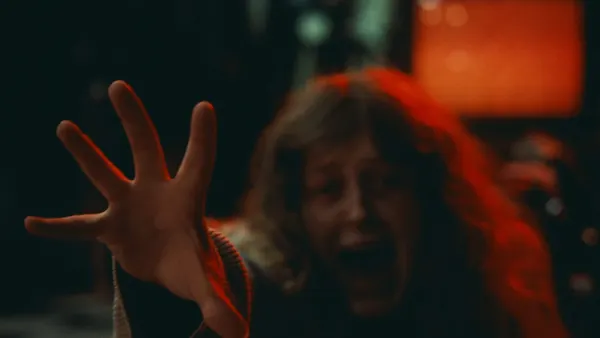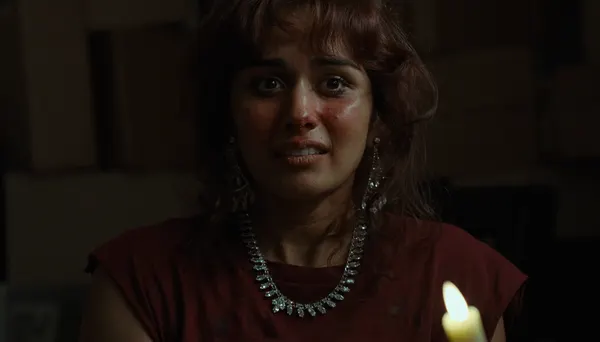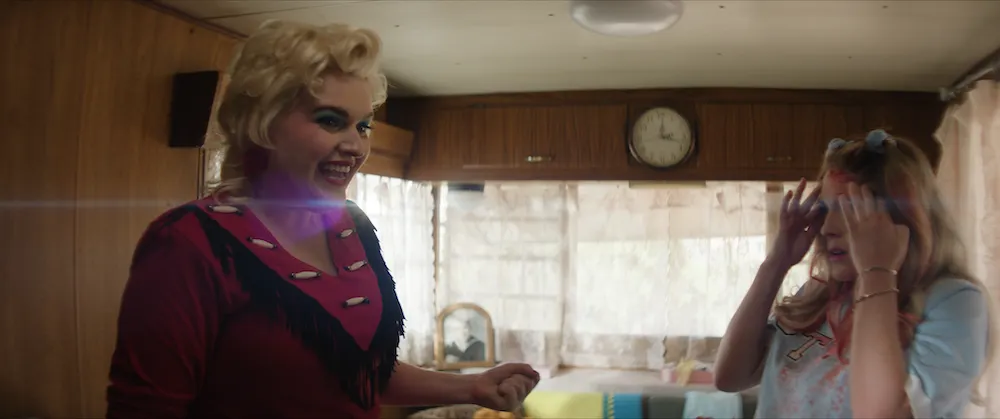
Carly is captain of the cheer squad and about to lose her scholarship to a teammate. Her older sister Ginger is four payments behind on the trailer her late husband left her. One of them commits a heinous crime; the other sees a cash reward on the local news and does the math. Money's Tight is a musical horror comedy about two women who decide that someone else's loss looks an awful lot like an opportunity.
Writer-director Scarlet Moreno, who also stars opposite Marnie Price, built the film out of her own particular set of loves: South Texas heat, Old Hollywood musicals, rock 'n' roll, and horror. A bilingual artist raised in Laredo on the Mexico border and trained at NYU's Tisch School of the Arts, she returns to FilmQuest with a third film and a sensibility she describes plainly — beauty and ugliness side by side, glamorous and grotesque, funny and frightening.
Key Takeaways
- Moreno wanted to make a film about women behaving badly without asking the audience to condemn or absolve them.
- By the time the long-gestating script reached camera, lead actress Marnie Price was seven months pregnant and Moreno had an eight-month-old at home — so a pregnant cheerleader got written in.
- Shot in California, the film's dusty, saturated, slightly kitschy world is a reimagining of the South Texas landscape Moreno grew up in.
Moreno spoke with us about economic desperation, creative outpouring, and driving a U-Haul around Los Angeles.
Interview
What drew you to make this film, and why this story, why now?
Money's Tight centers on two complex female characters whose economic desperation leads them to make a horrific choice. I wanted to make a film about women behaving badly without asking the audience to condemn or absolve them, and to explore the ways women are pitted against one another by both social and economic circumstance.
The film plays with those ideas through heightened femininity, violence, camp, and a tongue-in-cheek musical sensibility. Carly and Ginger are outrageous, but the desperation underneath them is very real: what happens when staying afloat begins to feel like a competition, and someone else's loss starts to look like your opportunity?
What surprised you most about the filmmaking process, including any moment on set or in post that changed how you saw the story?
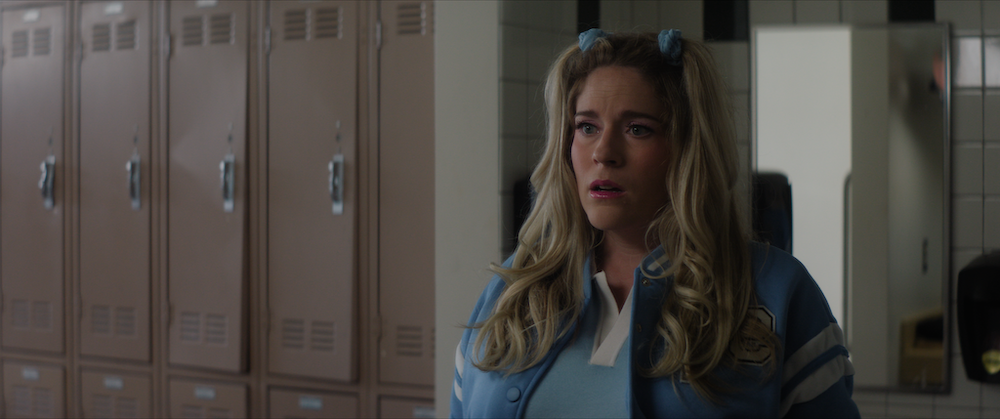
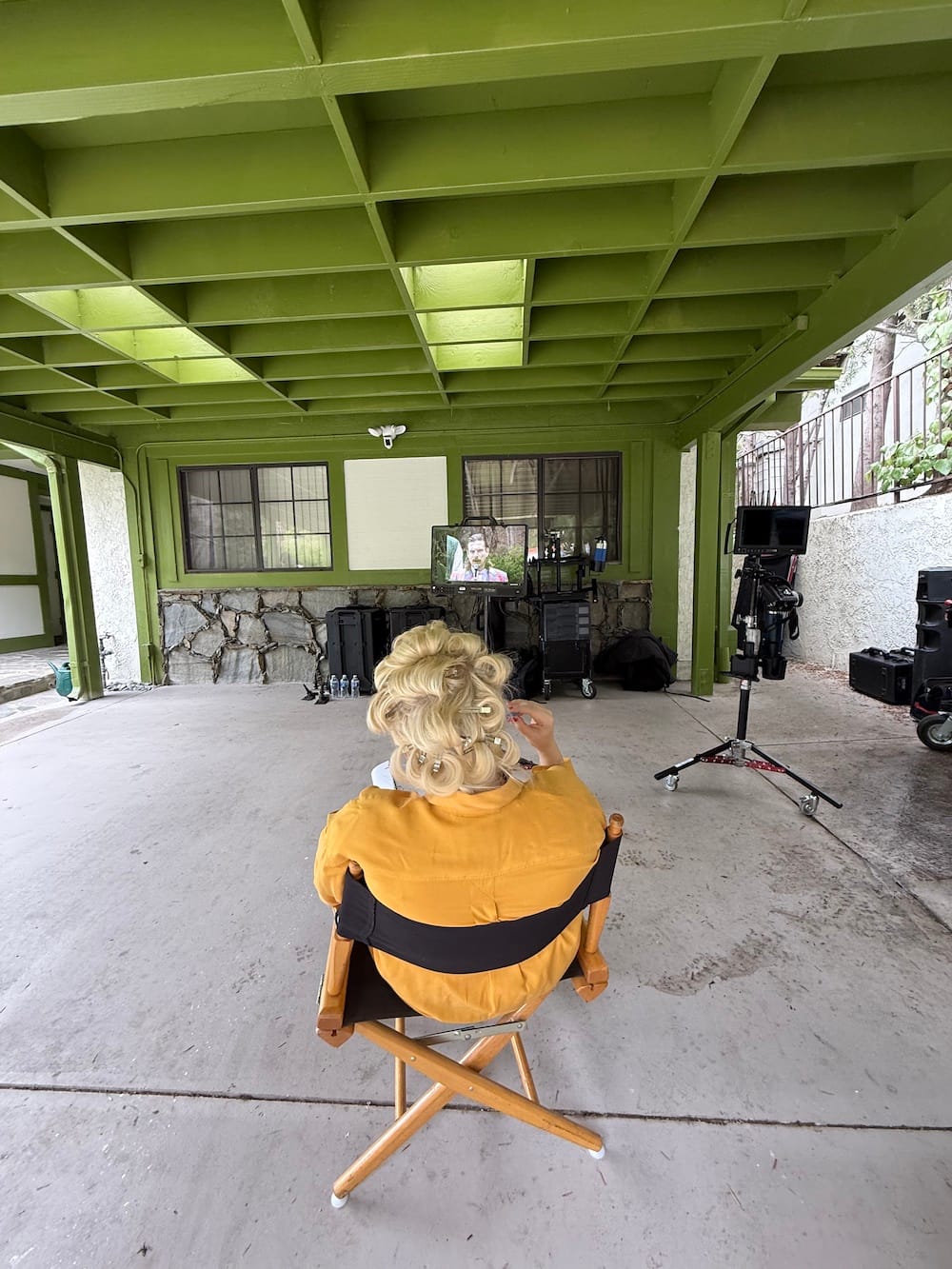
When I first wrote Money's Tight, neither Marnie, my lead actress, nor I were even thinking about motherhood. By the time we finally brought the film to life years later, she was seven months pregnant, and I had an eight-month-old baby at home. Needless to say, we were very different women from the ones who had first dreamed up this story. Also, a pregnant cheerleader is wildly campy, and definitely got written in because Marnie was actually pregnant by the time we made the movie.
I think what surprised me most was that something that sounds so logistically challenging on paper actually became this incredible source of creative energy. Of course, there were challenges, but rather than feeling like we were making a film in spite of these enormous changes in our lives, it felt like we were channeling something through them. There was a real sense of creative outpouring, of having so much to express and finding a place to put it all.
What moment in the film feels most like you, or like something only you could have made?
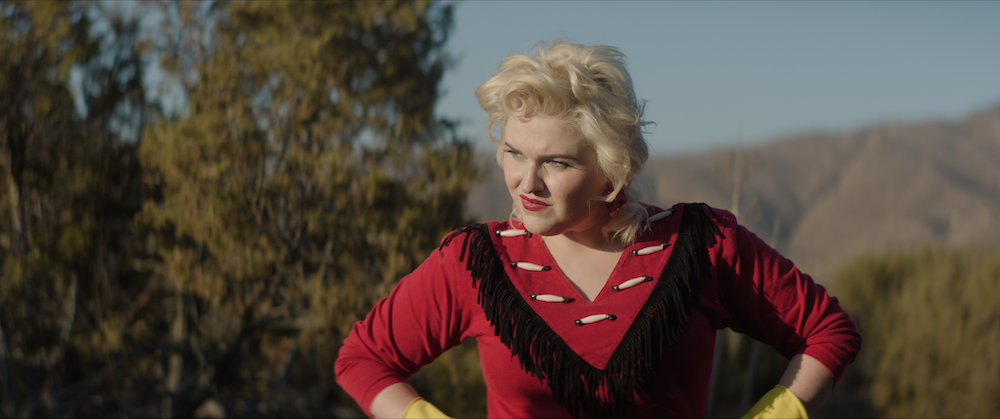
It's less one particular moment and more the world of the film itself. I grew up in South Texas, and there's something about that landscape — the vastness, the heat, the particular beauty and strangeness of the desert — that has always lived in my imagination. We shot in California, but I wanted it to feel like that Texas landscape I remember so well. I wanted the world of Money's Tight to feel dusty, saturated, and a little kitschy. Bringing that sensibility together with my love of Old Hollywood musicals, rock 'n' roll, and horror feels incredibly personal to me.
I love creating worlds where beauty and ugliness exist side by side, where things can be glamorous and grotesque, funny and frightening. I think Money's Tight is a real expression of that. It's a world that feels familiar to me, but one that's been heightened and reimagined through my own particular lens.
What was the hardest creative decision you made while making the film?
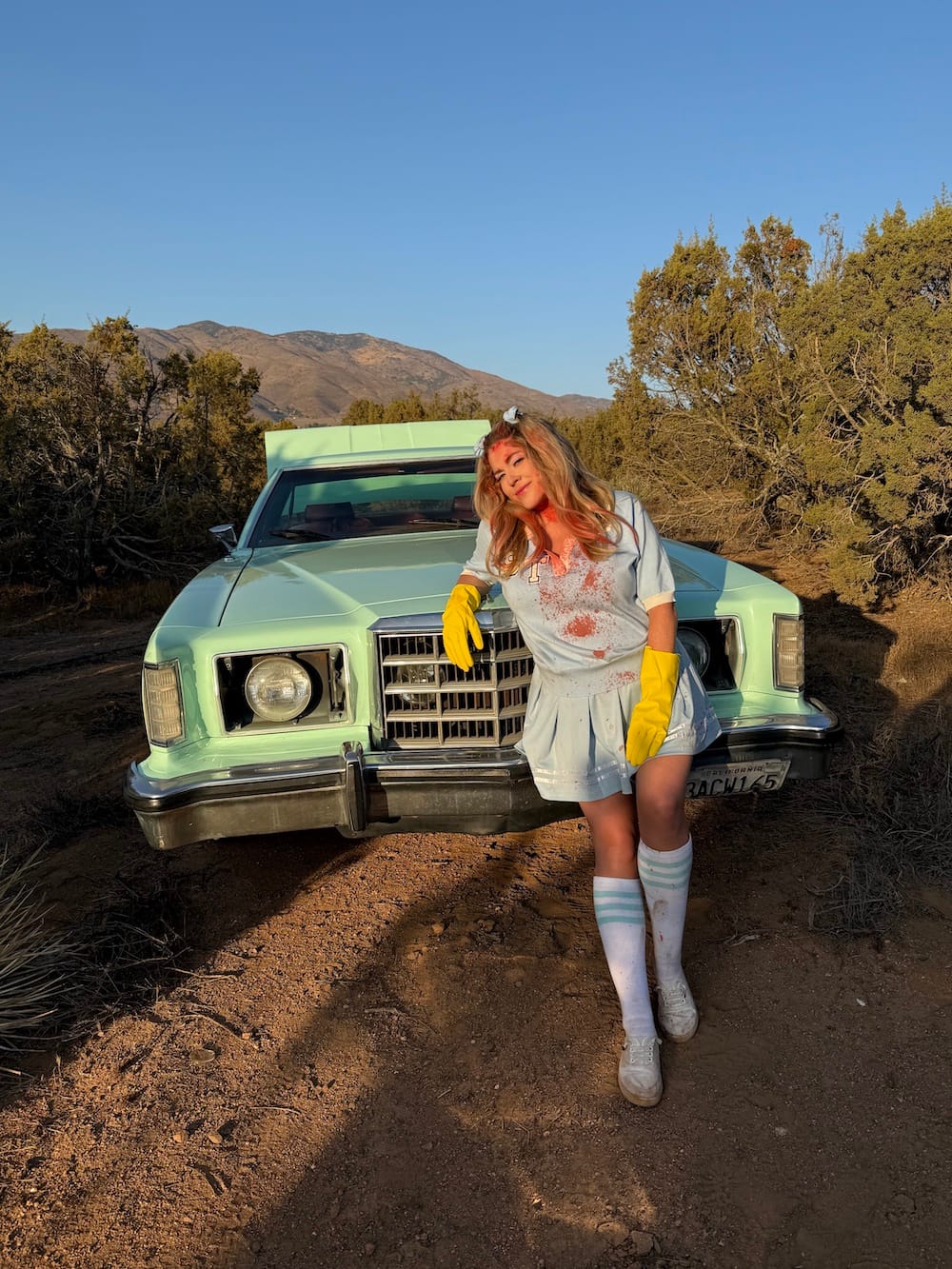
I actually don't remember struggling with any particularly difficult creative decisions! I had a pretty clear vision of what I wanted the film to be from the beginning. The real challenge was figuring out how to bring that vision to life with a limited budget. Finding the right locations that we could actually afford, sourcing equipment, driving a U-Haul around Los Angeles to pick things up myself. All the glamorous things you imagine when you decide to make a movie! I think the hardest decisions were ultimately about figuring out where I could compromise logistically without compromising creatively.
What tool, technique, resource, collaborator, or mindset shift helped most during production?
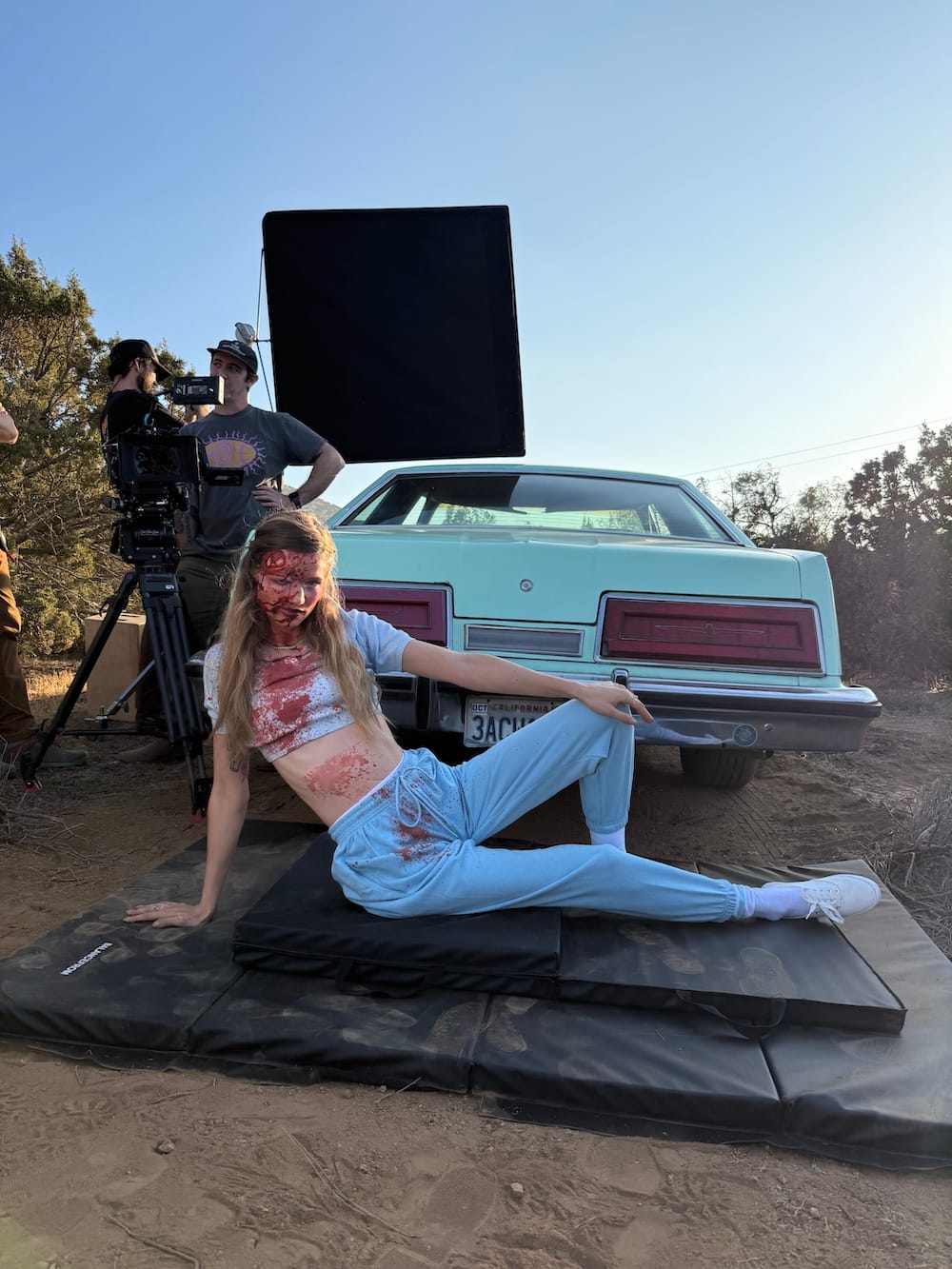
The greatest resource I had was the people around me. We had a small crew, but everyone brought so much creativity, generosity, and enthusiasm to the project. When you're making an independent film, you inevitably have to wear a lot of hats, and it's easy to feel like you need to have your hands in everything. But filmmaking is such a collaborative art form, and I think one of the most valuable things you can do as a director is surround yourself with talented people, trust their instincts, and give them room to contribute.
My cinematographer, Justin Moore, is a great example of that. When I'm both directing and acting, he's been instrumental in helping me navigate the shift between being immersed in a character and stepping back to see the bigger picture. Having someone whose eye and instincts I trust allows me to commit fully to the performance, knowing that we're working toward a shared vision.
How does your film fit within, or push the boundaries of, its genre or form?
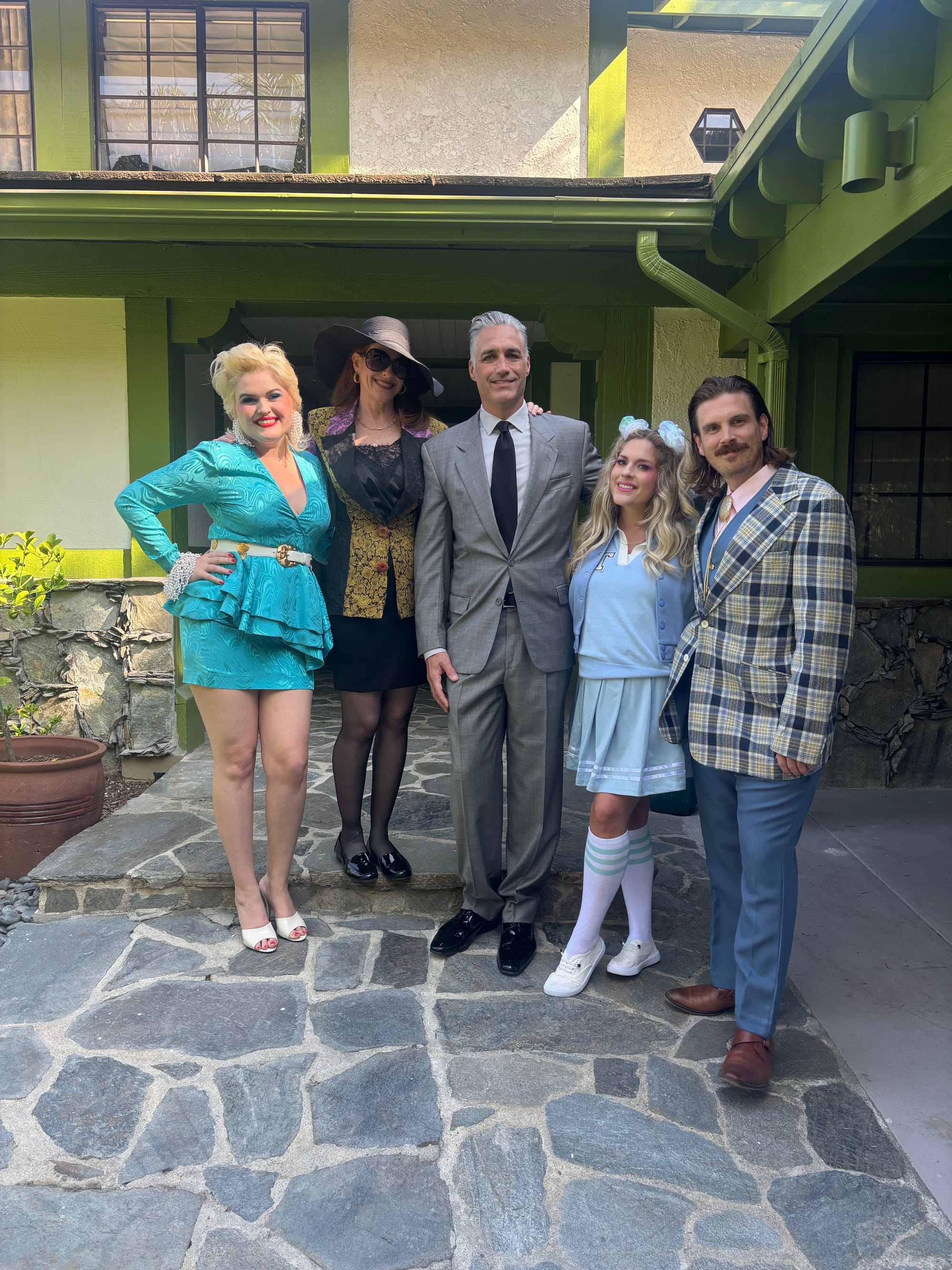
I think Money's Tight exists somewhere between a dark comedy, a horror film, and a musical, without ever fully committing to the conventions of any one genre. I love that the film can move from something funny or even playful to something quite disturbing, sometimes within the same scene. Then the musical numbers allow us to lean even further into the absurdity without losing sight of the darkness underneath it all. I'm not sure that I set out to push the boundaries of any particular genre, but I definitely had a great time playing with them!
I'd also say the greatest strength of independent filmmaking is the freedom to take creative risks. You don't necessarily have to worry about fitting into a particular mold or appealing to everyone, and that opens up so many possibilities for telling stories that are strange, personal, and unexpected. Money's Tight feels like a product of that freedom. We made a murder musical about two sisters making some truly terrible decisions, and we got to embrace all the peculiarities of that world without feeling the need to make it more conventional. Don't wait for permission to make something. Find people who share your enthusiasm, work with what you have, and trust that your particular point of view is worth exploring.
What does it mean to have your film selected for FilmQuest, and where do you see the film going next?
I'm absolutely thrilled to be returning to FilmQuest with Money's Tight! I've had two previous films screen there, and it's become one of my all time favorite festivals to attend. Beyond its reputation as a leading genre festival, what makes FilmQuest particularly special to me is that the people behind it genuinely believe in the filmmakers they invite and want to see them succeed. You can feel that in everything from the programming to the way the festival is run. There's a real sense of community and an enthusiasm for bold, imaginative storytelling.
Beyond the festival circuit, I'd love to explore the possibility of bringing Ginger and Carly to life in another format. I think there's so much more to explore with these two women, and perhaps even more stories to tell. Whether that's a feature film, a series, or something else entirely, I'd be thrilled to see where they take me. At the core of all my work is a desire to tell stories about women in all their beautiful, terrible complexity. I don't think a woman has to be good to be interesting, and I certainly don't think she has to be likable to be worthy of our attention.
Main Cast & Crew
- Written & Directed by: Scarlet Moreno
- Starring: Scarlet Moreno & Marnie Price
- Original Songs by: Marnie Price & Kellan Meador
- Cinematographer: Justin Moore
Filmmaker Opportunities
💛 Fund your next project with fiscal sponsorship
Have a project in the works? As a 501(c)(3) nonprofit, the Cinematography for Actors Institute can accept tax-deductible donations on your film's behalf — a door-opener for grants, foundations, and supporters who want to back your work. We've serviced over 100 projects to date and helped route over $800,000 in funding to filmmakers. Explore fiscal sponsorship →
📬 Grant deadlines and festival opportunities, straight to your inbox
The CFA newsletter rounds up grants, festival calls, and community news for independent filmmakers — the kind of opportunities that are easy to miss and painful to miss. Join the newsletter →
🎬 Focus on the creative — we'll help with the logistics
Production Management, CFA's newest member program, launches this November: production insurance and workers' comp, payroll, film permits, gear rental coordination, SAG-AFTRA compliance, contract drafting, production consulting, and crew recommendations — handled by a team of working filmmakers, à la carte or all in, in partnership with Creative Access Group. It's waitlist-only until launch. Join the waitlist →
League of Filmmakers is published by our parent organization, the Cinematography for Actors Institute — a 501(c)(3) dedicated to education, community, and capital for underrepresented filmmakers and actors. Learn more about CFA →