Table of Contents
This summer, cinemas were buzzing with people eager to see Ne Zha II. After all, the first film back in 2019 wasn’t just a hit, it was a cultural phenomenon. Fans expected big things this time around: epic battles, dazzling visuals, and Ne Zha, the fiery anti-hero who defied destiny itself. What they got was all of that, but also something far more personal. Beneath the spectacle, the sequel reveals itself to be a film about family, the complicated, sometimes painful, but deeply enduring ties between parents and children in collectivist cultures.
A Myth Retold for Modern Times
Ne Zha’s story has always been a dramatic one. In classical Daoist and Buddhist mythology, he’s born under a curse, fated to bring ruin to those closest to him. He rebels against gods and destiny alike, even going so far as to sacrifice himself. The first Ne Zha film reimagined this figure as a child misunderstood from the start — branded a demon, but fighting desperately to prove his worth. That version struck a chord because it made rebellion feel both mythic and painfully real. The sequel doesn’t just repeat that arc. Instead, it asks a quieter but heavier question: once you’ve fought against fate, what happens after?
Parents Who Matter
One of the most refreshing choices in Ne Zha II is how it treats parents. In many Western animated films, parents are absent or play little more than comic relief. Children “find themselves” by moving away. But here, Ne Zha’s parents are front and center. They aren’t perfect. Instead, they stumble, they make choices that wound, and they carry regrets. But their devotion to their son, even when it takes clumsy forms, is unwavering. This feels uniquely true to Asian family life. Love is rarely shown through grand speeches. It’s carried in sacrifice, quiet persistence, and sometimes stubborn mistakes. Family isn’t about being flawless, it’s about weathering storms together.
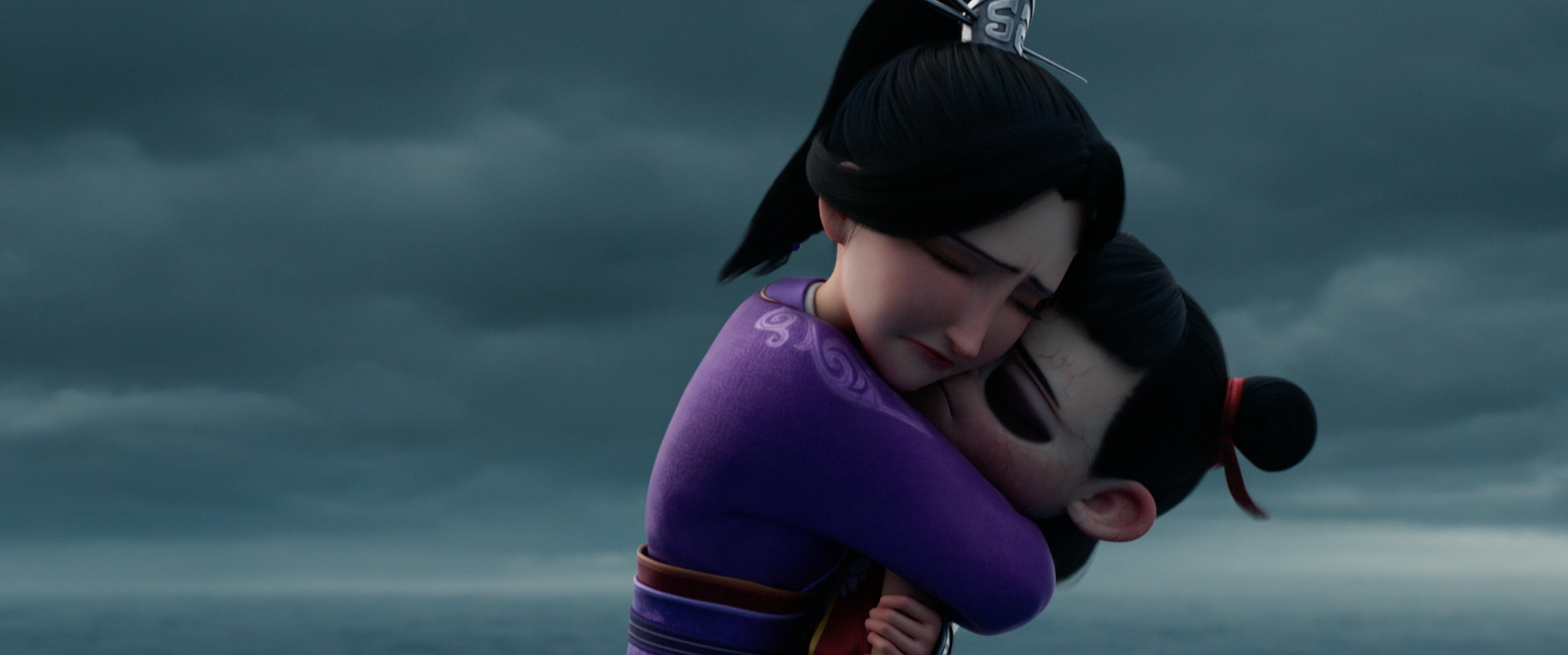
There’s one scene in particular (you’ll know it instantly) where Ne Zha and his parents share almost no words at all. Just a look, a gesture, a flicker of anger mixed with love. The theatre went silent during that moment. No explosions, no cosmic gods, just a small family reckoning with each other. It’s a reminder that sometimes the fiercest battles happen not in the sky, but at the dinner table.
Animation as Emotion
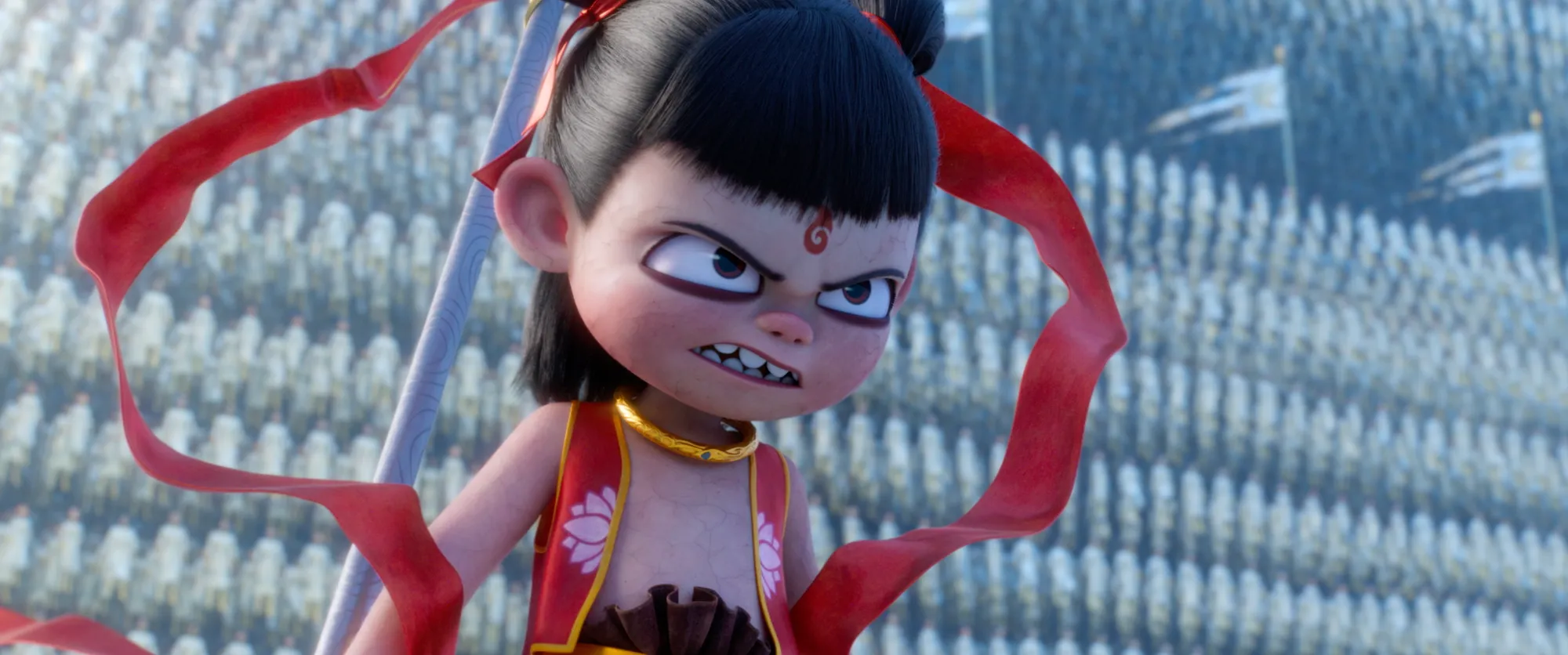
Visually, Ne Zha II is nothing short of stunning. Director Jiaozi and his team have found a way to fuse advanced CGI with the soul of traditional Chinese art. The beautiful skies are animated to swirl like ink-wash paintings and the fantastical and magical seals in the oceans glow like brushstrokes being brought to life. Battles unfold like dance, fluid and deliberate, echoing opera stages and calligraphy.
But what stands out is that the visuals are never just for show. Every design choice is rooted in emotion. When Ne Zha is torn apart inside, the skies rip apart with him. When he battles, you feel not just the clash of weapons but the weight of expectations he’s fighting against. The spectacle becomes a mirror of his turmoil, animation as poetry.
Collectivism vs. Individualism
What makes Ne Zha II especially striking is how it wrestles with cultural values. In most Western animation, the path to independence comes from leaving family behind, Ariel running to the sea’s surface, Elsa locking herself in her icy palace. Freedom equals separation.
But Ne Zha’s story turns this idea inside out. His rebellion doesn’t mean cutting ties. Instead, it means reshaping them. He learns that independence isn’t the absence of family, but the courage to exist within it differently. His parents, in turn, learn that loving their child sometimes means loosening their grip.
This is a tension that will feel familiar to many Asian audiences, and perhaps even more so to children of immigrants. The constant push and pull between honoring tradition and forging new paths is messy, emotional, and very real. Watching Ne Zha argue, resist, and ultimately find a way forward feels like seeing that struggle translated onto the big screen through myth and magic.
Why It Matters
In the end, Ne Zha II isn’t just another blockbuster sequel. It’s a statement about where Chinese animation is headed, and what stories it wants to tell. For audiences in China, it reclaims a piece of cultural heritage and gives it new emotional weight. For diasporic viewers, it echoes the tug-of-war between duty and independence that defines so many family conversations. For global audiences, it’s a rare chance to see a myth retold in a way that is both culturally specific and universally moving. When I sat in a packed cinema, watching the audience laugh, gasp, and even wipe away tears, I realized I wasn’t just watching a film. I was part of a moment. Ne Zha II takes a centuries-old story and makes it feel alive, not just in myth, but in the way we understand family, love, and the delicate act of letting go.