Table of Contents
Three Key Takeaways
- Aaron Barrocas crafts a biting horror-comedy centered on decades-long roommate resentment, using sharp dialogue and dark humor to reflect societal divides.
- The film’s success hinges on trusted collaborators and the authentic performances of Michael Paul King and London Garcia, who elevate the script beyond caricature.
- Independent filmmaking’s greatest strength—resourcefulness and trust—shines through in the film’s focused production and creative freedom, embraced fully by Barrocas and his team.
Los Angeles-based writer and director Aaron Barrocas returns to the genre spotlight with his short horror-comedy Bart & Bobbi Kill Each Other, selected for FilmQuest 2025.
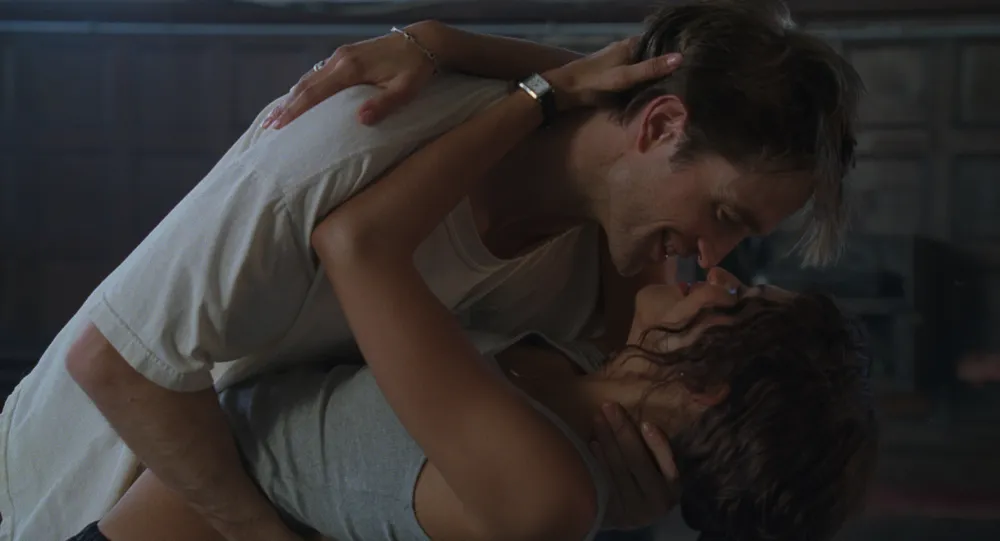
Anchored by the compelling performances of Michael Paul King and London Garcia and brought to life by the visually striking work of DP Sophia Cacciola, the film explores the toxic dynamics of long-term roommates entangled in an escalating and preternatural feud.
Barrocas, known for his sharp wit and genre-savvy storytelling, shares insights into the film’s creation, its biting humor, and the collaborative spirit that made this project a standout.

What drew you to make Bart & Bobbi Kill Each Other? Why this story, and why now?
Very often when I write a first draft of a comedy piece (and sometimes even when I'm writing more dramatic material), I spend pages on arguments and insults that make me laugh, but that I know ultimately won't be in the polished script anybody sees, because they're a distraction from whatever the reader should be focusing on. So I cut it down to one insult and move on, always missing what was left behind. This time I didn't want to cut out the insults and bickering. I wanted them front and center, to serve as the movie's overall reason for being. I liked the idea of two roommates who both wanted to live their own lives, but had been tethered to the other for decades longer than planned, forcing a resentment that can't help but come out in every interaction. And like any two people in the world today, these roommates have developed opposing worldviews - an obstacle that now seems insurmountable. Those arguments can never have an ending point - there's no consideration of the other's perspective. The most fact and reason based arguments will lead to the strongest heel-digging. So these two people are kind of everyone in the country right now.
"I liked the idea of two roommates who both wanted to live their own lives, but had been tethered to the other for decades longer than planned, forcing a resentment that can't help but come out in every interaction."

What surprised you most about the filmmaking process this time—creatively or logistically? Was there a moment on set or in post that completely changed how you saw the story?
This was a very simple shoot in many ways. It was one location, six pages, and almost entirely dialogue based. Producers Michael J. Epstein and Sophia Cacciola (who was also DP), along with AD David Harari helped set up a situation where we could focus entirely on getting the best performances for the long argument that is the entire second half of the film. We shot it with three cameras - sitcom-style - so that we would always have an honest reaction shot for any moment, and so that we could rapid-fire cut between the two leads without risking rhythm issues. What surprised me was that the performances were not at all what I expected. In my head, I heard the script exactly the way I had written it - constant and cantankerous. But London and Michael Paul King brought an honesty to it where they felt like characters and not cartoons. The resentment between them feels so real that underneath the back and forth slapstick sensibility of the film, something very human was happening on set, and I still feel that when I watch the film. It's still a very silly comedy, but there is a grounding that I don't think less experienced or skilled actors could ever have created.
Is there a moment in the film that feels the most you—something only you could have made?
This movie is filled with very specific art department humor - a drawing of Bobbi as a Quentin Blake illustration in a Roald Dahl book. An artistically modified Dr. Pepper can that serves as a punchline. A post credits vanity license plate gag which pays off a joke from the beginning of the movie. I love embellished, surrealistically silly sight gags, and it's the kind of joke I've been shooting since I made shorts with my friends in high school. In some ways my sense of humor has evolved since then, but the ridiculous moments that made me laugh in Mel Brooks and Savage Steve Holland movies (and yes - that is almost definitely the only time those two have ever been in the same sentence together) still find their way into my stuff to this day.

What was the hardest creative decision you made while making this film?
I had to lose a page of dialogue in post because the movie is really about what happens once the two sit down at the table, and it just took too long into the movie to get to that point. I became concerned that people would be in the third minute of a six minute movie with no idea what they were supposed to be watching. So I compressed several jokes, and lost several others. I know it was the right choice, but I always feel bad cutting material that actors studied, focused on, and rehearsed, and a whole crew worked hard to capture.

What do you hope audiences take away from your film?
I hope they laugh a few times - maybe even at something that they would normally not be inclined to laugh at, or might even be a little offended by. And there's a not-disguised-at-all message about who we are and maybe who we're becoming as a society that people can grab onto and share if they want to. But also just laughing totally works.
"London and Michael Paul King brought an honesty to it where they felt like characters and not cartoons."
How has this film shaped or shifted the kind of stories you want to tell next?
This film, despite the constant punchlines, is a little more pointed in its political critique than some of my previous stuff, and I like that about it. Moving forward, as I create projects that are less contained, and have larger stories - likely with more sympathetic characters (but still a lot of prop-based jokes), I'd love to keep that element of addressing our world directly enough that a few eyebrows raise.

What’s a tool, technique, or resource that really helped you during production?
What has always helped me on every production where I've worked as either a producer or director, is bringing on people I trust. Our two leads - both who I knew and trusted creatively prior to their casting - developed their own relationship dynamic, and their own world, and too many words from me would only have gotten in the way of that. The same went for DP Sophia Cacciola, as well as Makeup Artist Alexys Paonessa. They both created the world on screen from their own skills, and stepping in front of years of experience and talent is often a way of stifling it. I've seen many people sabotage their own projects by micromanaging talent until they're no longer talent - they are people who know how to do things. It reduces creative heads to operators, who are then set up to take the blame for the failure of creative choices they ultimately had very little say in. Similarly, this was the first time I have ever handed something off to a composer without sharing any idea of what I had in mind. I had originally placed temp music during the cut, but I've worked with Catherine Capozzi on two previous shorts, and didn't want her score constrained by my own lack of musical imagination. The cut she received had no temp tracks. So she found the tone of the movie and built the score around that - and in a few places it was very similar to what I had temped in. But elsewhere, it supported and punctuated the scene so perfectly that the score became a character. I love what she created because she used all of her talent and experience, without being limited by my ideas, as a non musician, of what it should sound like. Trusting that everybody involved wanted to make something very cool, and had the skills to do it, definitely made this a better film overall.

What do you think is the greatest strength of independent filmmaking, and how did you lean into that on this project?
The greatest strength of independent filmmaking is the way that it builds filmmakers. There are some true bootcamps in the entertainment industry. I spent years as a producer and editor on day-of-air shows where we spent 36 hours prepping roll-in material for a studio shoot, did the shoot at 8am, took it to an edit bay, and ran a completed program master to network by 6pm for air. It meant cutting corners and working at top speed, but the expectation of quality was always there, and it always had to be met. Many entertainment professionals never have that experience, and it gave me a certain scrappiness in my working style that I use for single-day turnaround projects to this day. Independent filmmaking is a similar bootcamp - there's never enough time or budget. It gets done or it doesn't, and it has to, so it does. On indies, the budgets are often harder to come by, and even though they are much smaller (usually by a bunch of zeros) than studio budgets, they represent a much greater investment to all involved, so everybody has to do what they can to make the thing work. In the case of our low-budget short, Bart & Bobbi Kill Each Other, we planned a realistically achievable shoot, and constantly consulted with every member of the team to make sure it would work - especially when it came to the time-consuming special effects makeup application. We knew that there wasn't much room for experimentation, so very few details were left to be figured out on the day. So it's not necessarily a lesson, but the preparation is the most important aspect of any shoot. Bring people in who truly understand the time and budget you're working with, and respect how much that can limit your shoot, so that you all know exactly how much play you have within those limitations, setting yourself up to make your days (or in our miniature case, our day).
What does it mean to you to have your film selected for FilmQuest?
I've been lucky enough to have my work represented at three prior FilmQuest events. I've met filmmakers at the fest that I've been in touch with for years, and have viewed some of the wildest shorts and features I've ever seen in my life in Provo. Being selected means that several rounds of experienced, trusted judges watched this thing and laughed. And they felt that others would too - because a lot of films get rejected. FilmQuest wants everything they screen to be a banger. So it means that people whose opinions I respect thought this ridiculous comedy had a place amongst some of the darkest, weirdest, most far out films around. That's really cool.
"Trusting that everybody involved wanted to make something very cool, and had the skills to do it, definitely made this a better film overall."

How does your film fit within—or push the boundaries of—genre storytelling?
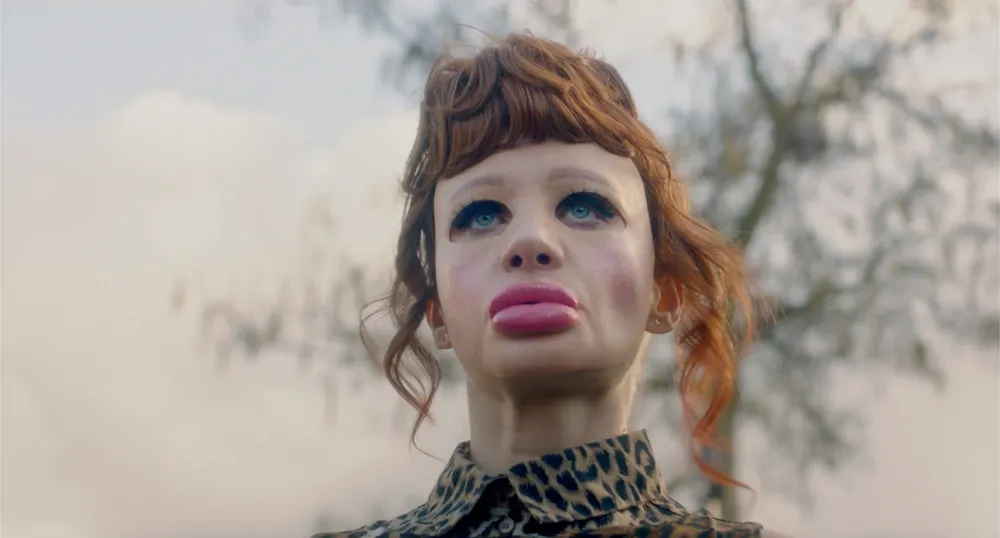
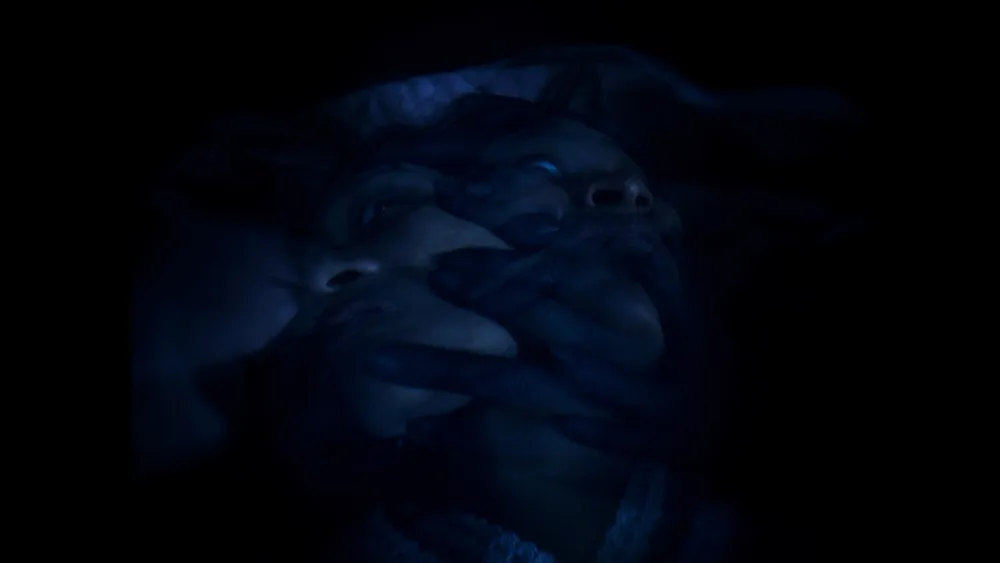
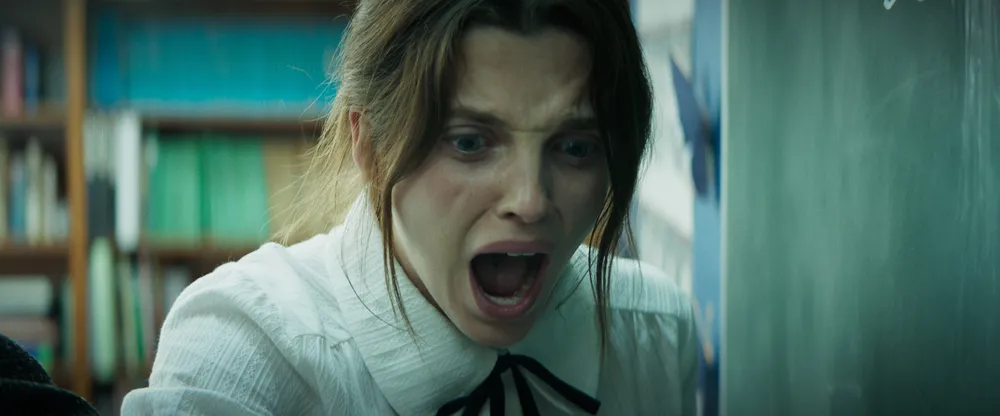
Bart & Bobbi rests on the edge of genre. It's a horror-comedy, but really only because it has things that you often see in horror films. It's a comedy that has a bunch of dried puke and death makeup and murderous behavior and ghosts. It plays on the fact that genre norms have been established, so that viewers understand what they're seeing immediately. It's not a spoof, making fun of other genre material, but rather a comedy that uses the familiar language of genre storytelling as a shorthand to understanding its twists and turns.

Where do you see this film going next?
At the moment, I'm truly enjoying the festival run. I love attending fests whenever possible and meeting filmmakers - especially genre people who like the same stuff I do and share a similar interest in making these types of movies. I've wound up working with super creative people that I never would have met had it not been for some project of mine landing at a particular fest. But once the fests end, I'll have to find Bart & Bobbi a forever home. My last two shorts both landed in one episode of an anthology series on Tubi, and I love that they have a semi-permanent place in the streaming world. As long as it lands somewhere easily accessible, so that audiences can find it and either laugh for six minutes, or stare blankly before scrolling on to a Sora video of a bear saving a child's life that they think is real.
“At the core of all my work is a desire to continue creating. I'm working on independent projects because I can't imagine or even understand a life where I don't share original material. My goal has always been to entertain and connect through film (though it's usually video), and since my career started in the early 2000s, I feel I've managed to consistently produce and edit comedy, sports series, documentaries, and even reality shows that move people in some way. There's nothing else I can do."

Cast & Crew
- Alexys Paonessa — Makeup/Special Effects artist with broad indie and commercial experience
- Catherine Capozzi — Composer, award-winning genre film scorer and musician
- David Harari — Assistant Director with 25 years in diverse entertainment projects