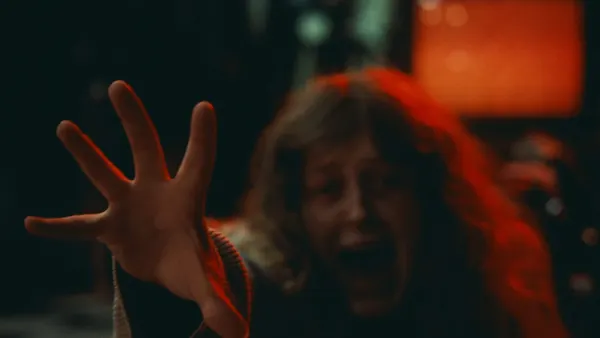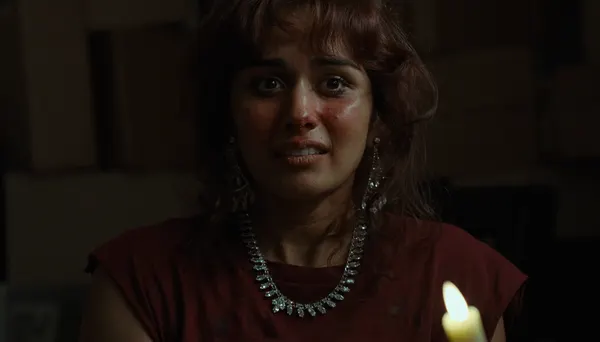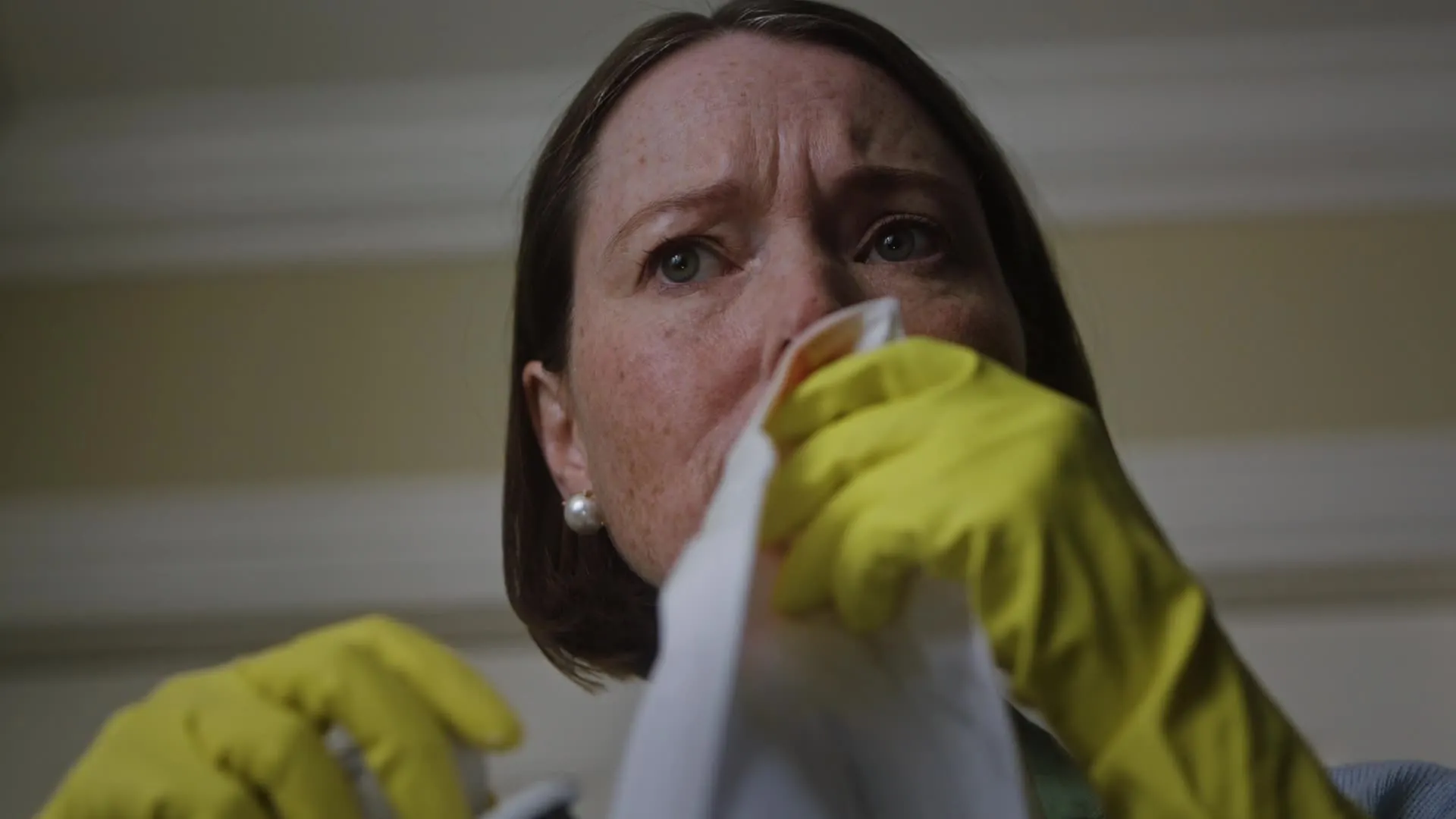
A housewife's carefully curated life unravels when a tiny mistake leads her to suspect she is the next meal for her lycanthrope husband. Tortured by guilt and her own fragile mortality, she serves up a surprise course for her werewolf hubby — but all is not as it appears. That's the engine of Silver Anniversary, writer-director D.M. Harring's domestic horror short, starring Samantha Sloyan and Jay Huguley, with Rhoda Griffis and Ira David Wood III.
The film began as an unfinished short story about a marriage to a monster, and the monster metaphor never softened — but the woman beside it grew more complicated. Harring, who has written and produced network television at a scale most indie directors never see, built this one out of limitation, friendship, and a two-day shoot that was supposed to be four. At the core of all his work, he says, is a desire to challenge the audience.
Key Takeaways
- Silver Anniversary is pitched as "a werewolf movie for people who don't normally like werewolf movies," trading the genre's familiar build-transform-kill formula for domestic drama and a deliberately interrupted ending.
- Trapped actors, a lost prep day, a lost shoot day and a six-month gap before the production could finish — and Harring came out of it energized: "Solving problems is one of my favorite things to do and it turns out that's a director's main job."
- The crew came out of a 2023 film festival friendship: cinematographer Owen Hamilton and costume designer Emmie Holmes, plus leads Jay Huguley and Samantha Sloyan, both close friends of the director.
Harring spoke with us about narcissists, practical effects that didn't survive the budget, and why FilmQuest has been his white whale.
Interview
What drew you to make this film, and why this story, why now?
The film initially started as a short story that I was unable to finish. It probably tells you everything you need to know about what I was going for that Marnie's original name was Melania (and her husband is named Don). Back in 2015-2016, when I initially conceived of the story, I was irritated that many Americans honestly believed that the First Lady would become some sort of savior of the Republic, keeping her egotistic, narcissistic husband in check. Apparently, no one in the public discourse knew what narcissists were like, or what it took to be married to one. Sadly, I have had too much experience with narcissists, so I felt that I had to write a story that showed the complicity of someone married to a monster — because what's the point of making art if you're not trying to expose some vital truth?
But as the story developed into a screenplay, Marnie transformed into a more complicated character: still complicit, but also sympathetic; a victim and a perpetrator. She became someone whom audiences might see differently depending on their background, which hopefully opens up a discussion after the credits roll. Since we have yet to emerge from this tyrannical political era, I think it's more important than ever to try to understand those in power, and to question what it really means to be a victim. That's what this film seeks to do in its small, subtle way. I hope the audience thinks about the film after it's over. That's all you can really hope for. I can't control what they'll think, but it would be nice if they questioned whether or not Marnie was the victim of the story or a perpetrator.
What surprised you most about the filmmaking process, creatively or logistically?
As a writer with a background in improv comedy, I always try to remain flexible on the day while still keeping to the core intention of the story. The film changed a lot from the unfinished short story through the adaptation process, but the screenplay remained fairly consistent throughout pre-production.
Unfortunately, my actors were trapped in the Dallas airport for over 12 hours, which meant that I lost both my prep day — trying to get them to Charleston — and my first shoot day, due to turnaround rules. So we had two days to shoot what should have been four days, which meant I had to make huge changes on the fly. Ultimately, we were unable to finish the film, so I spent the next six months scraping money together to bring everyone back to finish the shoot. That said, I didn't have the time or money to reshoot everything, so we got locked into some blocking that I wasn't exactly happy with. Additionally, my green-ness with regards to practical effects led to some problems, as some of the effects I wanted turned out not to be possible with my budget. Our incredible FX house, Bearded Skulls, did so much with a little, but there were elements of the werewolf transformation that sadly we had to scrap, and others we got locked into because of the disaster during our first shoot.
What moment in the film feels most like you, or like something only you could have made?
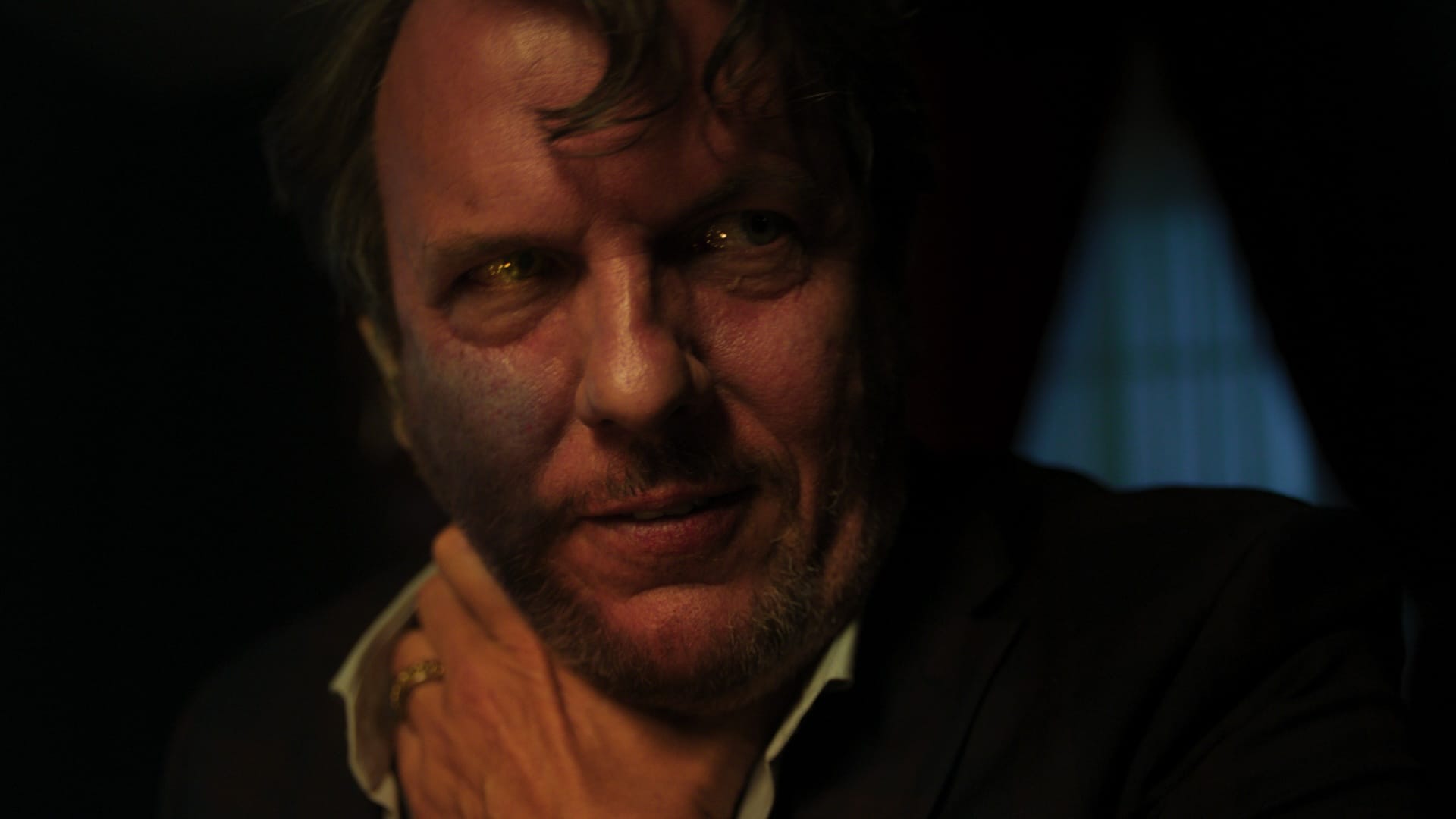
Early in my career, I spent a lot of time in the improv scene in LA, specifically at UCB, which was profoundly influential in both my writing and my approach to life. Probably because of that, I always try to bring an element of humor in my writing, especially when it's horror. The final dinner scene with Marnie's parents is one of my favorite scenes I've ever written, and showcases the way I like to use humor to play against a scene's tension and horror.
How does your film fit within, or push the boundaries of, its genre?
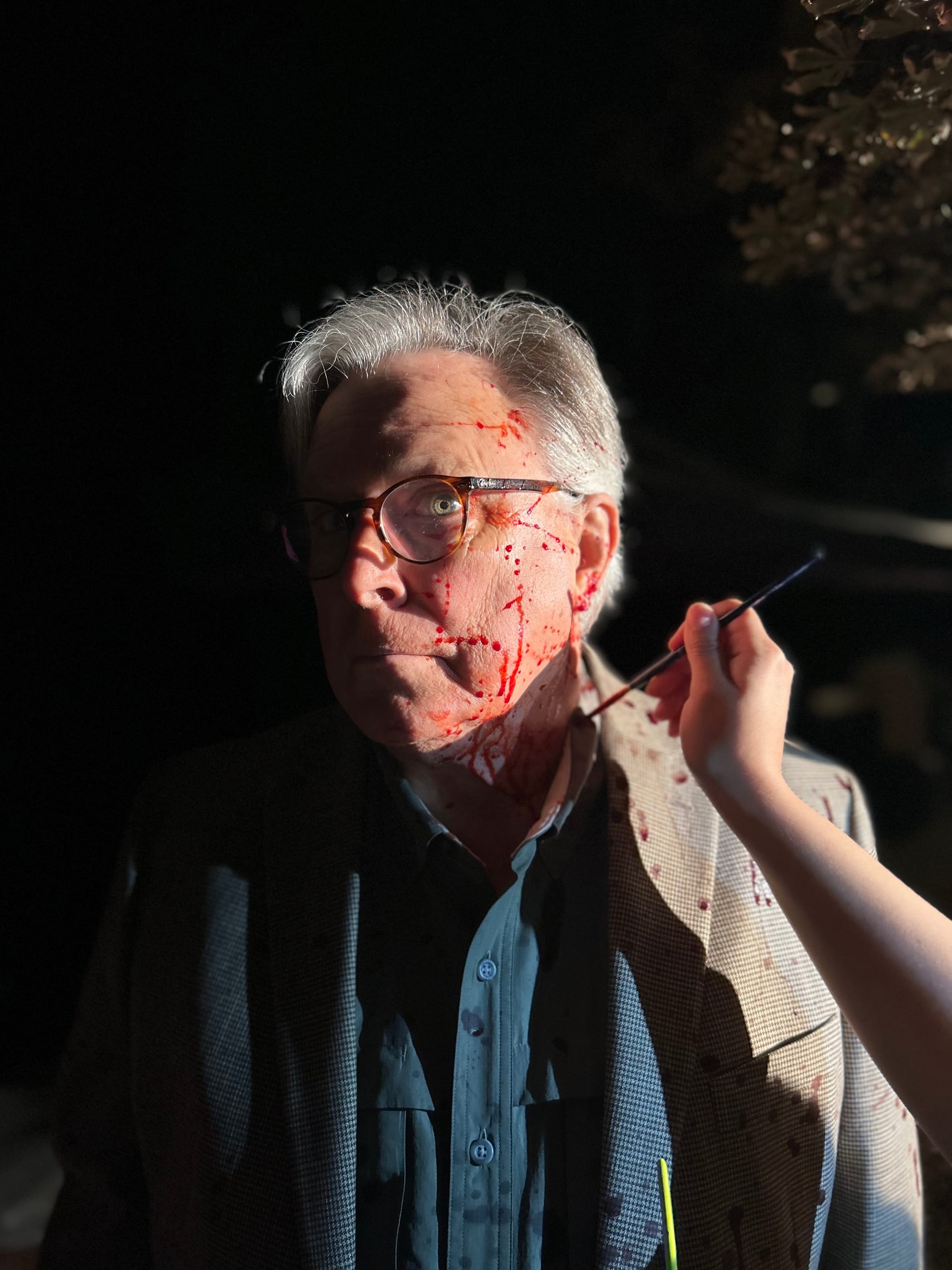
I feel that the werewolf genre has been trapped in a loop since the release of An American Werewolf in London. This isn't a knock on other filmmakers, but I've seen so many werewolf features and shorts over the years and they tend to follow a distinctive pattern: a whodunit build-up to a big transformation sequence followed by a kill spree. This formula unfortunately kills most of the film's scares, because the audience knows where it's headed.
So I intended this film to be "a werewolf movie for people who don't normally like werewolf movies," shying away from the expectations that have bogged down the genre. The metaphor of the werewolf is so rich, it's a mythos that spans the globe, so I wanted to use that metaphor for something that felt fresh — at least to me — putting a werewolf into a domestic drama and purposely interrupting the audience's expectations at the end. It's a bit of a thumb in the eye, but I think the genre needs that right now.
What collaborator or mindset shift helped most during production?
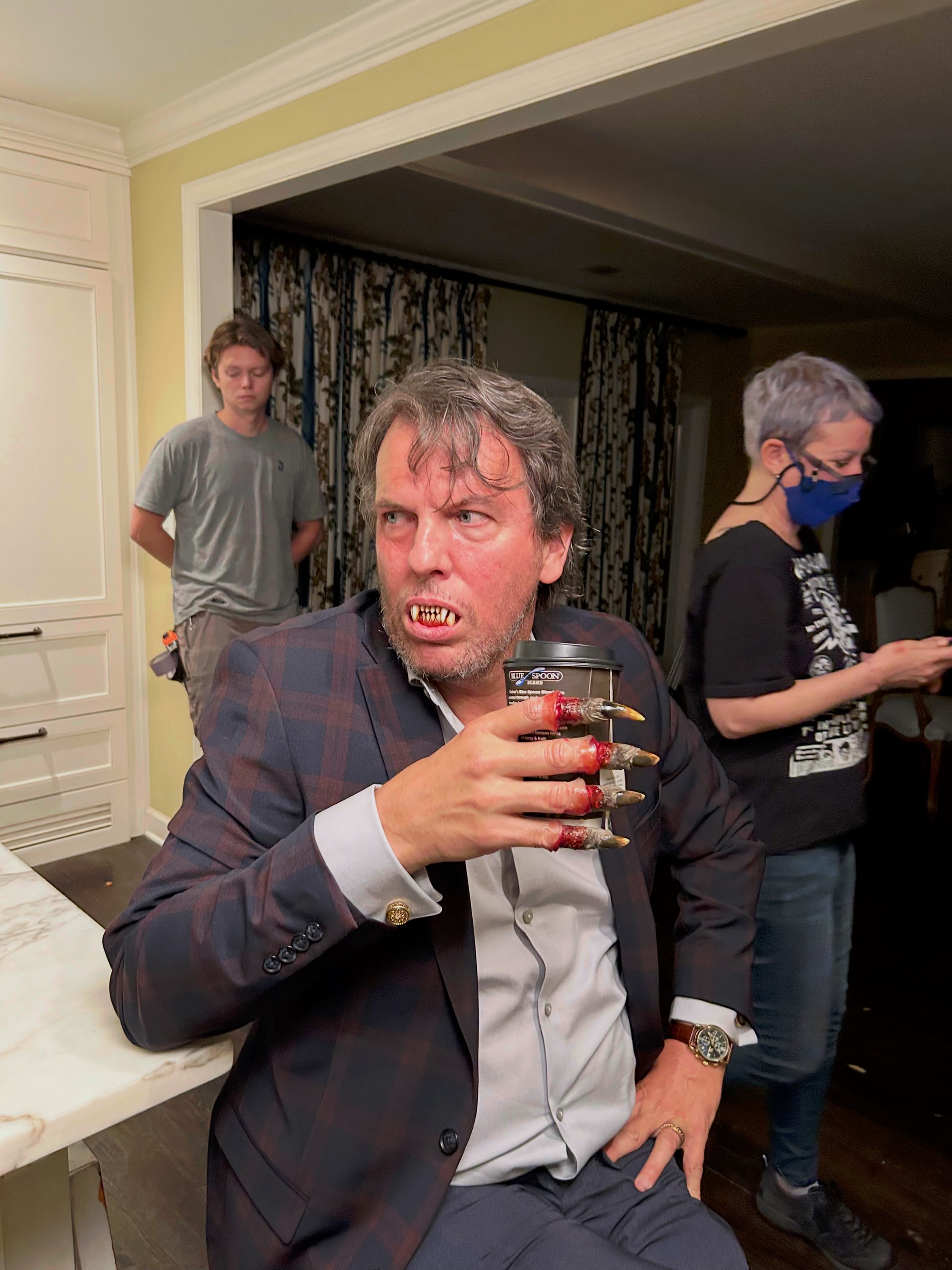
Working with my friends made this one of the greatest times of my life, in spite of the shitstorm that kept hitting us. I met our cinematographer, Owen Hamilton, and our costume designer, Emmie Holmes, at a film festival back in 2023 and we all became fast friends — including Kyle Perrit, an amazing director in his own right, who was supposed to edit our film before scheduling conflicts arose, but was an invaluable cheerleader on set. Their support helped me finally get this film off the ground. Once pre-production got underway, I was able to cast my friends, Jay Huguley and Sam Sloyan, two tremendously talented actors who also happen to be close friends. Working with all of them was an absolute dream. I feel like every film I make from here on out, I will be chasing that feeling.
What is the greatest strength of independent filmmaking, and what lesson would you share with others?
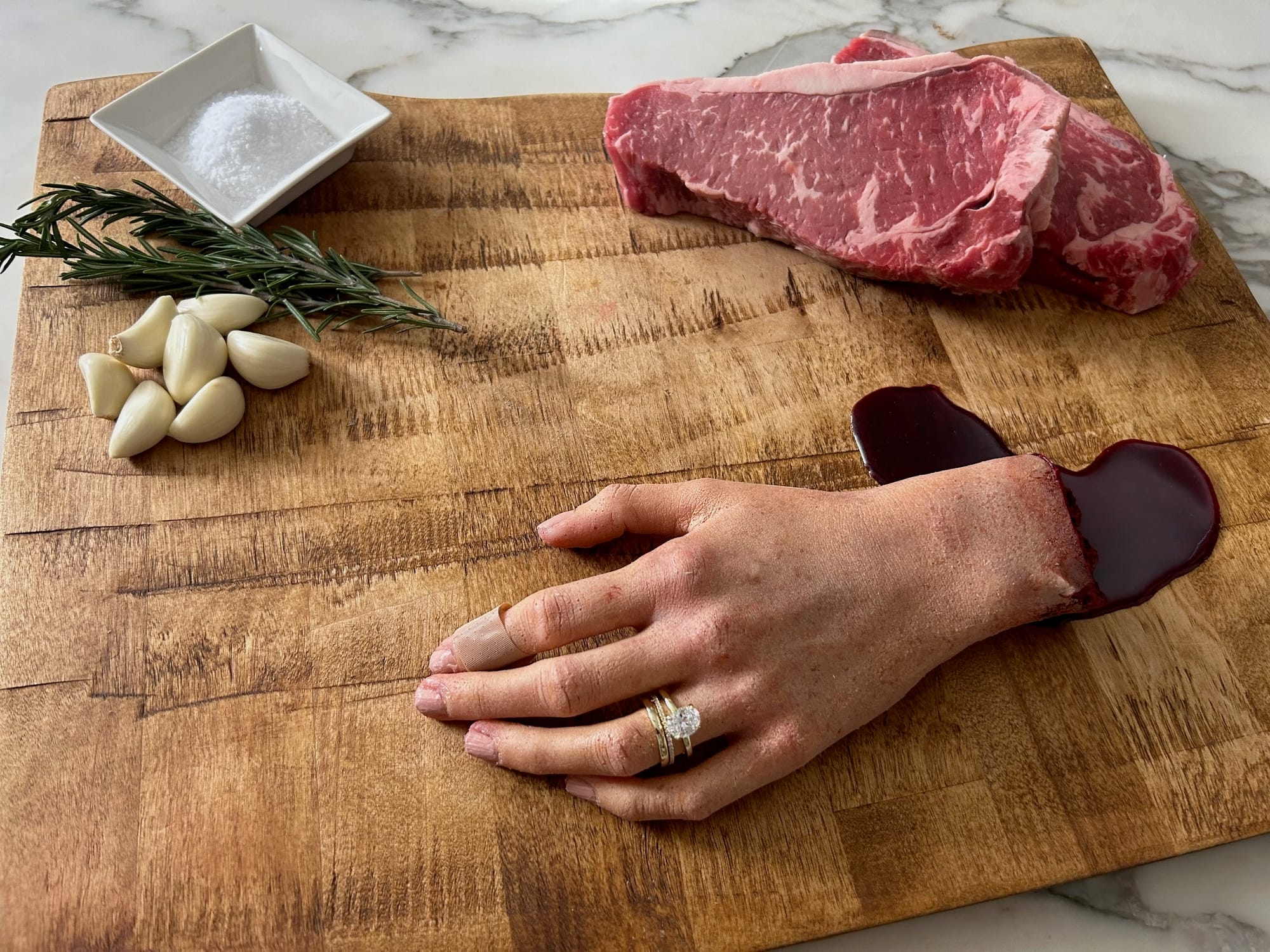
The greatest strength of independent filmmaking is its limitations, because it forces you to be creative and problem-solve. I've written and produced big network television shows that cost millions of dollars per episode, so I know what it's like to have everything at your disposal. Oftentimes that comfort can lead to a lack of imagination; things cost hundreds of thousands of dollars in network TV that an indie crew could do for a song. On every short film I've written, directed and/or produced, the limitations of budget, location and so on have always led to creative solutions. There's a scrappiness in the indie film world that binds people together and brings out their best brains. There's a documentary called The Five Obstructions by Lars von Trier that I always recommend to indie filmmakers, because it demonstrates this to amazing effect and proves that limitation is the mother of invention.
What does it mean to have your film selected for FilmQuest, and where do you see the film going next?
Karaoke. But, in all honesty, it means more than most selections, because my last film, Floater, was a Finalist in 2023 but didn't end up making the cut, so FilmQuest has kinda been my white whale ever since. I honestly can't wait to attend.
Making this film, with its enormous challenges, really showed me that I have what it takes to direct. Confidence has been an elusive quality most of my life, but when everything went wrong making this film, I honestly felt energized, like I'd finally found my calling. Hopefully Silver Anniversary gets adapted into a feature film that I'll shoot next year or the following — I'm currently working on the screenplay.
Main Cast & Crew
- Samantha Sloyan
- Jay Huguley
- Rhoda Griffis
- Ira David Wood III
- Writer-Director: D.M. Harring
- Cinematographer: Owen Hamilton
- Costume Designer: Emmie Holmes
Filmmaker Opportunities
💛 Fund your next project with fiscal sponsorship
Have a project in the works? As a 501(c)(3) nonprofit, the Cinematography for Actors Institute can accept tax-deductible donations on your film's behalf — a door-opener for grants, foundations, and supporters who want to back your work. We've serviced over 100 projects to date and helped route over $800,000 in funding to filmmakers. Explore fiscal sponsorship →
📬 Grant deadlines and festival opportunities, straight to your inbox
The CFA newsletter rounds up grants, festival calls, and community news for independent filmmakers — the kind of opportunities that are easy to miss and painful to miss. Join the newsletter →
🎬 Focus on the creative — we'll help with the logistics
Production Management, CFA's newest member program, launches this November: production insurance and workers' comp, payroll, film permits, gear rental coordination, SAG-AFTRA compliance, contract drafting, production consulting, and crew recommendations — handled by a team of working filmmakers, à la carte or all in, in partnership with Creative Access Group. It's waitlist-only until launch. Join the waitlist →
League of Filmmakers is published by our parent organization, the Cinematography for Actors Institute — a 501(c)(3) dedicated to education, community, and capital for underrepresented filmmakers and actors. Learn more about CFA →