Table of Contents
Three Key Takeaways
- John Thurman’s The Demon Core resurrects the nearly forgotten heroism of physicist Louis Alexander Slotin through an emotionally charged blend of historical drama and genre storytelling.
- The film pushes boundaries by merging true events with psychological horror and metaphysical themes, creating a unique cinematic experience that explores the cost of scientific discovery.
- Thurman’s personal health struggles during production deepened his connection to the story, fueling a fearless and heartfelt creative process that embraces independent filmmaking’s freedom and authenticity.
Writer-director J. Zachary Thurman brings a powerful new voice to genre cinema with The Demon Core, a harrowing dramatization of physicist Louis Alexander Slotin’s final days following a 1946 criticality accident.
Selected for the prestigious FilmQuest Festival 2025, the film stars Connor Paolo as Slotin alongside Ryan Lucy, Drew Waters, Sam Jacobs, and Warren Davis.
Thurman, known for his viral horror-comedy short FINLEY (2019), channels both meticulous historical detail and emotional depth into this haunting exploration of sacrifice and scientific obsession.

What drew you to make this film? Why this story, and why now?
The inspiration for the film began when I first encountered Louis’ story of extraordinary bravery and sacrifice. I wrote the script and received the Sloan Grant, yet I still hesitated. I knew what it would cost—endless hard work, mounting debt, and precious time away from my family. But everything changed the moment Los Alamos National Labs granted me access behind the active military fence, to the very spot where the incident occurred—the Slotin Building. Standing there, on the ground where Louis made his heroic stand to save his colleagues, was a profoundly moving experience. It was hauntingly beautiful, and in that moment, I felt a connection to him that transcended words. I knew deep within my soul that I had an obligation—to honor Louis’ story, to share his bravery and selflessness with the world, and to ensure that his legacy would live on.
“Standing there, on the ground where Louis made his heroic stand to save his colleagues, was a profoundly moving experience.”
What surprised you most about the filmmaking process this time—creatively or logistically? Was there a moment on set or in post that completely changed how you saw the story?
My goal throughout this production was to honor Slotin’s legacy with everything I had. Why? Because Louis gave everything to his craft, to science—and I felt compelled to do no less. The journey, however, was far from easy. During the filming, I was diagnosed with one of the rarest autoimmune diseases and a large brain mass. The day I received my diagnosis, I was filming the dream sequence (for which I served as cinematographer). I didn’t tell anyone on set but internalized the news, allowing me to connect more deeply with Louis and the emotional turmoil he must have experienced—the loss of the life he once had before the incident. This personal connection stayed with me throughout filming and post-production, during which I underwent chemotherapy. I share this not to seek sympathy, but to explain how profoundly I was able to relate to Louis and how his courage in the face of something far worse fueled my own resolve to finish this film and share his story with the world.
Is there a moment in the film that feels the most you—something only you could have made?
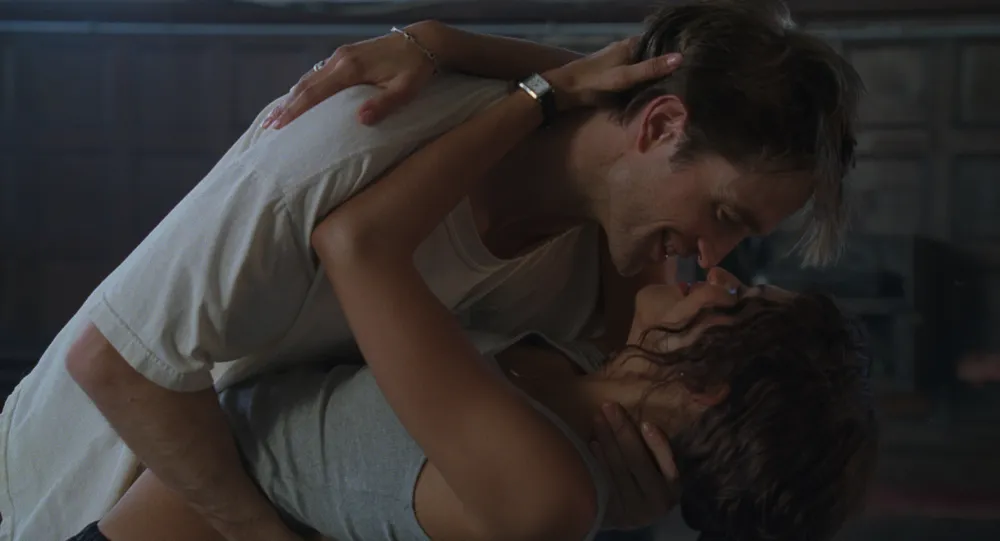
I think Betty and Louis' goodbye moment—I genuinely don't think many others could pull that scene off. I was able to solely because I have chosen film over every relationship I've ever had and in that moment—Louis chooses science over an alternative life in which he could have everything he's ever wanted but his obsession takes over.

What was the hardest creative decision you made while making this film?
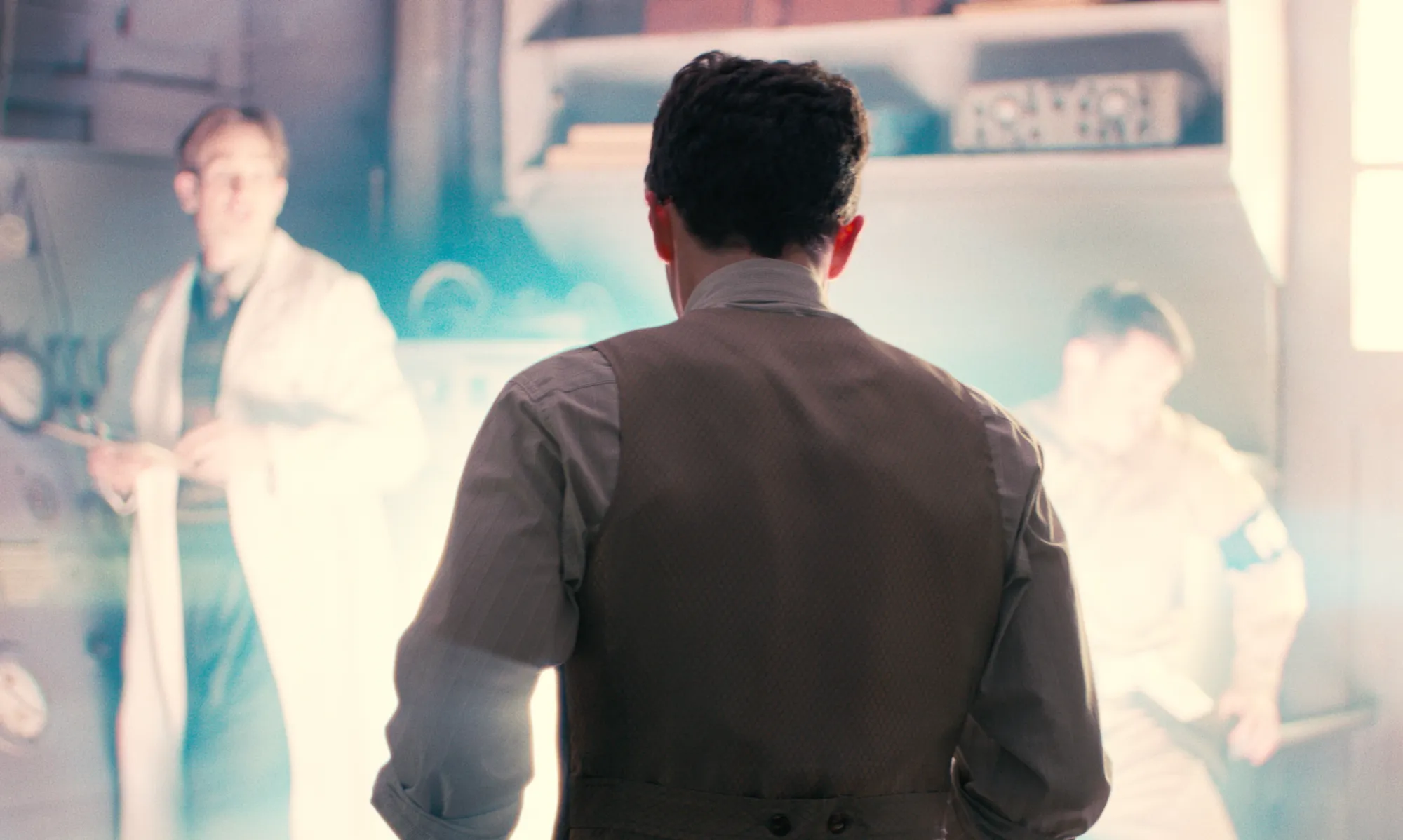
The hardest decision I faced was whether to depict the “blue flash.” In reality, the phenomenon was only visible to those present—it occurred when water molecules and electrons in the observers’ eyes were briefly excited. No film or photographic camera could have captured it; the effect existed solely in human perception. Yet, after reading the incident reports, I realized how integral that moment was. It wasn’t just a scientific detail—it was an emotional one, a fleeting intersection between physics and human experience. So, in the end, I knew I had to include it.
What do you hope audiences take away from your film?
My goal is to make Louis Slotin and Harry Daghlian household names. It is truly baffling to me that these two men, who sacrificed their lives in the name of science, have been almost entirely forgotten by history. Through this film, I hope to right this wrong, shedding light on their contributions and educating audiences about the groundbreaking science they were a part of. Beyond preserving and honoring Slotin’s legacy, my ultimate aim is to evoke the profound heartache I felt for Louis. Through the power of storytelling, I want to take viewers on an emotional journey, allowing them to feel the weight of his sacrifice and the humanity behind his story, all brought to life by the magic of cinema.
“The lesson I’d share is this: independent filmmaking gives you the rare freedom to follow your instincts without compromise.”
How has this film shaped or shifted the kind of stories you want to tell next?
I think it's made me realize I don't need to be confined to the horror genre and has made me want to blend horror and drama much more.

What’s a tool, technique, or resource that really helped you during production?
One of the most invaluable resources during production was ARRI’s generous support in donating equipment to the film. Having access to their industry-leading cameras and lenses elevated our production quality far beyond what our microbudget could have achieved on its own. Beyond the technical precision, ARRI’s contribution gave our team confidence and creative freedom—we could focus on storytelling, knowing the tools in our hands could capture every nuance exactly as we envisioned.
Independent filmmakers often rewrite the rules out of necessity. What do you think is the greatest strength of independent filmmaking, and how did you lean into that on this project? Is there a lesson or breakthrough you’d share with others navigating this path?
For me, the greatest strength of independent filmmaking is the freedom to cast based on truth rather than trend. Without the pressure to meet quotas or attach celebrity names, I was able to focus entirely on authenticity—both historical and spiritual. From the very beginning, casting was about honoring the real people behind the story. I sought actors who not only resembled their real-life counterparts but who also embodied their intellect, humor, and humanity. Drew Waters as Leslie Groves, Sam Jacobs as Philip Morrison, Ryan Lucy as Betty Wilson, and Warren Davis as Louis’s father—all felt destined for their roles. Staying true to the historical reality also meant acknowledging the Jewish heritage of many Los Alamos scientists. It was important to me to cast Jewish actors in those parts, to bring that cultural and emotional layer forward with honesty. Finding our Louis Slotin, though—that was a journey. We auditioned hundreds of Jewish actors, searching for someone who could balance wit, charm, and brilliance—a kind of Tony Stark energy with a quiet vulnerability beneath it. Then a friend suggested Connor Paolo, and the moment I saw his work, I knew we had to bring him in. His chemistry read with Ryan Lucy was electric; when they performed the flashback scene where Louis confesses his fear of the core yet chooses it over love, it felt like capturing lightning in a bottle. The lesson I’d share is this: independent filmmaking gives you the rare freedom to follow your instincts without compromise. Trust that inner compass—because when you do, the right people always find their way to your story.

What does it mean to you to have your film selected for FilmQuest, one of the world’s top reviewed genre film festivals?
Being selected for FilmQuest is an incredible honor and deeply meaningful to me. FilmQuest has a reputation not only as one of the world’s top genre festivals but also as a true champion of independent voices and bold storytelling. To have our film recognized among such imaginative, fearless work feels both humbling and validating. What makes FilmQuest special is its community—the filmmakers, programmers, and audiences who genuinely love cinema. It’s a festival that celebrates risk-taking and craft in equal measure, and that’s exactly what this film represents for me: taking creative risks to tell a story that’s emotionally grounded yet thematically daring. Being part of FilmQuest feels like coming home to a tribe of passionate storytellers who understand that genre can be both thrilling and profoundly human. I couldn’t imagine a better place for this film to make its mark.
“Demon Core pushes genre boundaries by merging historical realism with cosmic horror, blending precise period detail and authentic physics with an atmosphere that evokes the supernatural.”
FilmQuest celebrates the majesty and might of genre filmmaking across fantasy, horror, sci-fi, action, thriller, western, kung-fu, and beyond. How does your film fit within—or push the boundaries of—genre storytelling?
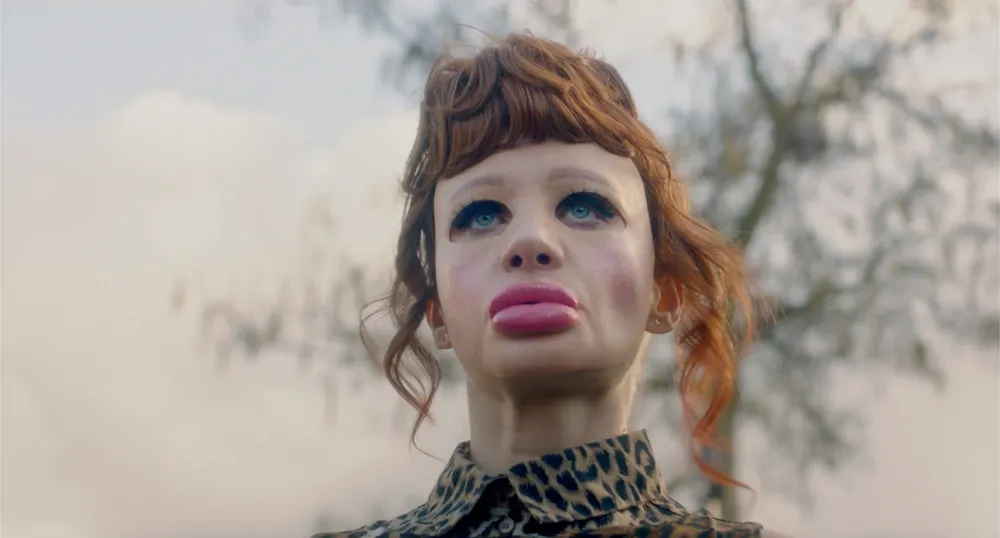
Demon Core exists at the intersection of science and horror, taking a real historical event—the 1945 Los Alamos radiation accident—and reframing it through a lens of psychological dread and metaphysical consequence. Rather than relying solely on genre tropes, the film uses the language of horror and sci-fi to explore the hubris of human curiosity, the blurred line between genius and madness, and the haunting afterimage of scientific discovery. While grounded in true events, Demon Core pushes genre boundaries by merging historical realism with cosmic horror, blending precise period detail and authentic physics with an atmosphere that evokes the supernatural. It’s not just about a moment of catastrophe—it’s about the unseen energies, both scientific and spiritual, that linger in its wake. Ultimately, Demon Core seeks to remind audiences that some of the most terrifying monsters are born not from folklore or fiction, but from our own pursuit of knowledge without restraint.

Where do you see this film going next?
I see Demon Core continuing its journey across both genre and prestige festivals, reaching audiences who appreciate bold, idea-driven storytelling. The film speaks to fans of psychological horror, science fiction, and historical drama — blending the precision of science with the unease of the unknown. We’re incredibly lucky to begin that journey at FilmQuest, a festival that truly celebrates the power and artistry of genre filmmaking. It’s the perfect home for Demon Core’s premiere — where imagination and craft are equally revered. From here, I hope the film finds its way to audiences worldwide — through festivals, specialty streaming platforms, and curated programs that embrace elevated genre work. Ultimately, Demon Core is just the beginning — the spark for a larger story world exploring the haunted legacy of scientific discovery.
“At the core of all my work is a desire to inspire the next generation — to challenge them to see science, art, and storytelling as interconnected forces that shape our understanding of the world. Through film, I aim to spark curiosity, empathy, and a sense of wonder — reminding young creators and thinkers that discovery and imagination go hand in hand."
For more on The Demon Core, visit the film's website.