Table of Contents
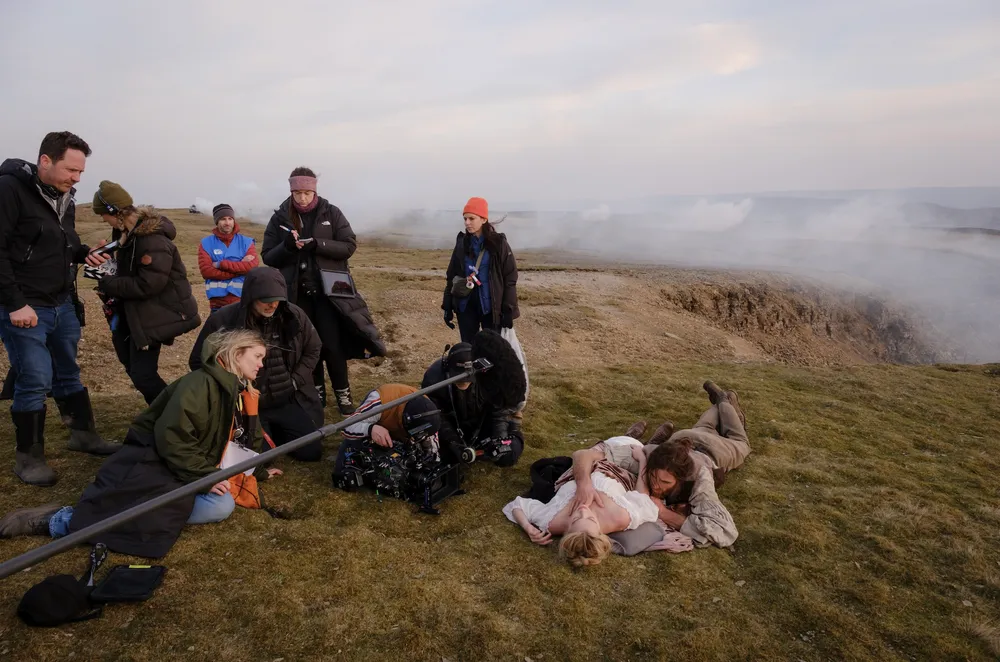
Film sets can quickly become hectic, sometimes there's just not enough time to properly explain what it is you want to say or do. No one wants to not "make the day", so here's a list with descriptions of some phrases and languages used to efficiently communicate while you're on a film set.
MAKE THE DAY
A phrase that is used primarily by the Director and First Assistant Director. The phrase is used to describe the successfully completed day. The film crew was on time, completed all the shots that were planned, and it was an overall good day of scheduling and shooting.
"We need to make this day or else we're going to have to drop all of scene 15."
BACKGROUND
A term that is only used if additional people, outside of the main cast, are within a scene that is currently being shot. It is used by the Director right before he calls "action" to signal to the background actors that they should begin their actions before he officially calls "action".
"Background... Action"
10-1
Used only over walkie talkies, it's used to signal to everyone who is on radio that you will be unavailable, to go use the bathroom. "10-1" can be used by anyone on set that has a walkie. The term comes from an old code system employed by law enforcement and other two-way radio users to communicate that transmission was unclear; its use has evolved to include film sets.
"Off walkie for a 10-1"
LAST LOOKS
A term that is used by the Assistant Director to announce to Hair and Makeup, and Wardrobe that they are invited to check talent if necessary. Typically, this is after blocking has taken place and they're about to go for an actual shot.
"Last looks, last looks, we're rolling in five."
BLOCKING
A very specific arrangement and choreography with precise movements organized between the director, cast, background, gaffer, and director of photography. This step usually occurs during pre-production or rehearsal, but sometimes can happen right before rolling for a scene. Blocking can also occur as a way of shooting scenes, where multiple cameras are being used, and they are blocking for Actor A, while rolling for Actor B, as they sit opposite each another, which is called a "shot-reverse-shot".
"Blocking in ten!"
SHOT-REVERSE-SHOT
Is a type of camera shot technique used to capture a conversation between two characters. The shot calls for the characters to sit face-to-face, opposite one another, and can be done with one or more camera. One actor will go through their lines, and the other actor will wait. Usually the camera is over the shoulder and behind the silent actor. Then, they will reverse the camera, or move to the other side and do the same thing. It's called "shot-reverse-shot" because the camera technique, after editing will show a back and forth that captures both of the actors alternately. Actor A, says something, we cut to Actor B's response, and so forth. When edited together, we will see an easy flowing conversation between both actors.
FIRST TEAM
Is used to describe the principal actors, and often called when they are ready to enter the set for a scene or exiting the scene. Principal actors are those that are considered part of the cast, and have speaking lines or important action. In contrast, background actors are those who have no speaking lines. "First team" is used to help everyone on set to know what's happening in a given moment – when they're going between blocking shots or going for actual shots. It also gives the first team a chance to recoup before moving forward.
"First team walking to set"
SECOND TEAM
Similar to the first team, the second team are the stand in actors for the first team when they are away. They will walk through the scene so that the camera crew, director, DP, and gaffer, can set up the shot and make sure lighting and blocking are right. The term is also used to help everyone know what's happening on set.
"Second team has left set, first team heading to set for rehearsal shot."
STRIKING
A very important phrase that is announced for everyone that may be standing nearby on set when production lights are going on or off. This can happen anywhere on set, from craft services to the parking lot. Extra light is needed for the large casts and crew that are on film sets. Calling out this term helps everyone prepare to be blasted by light, or prepare for the lights to go out, increasing safety and readiness on set.
"Striking!"

PICK-UP
Can be considered a reshoot, but pick-ups are usually short and minor shots taken after principal photography is done for the day or overall. Pick-ups are used to fix issues that were discovered during "dailies" or during the edit process. For example, perhaps the necklace on an actor was facing the wrong direction, the camera was too shaky, or the focus was off for the background scenery, quick pick-ups would be scheduled to recapture those moments.
"His shirt is unbutton and we can see the mic showing underneath, we'll have to plan a pick up for Scene 3, Shot b."
DAILIES
At the end of each day during principal photography, raw and unedited footage is reviewed to assess if anything from the day of shooting needs to be reshot, pickups need to be done, or if there's footage that should just be dropped.
"Nate's coming in later to review the daily for today, and to give us a new set of eyes to see if that scenes works or not. We might have to drop the scene."
There is so much going on during filming, aiming to know what you can before getting in the ring can make you an efficient and effective crew member, allowing for the day to run even smoother. Adding these terms to your lexicon could help to ensure a productive day on set and increase your chances of being asked back.