Table of Contents
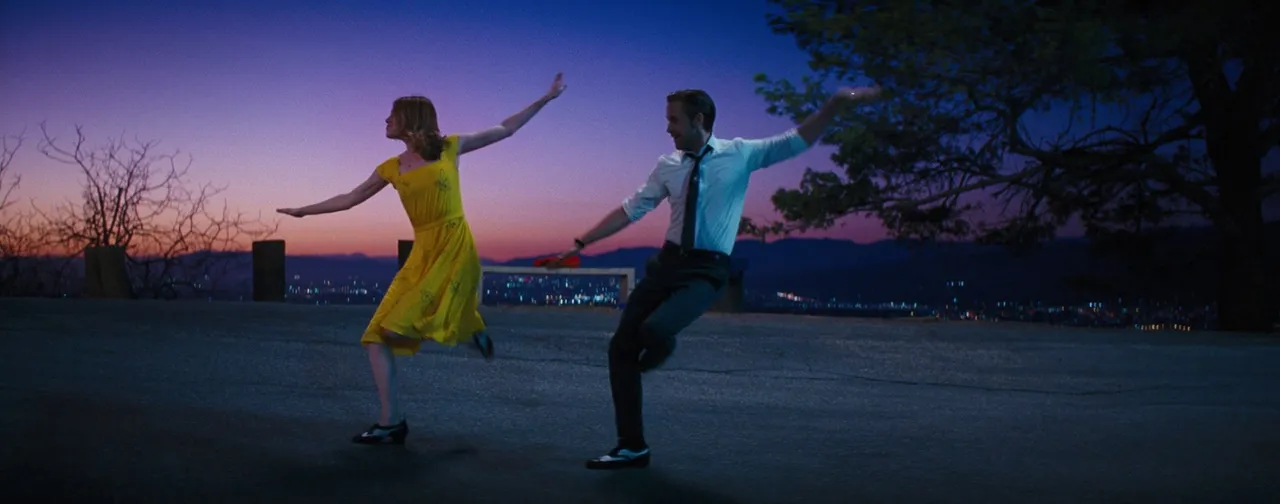
Damien Chazelle's La La Land is a visually stunning and critically acclaimed film. It's a film so vivid and striking it looks like it was filmed in technicolor and the film's storyline is only enhanced by the bold colors. La La Land highlights the beauty of the old Hollywood cinema it’s clearly heavily inspired by and it serves as a reminder for how important color is in films. So how and why does La La Land look like it was filmed in technicolor, leaving us with that same magical feeling, when the technology is no longer around?
When setting out to create La La Land, Chazelle knew he wanted to create a film that contained "lyrical long [takes], with a flowing camera and heightened color." His first step in achieving this was putting together a team that held the talent and passion to bring this goal to life. The production designer David Wasco, cinematographer Linus Sandgren, costume designer Mary Zophres, and editor Tom Cross were all part of this crew working together to create a visual masterpiece. Chazelle wanted to ensure that the color was made completely in-camera so they didn't have to "rely on CG or manipulated color correction" and this was achieved, in part, by looking to old films to understand how they made colors appear more saturated.
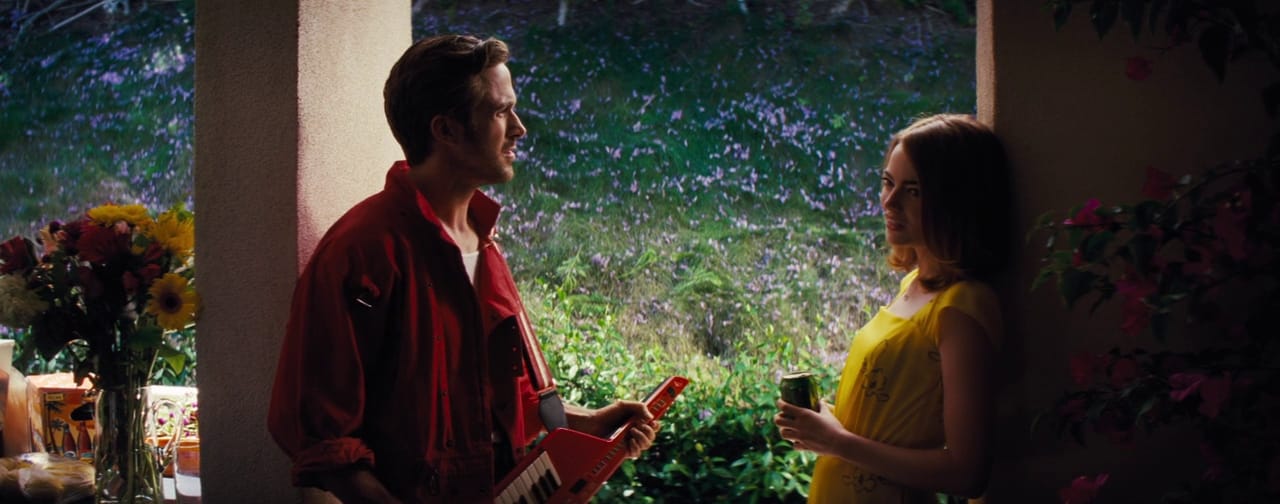
Chazelle screened films that his crew could draw from for inspiration, the most influential of which were: The Young Girls of Rochefort, Umbrellas of Cherbourg and Model Shop. Through these films the crew decided that a very controlled production design, created in close collaboration with the costume design team, would be the most effective way to be able to bring across the bright colors of the technicolor era. Colors were assigned to specific characters, and to the emotional arcs of Mia (Emma Stone) and Sebastian (Ryan Gosling). These color themes were also carried through to the design of their rooms, the clothing they wear, and the lighting. This careful decision is a large part of the magical romantic feeling the audience experiences while watching La La Land. Additionally, to make sure that the lighting in the exterior scenes (almost all of which take place at nighttime or dusk), felt as impactful and romantic as possible, the team used actual light instead of CGI or artificially manipulating the sky. In Sandgren's own words, "We always captured it in a very precise few minutes of the evening, in-camera."
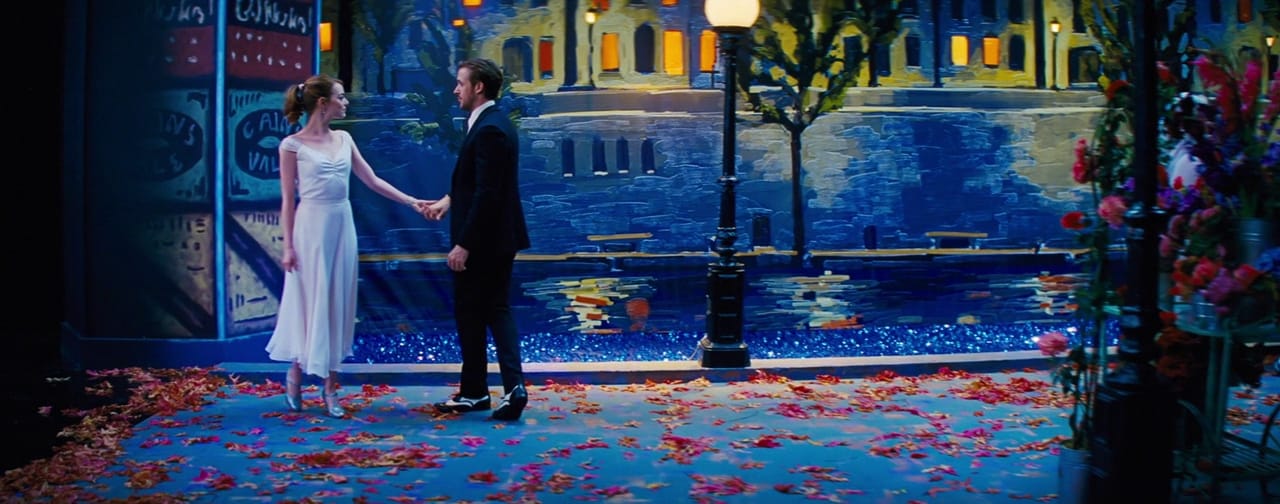
The use of 35mm and 16mm film is something that greatly enhanced the richness of the colors on screen. Sandgren attributes all the striking colors in La La Land to the film it was shot on, remarking to Kodak that "When you see La La Land, all the colors in the film are real. The color separation and rich nuances is what the celluloid film captured." Through using film to shoot La La Land, Sandgren was able to capture a color spectrum with far more depth, and in turn, the colors appear much more vibrant when shown on screen. All the hard work put into La La Land payed off with large critical acclaim – 13 Academy Award nominations and Academy Award wins for many of the artists who are responsible for the film's iconic visuals, including the production design team, Sandgren, and Chazelle.