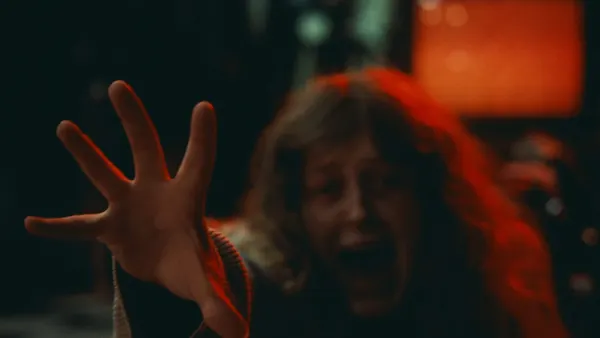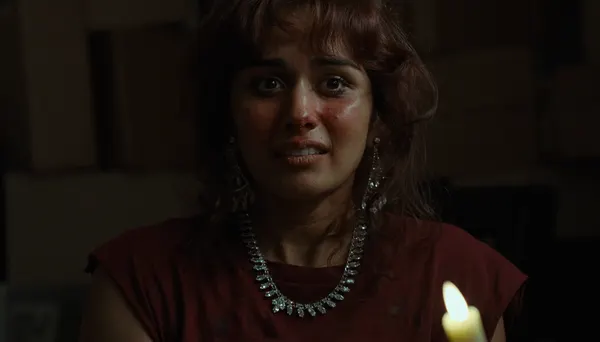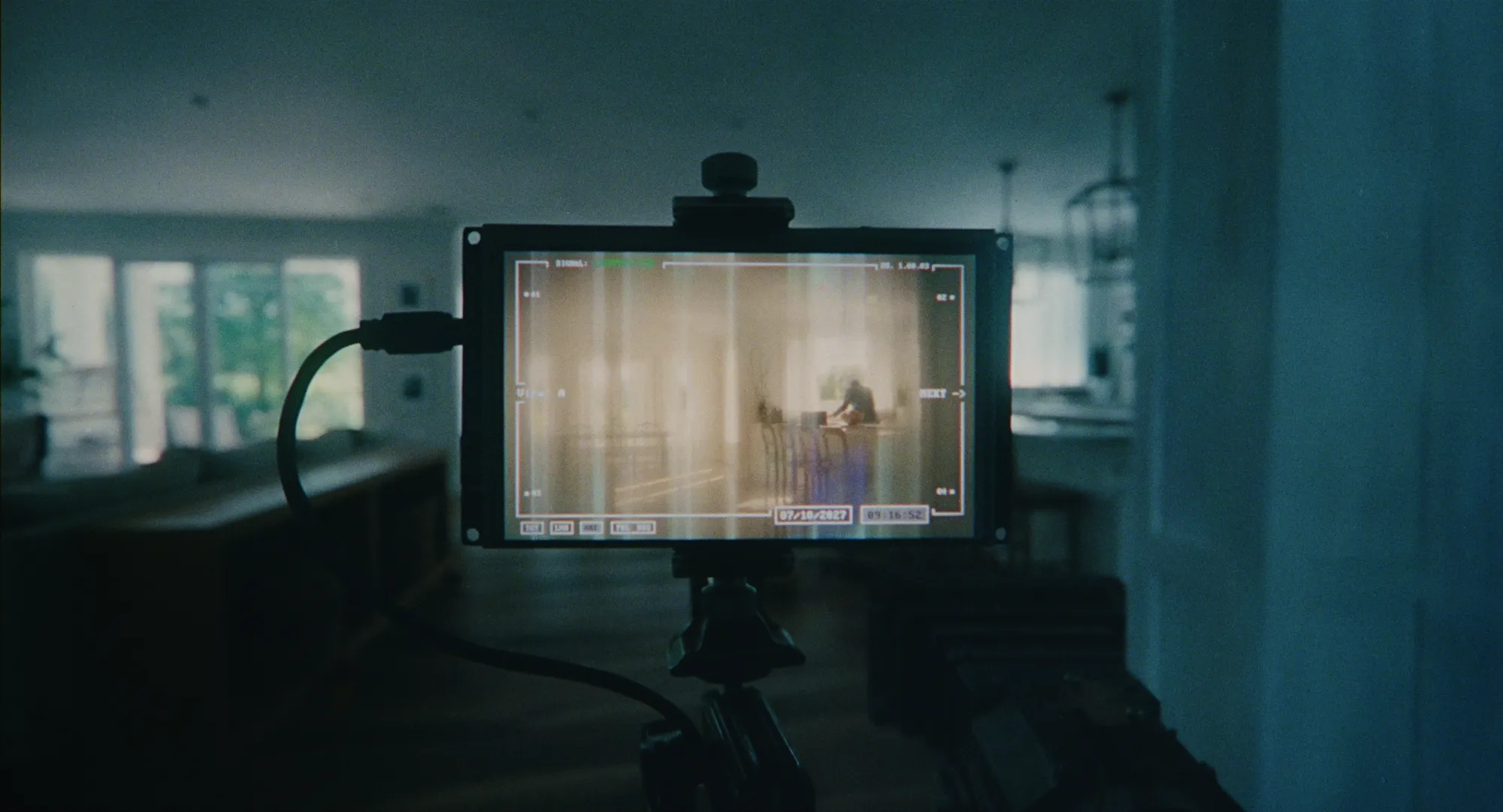
Miguel Barbosa has been carrying Tranquil since 2011 — an idea born out of a fascination with memory, and with the way the places we've been quietly shape who we become. What he eventually built around that idea is a taut piece of political pulp: when a U.S. senator disappears, a team of intelligence specialists defies government orders to find him, navigating surveillance, cover-ups and a trail of digital breadcrumbs in a race against time.
The film premieres at FilmQuest, which is a fitting room for it. Tranquil is, by Barbosa's account, the world's first Gaussian splat short film to integrate live action footage into the splats — then printed to 35mm, so that a bleeding-edge visual effects pipeline arrives wrapped in one of the oldest formats in the medium. Self-funded and uncompromised, it's a film where every choice is a swing.
Key Takeaways
- Everything behind the chronoscope camera POV is a digital environment built with Gaussian splatting — what Barbosa calls "invisible visual effects."
- The film was printed on 35mm and scored through an analog process, pairing groundbreaking VFX with a time-tested visual format.
- A slim location budget sent the pivotal senator scene to a parking garage, a constraint that gave the film its dark, All the President's Men texture.
Barbosa spoke with us about memory, privacy, performance, and why full control was worth saving up for.
Interview
What drew you to make this film, and why this story, why now?
I first came up with this idea in 2011. I was fascinated by memory and how our memories and past experiences in places molds who we are. A lot of us take our memory and privacy for granted, and this movie shows us a world without individual privacy. Which, in many ways, is not unlike the world we live in today. Why now? I finally saved up enough money to produce this idea at a scale that I thought fit the story.
What surprised you most about the filmmaking process, creatively or logistically?
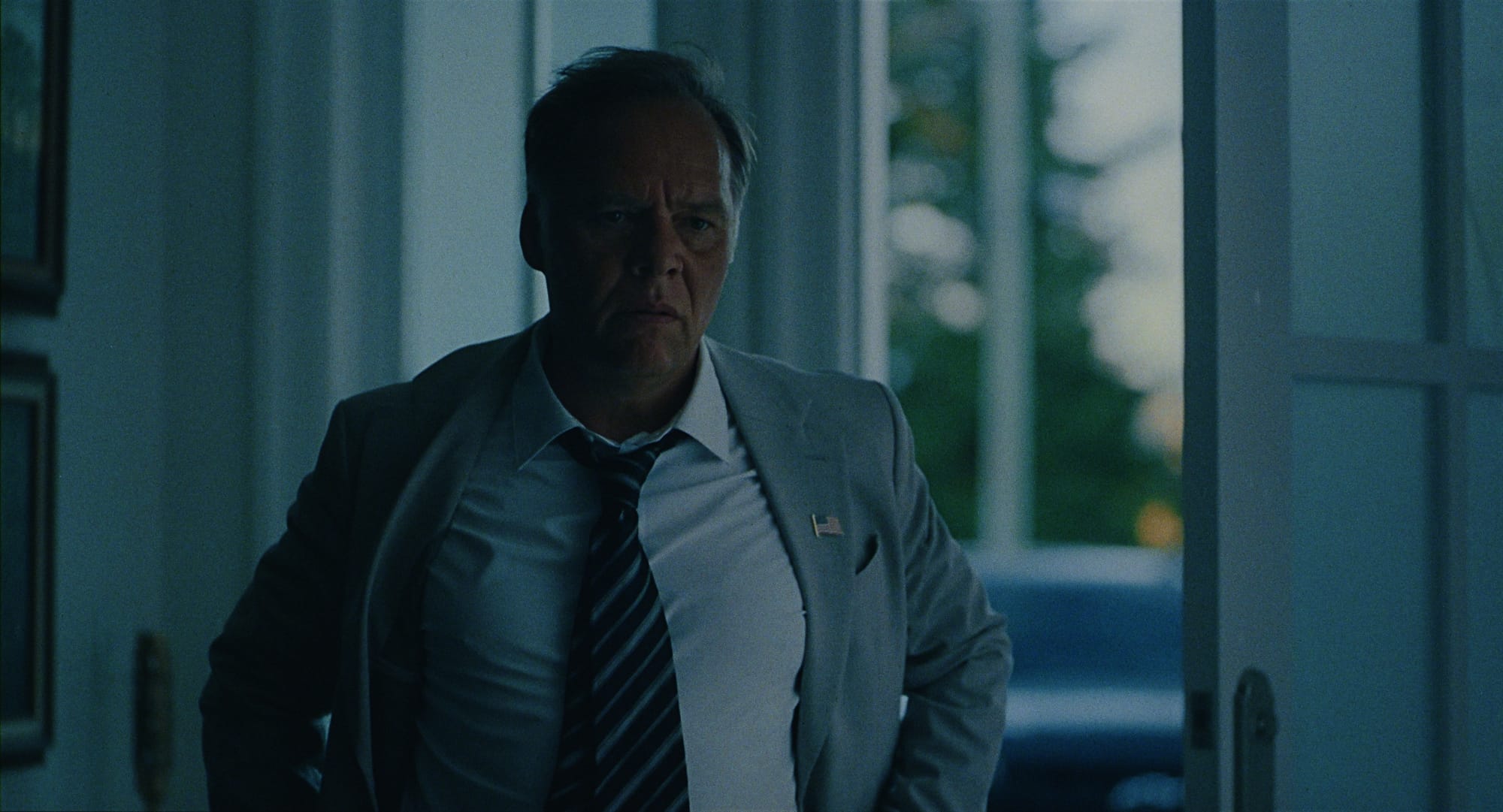
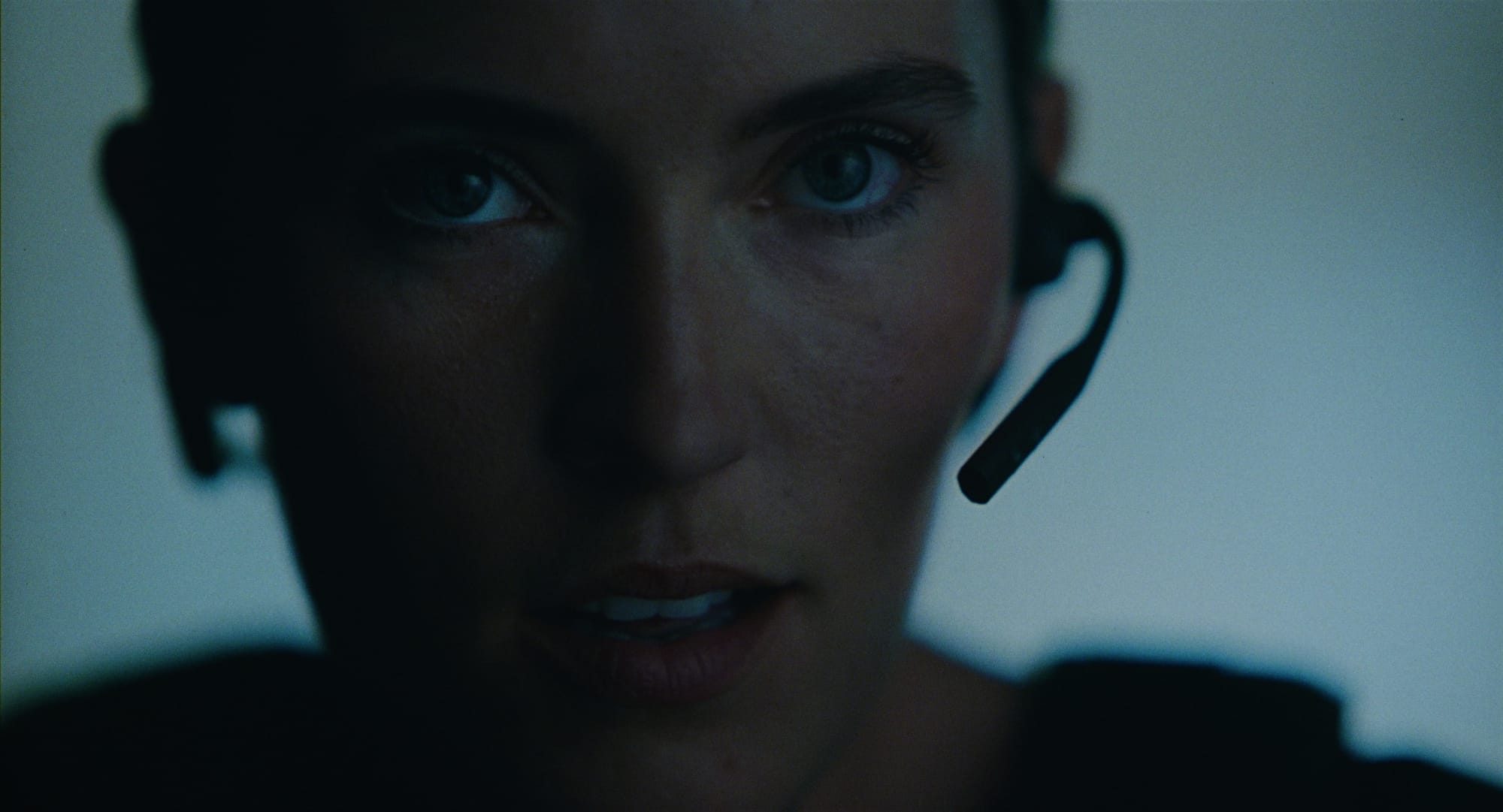
One thing that surprised me about the process was witnessing the actors perform the dialog. Seeing talented actors bring their take to the material was a surreal experience. In the past my characters and writing skewed to the younger generation, but this subject matter was serious in tone and without the performances landing right, the whole movie would've fallen flat.
What was the hardest creative decision you made while making the film?
The hardest creative decision was choosing where to shoot our "inciting incident," the conversation between the Senator and the Director of National Intelligence. Our location budget was slim, so we landed on our parking garage spot. It gave us a beautiful background and dark tone. Which is randomly in the vibe of All the President's Men. I swear I watched it after we shot this!
What moment in the film feels most like you, or like something only you could have made?
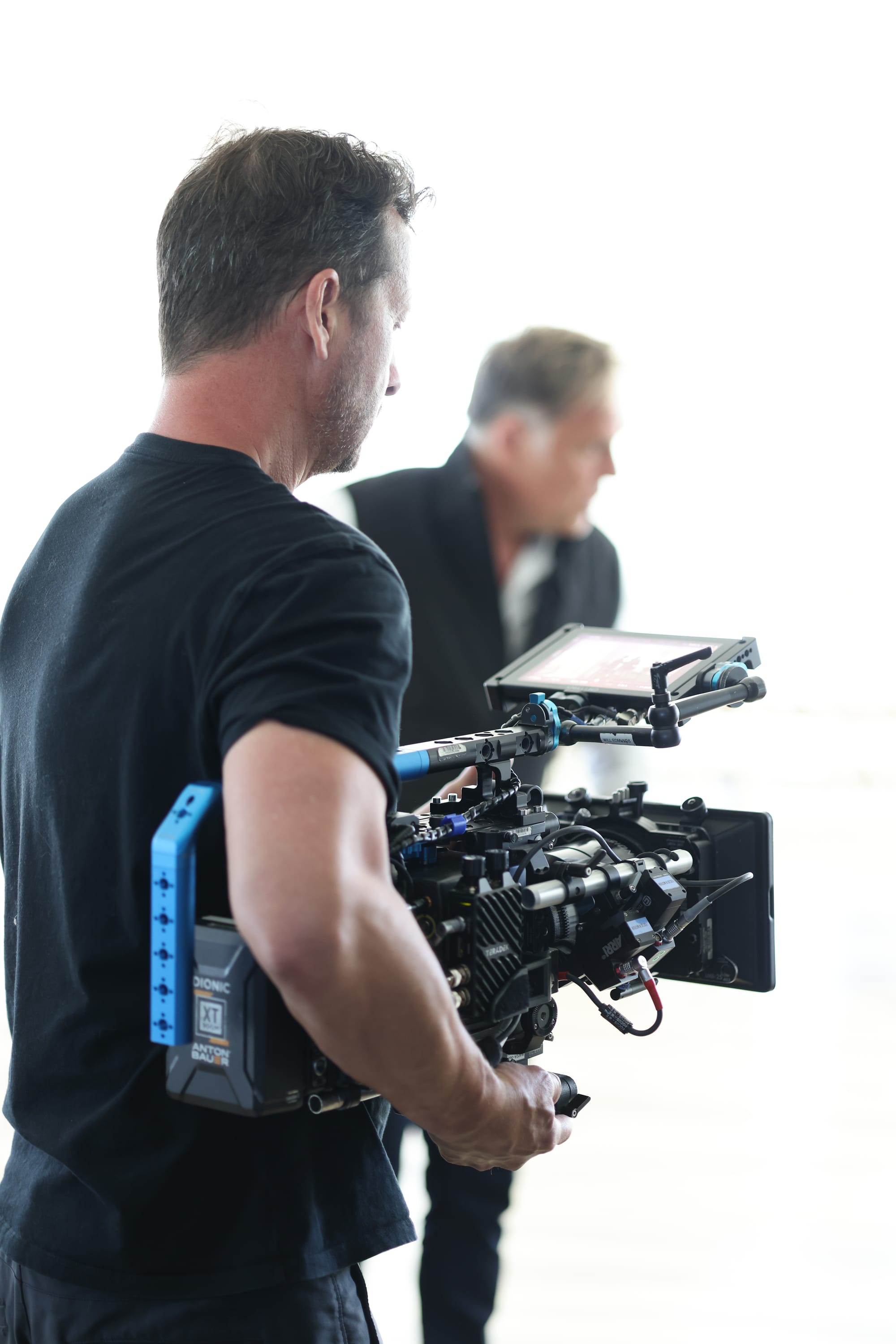
The thing that feels most like me is the connection between the music, the editing and layered subtext. The movie has an analog feel across the board. We printed it on 35mm film and the music was captured in an analog process. Everything is a big swing — we didn't play it safe at all.
What tool, technique, resource, collaborator, or mindset shift helped most during production?
This is the world's first Gaussian splat short film that incorporates live action footage into the splats. Everything you see behind the chronoscope camera POV is a digital environment. Surprise! We call this "invisible visual effects." This was a gamechanging approach for us, as it made the whole movie feasible.
How does your film fit within, or push the boundaries of, its genre or form?
This film pushes the boundaries of what's possible with post visual effects. Gaussian splatting is one of the rare visual effect approaches that is completely indistinguishable from real life. The photographic quality is almost flawless. Nobody has been able to guess how we achieved it. Printing it to 35mm film gave us the best of both worlds: groundbreaking visual effects within a time-tested visual format.
What is the greatest strength of independent filmmaking, and how did you lean into it here?
The greatest strength of independent filmmaking as a director is the ability to have full control over your vision, and full control of choosing who you collaborate with on executing that vision. Since I self-funded this, I was able to be responsible for the end result. No excuses. No limitations. That feels good as an artist.
What do you hope audiences take away from this film?
I hope audiences feel entertained — I want to get their blood pumping. I also want them to look past surface level and take in all of the subtext and structure of the film. Its morals and ethics of the characters. If they can imagine how the chronoscope would affect them, or how they would use it... amazing.
What does it mean to have your film selected for FilmQuest, and where does it go next?
Premiering at FilmQuest is an amazing opportunity. It's the perfect place to show a movie like this. FilmQuest brings together filmmakers operating on the bleeding edge of the medium, and that's how making this film felt, specifically with the post visual effects. I feel like this is the beginning of a long friendship. This film has motivated me further to tell pulpy, political movies that deal with darker themes. At the core of all my work is a desire to change the way people view the world. Where does Tranquil go next? YouTube. ;)
Main Cast & Crew
- Starring Miranda MacDougall, Matthew Harrison, Matty Finochio, Thomas Elms, Grace Dove & Herschel Andoh
- Written & Directed by Miguel Barbosa
- Producers: Bailey Wood, James Jope
- Executive Producers: Jake Manley, Ross Allen
- Director of Photography: Mitchell Baxter


Filmmaker Opportunities
💛 Fund your next project with fiscal sponsorship
Have a project in the works? As a 501(c)(3) nonprofit, the Cinematography for Actors Institute can accept tax-deductible donations on your film's behalf — a door-opener for grants, foundations, and supporters who want to back your work. We've serviced over 100 projects to date and helped route over $800,000 in funding to filmmakers. Explore fiscal sponsorship →
📬 Grant deadlines and festival opportunities, straight to your inbox
The CFA newsletter rounds up grants, festival calls, and community news for independent filmmakers — the kind of opportunities that are easy to miss and painful to miss. Join the newsletter →
🎬 Focus on the creative — we'll help with the logistics
Production Management, CFA's newest member program, launches this November: production insurance and workers' comp, payroll, film permits, gear rental coordination, SAG-AFTRA compliance, contract drafting, production consulting, and crew recommendations — handled by a team of working filmmakers, à la carte or all in, in partnership with Creative Access Group. It's waitlist-only until launch. Join the waitlist →
League of Filmmakers is published by our parent organization, the Cinematography for Actors Institute — a 501(c)(3) dedicated to education, community, and capital for underrepresented filmmakers and actors. Learn more about CFA →