Table of Contents
Three Key Takeaways
- Hide-and-Seek is a visceral, first-person 16mm film exploring the dangerous secrets women keep in Brazil under restrictive abortion laws.
- Vitória Vasconcellos combines her acting and directing talents to capture a raw, intimate narrative about sisterhood and female autonomy.
- Independent filmmaking’s fearless resourcefulness and collaborative spirit enabled this ambitious, emotionally charged project.
Brazilian actor-director Vitória Vasconcellos returns with Hide-and-Seek, a daring 16mm short shot entirely from a younger sister’s perspective in the sprawling urban chaos of São Paulo. Supported by a passionate team including DP João Rubio Rubinato and producers Julian Nebreda and Pedro Fiuza, the film confronts the harsh realities of Brazil’s abortion laws with an unflinching, intimate lens. Vasconcellos’ work has already earned accolades at Palm Springs and Edinburgh, and Hide-and-Seek continues her exploration of gender, body, and myth through a decolonial lens.
Q&A Interview
What drew you to make Hide-and-Seek? Why this story, and why now?
The honest truth is: what drew me to this story was the fear of being a woman in Brazil. This is a country with one of the highest femicide rates in the world, recently emerging from six years of an anti-humanistic government. Even under a progressive administration pushing for social change, women’s reproductive rights remain taboo or violently silenced. While much of the world moves toward legalizing abortion, Brazil is moving in the opposite direction from the rest of the world. Here, a woman dies every two days from an unsafe procedure (that we know of).

This project was born out of conversations with other fearful women, until I realized that illegal abortion is the most common “best-kept secret” among women. My research became an act of listening — long, intimate conversations with women who shared their experiences with me. No two stories were alike, but all carried the same urgency to survive. Those testimonies inspired me to craft a fictional narrative rooted in the raw honesty the subject demands. Before I even set foot on set, I felt I had already been transformed — strengthened by the voices and resilience of the women who entrusted me with their truths.
What surprised you most about the filmmaking process? Was there a moment on set or in post that completely changed how you saw the story?
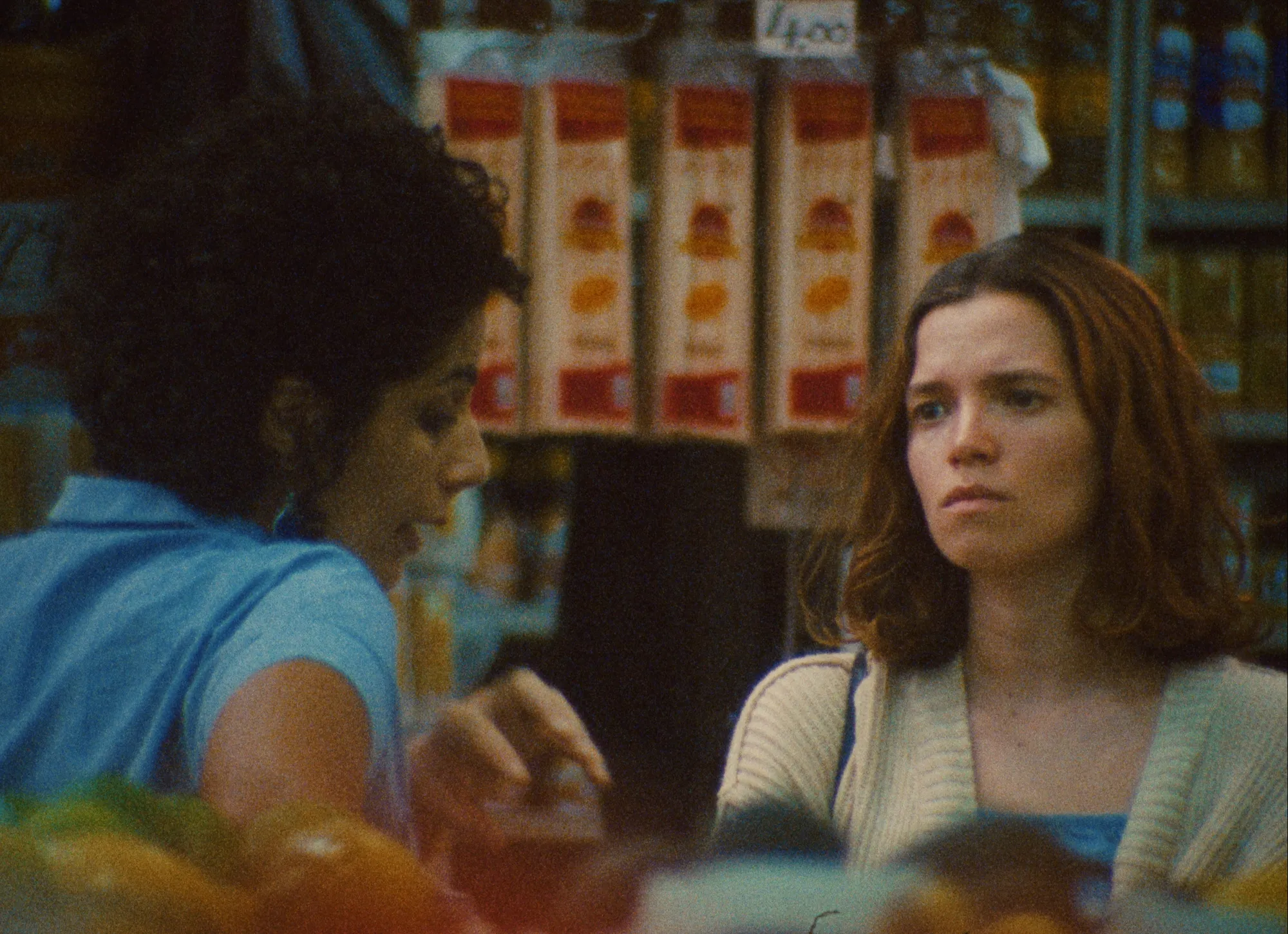
We shot this film in less than three days, mostly on uncontrollable public streets, with only three rolls of 16mm film. While we knew how important it was to get things right, we didn’t want to sacrifice the spontaneity of the city’s chaos — the unfiltered life surrounding our characters — which was essential to the film’s authenticity. Adding to the challenge, our camera, an old Eclair NPR, frequently broke down mid-take. Despite this, the shoot was surprisingly fun and adventurous because of our supportive, passionate team. One moment that stands out is when my character leaves the public market.
The camera follows two little girls playing with a doll, then tracks the doll’s quick movement as I enter the shot, weaving naturally through a bustling crowd unaware of our filming. Every detail had to align perfectly — timing, focus, movement — yet a single person blocking the view could have ruined the take and wasted precious film. With no camera monitors, we had to trust our DP and each other completely — no instant playback, no safety net. This trust created a euphoric, almost magical experience of collective creation. That moment made me realize the film would work. It was a “If we made this crazy thing happen, we will be good” mindset. My fears about shooting on 16mm — lost or stolen film, broken cameras, risky ambitious shots — were overcome by this shared confidence. Together, we made our ambitious vision a reality.

Is there a moment in the film that feels the most you — something only you could have made?
Leading to the film’s climax, there’s an unexpected moment when the camera falls to the ground, gets slightly damaged, but keeps recording. Hide-and-Seek was shot entirely from a subjective point of view; our camera had no monitors — just an optical reflex viewfinder you had to press your eye into to see the image clearly, which made the camera move. When the camera fell and hit the ground, our DP couldn’t look through the viewfinder without moving the camera slightly — which would have been very noticeable to the audience. It was even more challenging because the actors weren’t standing still; this climactic scene involved intense physical performance we rehearsed repeatedly to nail both the emotional beats and the exact distances needed for sharp focus. Both the camera and actors had to hit precise marks, and we didn’t know if it worked until the film was developed — weeks after we wrapped.
This kind of uncertainty is exactly what excites me about filmmaking. Shooting Hide-and-Seek on film felt audacious given our limited resources, but I’m deeply curious about playing with and even subverting cinematic language itself, no matter how penniless our productions might be. By doing so, we try to offer audiences moments they didn’t think were possible. Extra sensorial experiences that feel intimate and unique.
What was the hardest creative decision you made while making this film?
Shooting on film. Any reasonable person would have chosen digital — we didn’t have a fully reliable camera, a comfortable amount of stock, or even the necessary permits. Honestly, I think we could have made a nice and perhaps more complex short on digital. But our desire to shoot on film went beyond the excitement of working with the material that allowed the very existence of our craft. We wanted a rough yet intimate texture that could help us tell the story of a family in a big city and how everything we think is certain can change within a day.
We found in the grain of the 16mm film a possibility to create this first-person erratic "family vlog" atmosphere that quickly becomes a documentarian-style chase across voracious São Paulo, and finally results in a cinema-verité-like moment that feels like should be forbidden to see. Shooting on film allowed us to switch between these styles without losing the intimate bond with the viewer. We found that film (shot on film) allows for humanity like no other medium.

What do you hope audiences take away from your film?
I hope this film sparks dialogue around the secrets we carry, inviting people to truly open their hearts and minds to listen. Cinema is the most powerful tool for change and although this story deals with a cruel struggle women have to go through in many places around the world, it is also about sisterhood – and how the bond we nurture with others can push us through hard times. I think being a woman is both the hardest and most beautiful thing in the world, and I’ve made this film in honor of the women in my life and all the struggles that they think they need to hide.
"Shooting on film allowed us to switch between different styles without losing the intimate bond with the viewer. We found that film allows for humanity like no other medium."
How has this film shaped or shifted the kind of stories you want to tell next?
This is the film that showed me what kind of impact I want my work to have. It was the first time I shot in my homeland of Brazil, in my mother tongue — and that alone was deeply special. Before this film, my work consisted mostly of ambitious student projects and genre films. I’m grateful for them, but I always felt like I was still searching for my own voice. Truth be told, I still feel that way, but after Hide-and-Seek I have a strong sense that I’m now on a path that feels right, exciting and undoubtedly challenging. I want to tell stories about women — our guts and our glory.
"Before I even set foot on set, I felt I had already been transformed — strengthened by the voices and resilience of the women who entrusted me with their truths."
As an actor, I feel lucky to embody those narratives, and as a director, I want to focus on visceral intersections of gender, body, and myth through a decolonial lens. I’m fascinated by language and mythology — not only in terms of what a story tells, but how it’s told — and I’m interested in exploring different settings while weaving in supernatural elements and social commentary, often centering untold stories of womanhood itself.
Independent filmmakers often rewrite the rules out of necessity. What do you think is the greatest strength of independent filmmaking, and how did you lean into that on this project?

"The biggest lesson I’ve learned making films with nothing but the desire to create is that the act of making the film is the film."
The process itself is where we grow as artists and forge creative partnerships that often last a lifetime. With a small crew of daring, like-minded young people — true masters of no-budget filmmaking — we become the rulers of our own world. What we lack in funding, we make up for with untamed ideas, bold experimentation, and above all, fearlessness.
The resourcefulness indie filmmaking demands is transformative. There’s a unique beauty in the handcrafted, the intimate, and the collaborative. When things don’t go as planned, our DIY inventiveness and unconventional ideas help us find new paths forward. And even if they don’t, there’s always another film, another chance to try something wild and tell stories that we feel truly matter.
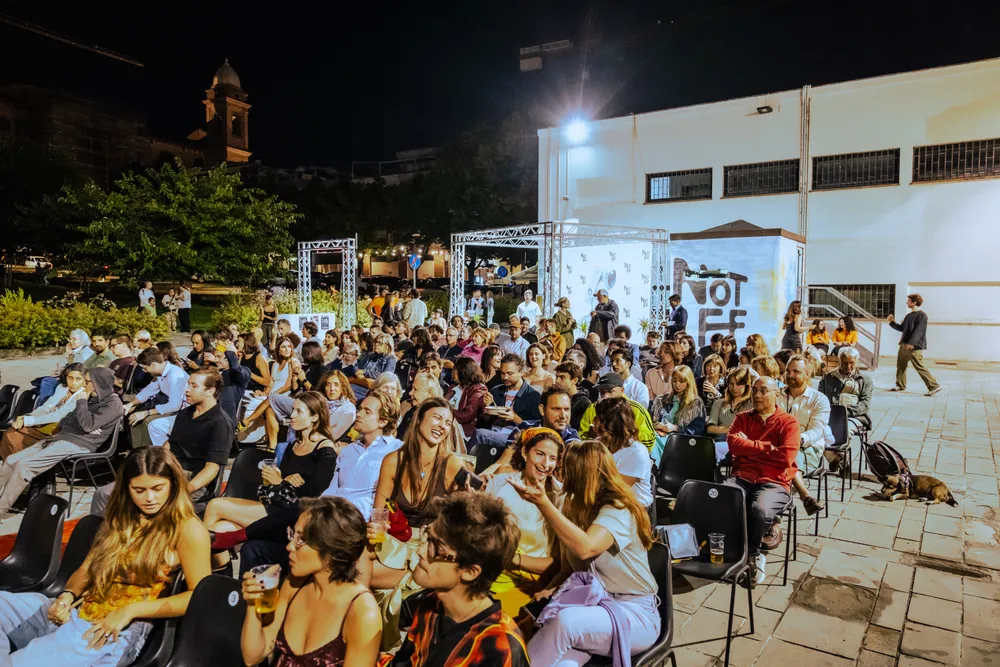
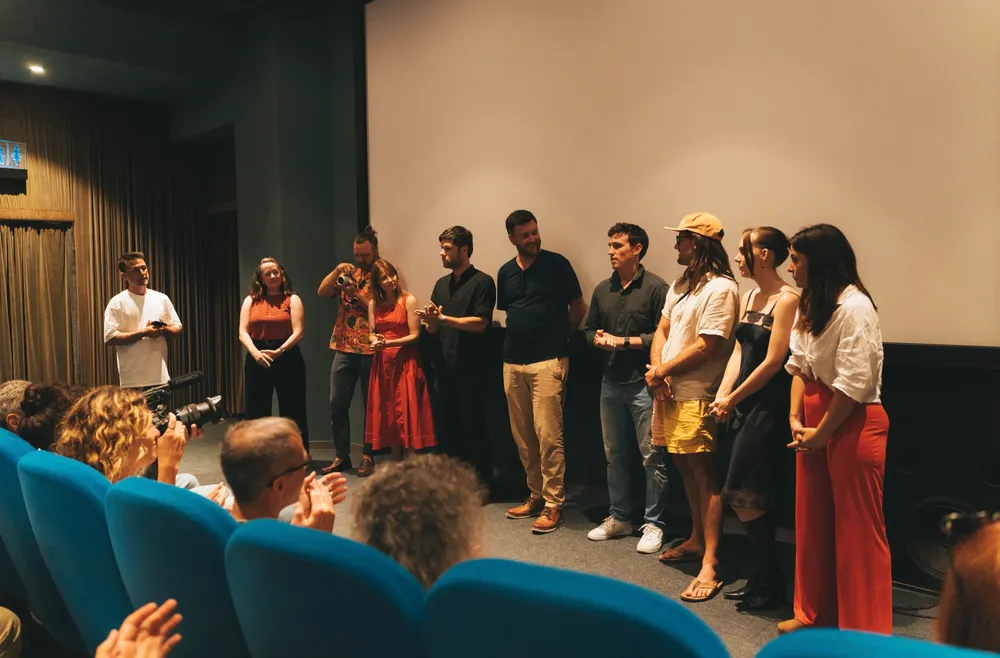
What does it mean to you to have your film selected for Nòt Film Fest?
Ever since I had the privilege of being part of Nòt in 2023, I was introduced to a new idea of what a festival can be like. It's such a safe place for meaningfully connecting with people, a chance to have real conversations instead of just giving your business card and attempting to low-key pitch your next film. At Nòt, you really get to make friends, and at the same time, gaining access to invaluable industry opportunities through masterclasses and insightful talks.
Not to mention, of course, the strength of the selection, year after year. Being part of Nòt Film Fest means more than just another screening opportunity — it’s a chance for the film to find an audience that truly values authentic storytelling and meaningful dialogue. I hope the festival’s unique atmosphere of genuine connection and openness will foster conversations around the film’s themes that go beyond the screen, creating a ripple effect of awareness and empathy.

Where do you see this film going next?
We have several screenings planned for the second half of the year, and now that the film has had its international and national premieres, our goal is to have it play as widely and as globally as possible. This is a story we feel is urgent and deeply important, and we want as many people as possible to see it. Screening in decentralized cities, especially in countries where reproductive rights are restricted or regressing, is particularly meaningful to us. But ultimately, any space where this film can spark meaningful conversations around these issues is a success in our book. At the conclusion of our festival run, we plan to release the film online to reach even broader audiences and continue fostering dialogue around its themes.
"At the core of all my work is a desire to make people feel less alone."
Cast & Crew
- Vitória Vasconcellos — Writer-Director, actor, and producer; Brazilian filmmaker exploring gender, body, and myth through a decolonial lens.
- João Rubio Rubinato — Director of Photography
- Julian Nebreda — Producer
- Pedro Fiuza — Producer
- Mariana Hardi — Producer
- Natália Morais — Assistant Director
- Artur Andrade — Production Sound, Editor, Sound Design & Mixing
- Sebastian Diáz — Sound Design, Mixing, Original Score
- Taline Caetano — Production Designer
- Glória Maciel — Lead Actress
- Fernanda Rocha — Acting Coach
- Producing Companies:
- Cinema Morto (@cinemamorto)
- Casa Da Praia Filmes (@casadapraiafilmes)