Table of Contents
Three Key Takeaways
- Personal stories fuel authentic dialogue: Matheus Malburg and co-writer Larissa Murai drew heavily from their own experiences and conversations to craft relatable, emotionally rich interactions.
- Collaborative spirit and creative problem-solving: Tight spaces and limited resources led the entire crew to contribute on screen and behind the scenes, deepening the film’s intimacy and inventive production.
- Exploring relationships through cinematic form: The film’s aesthetic choices—steady cam, lighting shifts, and camera movement—immerse viewers in a single environment, reinforcing themes of memory and connection.
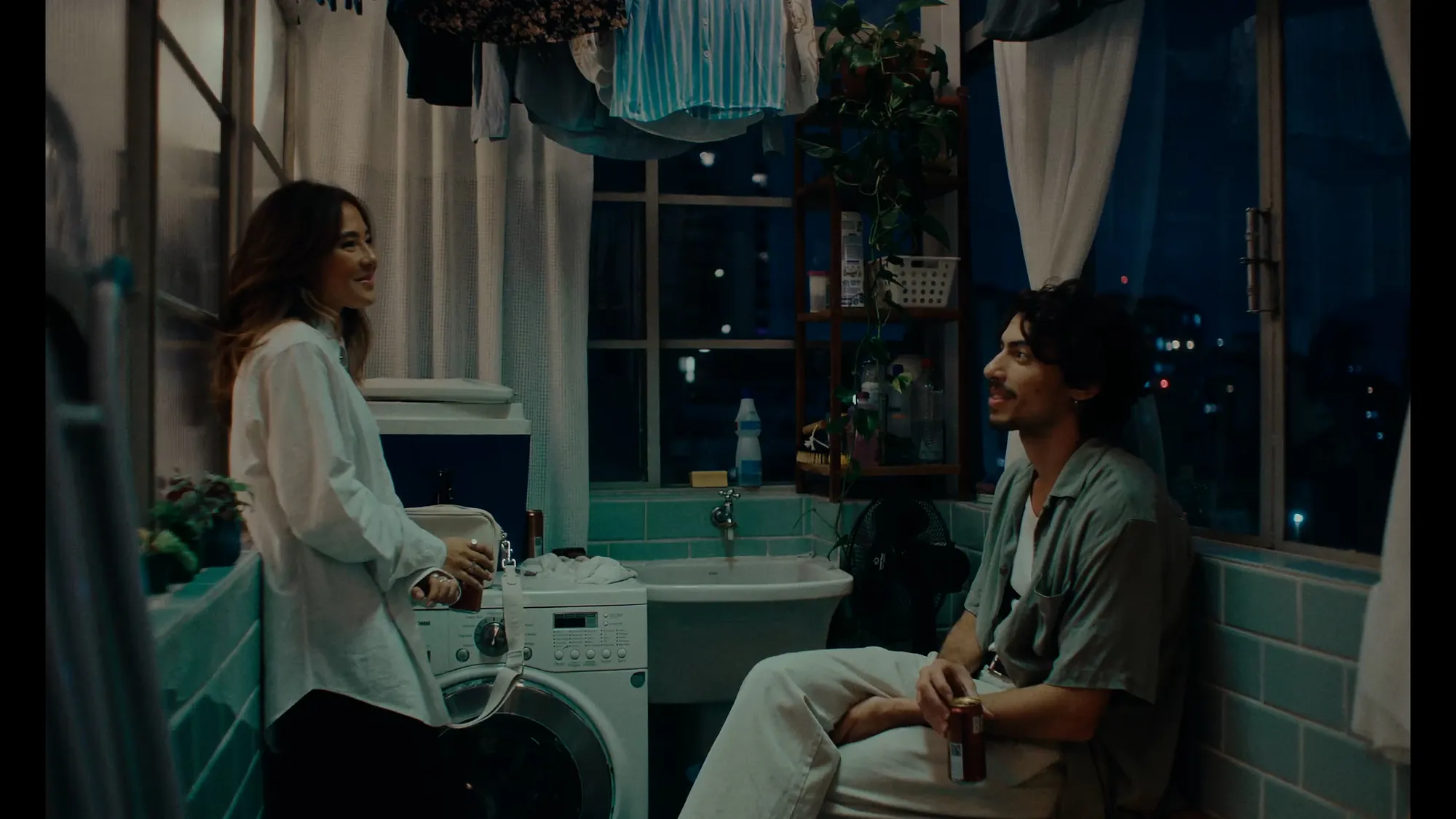
Brazilian filmmaker Matheus Malburg, director and screenwriter of the short film We’re Still Here, brings a deeply personal lens to stories about love and relationships. Co-written with Larissa Murai, who also acts in the film, We’re Still Here was selected for Nòt Film Fest and has made an impact across international festivals. The film stars Jaffar Bambirra and explores the emotional terrain of an ex-couple reunited at a party. Matheus and his producing team—João Macedo and Júlia Faria—share insights into their collaborative, resourceful process and what the film means to them.
Q&A Interview
What drew you to make this film? Why this story, and why now?
We’re Still Here was born from thousands of conversations between the two of us (Matheus and Larissa) about relationships. What began as confessions between friends turned into a strong motivation to write a script in which we mixed our own experiences, imagined scenarios, and even relationships from other friends. We realized that reflecting on what an ex-relationship means is something many people our age have in common, and once the film was finished, we saw that the connection was immediate, viewers quickly recognized themselves in small lines or situations from the film.
What surprised you most about the filmmaking process this time—creatively or logistically? Was there a moment on set or in post that completely changed how you saw the story?
I think that because we developed our story so thoroughly and shared it so much with our team, we didn’t have major conceptual changes during the shoot. What surprised us the most, both during and after making the film, was how collaborative a cinematic work can be. In our films, we always try to bring in as many opinions and ideas from different crew members as possible, but this film was special because the stories were highly relatable to everyone there. On top of that, since we were working in a very tight location, it was impossible to have many extras available for the party scenes, which meant that everyone on the crew ended up getting involved in some way as extras. This brought even more closeness to the story being told and gave us an eternal record of this whole group of friends.

Is there a moment in the film that feels the most you—something only you could have made?
I think what’s special is that the film is so personal to us that we felt almost everything could only have been done by us. Many of our characters’ lines came directly from real conversations we’ve had in our own lives, and we blended all of them together when building our dialogues. Even so, it’s interesting to see that they are common lines, and I think that’s precisely why it’s so easy for viewers to relate to them.
"The stories were highly relatable to everyone there... everyone on the crew ended up getting involved in some way as extras. This brought even more closeness to the story being told."
What was the hardest creative decision you made while making this film?
We faced the tough challenge of making a dialogue-driven film, and I think from the very beginning we understood that crafting intense, meaningful dialogues in cinema is one of the hardest things to do as filmmakers. To tackle this, we constantly acted out the conversations while writing the script, and we even rewrote all of them after Jaffar (who plays Dani) joined the process. The decision on how to handle this later carried over into the shot breakdown: we used more static, close shots of the characters during dialogues, and more moving, uncut camera work when depicting scenes from the characters’ past and future.
What do you hope audiences take away from your film?
Our film aims to make the viewer reflect on what a relationship means. I believe the way each viewer connects with their own story can evoke different feelings while watching the film — it’s possible to feel nostalgia, gratitude, sadness, happiness, and I think, above all, love. What we want them to take away is that strange feeling that mixes all of this and makes us want to fall in love, to open ourselves up, and also to close chapters.

How has this film shaped or shifted the kind of stories you want to tell next?
The idea of making this film comes from a mutual desire between the two of us to tell stories about love and relationships, and I don’t think that will ever change. We have future projects covering many other themes, but I believe this is a subject that will definitely remain present in our lives as writers and directors, whether those stories are made together or separately.
What’s a tool, technique, or resource that really helped you during production?
The idea of the film was always to immerse the viewer in that apartment where everything takes place. To achieve this, we made several aesthetic choices that make the film feel like it revolves almost entirely around a single scene; the transitions and camera movements reinforce this throughout. For that, we used a lot of steady cam and practical effects involving lighting changes on set, costume changes while the camera was rolling, and special effects in post-production.


Independent filmmakers often rewrite the rules out of necessity. What do you think is the greatest strength of independent filmmaking, and how did you lean into that on this project? Is there a lesson or breakthrough you’d share with others navigating this path?
We make films in Brazil, so it’s practically impossible to produce a film with an ideal budget, especially a short film. All our choices are made and reconsidered with these limitations in mind, and that’s one of the things that drives us the most—constantly having to make narrative adaptations to create the same effect with fewer resources.

There’s a scene where Bia is transported to an old fight with Dani; in it, we used a nearly theatrical blackout to take her to that moment. The initial idea was to have the character pulled out of the frame and plunged into darkness. We even got the equipment needed to make the effect happen, but we didn’t have rehearsal time or filming time on set—one of the biggest limitations of a small budget is the limited time to shoot. The film was made over three nights; we had to be very agile with all these desired effects as well as with the timing and depth the dialogues required.
"Crafting intense, meaningful dialogues in cinema is one of the hardest things to do as filmmakers."
What does it mean to you to have your film selected for Not Film Fest?
Nòt was a very special selection for us. Our cinematographer, who is also a director, had already had a film at the festival two years ago, and we were very excited about the possibility of having We're Still Here at the festival as well. It’s a festival that gives a lot of attention to the originality and execution of stories, and it’s really great to be able to occupy that space with our film.

How do you hope being part of Not Film Fest will shape the life of this film?
Beyond the name and recognition, Nòt offers various opportunities for promoting the film (like the one we’re writing now) as well as the creation of a community among those who attend the festival. We’re excited not only about the event itself but also about what may come as a result for the film in its continued distribution.
Where do you see this film going next?
We’re very happy with the festival opportunities the film has already given us. We’ve had the film screened in Brazil, Poland, Colombia, Spain, Portugal, and now Italy, at festivals that have made us very proud. We want the film to be seen by more and more people and to impact them deeply, giving them the chance to reflect on the themes the film carries. We hope to be part of even more festivals and later find a good screening window so it can be seen by as many people as possible.
"At the core of all my work is a desire to make people reflect on their lives and feelings."
Cast & Crew
- Matheus Malburg — Director and Screenwriter; began with documentaries on football and society; previous shorts nominated at Energa Camerimage and Watersprite FF.
- Larissa Murai — Director, Actress and Screenwriter; acting since age 12; writer for Amazon exclusives O Negociador and Sutura.
- Jaffar Bambirra — Actor; television debut in Pega Pega; appeared in Netflix film Ricos de Amor; part of Minha Irmã e Eu.
- João Macedo — Producer; partner at Biônica Filmes; executive producer of TOLL (2023) with extensive festival presence.
- Júlia Faria — Producer; works at Kaus Film producing commercials and shorts with multiple festival selections.
For more details on the film, you can follow their instagram.